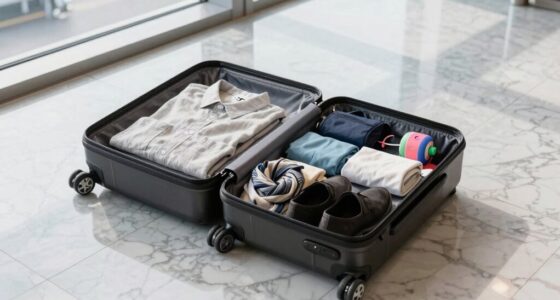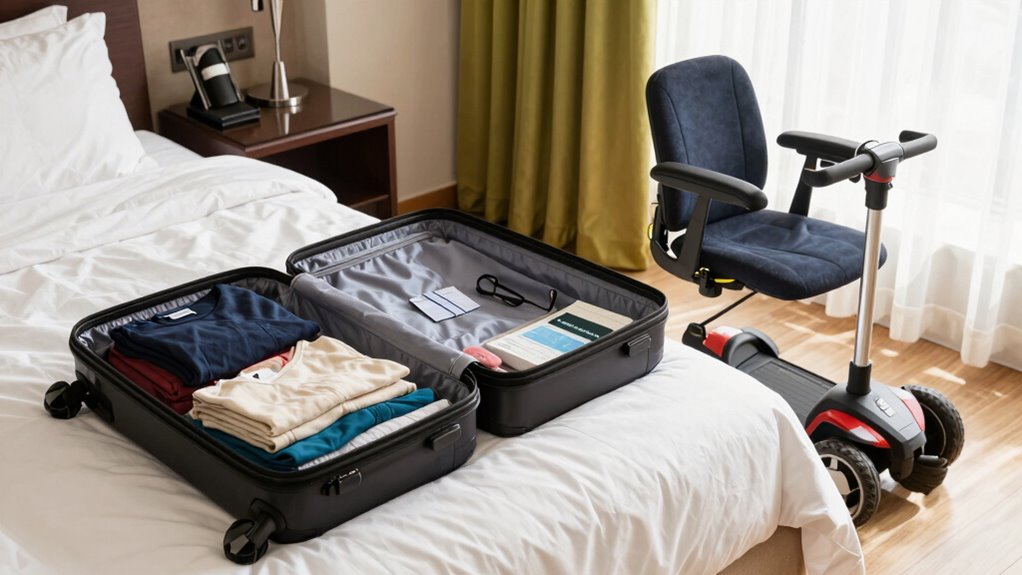

When packing for a Europe trip with mobility aids, prioritize essentials like extra batteries, chargers, and any replacement parts you might need. Pack lightweight, easy-to-maneuver clothing and organize accessories to prevent last-minute searches. Remember to carry copies of important documents, such as medical info and support contacts. Confirm your aid fits comfortably in your luggage and plan for accessible transportation options. Stay prepared and explore all your options to make your trip smoother — more helpful tips await.

Get travel and outdoor gear delivered free — and shop member deals
- Fast, free delivery on millions of items
- Access to Prime Big Deal Days deals on October 6–7
- Prime Video, Amazon Music and more included
Key Takeaways
- Pack essential spare parts and cleaning supplies for mobility aids to handle repairs or maintenance on the go.
- Carry copies of prescriptions, device manuals, and important documentation for mobility aids.
- Use a lightweight, durable travel bag or case designed for easy transportation of mobility aids.
- Inform airlines and accommodations of your mobility aid needs well in advance to ensure proper handling.
- Keep a list of local repair services and accessible transportation options at your destination.

Traveling through Europe with mobility aids can be smooth and enjoyable if you plan ahead. One of the most important steps is guaranteeing your accommodations are accessible. Before you go, research hotels or rentals that specifically mention accessible features, such as ramps, elevators, or wheelchair-friendly bathrooms. Many European cities now offer a range of accessible accommodations, but it’s always best to confirm their amenities directly with the property. Having a list of reliable options will save you time and frustration once you arrive. Remember to communicate your needs clearly when booking and ask about any specific accessibility concerns you might have. This proactive approach guarantees that your stay is comfortable and that you won’t face unexpected hurdles.
Another key aspect of planning your trip is choosing the right travel insurance options. Not all policies cover mobility aids or related medical needs, so it’s vital to read the fine print. Look for travel insurance that offers extensive coverage, including assistance for mobility device repairs, lost or stolen equipment, and emergency medical care. Having the right insurance gives you peace of mind, knowing that if something goes wrong, you’re protected financially and practically. Some providers even offer specialized policies for travelers with disabilities, which can include coverage for accessible transportation or personal assistance. Comparing options and selecting a plan that aligns with your specific needs ensures you’re ready for any unexpected situations. Being aware of accessible transportation options in advance can further streamline your travel experience. Additionally, understanding local accessibility regulations can help you navigate public spaces more confidently. Familiarizing yourself with local laws and policies related to accessibility can also help you advocate for yourself if needed during your trip. Moreover, researching disability support services available in your destinations can provide extra assistance if necessary.
As an affiliate, we earn on qualifying purchases.
Frequently Asked Questions
How Do I Navigate Airports With Mobility Aids?
You navigate airports with mobility aids smoothly by arriving early and informing airline staff about your assistive technology needs. Use designated assistance services and travel with trusted companions who can help with boarding and luggage. Always carry extra batteries or supplies, and stay aware of airport layouts. Your travel companions can coordinate with staff to guarantee you get timely assistance, making your journey more comfortable and stress-free.
Are There Accessible Accommodations Across Europe?
Like Odysseus steering treacherous waters, you’ll find many accessible hotel options and mobility-friendly sightseeing across Europe. Major cities and popular destinations increasingly prioritize accessibility, offering ramps, elevators, and adapted rooms. Research beforehand to identify accommodations that cater to your needs. With a little planning, you can enjoy seamless travel, explore historic sites without barriers, and experience Europe’s rich culture comfortably and confidently.
What Should I Include in My Emergency Kit?
You should include essential items like your travel insurance details and emergency contacts in your kit. Pack medications, a small first aid kit, and any necessary mobility aids or accessories. Bring copies of prescriptions, a flashlight, and a phone charger. Make certain your emergency contacts are easily accessible, and keep copies of important documents separately. Being prepared helps ensure safety and quick assistance if needed during your trip.
How Can I Ensure Transportation Is Accessible?
Imagine your trip as a smooth, flowing river—accessible transportation makes it happen. To guarantee this, research accessible sightseeing options, confirm wheelchair-friendly public transit, and consider booking accessible taxis or private rides. Always carry travel insurance that covers mobility aids and accessible transport. Call ahead to confirm arrangements, and stay flexible to adapt. With these steps, you’ll navigate Europe confidently, turning potential barriers into bridges of adventure.
Are There Specific Packing Tips for Different Mobility Aids?
Yes, there are specialized packing tips for different mobility aids. You should pack mobility-specific accessories, like extra batteries for wheelchairs or portable ramps, to guarantee smooth travel. Use specialized packing to protect your aids from damage, such as padded covers or sturdy cases. Label all items clearly and keep essential accessories within easy reach. Planning ahead with these tips makes your trip more comfortable and hassle-free.
As an affiliate, we earn on qualifying purchases.
Conclusion
Packing for Europe with mobility aids might seem intimidating, but with a little planning, you can make it smooth and stress-free. Remember to double-check your essentials, pack smart, and keep important items within easy reach. After all, isn’t the goal to enjoy your trip without unnecessary worries? With these tips, you’ll be ready to explore confidently, making wonderful memories along the way. So, are you ready to start your adventure prepared and empowered?
portable mobility aid repair kit
As an affiliate, we earn on qualifying purchases.
As an affiliate, we earn on qualifying purchases.
As an affiliate, we earn on qualifying purchases.
Fall Picks
fall essentials
As an affiliate, we earn on qualifying purchases.