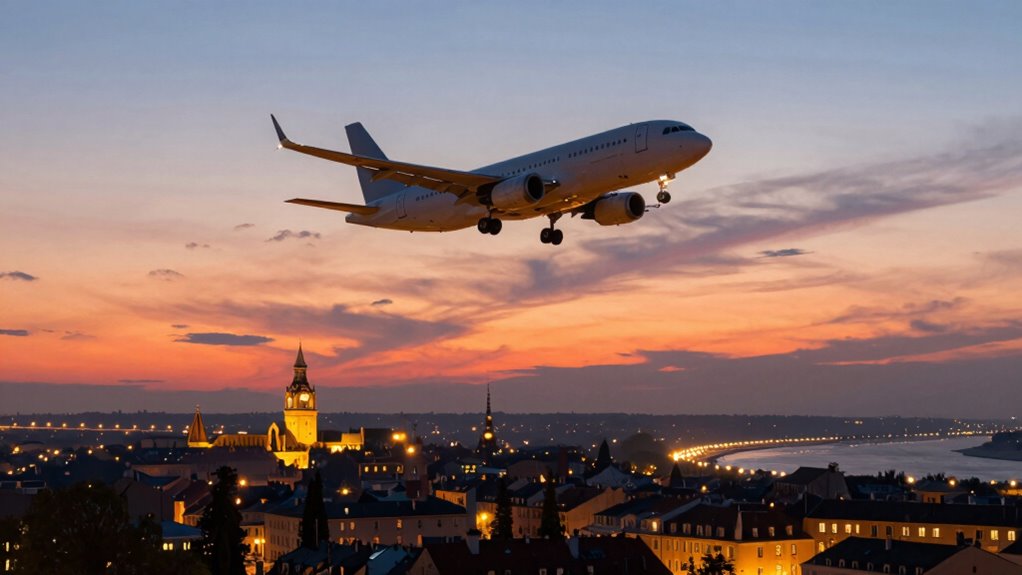

Choosing a morning flight to Europe often means a smoother check-in, quicker security lines, and more time to explore or settle in upon arrival. It helps you adapt to jet lag faster and makes your first day more productive. Night flights, on the other hand, can let you sleep during travel, but may feel cramped and have less staff support. To discover which option suits your travel style best, keep exploring for more detailed tips.
Open a free Amazon Business account
Business pricing, bulk buying and tax-exempt orders.
As an affiliate, we earn on qualifying purchases.
Key Takeaways
- Morning flights enable early arrival, allowing more time to explore or adjust to local time in Europe.
- Night flights often facilitate better sleep during travel, potentially leading to feeling more refreshed upon arrival.
- Morning departures typically involve quicker security and check-in processes, reducing travel stress.
- Night flights may face limited airport staffing, causing possible delays and less in-flight comfort.
- The choice depends on prioritizing in-flight rest versus optimizing time upon arrival.

Are you wondering whether a morning flight or a night flight to Europe is the better choice for your trip? The decision often hinges on various factors, including how you value in-flight comfort and what to expect from airport procedures. Morning flights typically depart early, giving you the advantage of arriving in Europe with plenty of time to explore or settle into your accommodation. These flights often feature more scheduled services, which can translate into better in-flight comfort, as airlines tend to allocate more resources to daytime routes. You might find that seats are cleaner, the cabin is less crowded, and the crew is more alert, making your journey more pleasant overall. Additionally, morning departures often mean smoother airport procedures since you avoid the rush hour crowds and long lines that develop later in the day. Security tends to be quicker, and check-in counters are less congested, helping you start your trip without unnecessary stress. Moreover, choosing a morning flight can help you adjust to jet lag more effectively, as arriving early allows you to acclimate to the local time zone and maximize your first day in Europe. Efficient airports can also contribute to a more streamlined travel experience, especially during busy travel seasons. Being aware of airport security procedures in advance can further reduce travel stress and ensure a smoother departure process.
In contrast, night flights, also known as red-eye flights, come with their own set of benefits and challenges. If you’re someone who prefers to sleep during your flight, a night departure might maximize your in-flight comfort. Airlines often equip these flights with dimmed lighting and amenities designed for sleeping, allowing you to rest and arrive feeling more refreshed. However, you should be prepared for potentially cramped seating arrangements, especially since airlines sometimes opt for economy seats that aren’t as spacious during late-night routes. Airport procedures for night flights can be more unpredictable; security lines might be shorter, but check-in counters could have limited staff, leading to longer waits or delays. You might also encounter less assistance from airline personnel, who could be less available during late hours. Ultimately, your choice depends on your priorities. If you value arriving rested, a night flight might seem appealing, but be ready for possible inconveniences at airports. If you prefer a smoother experience and better in-flight comfort, morning flights often deliver a more seamless journey. Think about your sleep preferences, how much time you want upon arrival, and your tolerance for airport procedures. Planning ahead and understanding these differences, including airport efficiency, will help you make the most of your trip to Europe. It can also be helpful to consider airline policies regarding late-night travel to better prepare for any potential challenges.
airline neck pillow for sleeping
As an affiliate, we earn on qualifying purchases.
As an affiliate, we earn on qualifying purchases.
Frequently Asked Questions
Which Flight Time Is More Affordable for Europe Trips?
Night flights are generally more affordable for Europe trips because budget airlines often offer lower fares during off-peak hours. Plus, night flights may have more flexible baggage policies, helping you save on additional fees. You can find cheaper tickets and better deals by booking late at night or early morning, giving you an economical way to travel while still enjoying the comfort of your preferred airline.
Do Morning or Night Flights Have Better Wi-Fi Options?
Night flights often have better Wi-Fi options because airlines tend to upgrade in-flight entertainment and connectivity systems during overnight upgrades. You’ll likely find more reliable Wi-Fi, making it easier to stream, work, or browse. Additionally, night flights usually experience less baggage handling delays, so your luggage arrives more smoothly. Overall, if Wi-Fi quality and baggage handling matter to you, night flights generally offer a better experience.
Are There More Delays on Morning or Night Flights?
Think of flights as a busy highway—morning or night, delays can happen anywhere. You’ll likely face more delayed departures during the early morning hours, when airlines are still getting their engines running, causing early morning delays. Night flights tend to be smoother, as airports quiet down and airlines have fewer scheduled departures. So, if avoiding delays is your goal, flying at night might be your better route.
How Do Airport Security Wait Times Compare for Both Flights?
You’ll likely find shorter airport security wait times during early morning flights, as airport congestion is generally lower then. Security procedures tend to be quicker because fewer travelers are going through screening. In contrast, evening or late-night flights often experience longer wait times due to increased passenger volume and more complex security procedures. Planning your departure time in the early morning can make airport security smoother and less stressful.
Which Flight Time Offers Better In-Flight Meal Options?
You’ll find that in-flight dining and meal quality tend to be better on morning flights. Airlines usually serve fresher, more diverse options earlier in the day, and meal quality is often higher when crew members are fresh and alert. Night flights might offer more limited or reheated meals, which can impact overall quality. If you prioritize better in-flight dining, a morning flight generally provides a more satisfying meal experience.
compact travel luggage for Europe trips
As an affiliate, we earn on qualifying purchases.
As an affiliate, we earn on qualifying purchases.
Conclusion
Ultimately, choosing between morning and night flights depends on your preferences and plans. Morning flights might mean more motivation and fewer delays, while night flights could offer a quieter, more comfortable commute. Consider your convenience, comfort, and calendar when making your choice. Whether you prefer the peaceful promise of night or the fresh start of morning, make your decision wisely. Whichever way you wing it, your Europe adventure awaits—so select smartly, settle swiftly, and set your sights on the skies!
noise cancelling headphones for flights
As an affiliate, we earn on qualifying purchases.
As an affiliate, we earn on qualifying purchases.
travel organizer for European trips
As an affiliate, we earn on qualifying purchases.
As an affiliate, we earn on qualifying purchases.
Fall Picks
fall essentials
As an affiliate, we earn on qualifying purchases.