To use European bakeries confidently, start with a friendly greeting and politely say “S’il vous plaît” when you’re ready to order. Decide what you want beforehand and point to items if needed. Learn some key words like “pain,” “croissant,” or “pain au chocolat,” and use simple phrases like “Je voudrais” along with numbers for quantities. Combining gestures, eye contact, and basic vocabulary will help you communicate effectively—keep exploring, and you’ll soon master these easy techniques.

Get travel and outdoor gear delivered free — and shop member deals
- Fast, free delivery on millions of items
- Access to Prime Big Deal Days deals on October 6–7
- Prime Video, Amazon Music and more included
Key Takeaways
- Greet staff politely with “Bonjour” and indicate you’re ready to order with “S’il vous plaît.”
- Decide your order beforehand and use “Je voudrais” to specify items clearly.
- Point to baked goods and use gestures to communicate unfamiliar items or preferences.
- Mention quantities with numbers like “un,” “deux,” and describe preferences (e.g., “bien cuite”).
- Confirm your order with eye contact and gestures to ensure understanding despite language barriers.
French bakery ordering phrase guide
As an affiliate, we earn on qualifying purchases.
As an affiliate, we earn on qualifying purchases.
Mastering the Basic Greeting and Approach Protocol
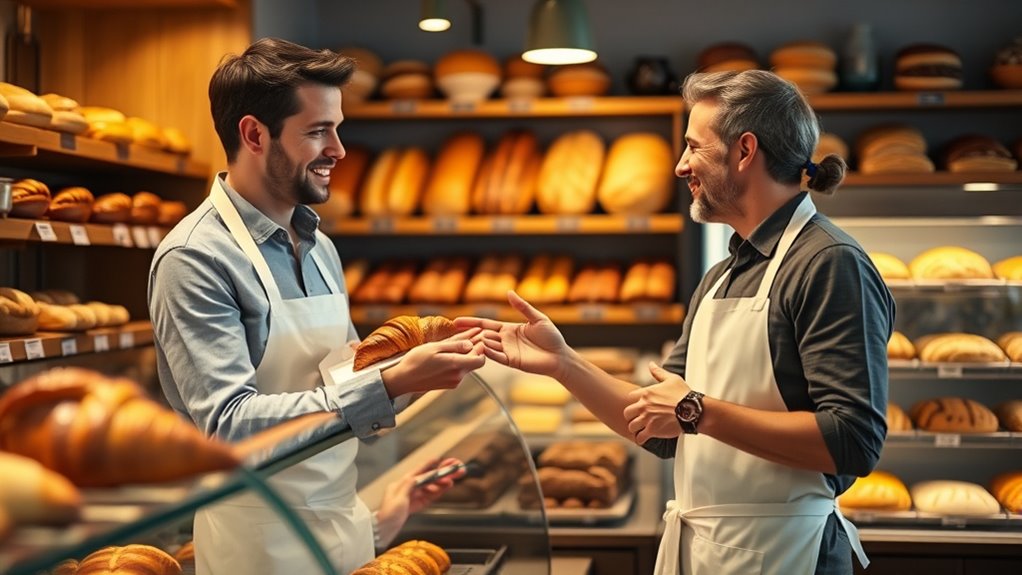
To successfully order at a French bakery, you need to start with a proper greeting. Saying “Bonjour” shows respect and sets a friendly tone. Once you’ve greeted the staff, catch their attention with “S’il vous plaît!” to indicate you’re ready to order politely. Before approaching the counter, decide what you want to buy to avoid holding up the line. When you’re ready, wait for the staff to acknowledge you before speaking. If you’re unsure about certain items, pointing to them remains acceptable. Using these simple steps helps you navigate the bakery smoothly, showing courtesy and understanding of local customs. Additionally, being aware of the Free Floating customs can help you feel more comfortable and confident during your visit. Knowing about cultural etiquette can further enhance your experience and prevent misunderstandings. Being mindful of market trends can also help you choose popular baked goods that locals prefer. Understanding local dining customs can give you insights into traditional practices and improve your interactions with the staff. Remember that a respectful attitude can significantly improve your interaction with the staff and your overall cultural experience.
European bakery pastry selection
As an affiliate, we earn on qualifying purchases.
As an affiliate, we earn on qualifying purchases.
Essential Vocabulary for Effective Ordering
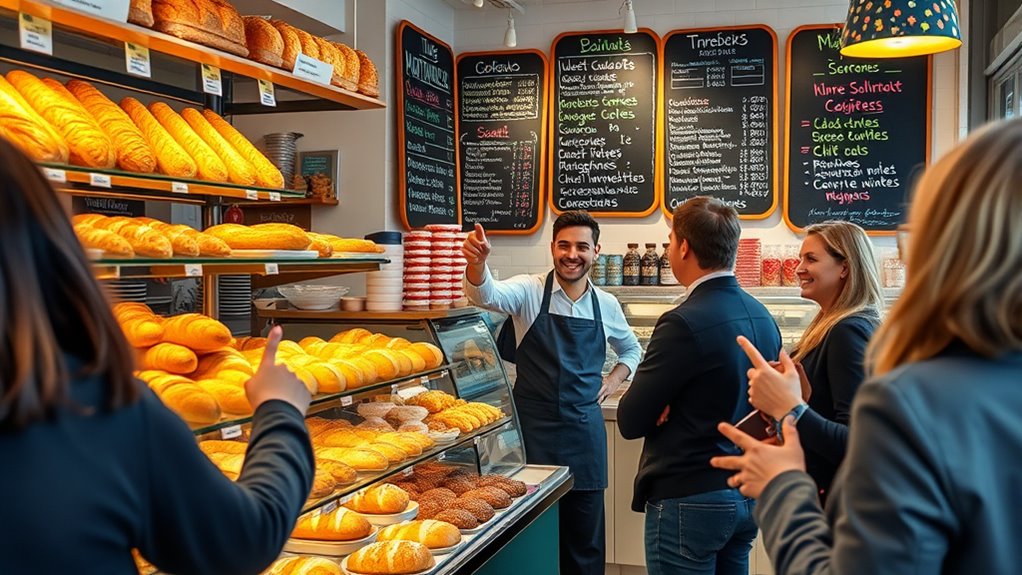
To order effectively at European bakeries, you need to know some key phrases and vocabulary. Using polite expressions like “S’il vous plaît” and the right bread or pastry terms helps you communicate clearly. Learning these essential words and phrases guarantees your order goes smoothly and politely. Additionally, understanding European cloud innovation can inspire you to explore modern solutions for your digital needs beyond just ordering at bakeries. Being familiar with common bakery items such as “brioche,” “croissant,” or “pain au chocolat” ensures you get exactly what you want, and knowing the regional specialties can enhance your culinary experience. Recognizing cultural differences in etiquette can also help you navigate interactions more comfortably. Moreover, having some knowledge of study techniques and exam preparation can be useful if you’re learning a new language or preparing for travel, making your experience more successful and enjoyable. Being aware of cultural etiquette can further improve your interactions and help you blend in more seamlessly during your visit.
Polite Phrases and Greetings
Using polite phrases and greetings is essential for a smooth and respectful ordering experience at European bakeries. Begin with a friendly “Bonjour” to acknowledge the staff and set a positive tone. When you’re ready to order, adding “S’il vous plaît” shows courtesy and helps guarantee friendly service. Before approaching, decide what you want so you can quickly state your choice, like “Je voudrais” followed by the item. Using these polite expressions demonstrates respect and makes interactions more pleasant. If you’re unsure about an item, asking “Comment ça s’appelle?” is polite and shows genuine interest. Remember to thank the staff with “Merci” after your order. These simple phrases create a courteous atmosphere, making your bakery visit more enjoyable and efficient. Understanding the French language basics can further enhance your experience and confidence in ordering. Additionally, practicing consistent feedback can help you improve your pronunciation and understanding during interactions. Being aware of relationship dynamics can also help you navigate any misunderstandings or miscommunications more effectively. Incorporating awareness of humor in social interactions can also lighten the mood and foster friendliness during your exchanges. Recognizing the importance of polite communication can help ensure a positive and memorable visit.
Common Bread Vocabulary
Knowing the key bread vocabulary is essential for ordering confidently at French bakeries. When you see “pain,” it simply means bread, but specific types have unique names. For example, “baguette” refers to the classic long, crusty loaf, while “pain de Campagne” is a rustic country bread. To specify a baguette‘s preparation, use “bien cuite” for a dark, crispy crust or “pas trop cuite” for softer bread. If you want sliced bread, say “tranché.” Other common types include “pain Ficelle,” a thin, narrow baguette, and “pain aux Raisins,” a sweet bread with raisins. Remember, understanding these terms helps you select the right bread and communicate your preferences clearly, making your experience smoother and more enjoyable. Understanding bread types can also enhance your appreciation of French bakery offerings and improve your ordering confidence. Additionally, familiarizing yourself with market dynamics can help you better understand regional variations and seasonal specialties at bakeries.
Pastry and Sweet Terms
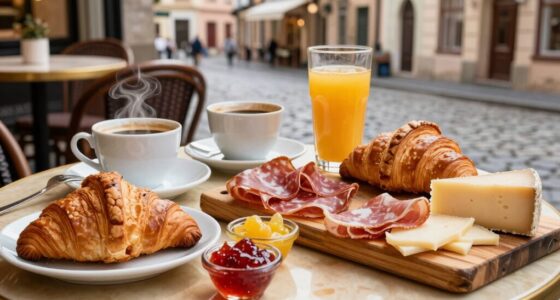
Are you familiar with the popular French pastries and sweets you might want to order? If not, knowing key terms helps you communicate confidently. For example, “canelés” are small, caramelized treats with vanilla and rum, while “gateau Basque” combines almond shortcrust with rich crème filling and cherries. Want something chocolatey? Ask for “pain au chocolat,” which features a chocolate center. “Chouquettes” are light, sugar-dusted pastry puffs, perfect for snacking. “Pain aux raisins” is a sweet bread with raisins and custard, often sliced. Recognizing these terms helps you specify your choice accurately. When ordering, use “Je voudrais…” and point if needed. Becoming familiar with these words ensures you enjoy authentic French sweets without confusion or guesswork. Understanding pastry ingredients can also enhance your ordering confidence and enjoyment, especially when exploring European bakery terminology to better understand the menu descriptions. Additionally, learning about the different types of fillings and toppings can help you customize your order to suit your preferences. Having a grasp of common pastry techniques can further improve your ability to choose exactly what you want. Knowing about traditional baking methods can also give you insight into the textures and flavors of the pastries you select.
As an affiliate, we earn on qualifying purchases.
Selecting and Customizing Baguettes and Other Breads
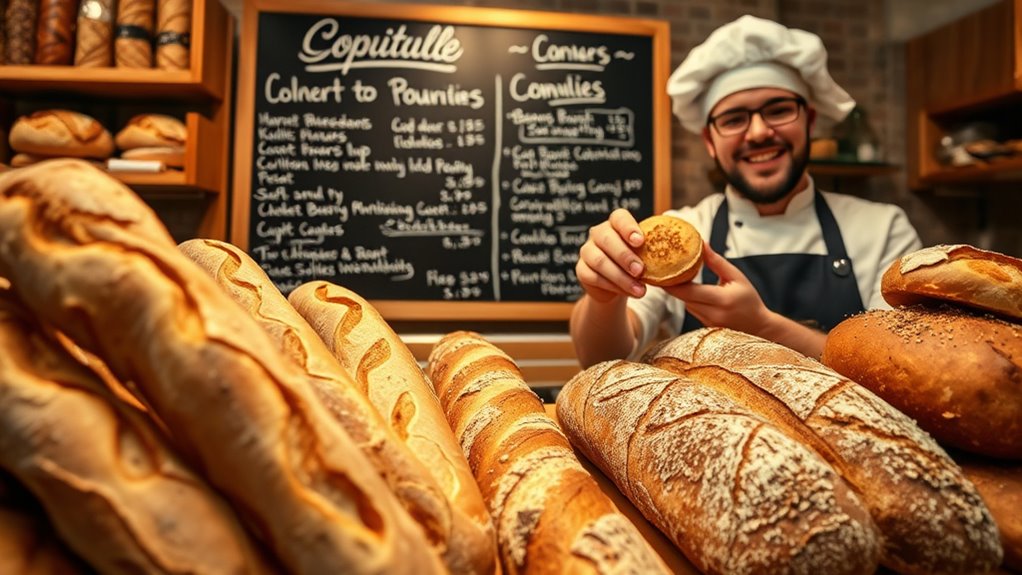
When selecting and customizing breads at a European bakery, clarity and preparation make the process smoother. To guarantee you get exactly what you want, consider these steps:
- Decide on your bread type—whether a traditional baguette, pain de campagne, or specialty bread—before approaching the counter.
- Specify your preferred crust and texture, like “bien cuite” for a darker, crunchier crust or “pas trop cuite” for softer bread.
- Use key vocabulary such as “pain” for bread or “tranché” if you want slices.
- Confirm your order politely with “S’il vous plaît!” and wait for staff acknowledgment before finalizing.
Being clear about your choices helps avoid confusion and speeds up your order.
travel-friendly bakery phrase book
As an affiliate, we earn on qualifying purchases.
As an affiliate, we earn on qualifying purchases.
Navigating Pastry and Sweet Item Choices
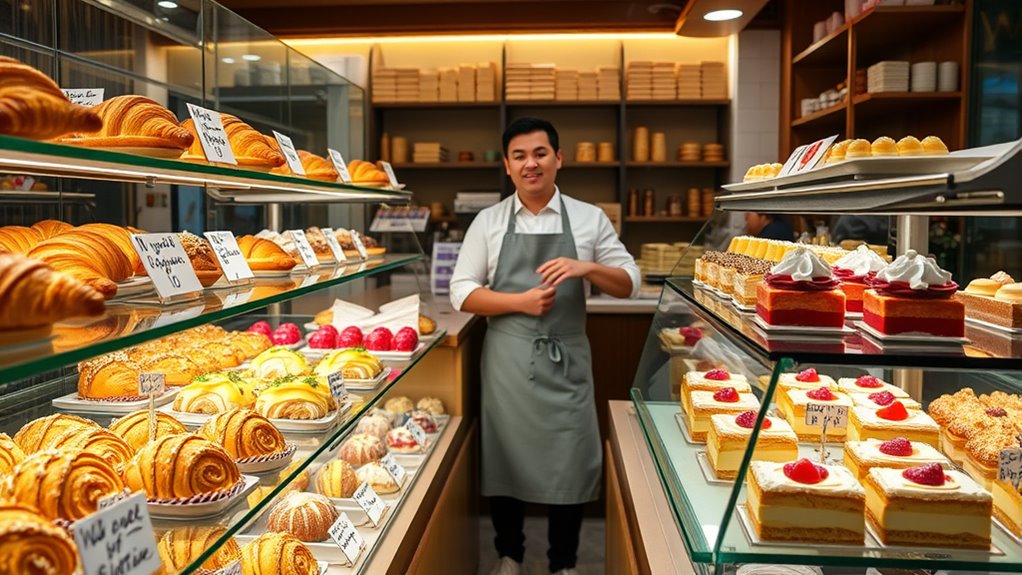
To choose pastries and sweet items confidently, it’s helpful to familiarize yourself with common French bakery terms and popular options. Items like “Canelés” have a caramelized crust and vanilla-rum flavor, while “Pain au Chocolat” features chocolate inside flaky dough. “Chouquettes” are light, sugared cream puffs, and “Gateau Basque” combines almond crust with fruity filling. When pointing or asking, use “Comment ça s’appelle?” to identify unfamiliar treats. Many pastries have regional variations, so don’t hesitate to ask staff about ingredients or flavors. If you prefer certain textures or sweetness levels, specify your preference—like “bien sucré” for very sweet or “moins sucré” for less. Familiarity with these terms helps you navigate selections and order with confidence. Paying attention to pastry ingredients can also help you choose options that suit your dietary needs or preferences, especially if you are mindful of allergens or dietary restrictions.
Assembling Your Sandwich and Choosing Beverages
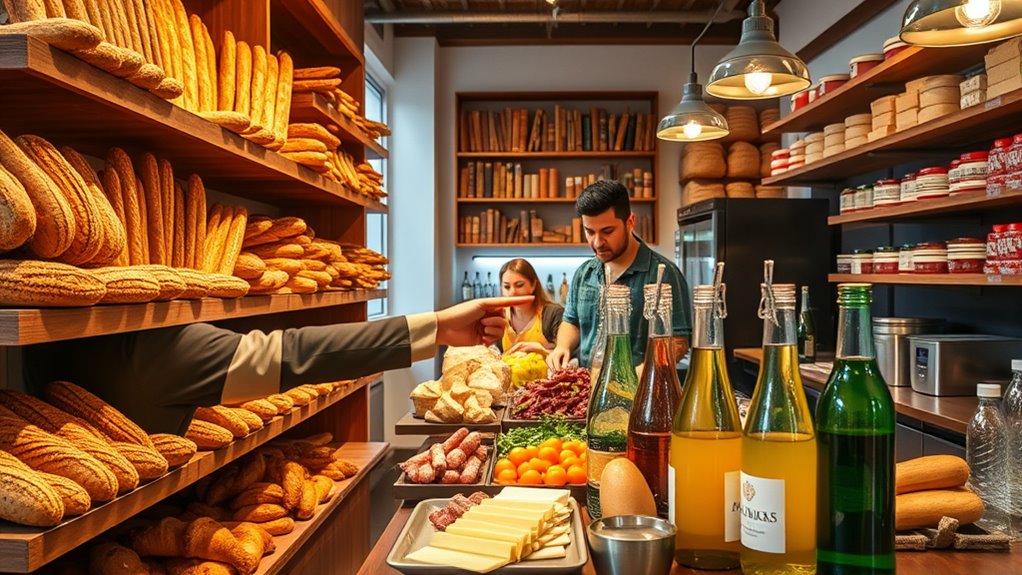
Once you’ve selected your favorite pastry or sweet item, it’s time to decide how you’d like your sandwich assembled and which beverage to enjoy alongside it. To help, consider these steps:
Choose your bread, fillings, and drink to customize your perfect pastry or sandwich experience.
- Specify your bread type, such as “pain de campagne” or “baguette tradition.”
- Mention your preferred fillings, like ham, cheese, or vegetables, after choosing the bread.
- Clarify the cooking level if needed, such as “bien cuite” or “pas trop cuite.”
- Choose your drink: ask for “une bouteille d’eau pétillante” for sparkling water or inquire about coffee or tea options.
Being clear and concise guarantees your order is accurate. Remember to use “S’il vous plaît” and wait for acknowledgment before continuing.
Tips for Communicating When Language Barriers Arise
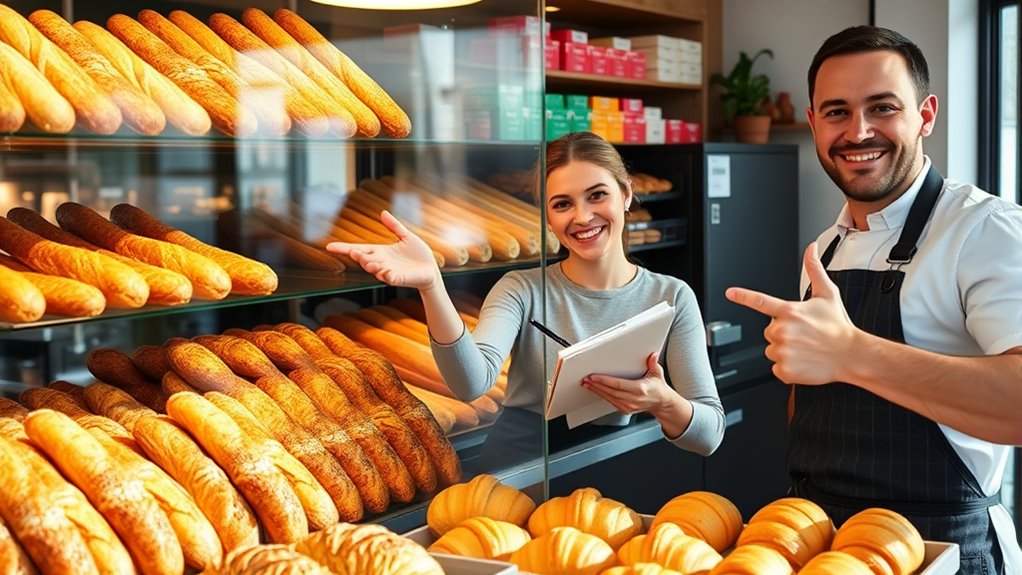
When language barriers occur, pointing to items and using simple gestures can help you communicate effectively. Learning key vocabulary like “pain” for bread or “je voudrais” for I would like makes ordering smoother. Combining these strategies guarantees you get what you want without frustration.
Point and Gesture Effectively
If language barriers make verbal communication difficult, pointing and gesturing become essential tools for effective ordering. Use these strategies to guarantee clarity:
- Point directly at the item you want, making sure it’s clear which pastry or bread you’re indicating.
- Use your hand to mimic the shape or size of what you’re ordering, helping to clarify specifics like a round loaf or long baguette.
- Combine pointing with a slight nod to show your choice and readiness to pay.
- Make eye contact with staff to confirm they understand, especially when pointing to unfamiliar items.
These gestures supplement your limited vocabulary, helping you order confidently without confusion or frustration.
Learn Key Vocabulary
Struggling to find the right words shouldn’t stop you from ordering confidently at a bakery. Learning a few key phrases and vocabulary can make communication smoother. Start with “Bonjour” to greet staff politely, then use “S’il vous plaît” to signal you’re ready to order. When pointing to items, say “Je voudrais…” followed by the item’s name, like “Pain” for bread. Use numbers like “un,” “deux,” or “trois” to specify quantities. If unsure about an item, ask “Comment ça s’appelle?” to learn its name. For bread preferences, add “bien cuite” or “pas trop cuite.” Remember, pointing is okay when words fail. With these basics, you’ll navigate the bakery confidently, even with language barriers.
Frequently Asked Questions
Can I Order in English if I Don’t Speak French?
You can usually order in English, especially in tourist-heavy areas or larger bakeries, but it’s respectful to learn a few basic phrases like “Bonjour” and “Je voudrais.” Using simple English, pointing to items, or showing pictures often works well. If unsure, staff appreciate polite gestures, and many will understand or help you find what you want. A little effort in local language can make the experience smoother and more enjoyable.
How Do I Ask for a Gluten-Free Bread Option?
Wondering how to ask for gluten-free bread? You simply say, “Avez-vous du pain sans gluten, s’il vous plaît?” which means, “Do you have gluten-free bread, please?” Make certain to approach with a friendly “Bonjour” and wait for acknowledgment. If you’re unsure, pointing to the bread and asking “C’est sans gluten?” can help. Being polite and clear guarantees the bakery staff understands your dietary request.
What if I Forget to Say “S’il Vous Plaît”?
If you forget to say “S’il vous plaît,” don’t worry. Most bakery staff understand that customers can overlook politeness phrases, especially if you’re clear and polite in other ways. You can simply repeat your order and add “Merci” at the end to show gratitude. Maintaining a friendly tone and making eye contact helps convey respect, and staff will usually appreciate your effort, even if the initial politeness phrase was missed.
How Do I Request a Specific Cooking Level for Baguettes?
Think of requesting a baguette’s cooking level as tuning a musical instrument; precision creates harmony. You simply say, “Bien cuite” for a darker, crunchier crust or “Pas trop cuite” for a softer, lighter result. Make sure to specify your preference clearly after choosing the baguette type. This way, you craft your perfect bite, ensuring the bread sings with your desired texture and flavor every time.
Is It Acceptable to Point Instead of Speaking When Ordering?
Yes, pointing is acceptable if you’re uncomfortable speaking, especially when the staff struggles with your language. Just make sure to accompany pointing with a polite gesture or the phrase “S’il vous plaît!” to show respect. You can point to the item and then say “Je voudrais…” to clarify your order. Combining pointing with simple French phrases helps avoid confusion and ensures your order is understood, making your experience smoother.
Conclusion
Remember, practice makes perfect, and even a simple “hello” can open doors. By mastering greetings, learning key vocabulary, and confidently selecting your treats, you’ll enjoy European bakeries without guesswork. When language barriers pop up, stay patient and polite—think of it like steering through a maze with a map. With time, you’ll find yourself savoring fresh bread and pastries with ease, turning every visit into a tasty adventure. After all, a journey of a thousand miles begins with a single step.
Evergreen bestsellers Picks
bestsellers
As an affiliate, we earn on qualifying purchases.