Many American bakery words related to French pastries are often mispronounced or misunderstood, hiding their genuine meanings. For example, calling a “pain au chocolat” a chocolate croissant ignores the authentic French term. Misreading “religieuse” can lead to confusion about its significance, and mixing up “macaron” and “macaroon” overlooks their cultural differences. Exploring these terms more closely helps you appreciate French baking tradition and understand what makes these treats special. Keep going to learn more about these culinary hidden gems.

Get travel and outdoor gear delivered free — and shop member deals
- Fast, free delivery on millions of items
- Access to Prime Big Deal Days deals on October 6–7
- Prime Video, Amazon Music and more included
Key Takeaways
- Many Americans mispronounce “pain au chocolat” as “chocolate croissant,” but the correct French term emphasizes it as a laminated bread with chocolate.
- The term “religieuse” is often mispronounced or misunderstood; it refers to a pastry resembling a nun’s habit, not a religious figure.
- Americans frequently confuse “macaron” (French, delicate almond cookie) with “macaroon” (coconut treat), leading to misinterpretation of these baked goods.
- The word “pain” simply means “bread,” but many assume it refers to specific types when it often indicates a plain baguette or basic loaf.
- French bakery terms like “boulangerie” and “pâtisserie” are sometimes misused, confusing bread-focused shops with pastry or sweet specialty stores.
As an affiliate, we earn on qualifying purchases.
Deciphering the True Baguette: Tradition vs. Supermarket Copies
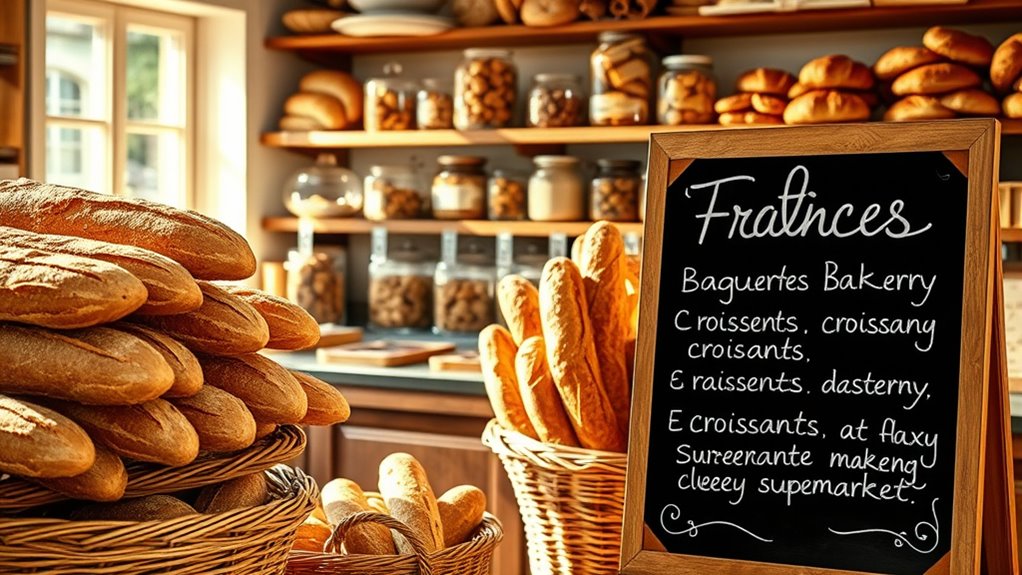
Deciphering the true baguette means understanding what sets a traditional French baguette apart from the mass-produced versions found in supermarkets. Authentic baguettes have a specific composition: flour, water, salt, and leavening, as defined by law since 1993. They’re hand-formed, with pointed ends, and baked fresh in the bakery, often on-site. You’ll notice the crust is crisp, golden, and crackles when you break into it, and the crumb inside is light yet chewy. In contrast, supermarket baguettes are usually frozen, pre-made, and mass-produced. They often lack the artisanal qualities — no hand-shaping, no fresh baking, and a bland taste. Once you taste a real baguette, you’ll immediately recognize the difference, understanding why the French distinguish genuine bakery bread from industrial copies. Artisanal qualities are what truly set apart authentic baguettes from their commercial counterparts.
As an affiliate, we earn on qualifying purchases.
The Correct Terminology for Chocolate Pastries: Pain Au Chocolat vs. Chocolate Croissant
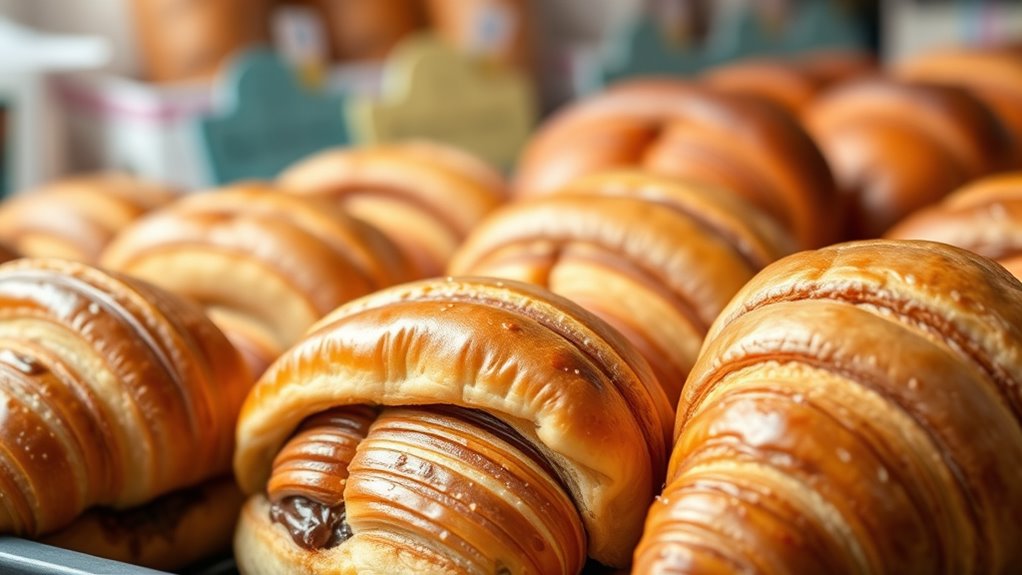
When you’re discussing this beloved pastry, it’s important to use the correct French term: pain au chocolat. This phrase accurately describes a laminated pastry filled with chocolate, common in France. Americans often call it a chocolate croissant, but that’s not precise; it’s a croissant-shaped pain au chocolat. French speakers emphasize the liaison in “pan au chocolat,” making pronunciation key. Correct terminology not only respects French baking traditions but also enhances your culinary vocabulary.
French macarons and macaroons set
As an affiliate, we earn on qualifying purchases.
As an affiliate, we earn on qualifying purchases.
Understanding “Pain” and Its Variations in French Baked Goods
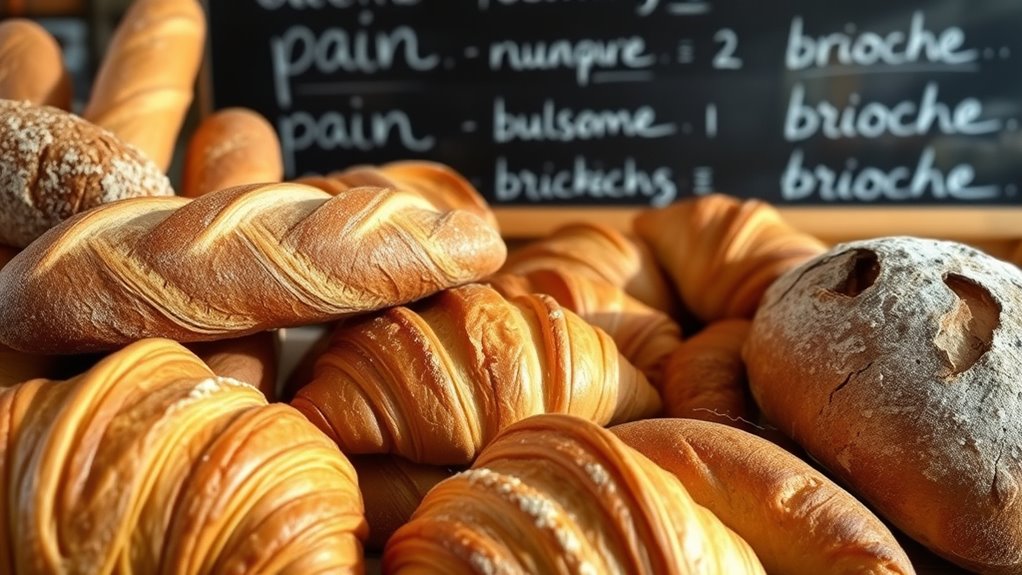
Have you ever wondered what “pain” means in French baking? In French, “pain” simply refers to bread, typically a baguette or a basic loaf. It’s not a specific type of bread but a general term. When you hear “pain au chocolat,” it’s a chocolate-filled pastry, not “chocolate bread.” Similarly, “pain” can specify different breads with qualifiers like “pain de campagne” (country bread) or “pain d’épi” (wheat stalk-shaped bread). However, if you just ask for “pain,” you’ll usually get a plain baguette or sliced bread. Be aware that “pain” doesn’t include special breads like “pain au levain” or “pain de seigle” unless specified. Understanding these nuances helps you avoid confusion at bakeries and better appreciate authentic French baked goods. Recognizing bread terminology in French bakeries enhances your culinary experience. Additionally, knowing the varieties of bread can help you select the perfect loaf for any meal or occasion. Exploring French bread classifications can deepen your appreciation for traditional baking techniques and regional specialties.
As an affiliate, we earn on qualifying purchases.
The Distinction Between Macaron and Macaroon: French Elegance vs. American Confusion
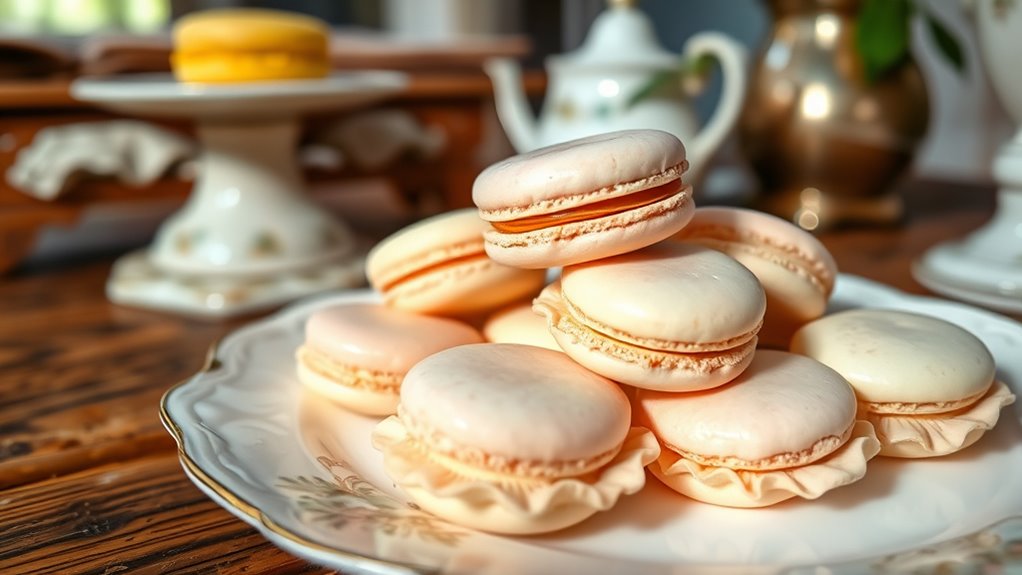
You might think macaroon and macaron are the same, but in France, they’re quite different. The French macaron is a delicate, almond-based cookie with a smooth, airy texture, while the American macaroon is a chewy coconut treat. Understanding their origins and cultural significance clarifies why these words are often confused abroad.
Origin and Language
The difference between “macaron” and “macaroon” highlights the elegance of French language and baking tradition versus American confusion. The French word “macaron” originates from the Italian “maccherone,” meaning fine paste or dough, and has evolved into a delicate, almond-based cookie. In contrast, the American “macaroon” comes from the Spanish “macarónes,” referring to coconut confections. The French pronunciation emphasizes the nasal “a” and smooth “ron,” while Americans often mispronounce it as “macaroon,” adding confusion. French bakers see “macarons” as a refined pastry with a specific texture and filling, whereas “macaroons” are simpler coconut treats. This linguistic distinction reflects a cultural appreciation for elegance and tradition that many Americans overlook.
Ingredient and Texture Differences
While the names sound similar, macarons and macaroons differ markedly in ingredients and texture. Macarons are delicate, French confections made from almond flour, egg whites, and sugar, resulting in a crisp exterior and a chewy, moist interior. They’re often filled with buttercream, ganache, or jam, giving them a refined, smooth texture. Macaroons, on the other hand, are dense, chewy treats primarily made from shredded coconut, egg whites, and sugar. They tend to be moist and sticky, with a rougher exterior. The difference lies in their base ingredients and resulting textures: macarons are light, smooth, and elegant, while macaroons are hearty, chewy, and rustic. Confusing the two is common, but understanding their distinct textures helps you appreciate their unique qualities.
Cultural Significance
Have you ever noticed how Americans often use “macaroon” to refer to the delicate French treat called a “macaron”? This mix-up reflects cultural differences in pastry appreciation. In France, a macaron symbolizes elegance, refinement, and culinary artistry, often associated with high-end patisseries. The precise pronunciation and presentation highlight its status. Meanwhile, in the U.S., “macaroon” typically refers to a coconut-based cookie, which is simpler and more rustic. This confusion shows how language shapes cultural perceptions of desserts. For the French, a macaron embodies sophistication and tradition, whereas Americans often see macaroons as comfort food. Understanding these distinctions deepens your appreciation of French bakery culture and highlights how language influences the way we perceive culinary elegance.
Religious or Not? The Proper Pronunciation and Meaning of Religieuse
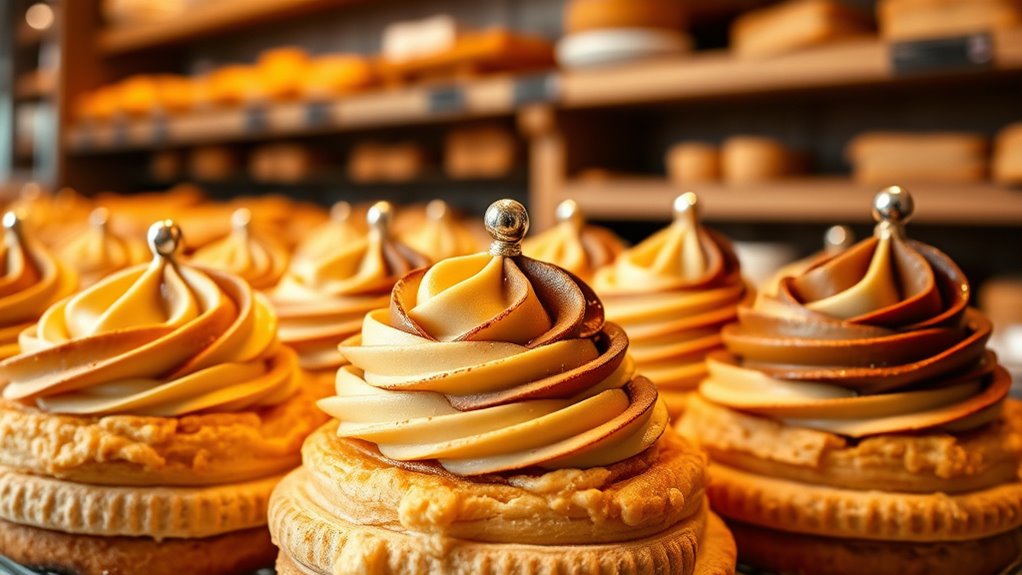
When you pronounce “religieuse,” make sure to say it correctly as “reh-lee-zyoos,” not like the word “religious.” The name refers to the pastry’s shape, resembling a nun’s habit, not anything spiritual. Many Americans mispronounce it or confuse its meaning, so understanding the proper way helps you appreciate its true French origin. Proper pronunciation is essential for authentic appreciation of French pastries. Additionally, familiarizing yourself with French culinary terms can deepen your enjoyment and understanding of these delicacies. Being aware of authentic French terminology can also help distinguish traditional recipes from modern adaptations. Recognizing these terms enhances your overall knowledge of French food culture and enriches your tasting experience. Paying attention to the nuances of pronunciation can further elevate your appreciation of authentic French cuisine.
Correct Pronunciation of Religieuse
Understanding the proper pronunciation of “religieuse” is essential to avoid confusion, especially since it’s often mispronounced by English speakers. The correct way is “reh-lee-ZYUZ,” with emphasis on the last syllable. French speakers hear “religieuse” as a word related to religion or nuns, not a religious person. When you pronounce it as “religious,” it sounds like you’re referencing a person of faith, which can lead to misunderstandings. To sound authentic, emphasize the final syllable and soften the “r” at the start. The French pronunciation is quite different from the English “religious,” so practicing the “reh-lee-ZYUZ” pronunciation ensures you communicate correctly. This helps you appreciate the pastry’s elegance without confusing it with religious connotations. Paying attention to pronunciation also enhances your cultural understanding of French culinary terminology.
Meaning Behind the Name
Many people question if the term “religieuse” carries any spiritual significance behind it. The answer is no; the term simply describes the pastry’s form, resembling a nun’s habit or a pair of connected domes. It’s not intended to invoke faith but rather to depict its appearance. The word originates from the French “religieuse,” meaning “nun,” but in this context, it’s purely descriptive. The name emphasizes the pastry’s refined, layered design rather than any spiritual link. When you see or hear “religieuse,” remember it’s about the visual shape, not belief. The focus is on its elegant, tiered look, making it a delightful treat with a name based on shape, not faith. Additionally, understanding the linguistic origins of the term can deepen appreciation for French pastry traditions. Recognizing the cultural context helps distinguish the pastry from any religious connotations and highlights its artistic craftsmanship. Interestingly, the culinary history of the religieuse showcases how visual inspiration often influences naming conventions in French desserts.
Common Mispronunciations
The word “religieuse” is often mispronounced by English speakers, who tend to say it as “religious,” but the correct French pronunciation is “reh-lee-zyuhz.” This mispronunciation not only changes the sound but also shifts the word’s meaning, making it sound like a religious person or nun in English. In French, “religieuse” refers to a delicate, layered pastry filled with cream, resembling a small nun’s habit. Correct pronunciation emphasizes the “zyuhz” ending, differentiating it from the English “religious.” Mispronouncing it can cause confusion, as it sounds more like a religious figure than a dessert. The proper pronunciation preserves the pastry’s elegance and distinct identity, helping you appreciate its true French origin and avoid mistaken associations.
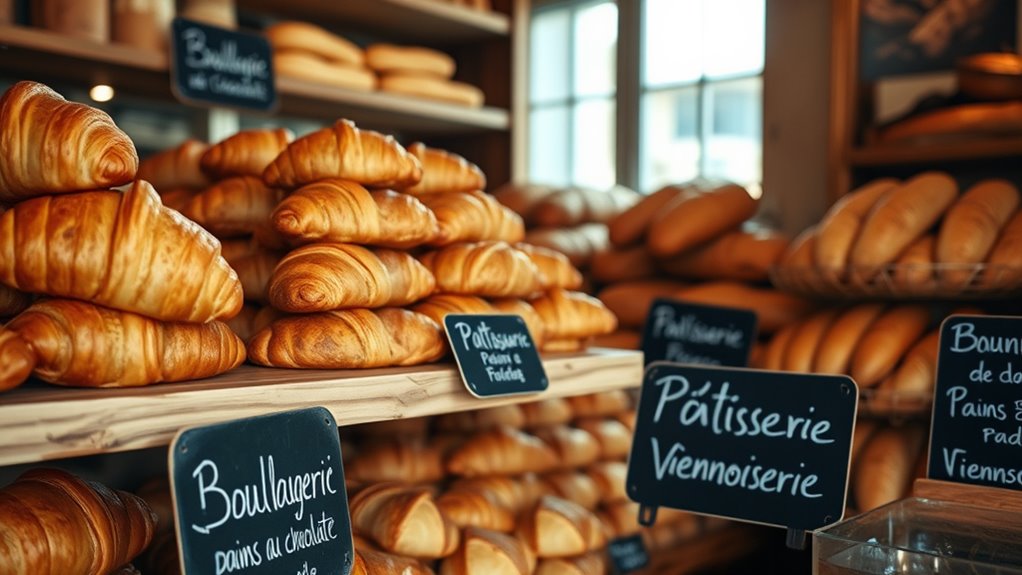
When you visit a French bakery, knowing the difference between boulangerie, pâtisserie, and viennoiserie helps you order with confidence. A boulangerie focuses on bread, baked fresh on-site. A pâtisserie specializes in pastries, cakes, and delicate sweets. Viennoiserie covers rich, flaky baked goods like croissants and pain au chocolat. Recognizing these terms prevents confusion and guarantees you get what you want. Understanding candy varieties and innovations, such as croissants filled with chocolate or fruit, can further enhance your bakery experience. Additionally, familiarizing yourself with French bakery terminology can deepen your appreciation for the artistry behind each baked good. Learning about baked goods classification can also help you identify other specialties you might encounter.
Frequently Asked Questions
How Can I Tell a Traditional Baguette From a Frozen Supermarket Version?
To spot a traditional baguette, look for a hand-formed shape with a pointier end and a crust that’s crispy and golden. A real one is baked fresh on-site, so it’ll taste richer and more complex than frozen supermarket versions, which often lack texture and flavor. Avoid pre-packaged, uniform baguettes, and instead, choose those with a slightly irregular shape and a fragrant aroma—signs of artisanal baking.
Why Do French Bakers Prefer “Pain Au Chocolat” Over “Chocolate Croissant”?
French bakers prefer “pain au chocolat” because it’s the traditional, authentic term rooted in French culinary culture. They take pride in using precise language that reflects their heritage. Calling it a “chocolate croissant” might sound more familiar to Americans, but it doesn’t honor the proper terminology or tradition. Using “pain au chocolat” shows respect for authentic French baking and helps preserve the cultural identity of this beloved pastry.
What Exactly Does “Pain” Refer to in French Bakery Terminology?
You might find it surprising, but in French bakery terminology, “pain” simply refers to bread, like a baguette or a boule, when ordered without qualifiers. It’s a broad term for basic bread, not specific to any shape or flavor. If you want something more specialized, like an appetizer bread or a flavored loaf, you add a descriptor. Otherwise, “pain” just means plain, everyday bread in France.
How Is a “Macaron” Different From an “American Macaroon”?
A macaron is a delicate, smooth, and colorful French sandwich cookie made from almond flour, egg whites, and sugar, often filled with ganache or buttercream. Americans call them macaroons, which are coconut-based, chewy confections. You might be confused, but remember, macarons are light and crisp with a creamy center, unlike the dense, chewy coconut macaroons. The two are entirely different treats in texture and ingredients.
What Is the Correct Pronunciation and Meaning of “Religieuse” in French Pastry?
You should pronounce “religieuse” as “reh-lee-zyuhz,” with emphasis on the last syllable. It refers to a beautiful French pastry, resembling a nun’s habit, often filled with cream. Don’t confuse it with the English word “religious,” as the French pronunciation is distinct. When ordering, use the correct pronunciation to avoid misunderstandings, and enjoy this delicate, elegant treat that’s a staple in French bakeries.
Conclusion
Next time you step into a French bakery, think of it as entering a treasure chest, each term revealing a story from centuries past. When you confidently order a “pain au chocolat” instead of a “chocolate croissant,” you’re embracing tradition. Remember, understanding these words is like holding a key to authentic flavors, transforming your pastry experience from a simple snack to a delicious journey through French culture.
Fall Picks
fall essentials
As an affiliate, we earn on qualifying purchases.