To confidently order on an Italian menu, learn key terms like antipasti (appetizers), primi (pasta and soups), and secondi (main proteins like bistecca or pollo). Remember to ask about side dishes (contorni) and sauces like al pomodoro or pesto. Understanding cooking styles such as al forno (baked) or fritto (fried) helps you customize your order. If you keep exploring, you’ll discover even more tips to navigate authentic Italian cuisine effortlessly.

Get travel and outdoor gear delivered free — and shop member deals
- Fast, free delivery on millions of items
- Access to Prime Big Deal Days deals on October 6–7
- Prime Video, Amazon Music and more included
Key Takeaways
- Familiarize yourself with common Italian dish categories: antipasti, primi, secondi, contorni, and sauces.
- Learn key terms for proteins (bistecca, pollo, gamberi) and preparation methods (al forno, alla griglia).
- Know essential sauce names like al pomodoro, pesto, and carbonara to specify flavors.
- Recognize side dish options such as verdure grigliate, insalata mista, and patate al forno.
- Use Italian culinary adjectives and phrases to customize your order confidently.
As an affiliate, we earn on qualifying purchases.
Understanding Antipasti and Appetizers
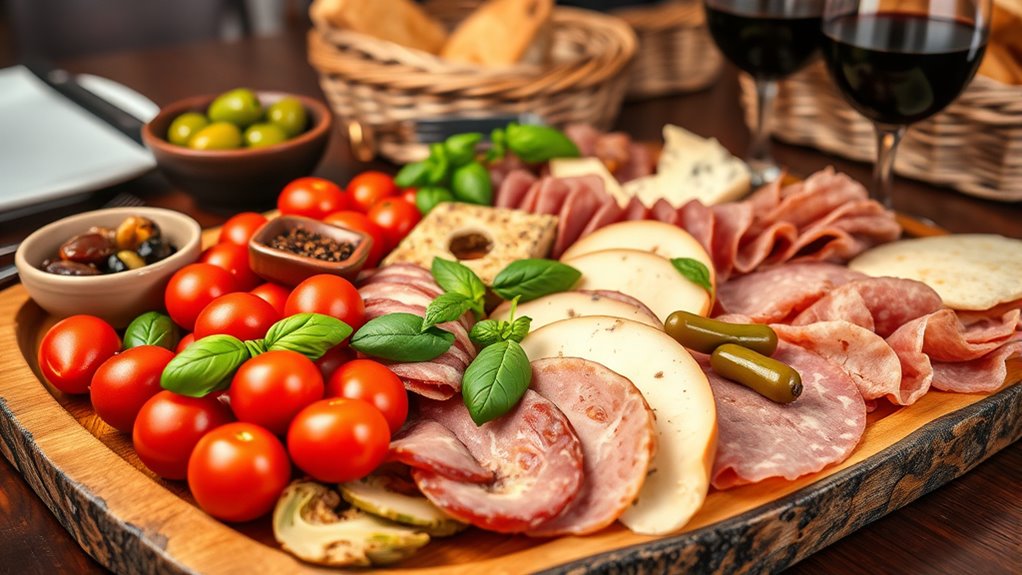
Have you ever wondered what makes Italian antipasti a perfect start to a meal? It’s because they set the tone, offering a delightful variety of flavors and textures. Antipasti are small dishes served before the main course, designed to stimulate your appetite. You might encounter bruschetta—crispy toasted bread topped with fresh tomatoes, herbs, or cheese. Cured meats like prosciutto and salami, along with cheeses such as mozzarella or parmigiano, add savory richness. Olives, anchovies, and marinated vegetables provide salty, tangy notes, while fried calamari adds a crispy seafood touch. These appetizers are perfect for sharing, giving you a taste of Italy’s culinary diversity. They’re simple yet flavorful, making your dining experience feel authentic and inviting from the very first bite. Incorporating traditional presentation techniques can enhance the visual appeal and authenticity of your antipasti platter. Using cultural serving styles can also elevate the overall dining experience and emphasize the authentic Italian feel.
Italian pasta and risotto cookbook
As an affiliate, we earn on qualifying purchases.
As an affiliate, we earn on qualifying purchases.
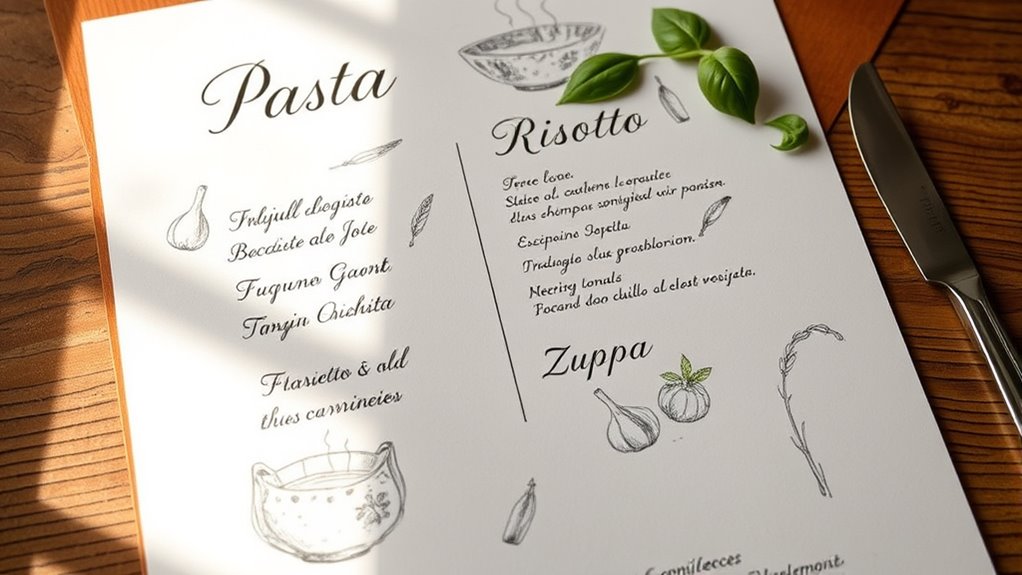
After enjoying a variety of antipasti, the meal typically moves on to the primi courses, which are the first substantial dishes. Here, you’ll encounter pasta, risotto, and soups. If you see “pasta,” your server might specify the type, like fettuccine or gnocchi. Risotto is a creamy rice dish, often cooked al dente and flavored with ingredients like saffron or mushrooms. Soups are labeled “zuppa,” and may include hearty options like minestrone or light broths. When ordering, listen for details on how it’s prepared—whether it’s “al pomodoro” (tomato sauce) or “alla griglia” (grilled). Primi dishes are filling but not heavy, setting the perfect stage for the next course. Feel confident asking about the ingredients or specialties; Italians appreciate curiosity.
Italian sauce jars pesto al pomodoro
As an affiliate, we earn on qualifying purchases.
As an affiliate, we earn on qualifying purchases.
Main Course Terms: Secondi and Proteins
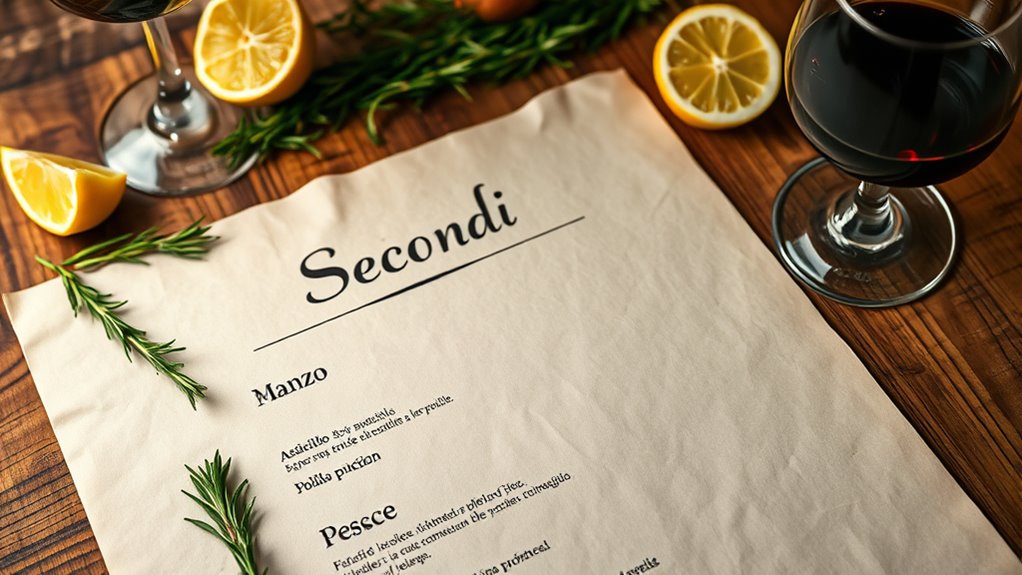
When it comes to the main course in an Italian meal, the secondi, you’ll find a variety of meat, fish, and vegetable dishes that satisfy different preferences. These dishes highlight proteins and are often the centerpiece of your meal. To understand the menu better, here are some common terms:
Explore Italian secondi: meat, fish, and veggie dishes that steal the show.
- Bistecca – a steak, usually grilled and served simply with salt and olive oil.
- Pollo – chicken prepared in various ways, like roasted or grilled.
- Gamberi – shrimp, often cooked with garlic and lemon or in seafood sauces.
Knowing these terms helps you confidently choose your main, whether you prefer tender beef, succulent seafood, or a hearty chicken dish.
Italian main course meat and fish dishes
As an affiliate, we earn on qualifying purchases.
As an affiliate, we earn on qualifying purchases.
Exploring Contorni and Side Dishes
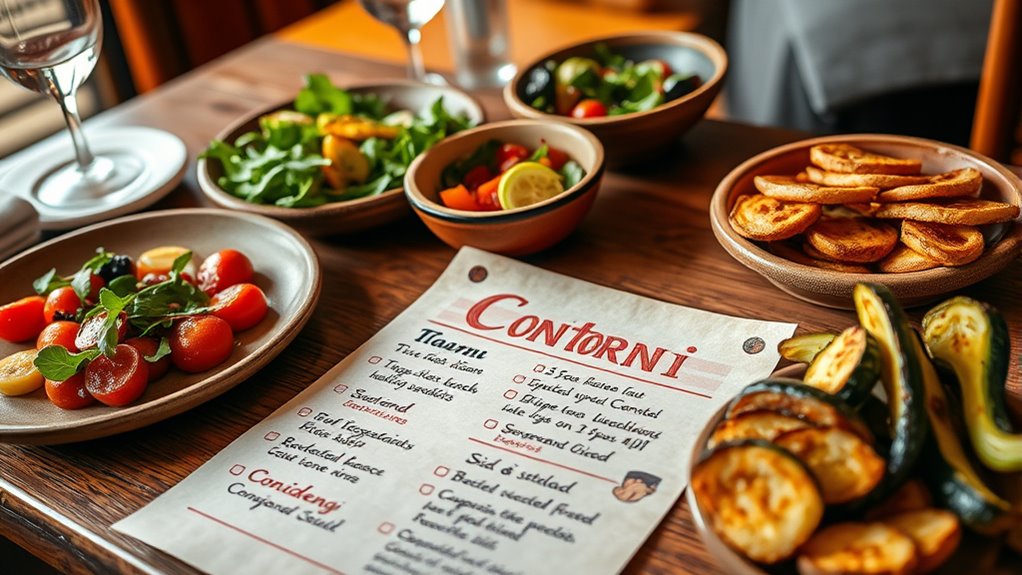
Contorni, or side dishes, complement your main course and add variety to your Italian meal. These dishes are ordered separately and enhance your dining experience. You might choose verdure grigliate or saltate—grilled or sautéed vegetables—to add freshness and flavor. Insalata mista offers a simple mixed green salad, perfect for balancing richer dishes. Roasted potatoes, called patate al forno, provide comforting, crispy bites, while spinaci saltati offers sautéed spinach packed with nutrients. Side dishes often highlight seasonal ingredients and regional specialties. When ordering, specify your preferred preparation, like alla griglia for grilled or fritto for fried options. Contorni help tailor your meal to your tastes, making each bite more satisfying and complete. Additionally, many restaurants incorporate regional specialties into their side dishes, emphasizing local ingredients and culinary traditions. Incorporating creative storytelling about the origin of certain ingredients can enrich your dining experience and deepen your appreciation for Italian cuisine. Utilizing landscape features such as outdoor seating or garden herbs can also elevate your dining experience and complement the side dishes. Incorporating seasonal ingredients can further enhance the freshness and authenticity of your chosen contorni. Exploring local markets can provide inspiration for selecting the freshest seasonal produce to include in your side dishes.
Deciphering Common Sauces and Condiments
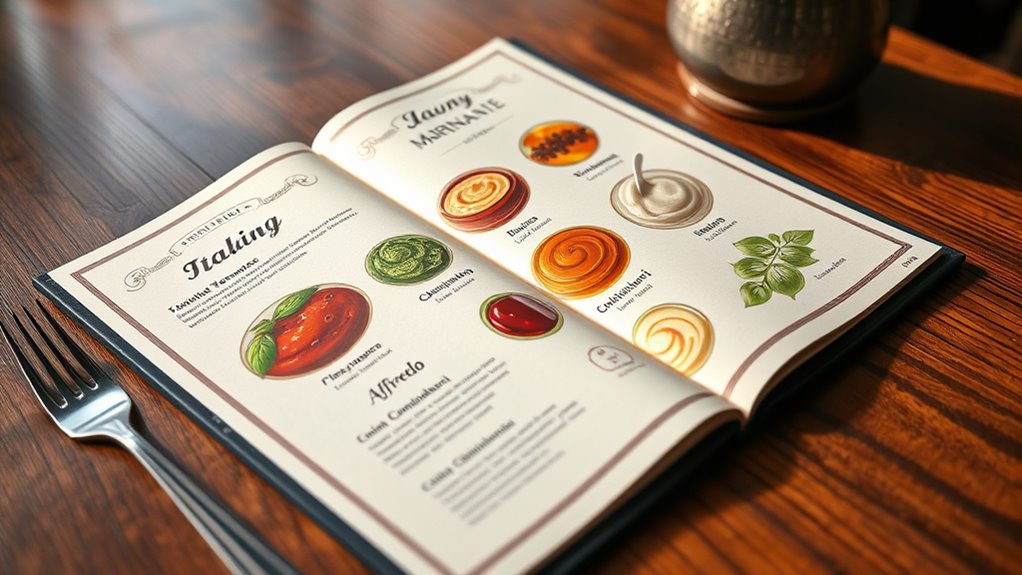
Italian sauces and condiments play an essential role in enhancing the flavors of your dishes, adding depth and richness to each bite. Understanding these options helps you order confidently and appreciate authentic flavors.
Here are three common sauces to recognize:
- Al pomodoro – A fresh tomato sauce, perfect for pasta or as a base for other dishes.
- Pesto – A vibrant blend of basil, garlic, cheese, and pine nuts, often tossed with pasta or spread on bread.
- Carbonara – A creamy sauce made with eggs, cheese, and pancetta, typically served with pasta.
Knowing these sauces allows you to describe your preferences clearly and choose dishes that match your taste. They’re fundamental to Italian cuisine, so familiarize yourself to enjoy your meal fully. Understanding Italian sauces can deepen your appreciation for the culinary traditions behind each dish.
Cooking Terms and How to Describe Your Preferences
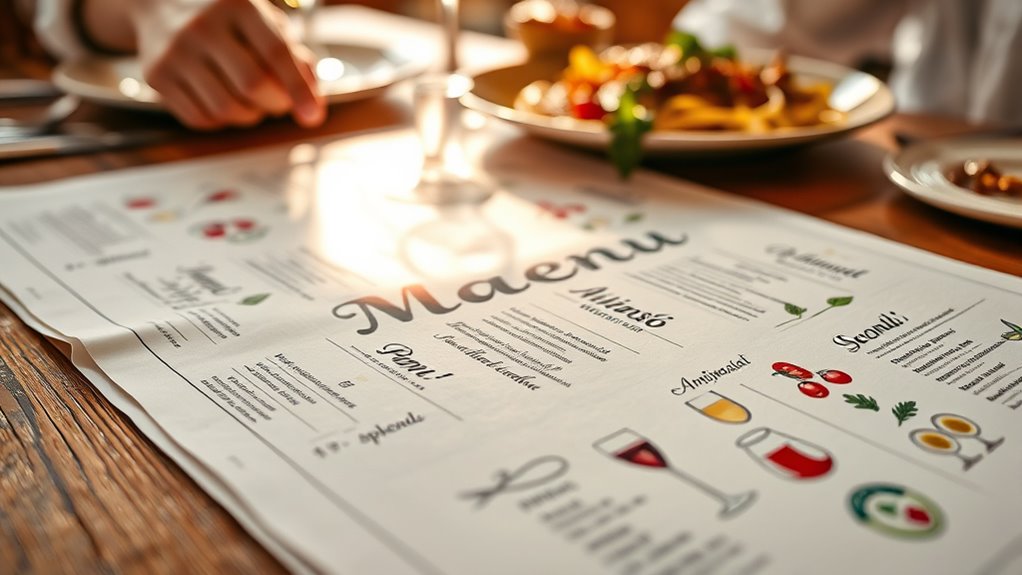
Are you familiar with Italian cooking terms that describe how dishes are prepared? Knowing these words helps you order confidently and customize your meal. For example, if you prefer a dish baked, say “al forno.” Want it crispy? Ask for it “fritto.” Craving something grilled? Mention “alla griglia.” If you prefer a dish roasted, use “arrosto.” These terms clarify the cooking method, ensuring your meal matches your taste. You can also specify how cooked you want your protein, like “well-done” or “rare,” though Italian chefs often cook to their standards. Using these terms shows you understand the menu and helps the staff prepare your dish just right. Mastering these words makes ordering more efficient and enjoyable, giving you confidence at any Italian restaurant.
Frequently Asked Questions
How Do I Specify My Preferred Cooking Method (E.G., Grilled, Baked)?
To specify your preferred cooking method, mention it directly when ordering. For example, say “grilled chicken” or “baked salmon.” You can also use Italian terms like “alla griglia” for grilled or “al forno” for baked to sound authentic and clear. Be polite and confident, and the staff will understand your preference. If unsure, just ask, “Can it be prepared grilled?” or “Is it cooked al forno?”
What Are Typical Portion Sizes for Antipasti and Primi Dishes?
You’ll find antipasti are usually small, perfect for sharing or sampling, about two to three bites each. Primi dishes are more filling, typically serving one person with a generous portion of pasta, risotto, or soup. Expect around one to one and a half cups of pasta or a bowl of soup, enough to satisfy without overstuffing. This balance lets you enjoy multiple courses without feeling overwhelmed.
How Can I Ask for a Vegetarian or Allergy-Friendly Option?
You can say, “I’m vegetarian” or “I have allergies,” and then ask, “Do you have any vegetarian or allergy-friendly options?” Be specific about your dietary needs, like “No cheese” or “Gluten-free,” to guarantee the dish suits you. Use polite phrases like “Could you recommend something suitable?” or “Are there any dishes without nuts or dairy?” This helps the staff assist you confidently and find the best meal.
What Does “S.Q.” Mean When Ordering by Weight?
Did you know that about 60% of Italians prefer ordering dishes by weight? When you see “S.Q.” on the menu, it means “sul quilo,” or “by the kilo.” You can ask the server for the exact weight you’d like, and the price will be calculated accordingly. It’s a flexible way to enjoy fresh ingredients, especially for meats or cheeses, ensuring you get just the right amount.
How Do I Request Less Spicy or Milder Flavors?
You can ask for less spicy flavors by saying, “Puoi rendere il piatto meno piccante?” or “Per favore, meno piccante.” If you prefer milder, simply say, “Mild” or “Più delicato, per favore.” You can also specify, “Senza molto pepe” for less pepper or spice. Being polite and clear helps guarantee your dish matches your taste, so don’t hesitate to communicate your preferences confidently.
Conclusion
Mastering these Italian menu words not only boosts your confidence but also turns dining into a true Italian experience. With a little practice, you’ll find yourself effortlessly browsing the menu, ordering dishes you love, and maybe even discovering new favorites. Sometimes, it’s the smallest words that make the biggest difference—like knowing how to ask for “secondi” or “contorni.” So next time, remember: a little knowledge goes a long way, especially when it helps you enjoy your meal even more.
Evergreen bestsellers Picks
bestsellers
As an affiliate, we earn on qualifying purchases.