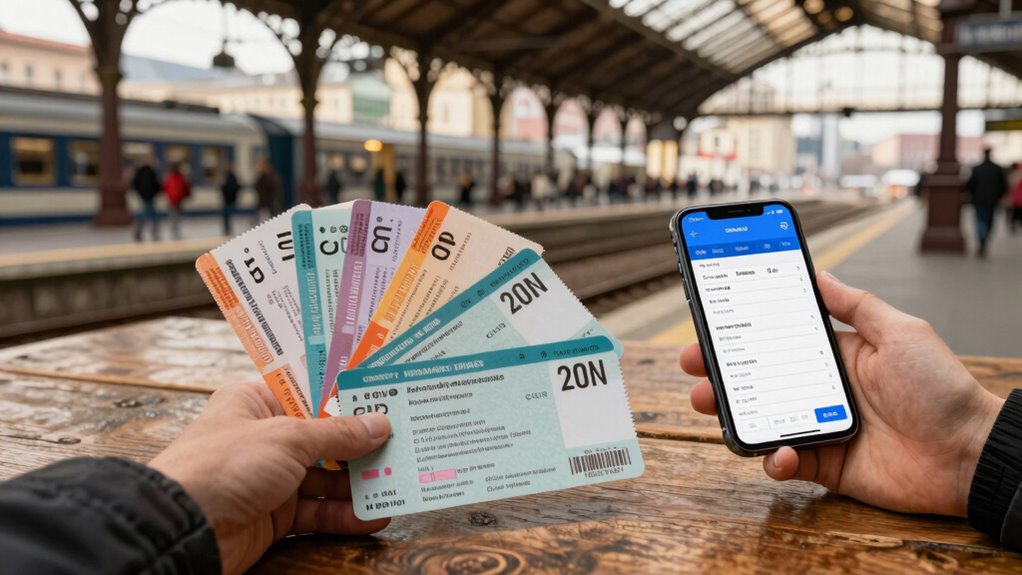

Rail passes in Europe can save you time and money if you plan to visit multiple countries or cities, offering flexibility and convenience. They’re ideal for spontaneous stops and exploring less accessible destinations. However, if you’re traveling within a single country or only need point-to-point tickets, passes may not be cost-effective. To find out when they truly help—and when they don’t—you’ll want to explore more details.

Get travel and outdoor gear delivered free — and shop member deals
- Fast, free delivery on millions of items
- Access to Prime Big Deal Days deals on October 6–7
- Prime Video, Amazon Music and more included
Key Takeaways
- Rail passes are most beneficial for multi-country trips, offering flexibility and savings across extensive rail networks.
- They are less cost-effective for single-country travel, where point-to-point tickets may be cheaper.
- Additional reservation fees on popular routes can reduce savings, especially for high-speed or international trains.
- For short or regional trips, individual tickets often provide better value than a rail pass.
- The cost and flexibility of passes depend on trip length, destinations, and travel style, requiring careful planning.
As an affiliate, we earn on qualifying purchases.
Advantages of Using Rail Passes for European Travel

Using a rail pass simplifies your European travel experience by providing flexible, multi-destination access across numerous countries and train types. With a single pass, you can visit multiple cities and regions without booking individual tickets for each trip, saving time and hassle. It’s especially useful for exploring smaller towns and scenic routes that might be difficult to reach otherwise. Rail passes also give you the freedom to change plans on the fly, allowing spontaneous stops or extended stays. Plus, they often include discounts on regional trains, ferries, and other services, making your trip more affordable. Additionally, understanding the contrast ratio of trains can help you appreciate the quality of scenic routes and nighttime journeys. Moreover, utilizing European cloud servers for your travel planning and booking can enhance your experience through secure and efficient online services. Being aware of train schedule flexibility can further help you optimize your travel days. Incorporating digital ticketing systems can streamline your boarding process and reduce wait times. Staying updated on train punctuality can also help you better plan your daily itinerary. Overall, a rail pass offers convenience, flexibility, and cost savings, making your European adventure smoother and more enjoyable.
As an affiliate, we earn on qualifying purchases.
Optimal Scenarios for Rail Pass Usage

If you’re planning a trip across multiple destinations, a rail pass can offer unmatched flexibility and convenience. It allows you to adjust your itinerary on the fly and explore smaller towns or hidden gems without hassle. Consider how a pass can streamline your travel plans and give you the freedom to change course as you go. Understanding your tools can help you make the most of your journey by ensuring you have the right equipment to navigate any situation.
Multi-Destination Trips
Multi-destination trips are ideal for travelers looking to explore multiple cities or regions across Europe efficiently, especially when leveraging a rail pass. With access to over 30,000 destinations across 33 countries, you can easily hop between major hubs and hidden gems without multiple ticket purchases. Flexibility is a key advantage, allowing you to switch routes or extend stays without hassle. If you plan to visit several countries or several cities in one region, a global or regional pass offers significant savings and convenience. High-speed and night trains connect key destinations quickly, making it easier to maximize your itinerary. Multi-destination trips are perfect if you want to experience diverse cultures and landscapes without the constraints of rigid schedules or expensive point-to-point tickets. Utilizing herbal infusion machines can also enhance your experience by preparing personalized herbal remedies for wellness during your travels. Additionally, rail network coverage and modern amenities contribute to a smoother and more enjoyable journey, especially when taking advantage of efficient transportation options available throughout Europe. Planning your routes with real-time travel updates can further improve your trip by avoiding delays and adjusting plans on the go. For optimal experience, understanding scheduling flexibility can help you adapt your itinerary as needed.
Flexible Itinerary Planning
Wondering when a rail pass can give your trip the most flexibility? If you plan to visit multiple cities across Europe, a rail pass is ideal. With options like the Flexi pass, you can choose any 10 travel days within two months, perfect for spreading out your adventures. Continuous passes up to three months suit travelers with a flexible itinerary, allowing you to hop from country to country without restrictions. Using a global pass gives you access to over 30,000 destinations in 33 countries, making spontaneous detours easy. This flexibility helps you adapt plans on the fly, switch destinations, or extend your stay without worrying about separate tickets. Overall, rail passes excel when your trip involves multiple regions and changing plans. Youngster Choice
As an affiliate, we earn on qualifying purchases.
Limitations and Challenges of Rail Passes

While rail passes offer great flexibility, extra reservation costs on popular high-speed trains can quickly add up. If you’re planning to stay within a single country, a pass might not be cost-effective or necessary. These limitations can make it harder to get the best value from your rail travel plans. Additionally, considering Free Floating options like bike rentals or car sharing could provide alternative ways to explore without additional costs. Being familiar with smartphone apps for booking and managing reservations can also help you avoid unexpected charges and streamline your journey. Moreover, understanding seasonal maintenance tips for your travel gear can ensure comfort and efficiency throughout your trip.
Additional Reservation Costs
Have you considered how additional reservation costs can impact the overall value of your rail pass? Many high-speed and international routes require mandatory reservations, which often come with extra fees. These costs can add up quickly, especially on popular routes like Eurostar or Paris-Berlin, diminishing the savings your pass offers. If you’re planning to travel mainly on flexible, unreserved trains, you might avoid these fees, but for scheduled high-speed trips, they’re unavoidable. This can turn what seems like an economical option into a less affordable one. It’s important to factor in reservation fees when calculating your overall budget. Sometimes, these extra costs outweigh the benefits, making point-to-point tickets a better choice depending on your itinerary. Additionally, understanding train reservation policies can help you better plan and avoid unexpected expenses. Being aware of wave and wind factors can also influence your travel plans, as weather conditions may affect train schedules and reservation availability.
Limited Single-Country Use
Rail passes are less practical if you mainly plan to explore a single country, as their cost-effectiveness diminishes when used solely within one destination. If you’re focusing on just one country, point-to-point tickets often offer cheaper, more flexible options. Many passes don’t cover all local operators or require separate bookings for ferries and public transport, adding extra costs. Continuous long-term passes, like the three-month option at nearly 1,000 euros, only make sense if you plan frequent travel within that country. If your itinerary is rigid or limited to one region, a pass may not provide enough savings. Instead, buying individual tickets can give you more control and often lower costs, especially for single-country trips.
compact travel organizer for train tickets
As an affiliate, we earn on qualifying purchases.
As an affiliate, we earn on qualifying purchases.
Comparing Pass Types and Choosing the Right Option
Choosing the right rail pass depends on your travel plans and flexibility needs. If you plan to visit multiple countries, a Global Pass offers the most convenience with borderless travel across 33 nations and over 30,000 destinations. For focused trips within a single country, One Country Passes save money and simplify bookings. Flexi options, like traveling any 10 days within two months, suit those with variable schedules, while continuous passes fit travelers exploring for extended periods. Consider your itinerary’s length, destinations, and preferred travel style. If timing and route flexibility are priorities, passes with unlimited travel during validity are ideal. Conversely, if your trip is short or region-specific, point-to-point tickets might be cheaper. Match your plans to the pass type that balances coverage, flexibility, and cost for the best value. Additionally, understanding rail network coverage can help you determine which pass provides the most comprehensive access for your journey. Analyzing regional rail systems can also assist in optimizing your travel options based on local connectivity and station access.
Cost Analysis and When Passes Offer Value

Understanding the costs of European rail passes is essential to determine if they offer good value for your trip. To assess this, consider:
- Total trip length and number of destinations
- Average cost of point-to-point tickets in your itinerary
- Pass prices versus individual tickets, including reservation fees
- Flexibility needs for spontaneous travel or multi-region hopping
If your trip involves multiple cities or countries, a pass can save money and add convenience. For example, a 3-month continuous pass costing 956 euros might be justified if you plan frequent travel, while occasional trips might be cheaper with single tickets. Also, factor in extra reservation fees on high-speed routes. Ultimately, compare the pass’s total cost against your planned journeys to decide if it offers real value.
Emerging Trends and Future of Rail Passes in Europe

The future of rail passes in Europe is shaped by innovative trends that aim to enhance traveler experience and expand accessibility. Digitalization is transforming how you plan and book journeys, with apps offering live updates, mobile tickets, and personalized itineraries. New routes and high-speed connections, like Vienna-Belgrade and expanded networks in Switzerland and Poland, promise faster, seamless travel options. Flexibility continues to grow, with options like flexible days within a validity window, catering to spontaneous travelers. Regional passes and ferry discounts will likely expand, offering more local and borderless options. However, reservations and additional fees on some high-speed trains may challenge all-inclusiveness. Additionally, thermal behavior and temperature control advancements in outdoor cooking tech serve as inspiration for innovative rail design and passenger comfort solutions. Overall, these trends aim to make European rail travel more efficient, flexible, and user-centric, shaping a dynamic future for travelers like you.
Frequently Asked Questions
Can I Use a Rail Pass With Discount Cards or Loyalty Programs?
You can often combine a rail pass with discount cards or loyalty programs, but it depends on the train operator. Some may allow stacking discounts for additional savings, while others might restrict use to full fares only. Always check each train company’s rules before booking. Using a discount card or loyalty program can lower your costs, especially if you plan multiple trips or frequent travel within specific networks.
Are Rail Passes Valid on All Train Operators Across Europe?
Your rail pass isn’t valid on all train operators across Europe. While it covers many countries and connects over 30,000 destinations, some high-speed trains like Eurostar require separate reservations and extra fees. Certain local or private operators may not accept your pass, so always verify specific operator policies before your trip. You might need to buy additional tickets for some routes or services to ensure seamless travel across all operators.
How Do I Book Reservations With My Rail Pass?
You can book reservations with your rail pass easily through the Rail Planner app or online platforms. Some trains, like Eurostar, require mandatory reservations and extra fees, so check in advance. Many routes let you reserve seats at stations or online before your travel day. Keep in mind, reservations are necessary for high-speed trains to secure your spot, especially during peak seasons, ensuring smooth and stress-free journeys.
Do Rail Passes Cover Regional or Local Transportation?
Rail passes generally don’t cover regional or local transportation unless explicitly stated. You might need to buy separate tickets for buses, trams, or metro systems in many destinations. However, some passes include discounts or combined tickets for regional transit. Always check the specific terms of your pass, as coverage varies by provider and country. Planning ahead guarantees you won’t face unexpected costs for local travel during your trip.
Are Rail Passes Refundable if Plans Change?
Think of rail passes as a safety net—you’re covered if your plans change. With most passes, you’re eligible for a full refund if you cancel within 7 days, and you’ll get 90% or more back if you cancel later. Just remember, some passes may have extra fees or restrictions, especially for high-speed routes. Always check the specific terms before purchasing to avoid surprises when your plans shift.
Conclusion
As you navigate Europe’s railways, remember that a rail pass can be your Excalibur—powerful in the right moments. But don’t wield it blindly; some journeys might be cheaper or more convenient without it. Think critically, weigh your options, and stay flexible. Just like travelers of old who charted unknown waters, your smart choices will ensure your adventure remains legendary, not a voyage straight into the Mariana Trench of expenses. Happy travels!
Fall Picks
fall essentials
As an affiliate, we earn on qualifying purchases.