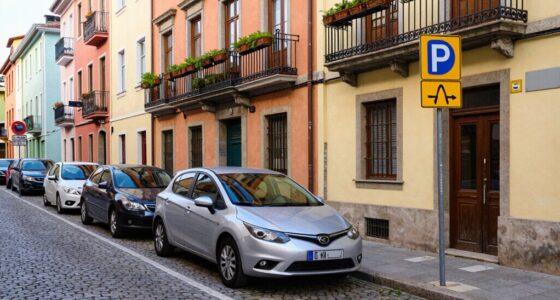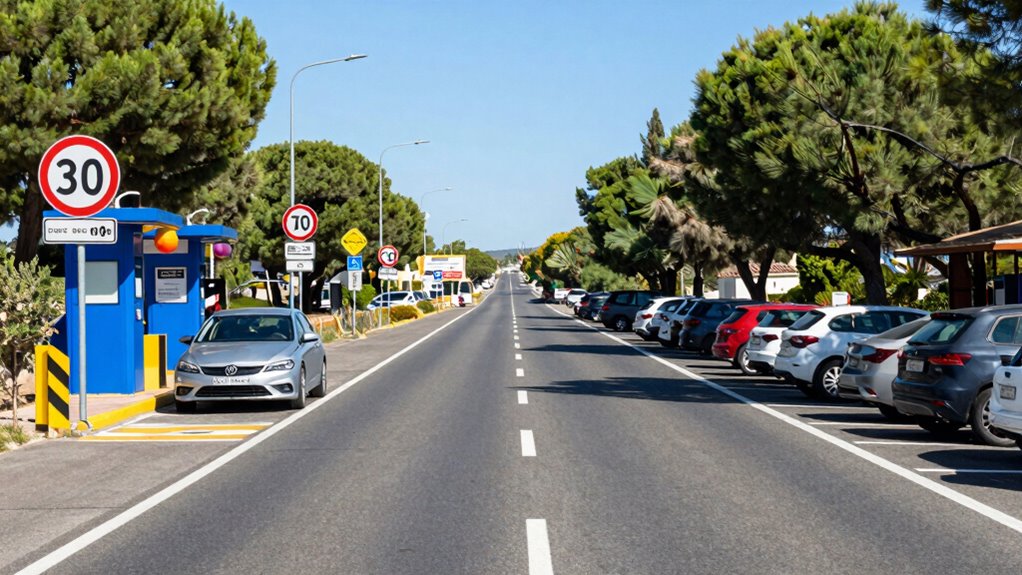

When driving across Spain, you’ll encounter both toll and free roads; tolls vary by route and vehicle, and using an electronic transponder makes payment quick and contactless. Speed limits are generally 50 km/h in cities and 120 km/h on highways, with parking often found in designated zones or garages. Knowing how to navigate tolls, routes, and parking rules helps you avoid surprises. Keep going to discover more tips for a smooth trip.

Get travel and outdoor gear delivered free — and shop member deals
- Fast, free delivery on millions of items
- Access to Prime Big Deal Days deals on October 6–7
- Prime Video, Amazon Music and more included
Key Takeaways
- Spain’s toll roads include paid AP highways and free A roads; tolls vary by route and vehicle type.
- Electronic transponders like Via-T enable contactless toll payments, simplifying travel and saving money.
- Speed limits are 50 km/h in cities, 80-120 km/h on highways, with specific restrictions for trucks.
- Toll-free routes mainly follow Autovías (A roads), offering cost savings and less traffic.
- Parking options include pay meters, parking apps, and designated zones; always check signage for restrictions.
As an affiliate, we earn on qualifying purchases.
Understanding Spain’s Toll Road Network

Spain’s toll road network consists of both paid and free routes, giving travelers flexibility depending on their priorities. Paid roads, called Autopistas (AP), charge tolls, while Autovías (A) remain free. The total network covers about 1,435 km of toll roads, with 15,793 km free routes, totaling 17,228 km. Choosing free roads, like many Autovías, can add 15-45 minutes to your trip and bring heavier truck traffic. Toll rates vary by route and vehicle type, with costs averaging €0.08-€0.15 per km. The network is operated by private concessionaires, with tolls paid via cash, card, or electronic systems like Via-T. Understanding these options helps you plan your route efficiently, balancing time, cost, and traffic conditions. Additionally, highway design influences traffic flow and safety, making it an important factor when selecting routes. Being aware of toll payment options can help avoid unexpected delays or charges during your journey. Being familiar with toll rate variations can also assist in budgeting your travel expenses more accurately. To further optimize your trip, consider traffic patterns and potential congestion times on popular routes.
electronic toll payment device Spain
As an affiliate, we earn on qualifying purchases.
As an affiliate, we earn on qualifying purchases.
Payment Options for Tolls and How to Use Them

You have several options to pay tolls on Spanish roads, from cash and credit cards to electronic systems. Using an electronic transponder like Via-T can save you time and money, especially on busy routes. Shadow tolls let you pay online after your trip, making the process even more convenient.
Toll Payment Methods
Wondering how to pay tolls efficiently during your road trip? Here are your main options:
- Ticket system: Collect an entry ticket when you enter, then pay cash or card at the exit.
- Via-T/Via Verde transponder: Attach a device to your windscreen linked to your credit card for seamless, quick payments.
- Shadow tolls: License plates are scanned, and payments are made online within 72 hours.
Rental companies often provide Via-T transponders for an extra fee, making toll payments even easier. Look for lanes marked with blue icons or green signals for Via Verde. Using these methods helps you avoid delays and keeps your trip smooth, whether paying at the booth or electronically. Understanding toll payment methods can help you choose the most convenient option for your trip.
Using Electronic Transponders
Electronic transponders, like Via-T and Via Verde, offer a quick and hassle-free way to pay tolls on Spain’s highways. Once you mount the transponder on your windshield, it automatically communicates with toll booths as you pass through. The system deducts the toll amount directly from your linked credit card, saving you time and avoiding cash or card payments at each toll plaza. When approaching a toll lane marked with a blue icon or green signals for Via Verde, simply stay in the designated lane. The transponder enables you to pass through without stopping, making your trip smoother. Rental companies often provide transponders for a small fee, so check with your provider before your trip. Using an electronic transponder is your fastest, most convenient toll payment option in Spain. Understanding how transponders work can help you avoid unexpected charges and ensure smooth toll crossings. Additionally, familiarizing yourself with electronic payment systems can further streamline your journey and prevent delays. Being aware of toll regulations can also prevent misunderstandings and help plan your route more effectively. To maximize the benefits, consider checking the coverage areas of your transponder to ensure it works across all toll roads you plan to use. Knowing the latest technology advancements in toll payment systems can also enhance your travel experience.
Paying Shadow Tolls
Shadow tolls in Spain operate by scanning license plates as vehicles pass through designated toll sections. To pay, you typically register online before your trip or use a rental transponder. Here are your main options:
- Online Payment: Register your license plate or transponder details and pay within 72 hours after crossing. Accurate registration is essential for smooth toll payments and to prevent potential fines. Using automated toll collection systems helps streamline the process and reduce errors.
- Rental Transponder: Rent a Via-T device from your car rental company for seamless automatic billing. Always verify that your rental includes a transponder device to avoid delays.
- Manual Payment: If no transponder is used, you can pay via cash or credit card at toll booths or online afterward. Using shadow tolls is convenient since you don’t need to stop, but ensure your vehicle is registered correctly to avoid fines. Always check your rental agreement for transponder details.
As an affiliate, we earn on qualifying purchases.
Current Toll Rates and How They Change

Current toll rates in Spain vary depending on the highway and vehicle type, with prices typically ranging from a few euros to over twenty euros for longer routes. For example, the AP-7 Costa del Sol charges between €5.50 and €8.90 for cars, while trucks pay €16.50 to €26.70 per section. The AP-2 Zaragoza-Barcelona route costs €18–25 for cars and up to €75 for trucks. Toll rates are usually calculated per kilometer, with an average of €0.08–€0.15 per km. These rates can change annually, often rising above inflation—an average of 4% in 2026 for private motorways and 2% for state highways. Keep an eye on updates, as toll hikes reflect inflation and infrastructure costs. Toll rate fluctuations are common as governments adjust fees to fund road maintenance and improvements, emphasizing the importance of staying informed about current toll rates and regulatory changes. Staying updated on toll pricing trends can help travelers better plan their budgets and routes. Additionally, it’s helpful to understand that toll adjustments are often influenced by broader economic factors and government policies.
Spain GPS navigation with toll info
As an affiliate, we earn on qualifying purchases.
As an affiliate, we earn on qualifying purchases.
Navigating Toll-Free Routes and Their Benefits

Opting for toll-free routes can considerably reduce your travel costs and simplify your journey through Spain. These routes often follow the Autovías (A roads), which are free and cover most major corridors. Here’s why choosing toll-free roads benefits you:
Choosing toll-free routes saves money and simplifies your journey across Spain.
- Cost Savings: You avoid toll fees, saving up to 50% on your trip expenses.
- Less Traffic: Toll-free routes typically have lighter traffic, making driving calmer and safer.
- Simpler Payment: No need to worry about toll payments or electronic transponders; just follow signs and enjoy your drive.
- Smart Design for Comfortable, Welcoming Living Spaces: Using toll-free routes aligns with a smart design approach that emphasizes practical and stress-free travel experiences.
While toll-free roads may add 15-45 minutes to your trip, the savings and reduced hassle often outweigh the extra time. Plus, they connect most regions efficiently, making them ideal for budget-conscious travelers.
Speed Limits on Different Types of Roads
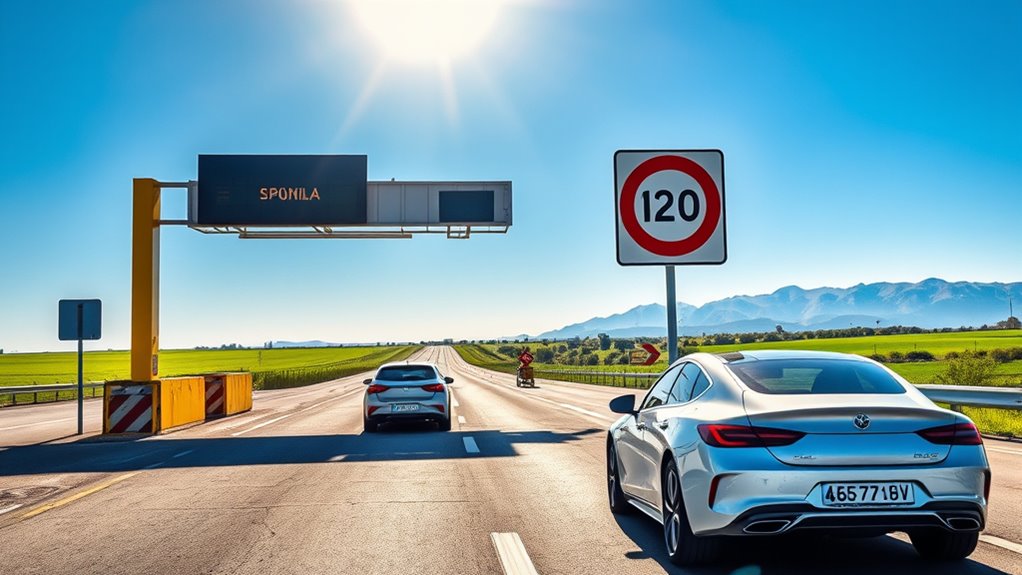
Understanding the speed limits on different types of roads is essential for safe and efficient driving in Spain. In urban areas, the standard speed limit is 50 km/h, so watch for signs, especially near schools and busy streets. On autopistas and autovías, cars can travel up to 120 km/h, but trucks usually have a limit of 80 to 100 km/h. Conventional roads outside towns typically allow speeds between 90 and 100 km/h. Always pay attention to posted signs, as limits can vary depending on conditions or roadworks. Keep in mind that exceeding speed limits can result in fines or points deducted from your license. Staying within the legal limits helps you avoid penalties and ensures a safer trip across Spain. Be aware that speed limits may be temporarily reduced in adverse weather conditions or construction zones. Additionally, understanding best heat pumpro features can be beneficial if you are considering energy-efficient climate control options for your vehicle or accommodations during your trip. Knowing about all waterparks can also be useful if you plan to include family-friendly stops along your journey. Incorporating local traffic regulations into your planning can further enhance your safety and compliance while driving.
Parking Regulations and Finding the Best Spots

Knowing the speed limits and parking rules helps keep your trip smooth and stress-free. To find the best parking spots, consider these options:
Knowing parking rules and planning ahead ensures a smooth, stress-free trip.
- Use parking apps like Parkopedia to locate nearby spaces quickly.
- Look for blue zones with pay meters—they’re ideal for short-term parking and usually reliable.
- Avoid red or yellow lines, which indicate restricted or no parking areas, risking fines or towing.
- Be aware of safe installation practices for any new or temporary parking solutions, especially in unfamiliar areas or when setting up charging stations.
In busy city centers, hotels often provide dedicated parking, saving you time. For longer stays, parking garages offer secure options, though they may be more expensive. Always check parking signs carefully for time limits and payment requirements. Planning ahead guarantees you avoid fines and find convenient spots, making your trip more enjoyable.
Tips for Managing Tolls and Avoiding Surprises

To keep your trip smooth and budget-friendly, consider sticking to toll-free routes like the A-7 or AP-1 whenever possible. Using electronic payment options such as Via-T can save you time and money, especially on busy toll roads. Planning ahead helps you avoid surprises and makes your journey more enjoyable.
Choose Toll-Free Routes
Opting for toll-free routes can considerably reduce your travel costs and simplify your trip across Spain. To do this effectively, consider these tips:
- Plan your route using toll-free highways like the Autovías (A roads), which are free and connect major cities efficiently, such as A-1, A-2, and A-7.
- Use navigation apps that highlight toll-free options, helping you avoid toll roads without detours.
- Research alternative routes beforehand, especially in areas with toll-heavy highways, so you can switch to free routes if needed.
Use Electronic Payment Options
Using electronic payment options like Via-T or Via Verde can make managing tolls much easier and help you avoid unexpected charges. These transponders automatically pay tolls as you pass, saving you time and hassle at toll booths. When you link your transponder to a credit card, you won’t need to stop or carry cash, and you can track your toll expenses easily online. Many rental companies offer Via-T devices for an extra fee, so check in advance. Remember, lanes marked with blue icons are for electronic payments, allowing a smooth, quick passage. Using these options not only streamlines your trip but may also save you 5-15% compared to paying with cash or card. It’s a simple way to stay on top of toll expenses and avoid surprises on your Spain road trip.
Planning Your Route for a Smooth Trip

Planning your route carefully can make all the difference in ensuring a smooth road trip through Spain. First, identify toll roads versus free alternatives to control costs and travel time. Second, use navigation apps to check real-time traffic, road works, and speed limits. Third, plan your stops for fuel, food, and parking, especially in busy urban areas or tourist hotspots. Consider alternative routes like A-7 instead of toll-heavy AP-7 to save money, even if it adds 45 minutes. Keep in mind the different speed limits: 120 km/h on autopistas and 50 km/h in urban zones. By mapping out your journey with these points, you’ll stay on schedule, avoid surprises, and enjoy a relaxed drive across Spain.
Frequently Asked Questions
Can I Pay Tolls With a Mobile App Instead of a Transponder?
Yes, you can pay tolls with a mobile app instead of a transponder. Spain offers options like shadow tolls where your license plate is scanned, and you pay online within 72 hours. Some toll operators also support electronic payments through dedicated apps. Make sure your vehicle’s registration is linked to your account, and keep track of deadlines to avoid extra charges. Using apps can be convenient and save you time at toll booths.
Are There Discounts for Frequent Toll Road Users?
You might qualify for discounts if you’re a frequent toll road user. Some providers, like Via-T, offer loyalty programs or reduced rates for regular travelers, especially if you use their transponder often. Rental companies may also provide special packages for long-term rentals with cheaper toll rates. Check with your toll operator or rental agency beforehand to see if they have any discounts or subscription plans that can save you money on your trip.
What Are the Penalties for Unpaid Tolls in Spain?
If you don’t pay your tolls in Spain, you’ll face fines and penalties. Authorities can issue a penalty notice, usually around €60-€100, plus the toll fee itself. If you ignore it, the fine can increase, and you might face legal action or vehicle registration issues. Always settle tolls promptly, especially if you have a Via-T transponder, to avoid extra charges and trouble.
Do Toll Prices Vary During Holidays or Peak Seasons?
During holidays or peak seasons, toll prices in Spain can rise slightly, like a tide swelling before a storm. Operators often increase rates to manage higher traffic, especially on popular routes. You might see a small surge of 2-4% on some toll roads, so plan ahead. Using electronic payment methods like Via-T can help you avoid some of these fluctuations, saving you time and money during busy travel times.
Is It Possible to Rent a Car With a Pre-Installed Toll Transponder?
Yes, you can rent a car with a pre-installed toll transponder. Many rental companies in Spain offer Via-T transponders for an extra fee, making toll payments easier and quicker. You just need to request it when booking, and they’ll equip the vehicle accordingly. This option often saves you time and money, as it typically offers discounts compared to paying cash or card at toll booths.
Conclusion
By mastering Spain’s tolls, speed limits, and parking rules, you’ll navigate the roads like a seasoned local. Planning ahead keeps surprises at bay and transforms your trip into an effortless adventure. With just a little preparation, you can avoid delays and enjoy the journey without breaking the bank. Think of your trip as a smooth sailing ship—unstoppable and stress-free—making every mile in Spain truly unforgettable.
Halloween Picks
halloween
As an affiliate, we earn on qualifying purchases.