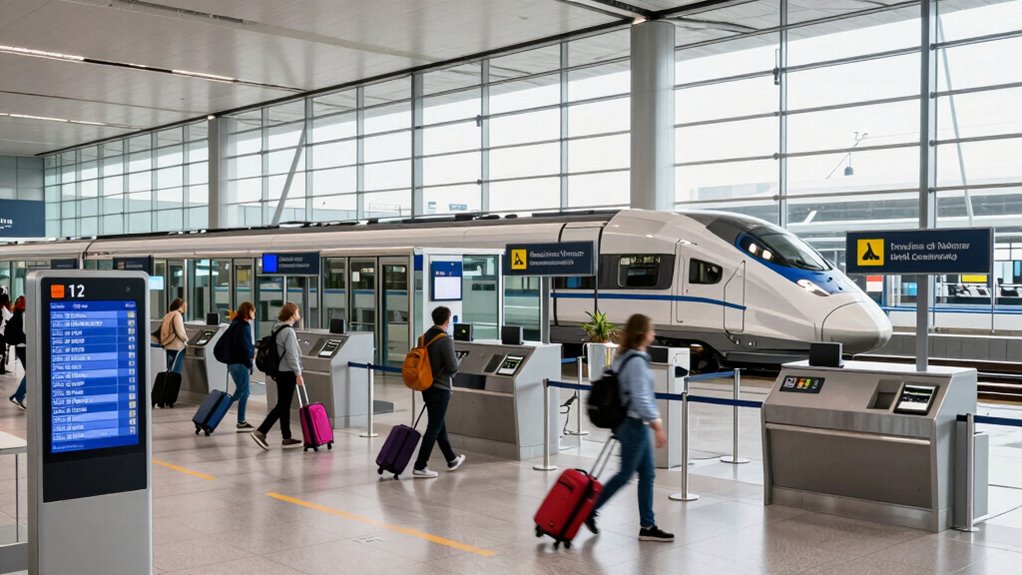

To navigate European airports faster from immigration to the train, arrive at least 2-3 hours early, especially during busy times, and use digital tools like the “Travel to Europe” app for real-time updates. Be prepared for biometric procedures if it’s your first entry, and ask staff for the quickest routes. Stay alert to signs, monitor delays, and follow airport instructions. Keep these tips in mind, and you’ll find the process much smoother as you continue exploring helpful strategies.
Key Takeaways
- Arrive early (2-3 hours) to allow extra time for border control and biometric procedures.
- Use the “Travel to Europe” app for real-time updates on delays, procedures, and airport navigation.
- Follow airport signage and digital displays closely to quickly locate immigration and train transfer points.
- Ask airport staff for directions to the fastest route to train stations, especially if unfamiliar with the layout.
- Stay informed on delays and gate changes through official apps and announcements to avoid unnecessary detours.

Portable ID & Passport Scanner for Bars, Clubs & Retail | Verifies Age & Expired IDs | Optional Fake ID Detection (Intellicheck) | Works in All 50 States | 2026 Model
Unlimited Standard ID Scanning — Always Free – Instantly verifies age and expiration on every scan and automatically…
As an affiliate, we earn on qualifying purchases.
As an affiliate, we earn on qualifying purchases.
Prepare for EES and Biometrics Requirements
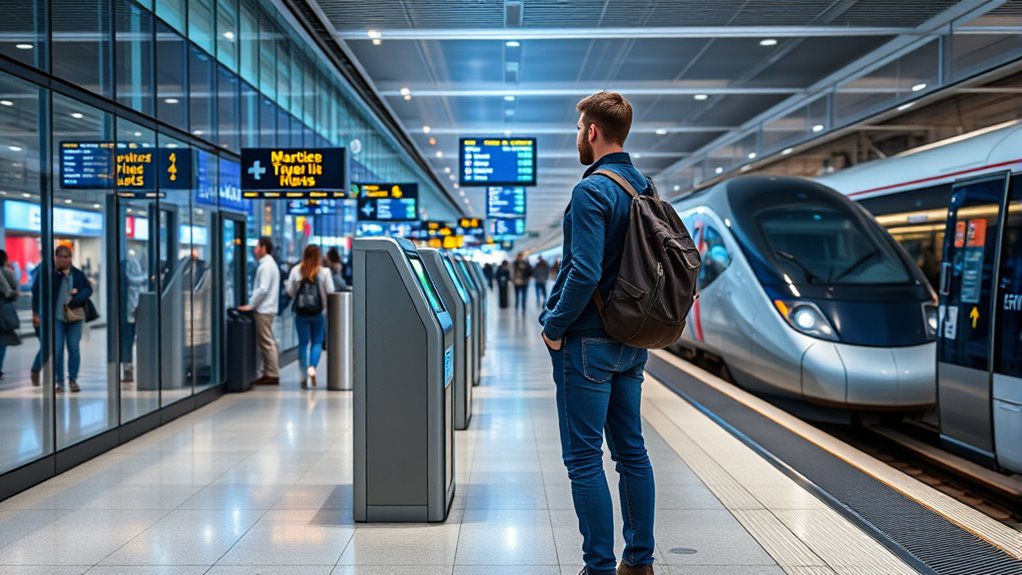
To prepare for the EES and biometrics requirements, you should understand that non-EU travelers need to provide biometric data—fingerprints and a facial photograph—on their first entry into the Schengen Area. This process replaces traditional passport stamping with digital tracking, making your entry more streamlined but also requiring prior preparation. Before traveling, download the “Travel to Europe” app and familiarize yourself with the biometric submission process. Make sure your passport is valid and ready for biometric capture. Arrive early at the border to allow extra time, especially during busy periods. Be aware that biometric data is generally only collected on your first entry; subsequent visits may not require re-submission. Staying informed about EES updates will help you navigate the process smoothly and avoid delays. Additionally, understanding the role of contrast ratio and its impact on image quality can help you better appreciate the visual clarity of projectors used for presentations or entertainment. Moreover, being aware of European travel regulations can further assist you in planning your journey efficiently.

DJI Mini 3 User Guide for Travelers and Vloggers: Beginner Setup, DJI Fly App Explained, 4K Cinematic Shots, Smart Flight Modes, Portable Flying Tips and Troubleshooting Guide
As an affiliate, we earn on qualifying purchases.
As an affiliate, we earn on qualifying purchases.
Arrive Early and Allocate Extra Time
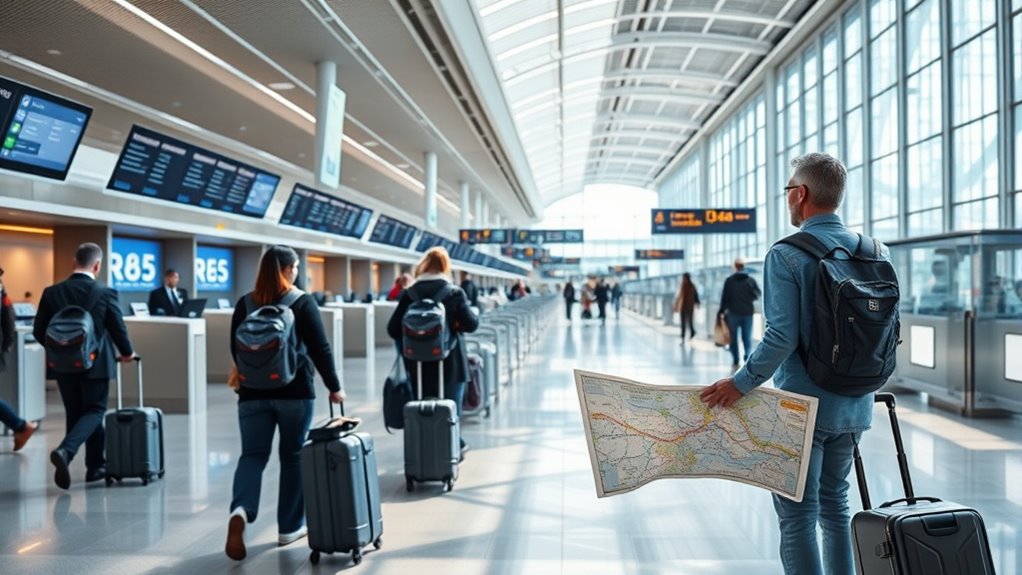
Given the ongoing EES implementation, arriving early at the airport is essential to avoid missing your flight. Delays at border control have increased markedly, sometimes up to three hours during peak times. To stay ahead, plan to arrive at least 2 to 3 hours before your scheduled departure, especially at busy airports like Paris or Frankfurt. This extra time ensures you can complete biometric procedures, handle potential technical issues, and navigate longer queues without stress. Remember, the phased rollout and system glitches may cause unexpected delays. By allocating more time, you reduce the risk of missed flights and hurried decisions. Staying proactive helps you move smoothly through immigration and reach your train or gate on time. Wave and wind considerations can also impact arrival times, especially during adverse weather conditions. Additionally, being aware of free floating factors like last-minute schedule changes can help you adjust your plans accordingly. Monitoring system updates and airport alerts can further facilitate a smoother process. Moreover, staying informed about biometric procedures can help you prepare for faster processing.

Samsonite Compact Folding Luggage Cart, Black, One Size
STURDY, LIGHTWEIGHT construction opens and closes in seconds providing easy maneuverability
As an affiliate, we earn on qualifying purchases.
As an affiliate, we earn on qualifying purchases.
Use the “Travel to Europe” App for Smooth Processing
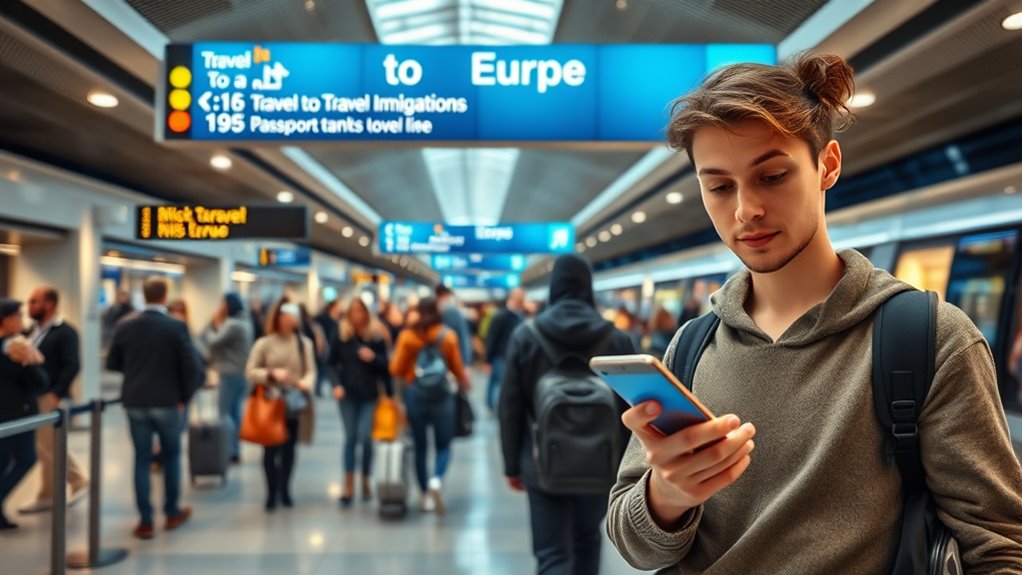
Using the “Travel to Europe” app can streamline your airport experience by helping you prepare for biometric checks and navigate the new EES procedures. The app offers real-time updates on system status, so you know what to expect at border control. It also provides step-by-step guidance to ensure you’re ready for biometric capture, reducing delays. Plus, it alerts you to any procedural changes or delays affecting your flight or entry. Additionally, the app helps you locate the closest immigration counters and train stations, saving you time. Incorporating digital tools for border crossing can help you stay informed and prepared at every step, especially as biometric technology continues to evolve. Understanding public figure travel strategies can provide insights into how public figures manage their travel and financial independence, giving you a broader perspective on navigating international journeys. Leveraging AI-driven innovations can further enhance your travel experience by offering personalized assistance and real-time problem-solving during your journey.

High-Visibility Solar Yield Sign – Reflective LED Traffic Indicator for Road Safety, Flashing Light Feedback for Schools, Factories, Airports, Logistics, Ports & Tunnels
**Solar-Powered Traffic Sign**: This innovative Outdoor Yield Sign features advanced solar charging technology, ensuring reliable performance for up…
As an affiliate, we earn on qualifying purchases.
As an affiliate, we earn on qualifying purchases.
Find the Fastest Route to Your Train Station

Managing your airport efficiently becomes even more important with the new EES procedures in place. Once you’ve cleared immigration, your priority is to reach your train station quickly. Check airport maps beforehand to identify the fastest route, whether via airside or landside. Look for signs pointing to train platforms or dedicated transfer areas—these are often marked clearly. If available, follow digital screens or information kiosks for real-time updates on train schedules and platform assignments. Avoid unnecessary detours by heading straight to the most direct route. During peak times, delays and congestion are common, so moving swiftly is key. If you’re unfamiliar with the layout, ask airport staff for directions to your train station. Being prepared helps you navigate faster and reduces stress during busy periods. Familiarize yourself with airport layout and available services to streamline your journey, and pay attention to passenger flow patterns to avoid crowded areas. Additionally, understanding airport signage can significantly improve your speed in locating transfer points. Recognizing security checkpoint procedures and requirements can also prevent unexpected delays during your transit. Incorporating smart wayfinding solutions, such as interactive digital maps, can further assist in efficient navigation.
Follow Airport Signs and Stay Informed on Delays
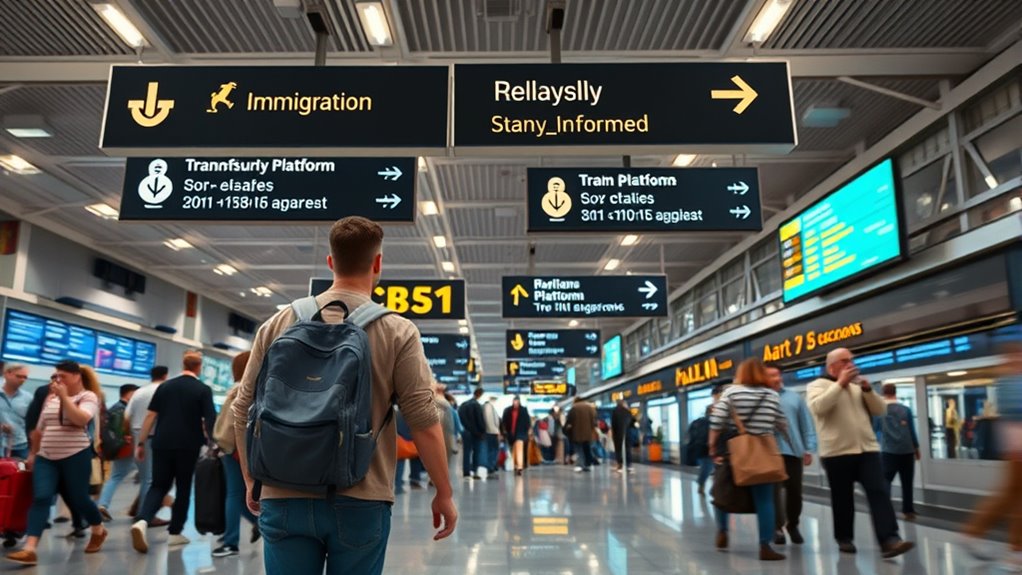
Staying alert to airport signs and real-time updates is essential, especially as delays from the EES rollout increase wait times. Clear signage helps you navigate rapidly changing procedures and avoid confusion. To stay informed:
- Watch for digital display boards for live updates on delays and gate changes.
- Follow airport staff instructions and posted signs for the quickest route through immigration.
- Use official airport apps or websites for real-time information on wait times and disruptions.
- Listen to announcements for urgent updates or changes in procedures, especially during peak hours.
- Familiarize yourself with navigation and mapping features of smart-home solutions that can assist in unfamiliar environments.
- Being proactive and aware of your surroundings can significantly improve your overall airport experience, especially when managing unexpected delays.
- Consider using digital wayfinding tools that some airports now offer to streamline your movement through complex terminals. Additionally, understanding airport signage can help you interpret instructions more effectively and reduce unnecessary detours.
- Recognizing the importance of real-time updates allows you to adjust your plans promptly and avoid unnecessary waiting times.
Being proactive ensures you don’t miss critical information, reducing stress and helping you reach your train on time. Staying attentive makes a significant difference amid the current delays.
Frequently Asked Questions
How Long Should I Expect Immigration Lines With EES in Place?
With EES in place, you should expect immigration lines to take anywhere from 30 minutes to over 2 hours during peak times, especially at busy airports like Paris and Frankfurt. Delays depend on the time of day, airport congestion, and how well the system is functioning. Arriving early and allowing extra time, particularly during busy periods, helps you avoid missing your train or flight.
Are There Specific Airports With Shorter or Faster Immigration Processes?
Some airports handle immigration faster despite EES implementation. Look for smaller or less busy hubs like Helsinki, Copenhagen, or Zurich, which typically have shorter lines and better processing times. Arrive early, especially during peak hours, and check real-time updates on airport websites or apps. These airports often manage delays more efficiently, so you can get through immigration quicker and proceed to your train or next destination without long waits.
Can I Use Mobile Apps to Check Real-Time Border Wait Times?
Yes, you can use mobile apps to check real-time border wait times. Many airports and third-party apps provide live updates on queues at immigration. Before you arrive, download apps like “FlightAware,” “Airport Maps,” or the official airport app for current info. Checking these updates helps you plan your arrival, avoid peak hours, and reduce stress. Always verify the app’s reliability, especially during busy travel seasons.
What Documents Do I Need Besides My Passport for Faster Processing?
Besides your passport, you’ll need your biometric residence permit or visa if applicable. Keep your travel documents organized and ready to show. Sometimes, additional paperwork like hotel reservations or proof of funds can speed things up if asked. Stay alert for instructions from border officials, and have everything accessible. Being prepared with all necessary documents minimizes delays, helping you move swiftly from immigration to the train station, even amid ongoing EES challenges.
Is There a Way to Pre-Register or Expedite My EES Biometric Scan?
You can’t pre-register for the EES biometric scan, but you can prepare to speed up the process. Use the “Travel to Europe” app to familiarize yourself with the steps, confirm your biometrics are ready, and arrive early during peak times. Having all your documents organized helps, too. Staying informed about system updates and delays allows you to plan better, reducing stress and wait times at the border.
Conclusion
Did you know that nearly 70% of travelers who plan ahead report smoother airport experiences? By preparing for EES, arriving early, using helpful apps, and following signs, you can cut down your wait time markedly. Staying informed about delays also saves you stress. With these tips, you’ll navigate European airports faster and more confidently, making your journey to your train connection seamless. So, plan ahead and enjoy a smoother, more efficient travel experience across Europe!