
To stay comfortable in rainy Europe, pack versatile waterproof clothing like lightweight jackets and quick-dry pants that layer easily. Opt for breathable, waterproof outerwear with sealed seams and good ventilation. Don’t forget waterproof shoes with good grip and moisture-wicking insoles, along with quick-dry accessories like hats and gloves. Use space-saving packing techniques, such as rolling clothes, and include compact umbrellas. Keep exploring for more tips on staying dry and stylish no matter the weather.
Key Takeaways
- Pack lightweight, waterproof clothing including breathable jackets, quick-dry pants, and moisture-wicking base layers to stay dry and comfortable.
- Include versatile waterproof accessories like umbrellas, hats, and rain boots with good traction for added protection and stability.
- Opt for compact, foldable rain gear and moisture-resistant bags to save space and protect belongings from rain.
- Layer clothing strategically with moisture-wicking, insulating, and waterproof pieces for adaptable comfort in variable weather.
- Regularly inspect and maintain waterproof footwear and outerwear to ensure optimal performance during rainy trips.
Understanding Europe’s Rainy Regions and Climate Trends
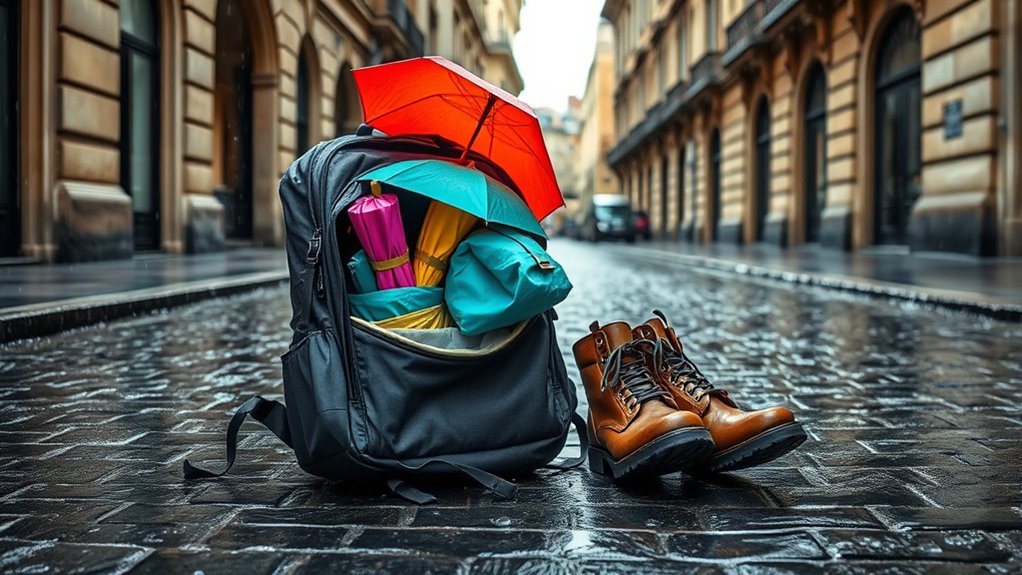
Europe’s rainy regions are characterized by consistent precipitation patterns influenced by geographical features and climate dynamics. You’ll find that coastal areas, especially in northern countries like Norway and the UK, experience frequent rain due to prevailing winds and oceanic influences. Bergen, Norway, tops the list with nearly 13 rainy days per month, while cities like Sunderland see heavy rain in winter months. The UK averages around 164 rain days annually, with December often being the wettest month. Climate change is making the weather warmer and wetter, leading to more intense storms and prolonged rainy periods. These patterns mean you need to be prepared for persistent wet conditions, especially in regions with high annual rainfall like Bergen and parts of the UK. Understanding these trends helps you pack smartly and stay comfortable. Additionally, Youngster Choice highlights that climate variability can influence regional weather patterns, making it even more important to stay informed when planning your trip, as Climate change is contributing to unpredictable and extreme weather events. Moreover, climate variability can lead to sudden shifts in weather, so staying updated on forecasts is crucial for comfort and safety. Recognizing the impact of oceanic influences can help you better anticipate rainy seasons and plan accordingly, especially as Supprim fabrics are increasingly favored for their durability and comfort in unpredictable weather conditions.
Essential Clothing for Wet and Variable Weather
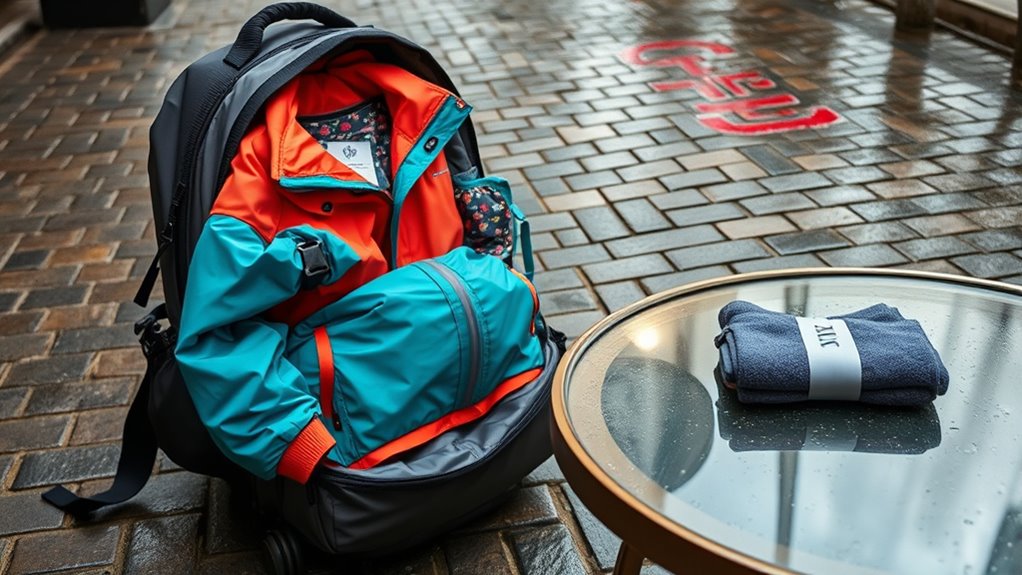
When facing unpredictable and often wet weather, packing the right clothing is essential to stay comfortable and dry. Layering is key, so bring moisture-wicking base layers that keep you dry and warm. Quick-dry fabrics are a smart choice for shirts and pants, preventing discomfort during frequent showers. Pack versatile, waterproof clothing like lightweight jackets and pants that protect you from rain without adding bulk. Don’t forget to include moisture-resistant accessories such as hats and gloves for cooler days. Sturdy waterproof shoes or boots are vital for walking on wet cobblestones and muddy paths. Remember, staying comfortable means preparing for sudden changes in weather, so choose breathable, quick-drying, and waterproof clothing to adapt easily to Europe’s wet and variable climate. Unplanned weather changes can sometimes lead to humorous or challenging situations, so being prepared ensures you stay comfortable regardless of surprises.
Choosing the Right Outerwear to Keep Dry
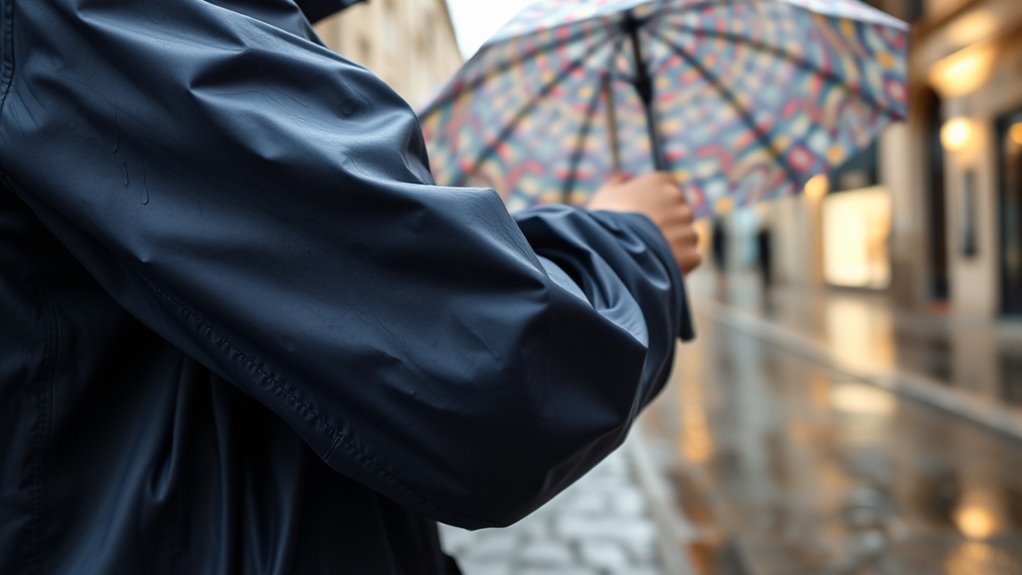
When choosing outerwear for rainy Europe, focus on waterproof materials that can withstand persistent showers, especially in cities like Bergen. Layering your jacket with windproof features adds versatility during variable weather, while quick-drying fabrics keep you comfortable. Balancing windproof and waterproof qualities guarantees your outerwear shields you from both wind and rain without sacrificing breathability. Additionally, selecting outerwear with reliable safety features ensures your gear performs well under challenging conditions. Incorporating waterproof testing standards into your selection process can help ensure your outerwear truly withstands prolonged exposure to rain, and understanding the importance of proper maintenance and care can prolong the lifespan of your outerwear in damp climates. Being aware of breathability ratings can also help you choose gear that remains comfortable during active or extended wear. Considering ventilation considerations helps prevent overheating and moisture buildup inside your outer layers.
Waterproof Material Selection
Choosing the right waterproof material for your outerwear is essential when packing for rainy Europe, especially in cities like Bergen or Sunderland where persistent rain is common. Look for fabrics like Gore-Tex, eVent, or PU-coated nylon, which are breathable and effectively repel water. These materials keep you dry without trapping sweat, preventing discomfort during long walks or sightseeing. Avoid cheaper, non-breathable fabrics that can cause overheating and dampness inside your jacket. Consider the durability and weight of the material—lighter options are easier to pack but still need to offer reliable protection. Also, check for sealed seams and waterproof zippers, which are vital in heavy rain. Your outerwear’s fabric choice directly impacts comfort and dryness, so pick wisely to stay cozy during your rainy European adventures.
Layering for Weather Variability
Layering your clothing effectively is key to staying comfortable and dry in Europe’s unpredictable rain. Start with a waterproof outer layer, such as a breathable jacket, to block out rain while allowing moisture to escape. Underneath, wear a moisture-wicking base layer to keep sweat away from your skin, preventing chills. Add an insulating mid-layer, like a fleece or lightweight sweater, for warmth during colder spells. This setup allows you to adapt easily to changing weather—removing or adding layers as needed. Opt for quick-dry fabrics to avoid discomfort if you get caught in a sudden shower. Remember, the goal is flexibility: your outer layer protects against rain, while inner layers adjust to temperature shifts, keeping you comfortable no matter the weather. Incorporating Free Floating elements like removable accessories or adjustable layers can further enhance your adaptability during unexpected weather changes.
Windproof vs. Waterproof Balance
Ever wonder whether windproof or waterproof outerwear is more important for keeping dry in rainy Europe? The answer depends on your activities and weather conditions. Windproof jackets block gusts that can chill you and push rain under your layers, while waterproof gear keeps moisture out during heavy downpours. Ideally, you want a balance: a jacket that’s both wind-resistant and waterproof. Consider the table below:
| Feature | Benefits | Situations |
|---|---|---|
| Windproof | Keeps you warm, prevents drafts | Windy days, coastal walks |
| Waterproof | Keeps you dry during rain | Heavy rain, storms |
| Both | Provides full protection | Unpredictable weather conditions |
Choosing gear with both features guarantees you stay comfortable without sacrificing mobility or dryness. Additionally, understanding contrast ratio in your clothing layers can help you select materials that maximize insulation while minimizing moisture retention.
Footwear Tips for Navigating Wet Surfaces
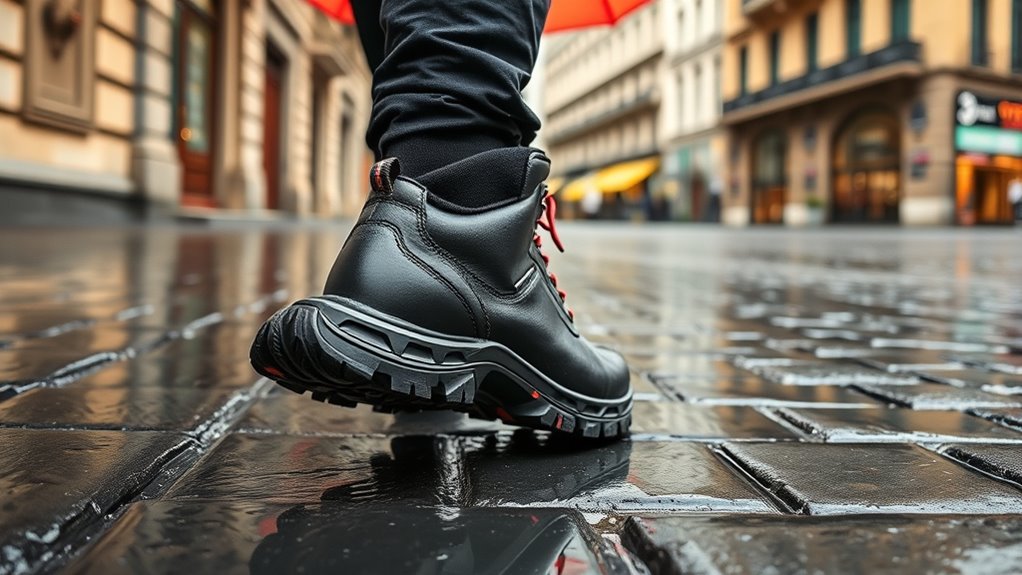
Choosing the right waterproof shoes is key to staying dry and comfortable on rainy days. You should look for footwear with good traction and grip to prevent slipping on wet surfaces. Properly selected shoes will keep you safe and make exploring much easier in Europe’s damp conditions. Using waterproof footwear can also help protect your feet from prolonged exposure to moisture, ensuring overall comfort during your adventures. Additionally, selecting shoes with non-slip soles can significantly reduce the risk of accidents on slick pavements. Incorporating smart shoe technology that monitors foot moisture and temperature can further enhance comfort and safety during your travels. Opting for breathable materials can further improve comfort by reducing sweat and moisture build-up inside the shoes.
Waterproof Shoe Selection
When exploring Europe’s rainy cities, selecting the right waterproof shoes is essential for staying comfortable and dry. You need footwear that keeps water out without sacrificing style or comfort. Look for shoes made with waterproof membranes or treated leather to prevent leaks. Ensure they have good drainage and quick-drying materials to handle frequent showers. Proper fit is crucial to avoid blisters and discomfort during long walks. Consider insoles with moisture-wicking properties for extra comfort. Additionally, understanding water-resistant materials and water-resistant features can help you choose footwear that withstands prolonged exposure to wet conditions. Recognizing the importance of proper footwear maintenance can extend the lifespan of your shoes and ensure they remain effective in rainy weather. Being aware of durability factors can help you select shoes that endure frequent wet conditions over time. Investing in the right waterproof footwear makes traversing rainy streets easier and keeps you comfortable throughout your trip.
Traction and Grip Enhancement
Traversing wet and slippery surfaces in rainy Europe requires footwear with strong traction and grip. Choose shoes with rubber soles featuring deep lugs or multidirectional treads to maximize stability on wet cobblestones, slick streets, and damp pathways. Avoid smooth-soled shoes that can easily slip, especially on uneven or slick surfaces. Consider waterproof hiking shoes or boots with slip-resistant outsoles designed specifically for wet conditions. For added safety, look for shoes with textured rubber soles that channel water away and provide better contact. Keep in mind that worn-out soles lose grip quickly, so inspect your footwear regularly. Proper traction footwear helps you stay confident and steady during rainy adventures, preventing slips and falls as you explore Europe’s rainy cities. Regularly checking your footwear condition ensures optimal safety and grip while navigating unpredictable weather. Additionally, choosing appropriate footwear that aligns with the terrain and weather conditions can significantly enhance your comfort and safety during wet excursions. Recognizing the importance of traction and grip enhancement can help prevent accidents and make your rainy-day explorations more enjoyable.
Accessories That Make a Difference in Rainy Conditions
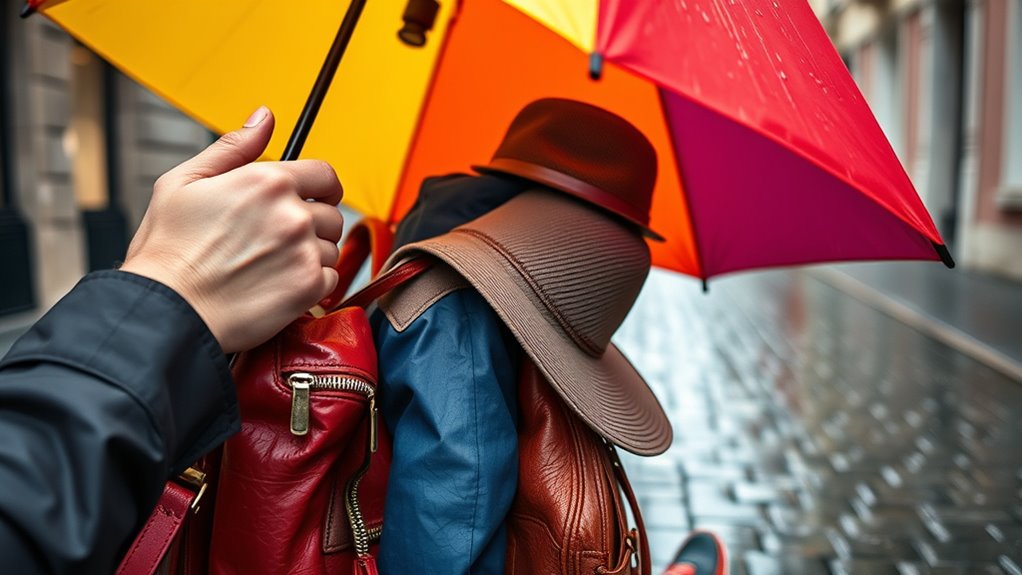
In rainy conditions, the right accessories can make all the difference in staying dry and comfortable. Proper gear helps you navigate wet streets without hassle. Pack a compact umbrella that’s wind-resistant to handle gusts along coastal areas like Sunderland. A waterproof hat or cap keeps rain off your face and prevents your glasses from fogging. Sturdy rain boots with good grip provide stability on slippery cobblestones and uneven surfaces. Consider quick-dry gloves for chilly, wet days, and a waterproof phone pouch to protect your essentials. These accessories ensure you stay dry, comfortable, and prepared, regardless of how heavy the rain gets. With the right gear, rainy days won’t dampen your travel experience.
Packing Smart: Space-Saving and Weather-Resistant Gear
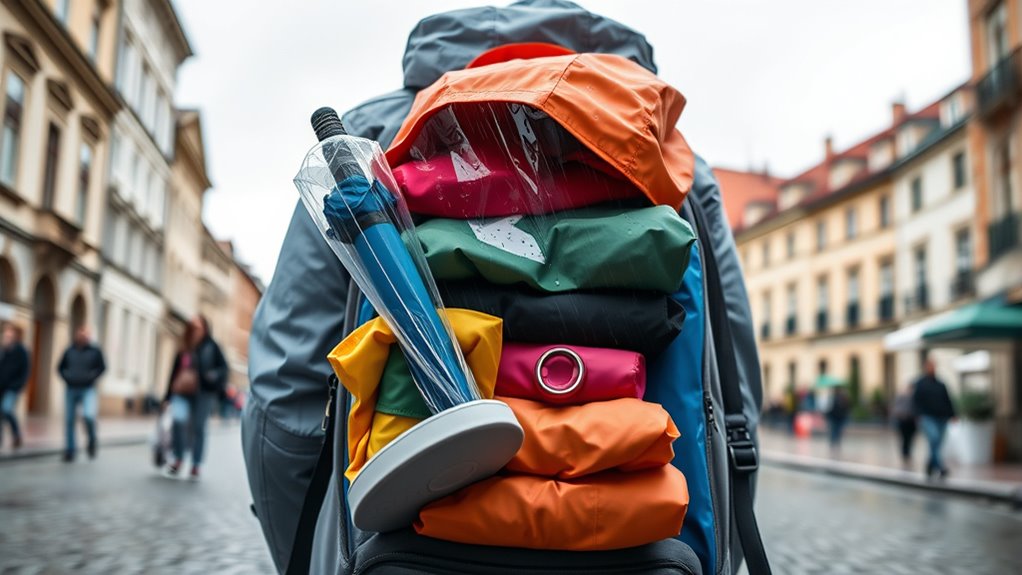
Efficient packing combines compact, weather-resistant gear with smart organization to keep your luggage manageable and ready for rain-soaked adventures. Use lightweight, foldable rain jackets and pants that pack down small yet keep you dry. Opt for quick-dry fabrics in shirts and pants to reduce drying time after showers. Waterproof, compressible bags help protect your belongings from moisture while saving space. Roll clothes instead of folding to maximize luggage capacity and minimize wrinkles. Don’t forget a compact umbrella and a foldable rain hat—these add extra protection without bulk. Sturdy waterproof boots with breathable membranes keep your feet dry and comfortable on wet streets. By choosing versatile, space-saving gear, you ensure you’re prepared for sudden downpours without overloading your luggage.
Layering Strategies for Comfort and Flexibility
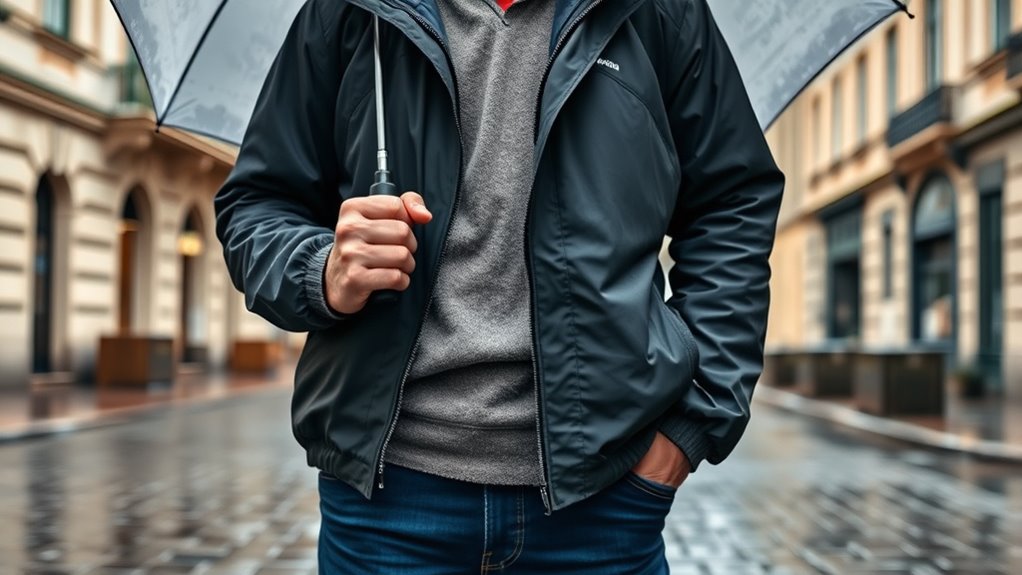
Layering is essential for staying comfortable and adaptable in Europe’s rainy weather. It allows you to adjust to changing temperatures and wet conditions easily. Start with a moisture-wicking base layer to keep sweat away from your skin. Add an insulating layer, like a fleece or lightweight sweater, for warmth when needed. Top it off with a waterproof outer shell to block rain and wind. To maximize flexibility, consider these strategies:
- Use breathable, quick-dry fabrics to stay comfortable during frequent showers
- Opt for adjustable layers to regulate temperature easily
- Pack versatile pieces that can be mixed and matched for different looks and conditions
Staying Dry Without Sacrificing Style
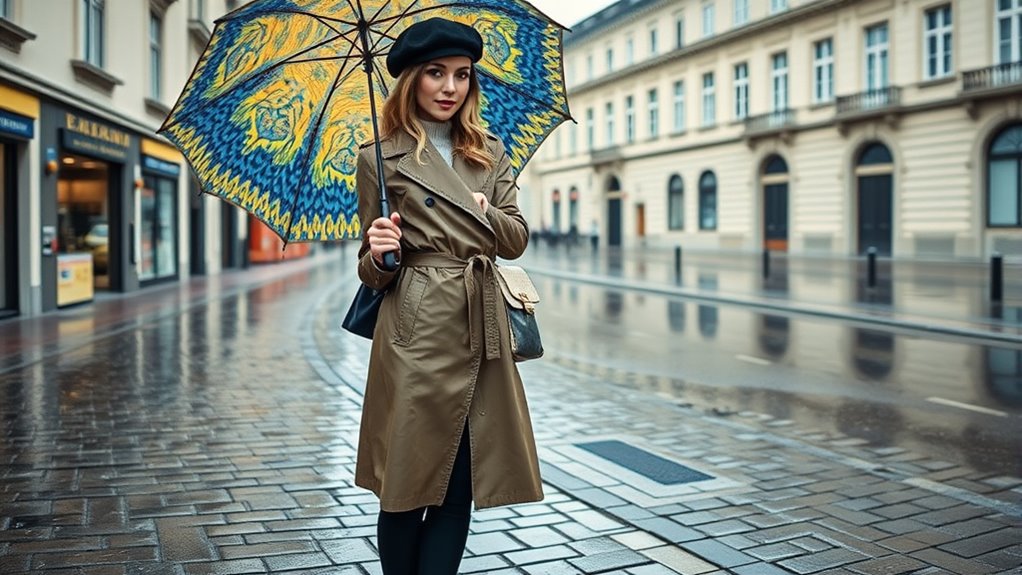
You don’t have to sacrifice style to stay dry in Europe’s rainy weather. Opt for sleek, waterproof jackets that look good over your outfits, not just function. Choose tailored raincoats in neutral or bold colors that complement your wardrobe. Pair them with waterproof ankle boots or stylish rain shoes that keep your feet dry while adding flair. Use compact umbrellas with fashionable patterns or solid colors to enhance your look without bulk. Incorporate waterproof accessories like rain hats or hats with water-resistant brims to stay dry and chic. Layer your clothing to adapt to changing temperatures, and select quick-dry fabrics that look polished even when damp. With these choices, you’ll stay comfortable and stylish, no matter how persistent the rain.
Practical Tips for Rainy-Day Activities and Sightseeing
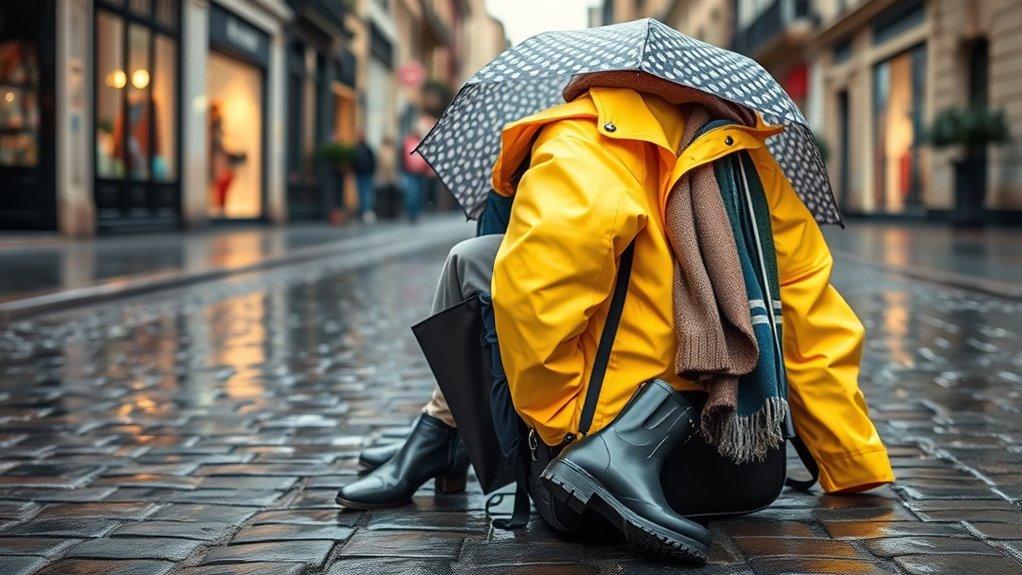
When rain threatens to dampen your plans, embracing flexible indoor activities can keep your sightseeing enjoyable. Visit local museums, art galleries, or historic sites—they’re perfect for exploring while staying dry. Check out indoor markets or food halls to sample regional specialties without getting soaked. Look for cultural performances, like theater shows or concerts, which often happen indoors and provide authentic experiences.
To stay prepared, pack a small umbrella and waterproof footwear to make quick exchanges easier. Keep an eye on indoor event calendars for pop-up exhibitions or workshops. With a little planning, you can turn rainy days into memorable adventures, discovering hidden gems without sacrificing comfort or your schedule.
Frequently Asked Questions
How Can I Protect Electronics From Rain While Sightseeing?
To protect your electronics while sightseeing in rainy Europe, always carry a waterproof pouch or case. Keep devices inside when not in use, and avoid exposing them to heavy rain or puddles. Use a sturdy, waterproof bag or backpack with a rain cover for extra protection. Consider using a portable power bank in a sealed bag to prevent moisture damage, so your devices stay safe and dry throughout your trip.
What Are the Best Rainproof Backpacks for Travel in Europe?
Imagine your gear snug inside a sleek, waterproof backpack, shielded from the relentless European rain pouring down on cobblestone streets. The best rainproof backpacks feature durable, sealed seams, water-resistant zippers, and sturdy fabrics like ripstop nylon or tarpaulin. Look for models with quick-drying interiors and reflective accents for safety. These backpacks keep your essentials dry, letting you explore cities like Bergen and Sunderland without worry, rain or shine.
How Do I Dry Clothes Quickly During a Prolonged Rainy Trip?
To dry clothes quickly during a prolonged rainy trip, you should hang them in a well-ventilated area with good airflow. Use a portable travel clothesline or a drying rack, and if possible, place them near a heater or heat source. Wrapping damp clothes in a dry towel can help absorb moisture. Consider using a quick-dry fabric spray to accelerate drying, and avoid folding wet clothes to prevent mildew.
Are There Specific Fabrics Better Suited for Rainy European Climates?
In Europe’s rainy climates, quick-dry fabrics are your best bet, especially since Bergen experiences nearly 13 rainy days per month. Opt for synthetic materials like polyester, nylon, or merino wool, which dry faster and resist moisture better than cotton. These fabrics keep you comfortable and dry during frequent showers, helping you stay prepared in cities with high rainfall and unpredictable weather.
How Can I Prevent My Shoes From Slipping on Wet Surfaces?
To prevent your shoes from slipping on wet surfaces, choose footwear with slip-resistant soles designed for wet conditions. Make sure your shoes have good traction and are in excellent condition—replace worn-out soles if needed. You can also apply non-slip adhesive pads or grip sprays for extra grip. Walking carefully, especially on cobblestones or smooth pavement, helps avoid slips. Proper footwear and cautious steps keep you safe and steady in rainy European cities.
Conclusion
Think of your packed gear as a shield against Europe’s ever-changing skies. With the right layers and waterproof choices, you’ll navigate rainstorms and sun showers like a seasoned traveler. Each item becomes a symbol of your readiness—a umbrella for uncertainty, sturdy shoes for adventure, and comfort as your constant companion. Embrace the weather’s unpredictability, knowing you’re equipped to enjoy every moment, rain or shine, turning the sky’s tears into your journey’s sparkle.