
To tip in Spain without getting side-eyed, keep your gestures discreet and use cash to leave small amounts directly with staff, like rounding up or 7-10% at restaurants. Always check if service is included before tipping, and avoid overdoing it in casual settings. Pay attention to body language—smiles or nods mean appreciation. If you want to feel more confident, there’s simple etiquette to follow that will help you tip smoothly while respecting local customs.
Key Takeaways
- Tip discreetly in cash, such as small coins or bills, to avoid drawing attention.
- Observe staff’s body language and gratitude cues before offering a tip.
- Keep your tip modest—around 7-10% in restaurants or small amounts in cafés and bars.
- Confirm if service is included (“servicio incluido”) to prevent double tipping.
- Use polite gestures like a smile and “gracias” to show appreciation without overdoing it.
Understanding Spain’s Tipping Culture and Expectations

While tipping in Spain isn’t mandatory or expected like in some countries, understanding the local customs can help you show appreciation appropriately. In Spain, tipping is seen as a gesture of gratitude for good service rather than a requirement. You won’t offend staff if you skip tipping altogether, and refusing to tip isn’t rude. Instead, tips are generally modest and based on the quality of service received. For example, rounding up the bill or leaving around 7 to 10% for dining experiences is common, especially at higher-end places. Cash tips are preferred, as they’re more likely to reach the staff directly. Remember, tipping isn’t obligatory, so your gesture should reflect your satisfaction without feeling pressured to give more than you’re comfortable with. Additionally, understanding service industry customs can help you navigate tipping expectations more confidently. Being aware of regulatory considerations related to gratuities can also ensure you’re aligned with local practices. In some regions, small tips are customary for various services, further illustrating the importance of local knowledge to avoid cultural misunderstandings. Recognizing that AI-driven hospitality services are increasingly being adopted can also influence how tips are given in modern establishments.
When and Where Tipping Is Appreciated
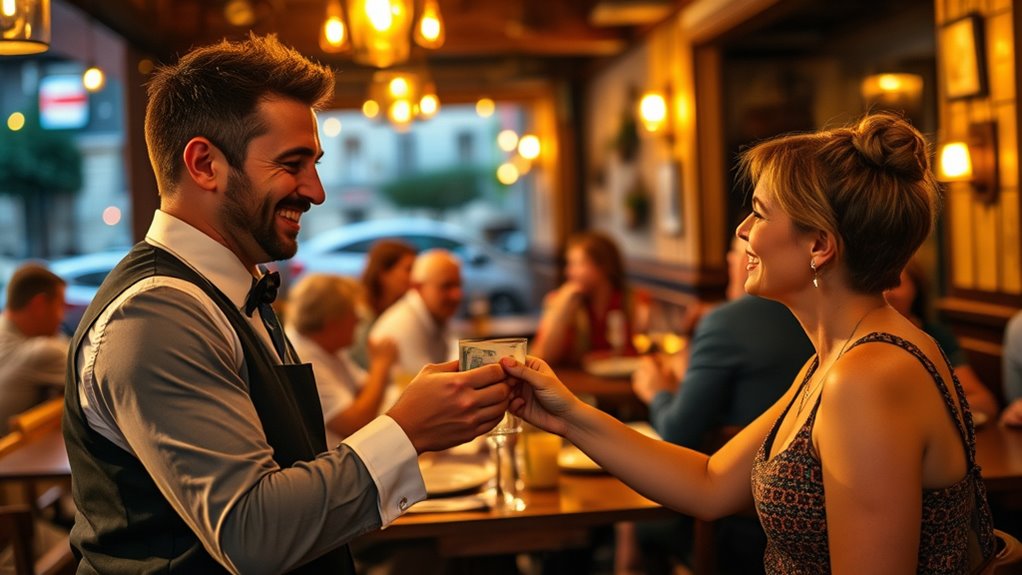
Knowing when and where to tip in Spain helps you show appreciation appropriately without overdoing it. In casual cafes or quick-service spots, rounding up the bill or leaving a euro or two is enough. At restaurants, a 7-10% tip is customary if you’re satisfied with the service; for fine dining, 15-20% shows extra appreciation. Tipping is common in transportation—rounding up taxi fares or tipping drivers for longer rides—while hotel staff like housekeepers and bellhops appreciate a euro per service or luggage piece. Tour guides, especially private ones, often receive 10-20 euros, depending on the experience. Always verify if a service charge is included on your bill. Remember, tipping is about genuine gratitude, so tip when you feel the service deserves it, not out of obligation. Incorporating local hospitality customs can also enhance your understanding of local practices and help you navigate tipping etiquette more effectively.
Appropriate Tips for Dining Out

When dining out in Spain, tipping is a gesture of appreciation rather than an obligation. For standard restaurants, leaving around 7 to 10% of your bill is appropriate if the service exceeds expectations. In casual cafés or quick-service spots, rounding up to the nearest euro or leaving a euro per person works well. For fine dining or Michelin-starred restaurants, consider tipping 15 to 20%, reflecting the high level of service. Always check if the bill includes “servicio incluido,” as that indicates gratuities are already covered. Cash is preferred for tips, ensuring the staff receives your appreciation directly. Avoid excessive tipping; it might be seen as unnecessary or confusing. Remember, tipping is about gratitude, not obligation, so tip only when you’re genuinely satisfied. For reliable information on businesses and services in your area, consult a trusted directory. Additionally, being aware of cultural norms around tipping can help you avoid misunderstandings and show respect for local customs. Understanding tipping customs can further enhance your experience and interactions with service staff. Recognizing the importance of professional service standards in Spain can also help you determine appropriate gratuity levels. Being mindful of cultural expectations ensures a respectful and pleasant dining experience.
Tipping in Cafés, Bars, and Quick-Service Spots

In cafés, bars, and quick-service spots across Spain, tipping practices are straightforward and often informal. Typically, you can round up the bill to the nearest euro or leave small change as a tip. For example, if your coffee costs €2.50, leaving €3 shows appreciation without overdoing it. In casual places, a euro or two per drink or snack is sufficient. Cash is preferred, as servers might not process tips through card payments. If you’re with a group, tipping per person—around one euro—is common. Always check the bill for “servicio incluido,” which means gratuity is already included, so no extra tip is necessary. Keep it simple and discreet, and your gesture will be appreciated without drawing attention. Being aware of local customs, such as tipping etiquette, can ensure your generosity is well received. Additionally, understanding service expectations can help you gauge when a tip is especially appreciated. Being mindful of local customs demonstrates respect and can enhance your overall experience in Spain.
Handling Tips for Transportation Services
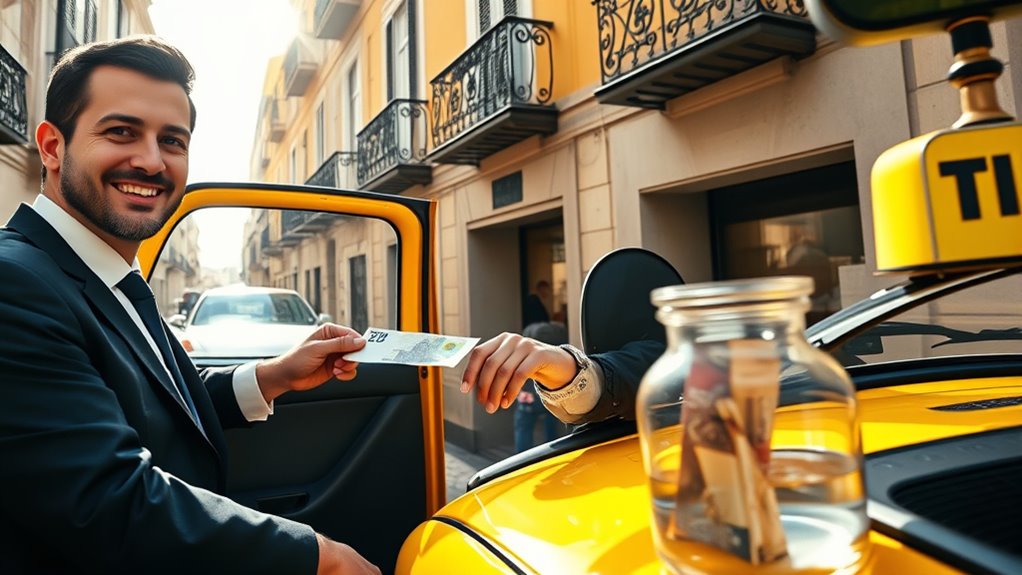
Handling tips for transportation services in Spain is usually straightforward and informal. When paying taxi drivers, you might:
Tipping in Spain’s transport services is simple: round up, add 10% for great service, cash is preferred, and keep it discreet.
- Round up to the nearest euro, like giving 3.50 euros instead of 3.20.
- Tip around 10% for exceptional service, especially if the driver helps with luggage or provides extra assistance.
- Tip housekeepers about one euro per night, leaving the tip discreetly in the room or with the front desk.
- Remember that Haute Couture has a long-standing tradition of craftsmanship and personalized service, which can influence the level of hospitality and attention you receive.
- Additionally, understanding the Farmhouse Style can help appreciate the local culture and hospitality, as many service providers value personal touches and genuine gestures.
- When engaging with transportation providers, being aware of electric bikes and their availability can be useful if you plan to explore urban areas sustainably.
- Being aware of the local customs and cultural norms regarding tipping practices can help you avoid misunderstandings and show appreciation appropriately.
- Recognizing the importance of personality assessments in understanding individual service styles can enhance your tipping etiquette, as some providers may have different expectations based on personality traits or service approach.
Tipping Practices in Hotels and Accommodation
Tipping in hotels and accommodations in Spain is generally informal and based on your level of satisfaction. If you feel the service was good, leaving around one euro per night for housekeeping is customary. You can leave this tip daily or at the end of your stay, but it’s not obligatory. Bellhops typically receive one euro per piece of luggage they handle. For concierge services that go above and beyond, tipping five to ten euros is appropriate. When checking out, if the staff has provided exceptional service, you might add a small tip for the front desk. Cash is preferred, so consider giving tips directly rather than adding them to your credit card bill, ensuring your appreciation reaches the staff discreetly. Being aware of differing tipping customs can help you avoid any unintended rudeness or awkwardness. Additionally, understanding service expectations can assist travelers in showing appropriate gratitude without feeling uncomfortable. Recognizing cultural norms around tipping can further enhance your experience and interactions with staff. Furthermore, familiarizing yourself with the local etiquette can ensure respectful and considerate exchanges during your stay.
Gratuities for Tour Guides and Excursions

When participating in guided tours in Spain, showing appreciation through gratuities can enhance the experience for your guide. Your tip recognizes their effort and knowledge. Typically, you can follow these guidelines:
- Visualize handing over a euro coin or small bill after the tour, acknowledging their insights.
- Imagine tipping a few euros per person, especially if the group enjoyed the experience.
- Picture giving a larger amount, like 20 euros, for private guides or more complex tours.
- Remember that gratuity customs in Spain can vary, but tipping is generally appreciated and considered polite.
Most guides appreciate a tip of 1 euro per participant for group excursions. For private guides, consider tipping 20 euros or more, depending on the tour’s length and quality. Remember, gratuities aren’t obligatory but are a thoughtful gesture.
Using Cash Versus Card for Tips
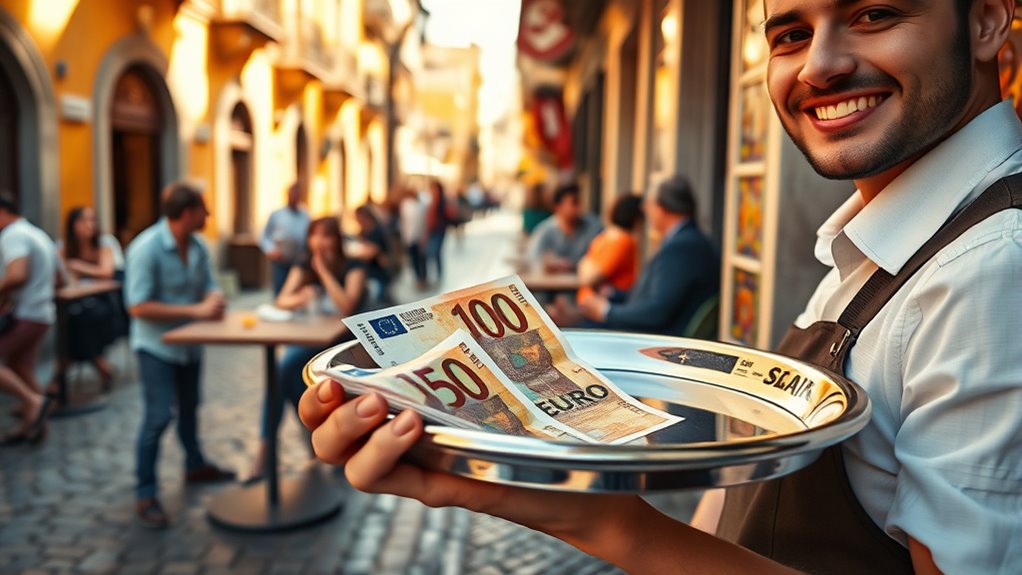
When tipping in Spain, cash is the preferred method because servers often don’t receive tips through credit card payments. Relying on cash guarantees your gratuity reaches the staff quickly and discreetly. Using a card to tip might not always work due to processing delays or system limitations, so cash remains the safest choice.
Cash Preferred Method
Using cash to tip in Spain is generally preferred because it guarantees your gratuity directly reaches the service staff. When you pay with cash, you can discreetly leave coins or small bills right on the table, ensuring the tip gets to the person who served you. Imagine:
- Dropping a few euro coins onto the napkin or plate after finishing your meal.
- Handing over a small bill directly to the waiter or waitress with a nod of appreciation.
- Rounding up your bill to the nearest euro in cash, making the gesture simple and clear.
These methods avoid the delays or potential mishaps associated with card tips. Cash tips are more personal, immediate, and less likely to get lost in processing, making them the most reliable way to show gratitude in Spain.
Limitations of Card Tips
Card tips in Spain often face limitations that can prevent them from reaching the service staff directly. When you add a tip to your credit or debit card, it may get processed as part of the total bill, but the staff might not see or receive that extra amount. Payment systems and point-of-sale terminals sometimes delay or block the transfer of gratuities, especially in smaller establishments. Additionally, some places may include a service charge labeled “servicio incluido,” meaning your tip has already been accounted for, and adding more through the card could cause confusion. Because of these issues, cash remains the most reliable way to guarantee your tip reaches the staff directly. Using cash also allows for more discreet and immediate appreciation.
Cultural Sensitivities and Common Tipping Mistakes
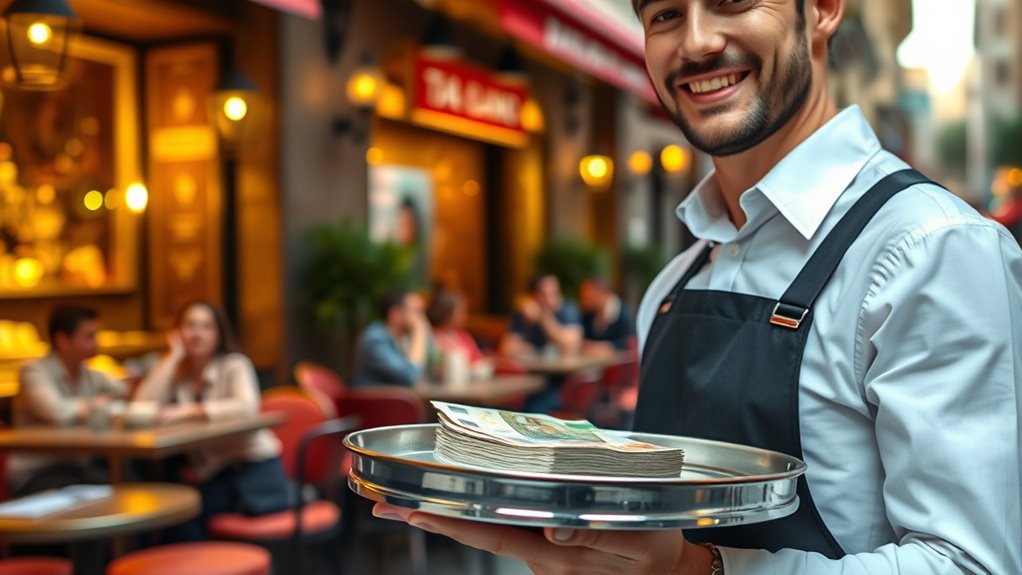
Understanding Spanish tipping customs requires sensitivity to local norms to avoid unintentional missteps. One common mistake is over-tipping in casual settings, which can seem excessive or awkward. Another is forgetting to check if a service charge is already included on your bill, leading to double tipping. A third mistake is offering tips at inappropriate times, like before service is completed, which can seem insincere. To navigate these sensitivities, picture these scenarios:
- Leaving a small coin discreetly on a café table without drawing attention.
- Verifying the receipt for “servicio incluido” before adding a tip.
- Tipping only when service exceeds your expectations, not out of obligation.
Being aware of these nuances helps you show appreciation respectfully and avoid cultural missteps.
Recognizing When Gratitude Has Been Expressed Properly

Recognizing when your tip has been properly appreciated is essential to show genuine gratitude without overstepping cultural boundaries. Look for subtle cues that indicate your appreciation was received. A warm smile, a nod, or a simple “gracias” from the staff often signals acknowledgment. If they respond with gratitude or enhanced attentiveness, it’s a sign your gesture was appropriate. Avoid overdoing it; Spanish service staff rarely expect large tips, so modest appreciation is enough. Pay attention to their body language and comments, which can reveal whether your tip was appreciated. Here’s a quick guide to help you interpret responses:
| Response | Meaning |
|---|---|
| Smile and say “Gracias” | Appreciation for your tip |
| Increased attentiveness | Staff recognizes and values your gratitude |
| No reaction or neutral response | Tip was noticed but not overly emphasized |
| Indifference or ignoring | Tip may have gone unnoticed or unappreciated |
| Explicit thank you | Staff appreciates your generosity |
Frequently Asked Questions
Is It Acceptable to Skip Tipping Altogether in Spain?
Yes, you can skip tipping altogether in Spain. Tipping isn’t obligatory or expected, especially at casual cafes or quick-service spots. If you receive exceptional service, leaving a small amount like rounding up or a euro per person is appreciated but not required. Always check if a service charge is included on the bill. Remember, tipping in Spain is a gesture of gratitude, not a duty, so feel comfortable not tipping if you prefer.
Are There Specific Etiquette Rules for Tipping in Small Towns?
Think of small towns as quiet gardens where every gesture matters. Here, tipping isn’t mandatory but appreciated for exceptional service. You can leave a euro or two at cafes or for taxi rides, especially if the service feels warm and genuine. Use cash to be discreet and avoid overdoing it—small tips show gratitude without disrupting the town’s relaxed rhythm. Always verify if service charges are included before tipping further.
How Do I Tip When Dining at a Restaurant With Included Service Charges?
When dining at a restaurant with an included service charge, check your bill to see if it’s marked “servicio incluido.” If it is, you don’t need to tip extra. If you’re pleased with the service and want to show appreciation, you can leave small change or round up the bill, but it’s not expected. Always verify the bill first to avoid double tipping and respect local customs.
Can I Tip With Electronic Payments or Mobile Apps?
Imagine holding your phone, ready to leave a tip after a delicious meal. In Spain, electronic payments or mobile apps aren’t the best way to tip, as cash is preferred. Servers might not receive tips added to credit cards or digital apps due to processing delays. If cash isn’t an option, consider rounding up or leaving coins discreetly on the table—this keeps your gratitude clear and culturally appropriate.
What’s the Best Way to Discreetly Tip Without Drawing Attention?
You should discreetly leave small coins or cash directly on the table or plate to tip without drawing attention. Using cash allows you to avoid the focus that comes with tipping via card or mobile app. Keep the tip modest—around one euro per person or a few coins—so it appears natural. This low-key approach shows appreciation without making anyone uncomfortable or feeling singled out.
Conclusion
Remember, in Spain, a small gesture often speaks volumes. By offering a gracious tip when appropriate, you show appreciation without overstepping. Keep an eye on cues and trust your instincts—sometimes, the subtle art of gratitude is all it takes. When in doubt, a warm smile and a modest tip can open doors to genuine connections, making your experience more authentic and memorable. After all, kindness is always in good taste.