
When budgeting for Greece, you’ll find mainland stays and meals are generally cheaper than islands, with private rooms costing €30-60 and local tavernas around €10-15. Islands like Santorini or Mykonos can be more expensive, especially in high season, with dining over €30 and private accommodations over €150 per night. Transportation costs also vary—ferries and flights are pricier between islands. Keep in mind that if you want to save, opting for lesser-known islands and shoulder seasons can cut your expenses markedly.
Key Takeaways
- Mainland Greece offers more affordable accommodation, dining, and transportation options compared to islands like Santorini and Mykonos.
- Island destinations generally have higher costs due to expensive ferry transport, premium lodging, and tourist-driven prices.
- Budget travel is more achievable on lesser-known islands and mainland cities with local accommodations and groceries.
- Peak summer season significantly increases costs; traveling in shoulder or low seasons can save 20-50%.
- Planning ahead and choosing budget-friendly options on the mainland or quieter islands can reduce overall trip expenses.

Flygiene Travel Essentials Kit (Women Travel)
- Complete Travel Essentials Kit: Includes personal care and medical items
- Organized Carry Case: Washable, TSA-compliant travel case for easy transport
- Hygiene and Freshness: Sanitizing wipes, hand sanitizer, deodorant wipes included
As an affiliate, we earn on qualifying purchases.
As an affiliate, we earn on qualifying purchases.
Accommodation Costs: Mainland Vs Islands
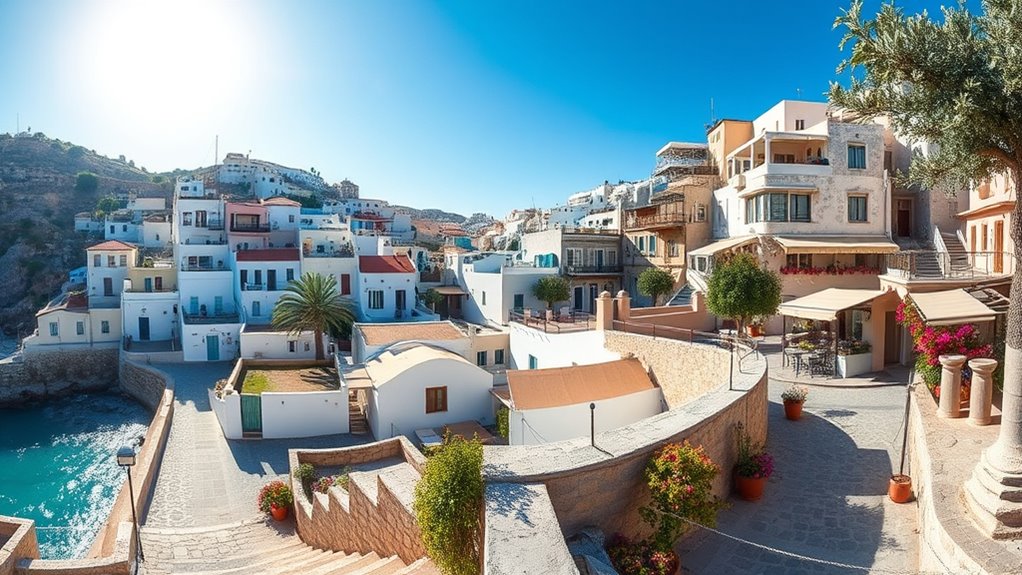
If you’re looking to save on accommodation in Greece, you’ll find that the mainland offers more affordable options compared to the islands. On the mainland, you can find private rooms for €30-60 per night, making it budget-friendly. Hostels on the mainland start at €15-25 for dorm beds, which is ideal for backpackers. In contrast, popular islands like Santorini and Mykonos charge premium prices, with luxury accommodations reaching €200-500+ per night. Smaller, lesser-known islands or regions like Crete and Nafplio also offer better value, with monthly rentals around $860. Mainland cities such as Thessaloniki and Patras tend to have lower accommodation costs overall. So, if saving is a priority, sticking to the mainland can considerably cut your expenses. Additionally, choosing budget-friendly accommodations can further maximize your savings during your trip. Exploring local rental options and staying outside major tourist areas can also help reduce costs further, especially by considering the cost differences between island and mainland stays. For more tailored savings, researching affordable lodging options through online platforms can be very beneficial. Moreover, understanding the free floating nature of many local markets can help you find better deals on accommodations and related services.

Luvsweets Greece Travel Souvenirs Gifts Greek Travel Essentials Makeup Bag
- Aesthetic Greek Landscape Design: Double-sided printed Greek scenery
- Travel Essential Organizer: Compact, spacious for toiletries and makeup
- Perfect Greek Souvenir Gift: Stylish blue and white Greek landscape
As an affiliate, we earn on qualifying purchases.
As an affiliate, we earn on qualifying purchases.
Food and Dining Expenses Across Regions
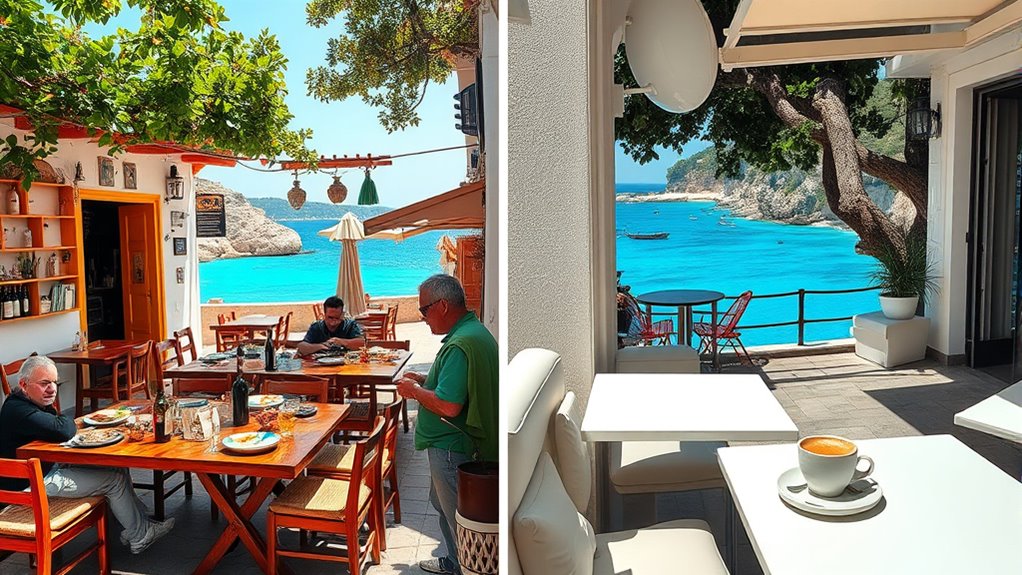
You’ll find that restaurant prices are generally lower on the mainland compared to the popular islands, where dining out tends to be more expensive. Shopping for groceries on the mainland can save you money, as everyday items are cheaper than on the islands. Keep in mind that dining costs vary greatly between regions, so planning your meals accordingly can help you stick to your budget. Additionally, regional price variations can be employed to discover hidden dining gems and reduce expenses even further.
Restaurant Pricing Differences
Dining costs in Greece vary markedly between regions, with mainland areas generally offering more affordable options than the popular islands. On the mainland, you can find a decent meal at a local taverna for around €10-15 per person, while mid-range restaurants usually charge €20-30 per person. On islands like Santorini or Mykonos, prices jump considerably—expect €30-50 or more for similar meals. Tourist hotspots often add a premium, especially in peak season. Local tavernas on lesser-known islands or coastal towns tend to keep prices lower. If you want to save, opt for small, family-run eateries instead of tourist-centric venues. Overall, you’ll find that eating out on the mainland is noticeably easier on your budget than in the heavily touristed islands. Regional variations significantly impact dining expenses across Greece, making it worthwhile to explore lesser-known areas for more budget-friendly options. Additionally, regional culinary differences can influence the overall dining experience and costs, encouraging travelers to seek out authentic local spots off the beaten path. Considering local ingredients can also help you find delicious and affordable meals that highlight Greece’s rich culinary heritage. Exploring local markets and fresh produce can further reduce meal costs while allowing you to enjoy authentic flavors. Selecting venues with good hygiene standards can also help ensure a safer dining experience while keeping costs reasonable.
Local Grocery Savings
Wondering how much you can save on groceries while traveling in Greece? You’ll find that groceries and everyday items are generally cheaper on the mainland compared to the islands. Mainland regions like Thessaloniki or Nafplio offer more affordable options, with fresh produce, local meats, and staples often costing less. On islands such as Santorini or Mykonos, prices tend to be higher due to transportation costs and tourist demand, making basic groceries more expensive. Shopping at local markets or smaller grocery stores can help you cut costs regardless of location, but your savings are maximized on the mainland. If you’re planning to cook your meals, buying in local markets and visiting smaller shops can notably reduce your food expenses and give you a more authentic experience. Additionally, water availability and local supply chains can influence grocery prices, especially on more remote islands, as they affect the overall cost of goods. Being aware of regional market differences can help you better plan your grocery shopping and optimize your travel budget. For example, understanding regional supply chains can help you anticipate price fluctuations and make smarter shopping choices. Recognizing local food sourcing practices can also guide you to seasonal and locally produced items that are typically more affordable.
Dining Cost Variations
While grocery prices vary between mainland and island regions, dining costs can differ even more markedly across Greece. On the mainland, you’ll find mid-range restaurant meals for two around €50, often cheaper than on islands, where prices jump to €75 or more. Daily dining budgets are about $15-20 for quick eats or local tavernas, but on islands, expect to spend $25-45 for similar experiences. Tourist hotspots like Santorini and Mykonos charge premium prices year-round, inflating meal costs. Eating out in smaller towns or less popular islands can save you money. Overall, dining on the mainland tends to be more affordable, and you can enjoy authentic Greek cuisine without breaking the bank. Be prepared for higher prices if you’re dining in tourist-heavy areas. Additionally, regional price differences can significantly impact your overall travel budget.
Money Belt for Travel, RFID Blocking, Hidden Money Belt, Passport Holder for Travel (Black)
- Adjustable Elastic Band: Fits all waist sizes with stretch
- Multiple Storage Pockets: Three pockets including mesh compartment
- Includes RFID Card Holders: 10 free RFID card holders included
As an affiliate, we earn on qualifying purchases.
As an affiliate, we earn on qualifying purchases.
Transportation Costs Within Greece
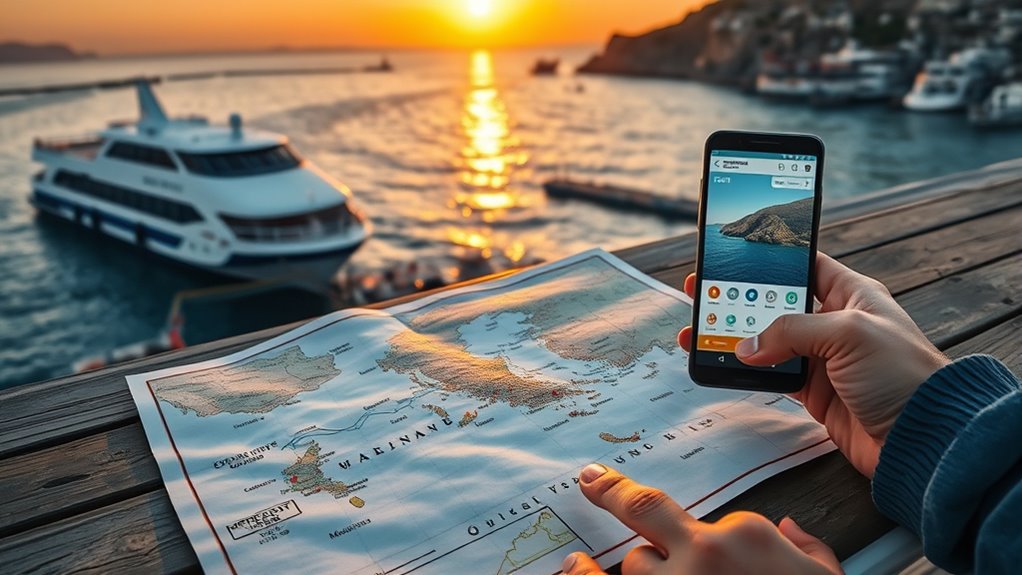
Transportation costs within Greece vary depending on your travel choices and destinations. If you’re hopping between islands, ferry tickets from Piraeus to Syros cost around $40, with prices rising during high fuel seasons. Island-hopping ferries or flights for two weeks typically range from $100 to $200 on a budget, or $400 to $800 for luxury options. Locally, daily transport costs about $5 to $10 on a budget, or $15 to $20 for mid-range options. Airfares from Athens to popular islands remain affordable, especially if booked early. If you’re a resident, you could qualify for up to 50% ferry rebates to Athens. Overall, transportation costs are higher on popular islands due to fuel and logistics, while mainland travel tends to be more economical. Regular vehicle maintenance can help prevent unexpected breakdowns during your travels and is a key aspect of cost-effective transportation. Incorporating technological solutions, such as mobile apps for booking and navigation, can further reduce expenses and improve travel efficiency. Additionally, planning routes ahead can significantly save money on transportation.

Fodor's Essential Greece: with the Best of the Islands (Full-color Travel Guide)
As an affiliate, we earn on qualifying purchases.
As an affiliate, we earn on qualifying purchases.
Overall Trip Budget Expectations
Planning your trip to Greece involves understanding the overall costs, which can vary widely based on your choices and travel style. You might spend around €1,600 to €3,200 for a two-week adventure, but luxury options can push costs over €17,000. Your daily budget could range from as low as €25 on a tight budget to over €165 enjoying mid-range experiences. Keep in mind:
- Mainland stays often cost less than island accommodations.
- Transportation expenses, including ferries and flights, add considerably.
- Dining costs fluctuate between budget street food and fine dining.
- Off-season travel offers discounts, while high season increases prices.
- Larger groups can save on per-person expenses, especially on mainland.
Seasonal Price Fluctuations and Their Impact
Seasonal fluctuations considerably influence your Greece trip budget, impacting accommodation, transportation, and activity costs throughout the year. During high season (June to August), prices surge by 30-50%, especially on popular islands like Santorini and Mykonos, making luxury accommodations and ferries notably more expensive. Shoulder seasons (April-May and September-October) offer 20-30% savings, with lower hotel rates and fewer crowds. In low season (November to March), discounts can reach up to 50%, but some islands may close or reduce services. Additionally, climate crisis taxes increase slightly in summer, adding €2-8 per room per night. Planning your trip outside peak months helps you save, ensuring better deals on accommodations, transportation, and activities while avoiding the busiest tourist influx.
Cost Differences Between Popular and Lesser-Known Islands
While popular islands like Santorini and Mykonos attract most tourists and charge premium prices, lesser-known islands often offer more affordable options without sacrificing beauty. These hidden gems typically have lower accommodation costs, with budget options starting around €15-25 for dorm beds and private rooms at €30-60. Food prices tend to be more reasonable, with meals costing less and groceries cheaper than on popular islands. Transportation costs are also lower, as ferry tickets and local transport are less expensive. Additionally, many lesser-known islands have fewer tourists, which helps keep prices down year-round.
Lesser-known Greek islands offer affordable accommodations, meals, and transportation, with fewer tourists and steady prices year-round.
- Accommodation: lower nightly rates and fewer luxury options
- Food: cheaper meals and groceries
- Transportation: more affordable ferry and local travel
- Tourism demand: less pressure on prices
- Seasonal variations: smaller spikes in off-peak times
Comparing Mainland Cities and Island Destinations
When comparing mainland cities and island destinations, you’ll notice that mainland areas usually offer lower costs for accommodations, food, and transportation. Islands tend to be pricier because of higher transport expenses and tourist demand, especially on popular spots like Santorini and Mykonos. Exploring lesser-known islands or mainland cities can help you save without sacrificing the Greek experience.
Cost Differences in Cities
Mainland cities like Thessaloniki and Patras generally offer more affordable options for accommodation, dining, and transportation compared to popular island destinations such as Santorini and Mykonos. You’ll find budget hotels for €30-60 per night and street food or casual restaurants costing less. Transportation costs are also lower, with local buses and trains affordable and reliable. In contrast, islands tend to have higher prices due to transportation and tourism demand. Key differences include:
- Accommodation: mainland €30-60/night, islands €80-150+
- Dining: mainland €10-20 per meal, islands €20-40+
- Transport: mainland local €1-3, islands €5-15
- Entertainment: mainland free or low-cost, islands often pricier
- Shopping and souvenirs: mainland prices generally lower
Island Vs Mainland Pricing
Compared to mainland Greece, island destinations tend to be considerably more expensive across most categories, primarily due to higher transportation costs and increased tourist demand. Accommodation on islands like Santorini or Mykonos can reach €200-500+ per night for luxury options, while mainland prices are lower. Food costs are higher on islands, with meals for two often costing €50 or more, compared to €30-€60 on the mainland. Transportation adds to the difference, with ferry tickets from Piraeus to islands costing $40-$200, whereas local transport is $5-$20 daily. Here’s a quick comparison:
| Category | Mainland | Islands |
|---|---|---|
| Accommodation | €30-60 private rooms | €100-€500+ luxury |
| Food & Dining | €15-€45 daily | €25-€60 daily |
| Transport | $5-$20 local | $40-$200 ferry |
Budget Tips for Affordable Greek Travel
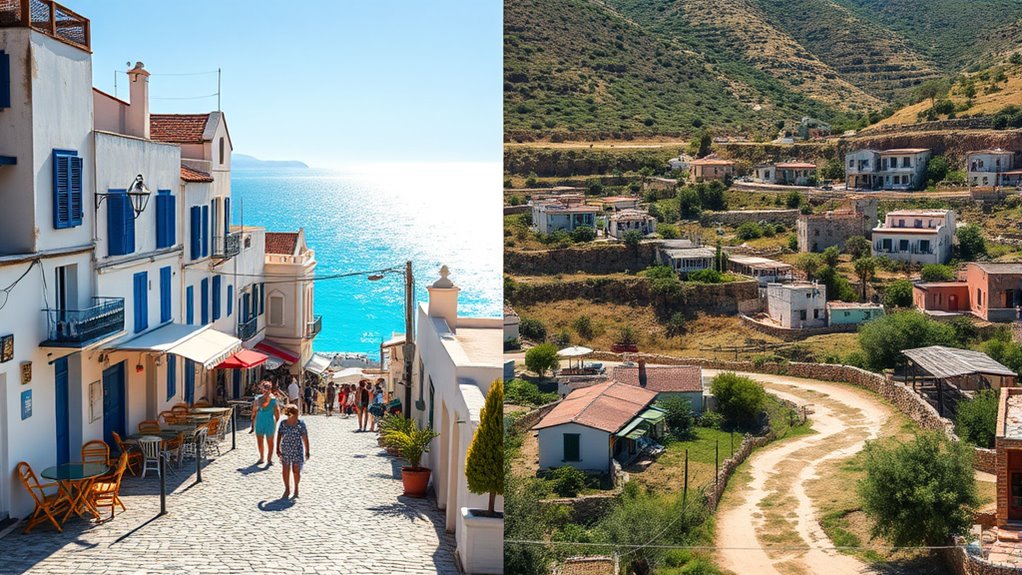
Traveling in Greece on a budget is entirely doable if you plan smartly. Start by choosing mainland destinations or lesser-known islands, which often have lower prices. Opt for budget accommodations like hostels or private rooms in smaller towns, saving up to 70% compared to luxury hotels. Cook your own meals using local groceries instead of eating out every day, reducing food costs considerably. Use local transport options, such as buses and ferries, which are cheaper than taxis or flights. Finally, travel during shoulder seasons to avoid peak prices and crowds.
To maximize savings, consider:
- Staying in smaller towns or less touristy areas
- Booking accommodations early for discounts
- Using public transport instead of taxis
- Eating at local tavernas rather than tourist spots
- Planning trips during off-peak seasons
Planning Your Budget Based on Travel Style
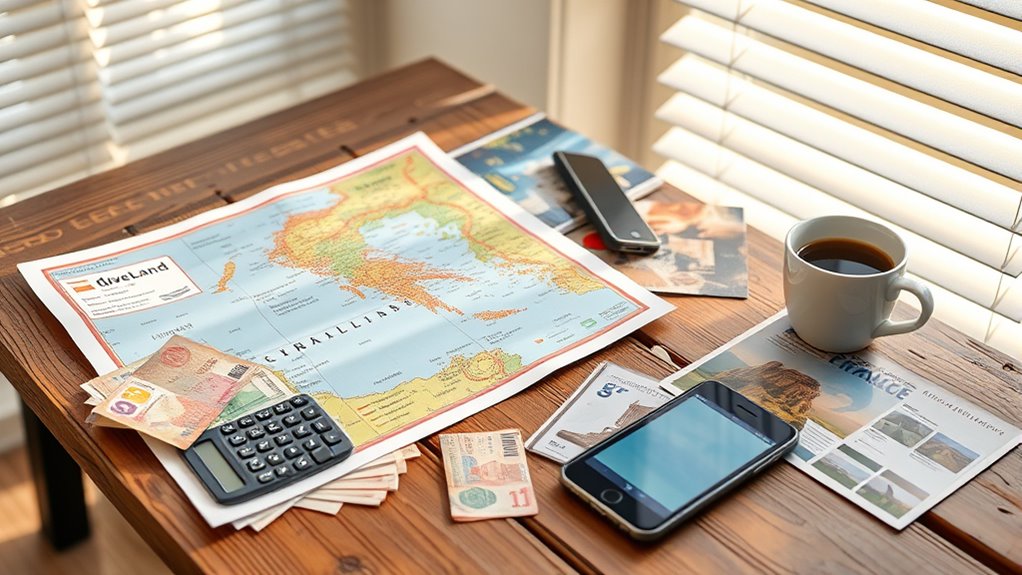
Your travel budget in Greece depends heavily on your preferred style of trip, as each approach has distinct cost considerations. If you’re seeking luxury, plan for high-end accommodations, dining, and private tours, especially on popular islands like Santorini or Mykonos, which can cost €200-€500+ per night. Budget travelers should consider staying on the mainland or lesser-known islands, where private rooms start at €30-€60 and dorm beds at €15-€25. Dining costs vary from €15-€45 daily, depending on your choices, while transportation costs increase with island hopping or private transfers. Aiming for a mid-range experience? Budget around €115-€165 daily, including accommodation, meals, and transport. Your travel style will determine your overall expenses, so plan accordingly to enjoy Greece without overspending.
Frequently Asked Questions
How Does Accommodation Pricing Vary Between Summer and Winter in Greece?
In Greece, you’ll find accommodation prices drop markedly in winter, sometimes by up to 50%, especially on less popular islands and mainland areas. During summer, prices surge 30-50%, with popular tourist spots like Santorini and Mykonos charging premium rates. You can save by traveling in shoulder or low seasons, when hotels offer discounts and fewer crowds make for a more relaxed stay.
Are There Affordable Options for Family Vacations on Greek Islands?
You can find affordable family vacation options on Greek islands, especially during shoulder and low seasons when prices drop 20-50%. Dorm beds start at €15-25, and private rooms can be found for €30-60 per night. Local meals cost around €15-20 for two, and ferry tickets are often discounted. By traveling off-peak and choosing lesser-known islands, you’ll save money while enjoying Greece’s stunning scenery with your family.
What Are the Hidden Costs Beyond Accommodation and Food?
Beyond accommodation and food, you should budget for transportation, taxes, and extras like tourist fees or climate resilience taxes. Ferry rides and flights can add up, especially during peak season, and some islands charge additional taxes or service fees. Don’t forget to factor in costs for activities, souvenirs, and tips. These hidden expenses can markedly increase your overall trip budget, so plan ahead to avoid surprises.
How Can Travelers Save on Transportation Between Islands?
You can save on transportation between islands by booking ferry tickets early, especially during shoulder seasons when prices drop. Consider using local ferries instead of high-speed services, which are cheaper. Look for discounts or rebates if you’re a resident. Planning your route efficiently, traveling during off-peak times, and avoiding luxury options help cut costs. Sometimes, flying between islands is more affordable if booked in advance.
Which Regions Offer the Best Value for Longer Stays?
You’ll find the best value in the mainland regions like Peloponnese and Northern Greece, where your budget stretches like a sail in the breeze. These areas offer charming towns, budget-friendly accommodations, and delicious local food without the tourist price tag. Imagine exploring ancient ruins or mountain villages without draining your wallet. By choosing these regions, you’re carving out a richer, more authentic Greek experience that feels like a hidden treasure.
Conclusion
Knowing that island accommodations can cost up to 50% more than mainland options helps you plan smarter. Curiously, some lesser-known islands offer prices nearly identical to city stays, proving you don’t need to splurge to enjoy Greece’s beauty. By balancing your travel style and season, you can experience Greece without breaking the bank. With careful planning, you’ll make unforgettable memories while staying within your budget—making your Greek adventure both affordable and extraordinary.