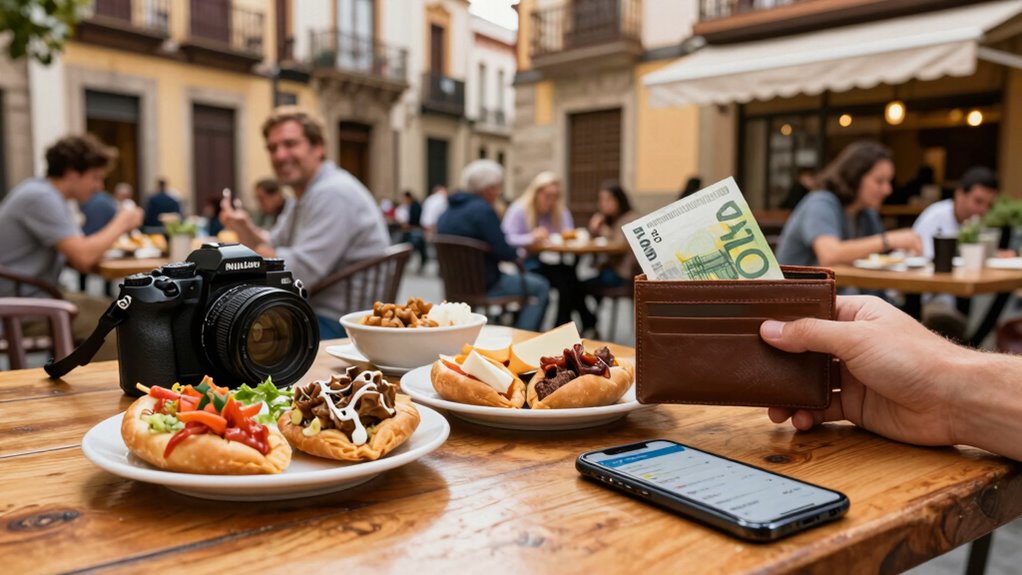

To budget well in Spain, pick affordable locations such as smaller towns, coastal areas, or suburbs outside big cities. Use shared housing or long-term rentals to cut costs, and enjoy local markets for cheaper, fresh food instead of dining out constantly. Take public transportation, walk, or bike to save on travel expenses. Planning ahead and exploring free or low-cost activities guarantees you experience Spain’s culture without overspending. Keep these tips in mind, and you’ll find ways to enjoy more while spending less.

Get travel and outdoor gear delivered free — and shop member deals
- Fast, free delivery on millions of items
- Access to Prime Big Deal Days deals on October 6–7
- Prime Video, Amazon Music and more included
Key Takeaways
- Opt for affordable regions like smaller towns or suburbs outside major cities to lower accommodation and living costs.
- Cook at home and enjoy tapas or “menu del día” meals to save on dining expenses while experiencing local cuisine.
- Use public transportation, walk, or bike to reduce travel costs and explore more economically.
- Choose budget accommodations, book in advance, and take advantage of free or low-cost attractions and activities.
- Plan visits during off-peak seasons and set a clear budget to maximize savings without missing authentic experiences.
As an affiliate, we earn on qualifying purchases.
Choosing the Right Location to Maximize Savings

Choosing the right location in Spain can substantially boost your savings, especially if you prioritize affordable housing and lower living costs. Smaller towns and coastal areas like Alicante or Granada are often 30–40% cheaper than big cities like Madrid or Barcelona. Medium-sized cities such as Valencia or Seville strike a balance, offering lower rent and living expenses while still providing urban amenities. Rural areas tend to have the lowest costs, with single expenses dropping markedly. By selecting a location outside major metropolitan centers, you can reduce housing costs and everyday expenses like groceries and utilities. Additionally, opting for regions with energy-efficient infrastructure can further decrease your utility bills and support sustainable living. This allows you to stretch your budget further, giving you more flexibility to enjoy Spain’s culture, cuisine, and leisure activities without overspending. Choosing areas with cost-effective transportation options can also help you save on commuting and travel expenses, maximizing your budget. Moreover, researching local economic conditions can help you identify the most affordable and stable areas to settle in. Being aware of regional economic stability can also provide insights into long-term affordability and growth prospects in different regions. Investing in areas with affordable healthcare and services can further enhance your quality of life while maintaining a budget-friendly lifestyle.
As an affiliate, we earn on qualifying purchases.
Smart Housing Options to Cut Costs

To cut housing costs in Spain, exploring smart options like co-living arrangements, renting in less expensive neighborhoods, or considering longer-term rentals can make a significant difference. Co-living spaces offer shared amenities and lower monthly rent, ideal if you’re seeking social connections and affordability. Opting for neighborhoods outside major city centers, such as suburbs or smaller towns, can reduce your rent by up to 50%. Longer-term rentals often come with discounts compared to short-term stays, helping you save monthly. Additionally, negotiating your lease or seeking furnished apartments can cut upfront costs. Being aware of building and legal considerations for tiny houses options, which include utilizing salvaged materials and understanding zoning laws, can also provide cost-effective alternatives for housing. Understanding zoning laws can help you determine the most suitable and legal housing options, potentially saving you from costly legal issues. Being aware of zero-gravity recliner options and their benefits can contribute to a comfortable living environment that supports relaxation and well-being. Utilizing these strategies can help you find flexible and affordable living arrangements. By being flexible with location and rental terms, you can find quality housing that fits your budget without sacrificing comfort. These strategies ensure you’re making the most of your money while living comfortably in Spain.
As an affiliate, we earn on qualifying purchases.
Budget-Friendly Food and Dining Tips

Eating well in Spain doesn’t have to break the bank; many affordable options are available if you know where to look. Start by shopping at local markets like Mercado Central or neighborhood grocers, where fresh produce, bread, and cheese are cheaper and tastier. Cooking your own meals saves money compared to dining out frequently. When eating out, opt for casual tapas bars or menu del día specials, which offer filling meals at fixed prices—often around €10–€15. Take advantage of lunchtime deals and avoid tourist-heavy restaurants, which tend to be overpriced. Consider joining local food festivals or community events for authentic, budget-friendly eating experiences. Budget-friendly dining options are widely available throughout Spain, making it easier to enjoy the country’s rich cuisine without overspending. Additionally, exploring local culinary traditions can help you discover authentic, affordable dishes that showcase regional flavors. Being aware of cruise port locations can also help you plan where to find the best local eateries during your travels. With a little planning, you can enjoy Spain’s rich cuisine without overspending.
low-cost travel activities Spain
As an affiliate, we earn on qualifying purchases.
As an affiliate, we earn on qualifying purchases.
Managing Utilities and Communication Expenses

Wondering how to keep your utility and communication costs manageable in Spain? Start by choosing affordable internet plans and phone packages. Many providers offer budget-friendly options for around €15–€20 a month, which include unlimited calls and data. Consider bundling your internet, TV, and phone services to save further. Be mindful of electricity and water usage—simple habits like turning off lights when not in use and fixing leaks can lower bills. In smaller towns, utility costs tend to be lower, so living outside major cities can help cut expenses. Additionally, shop around for the best internet and mobile deals rather than sticking with the first provider. By managing your consumption and choosing cost-effective plans, you can keep your utility and communication expenses under control. Maintaining an understanding of filtration systems and appliance maintenance can also help optimize energy efficiency and reduce ongoing costs. Exploring energy-efficient appliances and proper insulation techniques can lead to even greater savings over time. Being aware of smart home technology options can further enhance your ability to monitor and reduce utility consumption efficiently. Incorporating home automation systems can provide more precise control over your energy use, leading to additional savings and automated energy management can help you identify and eliminate waste more effectively.
Strategies to Save While Enjoying Your Time in Spain

You can save money while enjoying Spain by embracing local experiences and making smart choices. By focusing on authentic activities, you’ll get a richer experience without overspending. Opt for free or low-cost cultural events, outdoor markets, and local festivals to immerse yourself without breaking the bank. Choosing smaller towns or neighborhoods over tourist hotspots can also reduce costs and provide a more genuine experience. Additionally, planning meals around local grocery stores and street food can be both economical and delicious. Incorporating cultural content such as traditional music and art exhibitions can further enrich your visit without extra expense. Engaging in auditory processing activities like listening to local music can also enhance your cultural immersion without adding to your costs. Being mindful of budget-friendly travel tips can help you maximize your experience while keeping costs down. Exploring the energetic alignment of your travel choices may also attract positive experiences and spontaneous adventures during your trip. Also, considering dog-friendly activities in the area can make your trip more enjoyable if you’re traveling with pets, ensuring they are included in your budget-friendly plans.
Frequently Asked Questions
How Can I Find Affordable Healthcare Options in Spain?
You can find affordable healthcare options in Spain by exploring public healthcare, which offers quality services at low or no cost if you’re legally registered and pay into the system. Consider private healthcare for quicker appointments and more personalized care, but compare plans for the best rates. Additionally, look for health insurance packages tailored for expats, often providing affordable coverage with extensive benefits, helping you save money while staying healthy.
What Are the Best Regions for Low-Cost Living?
You should consider Granada or Seville, where single residents spend only €500–€800 monthly excluding rent, making them some of the most affordable regions. These areas are 30–50% cheaper than Madrid or Barcelona and offer lower housing costs, especially in rural zones. With regional food, utilities, and transport costs markedly below big cities, you can enjoy a comfortable lifestyle while saving more, all without sacrificing quality.
How Do Public Transportation Costs Compare Across Cities?
Public transportation costs in Spain vary by city, with medium-sized cities and smaller towns offering more affordable options. You’ll spend around €74 monthly for two people in cities like Valencia or Granada, while Madrid or Barcelona can be slightly more expensive, around €80 or more. You benefit from good public transit networks that help you save on commuting, making it easier to stick to your budget without sacrificing mobility or convenience.
Are There Budget-Friendly Activities and Entertainment Options?
You can enjoy budget-friendly activities in Spain, where regional variations make a big difference. For example, smaller towns and coastal areas are 30–40% cheaper than major cities like Madrid and Barcelona. You’ll find free or low-cost options like local festivals, parks, and cultural events. Exploring markets, beaches, and historic neighborhoods costs little, so you can have fun without overspending. Use public transport and local eateries to stretch your budget further.
What Financial Tips Help Expatriates Avoid Hidden Costs?
To avoid hidden costs, you should research local taxes, service fees, and exchange rates before spending. Always compare prices on utilities, internet, and healthcare—these can vary widely. Be cautious with tourist traps and expensive neighborhoods, and opt for local markets instead of international chains. Additionally, check your utility plans regularly to prevent unexpected charges, and consider shared accommodations or public transport to cut costs further.
Conclusion
By choosing budget-friendly locations, affordable housing, and smart dining options, you can enjoy Spain without overspending. Did you know that travelers who plan ahead save up to 30% on their trip costs? So, stay flexible, research wisely, and manage your expenses carefully. With these tips, you’ll experience Spain’s rich culture and beautiful sights without breaking the bank—making your trip both memorable and affordable.
Fall Picks
fall essentials
As an affiliate, we earn on qualifying purchases.