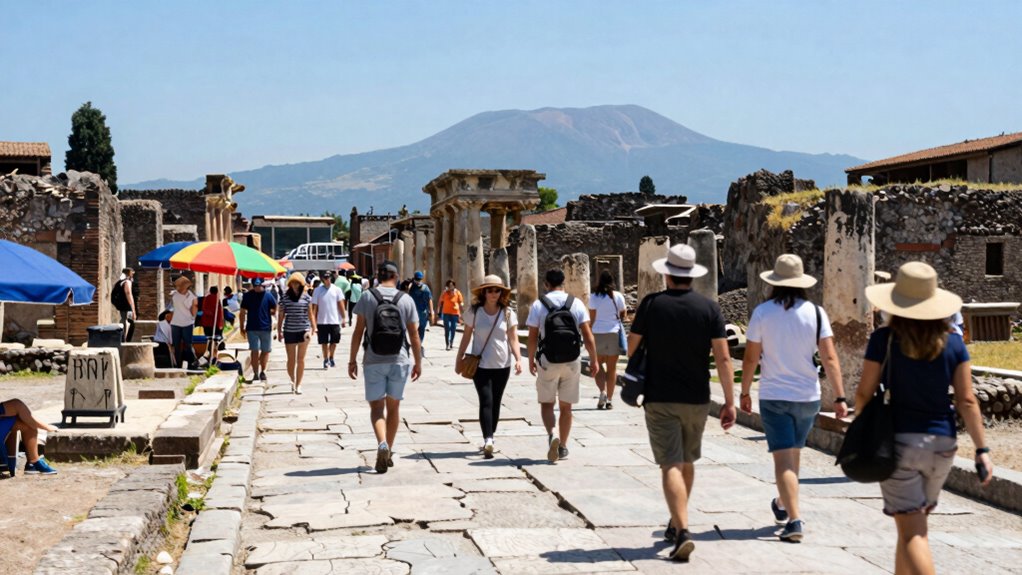

Many tourists make the mistake of visiting Pompeii during peak hours, like late morning or midday, when crowds are thick and temperatures soar. This rush reduces your enjoyment, limits access to key sites, and exposes you to intense heat. Instead, plan your visit early in the morning or late in the afternoon when it’s quieter and cooler. If you keep exploring, you’ll discover smarter timing tips to make your trip truly memorable.
Key Takeaways
- Avoid visiting mid-morning or midday to prevent crowds, heat, and limited sightseeing time.
- Opt for early morning or late afternoon visits for cooler temperatures and quieter attractions.
- Plan visits during shoulder seasons (April–May, September–October) to escape peak crowds and high temperatures.
- Book tickets in advance to secure preferred times, especially during busy seasons, and avoid long queues.
- Consider arriving early or later in the day to maximize exploration and enjoy the site with fewer visitors.
Top picks for "visit pompeii mistake"
Open Amazon search results for this keyword.
As an affiliate, we earn on qualifying purchases.
The Pitfall of Visiting During Peak Summer Hours
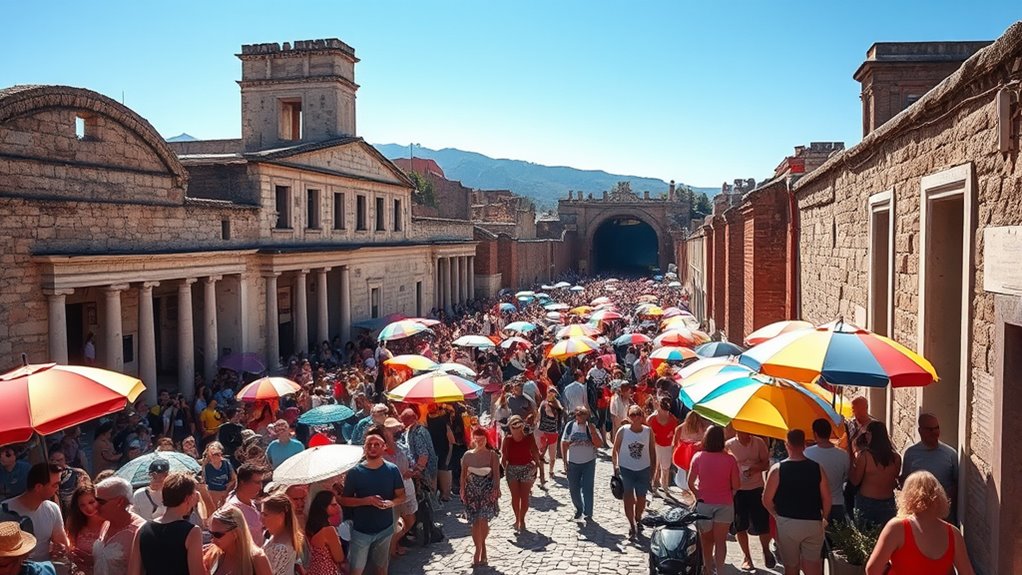
Visiting Pompeii during peak summer hours often leads to a frustrating experience due to overcrowding and intense heat. You’ll find the site packed with tour groups, making it hard to see key attractions without feeling rushed or crowded out. Temperatures can soar above 90°F, and the sun beats down on exposed ruins, making your visit uncomfortable and tiring. Lines at entrances and popular spots tend to be long, especially if you haven’t booked tickets in advance. Plus, many areas may be temporarily closed or crowded during peak hours, limiting what you can see. Trying to explore during this busy period often results in a hurried, less enjoyable experience. To truly appreciate Pompeii, you need to avoid these peak hours and aim for quieter times. Additionally, visiting during off-peak hours allows for better color accuracy in viewing the site’s details and mosaics, enhancing your overall experience. Choosing the right timing also helps you avoid the crowd congestion, giving you a more relaxed and immersive visit. Being aware of visitor patterns can help you plan a more comfortable and insightful exploration of the ancient city. Planning your visit early in the morning or later in the afternoon can also help avoid the peak visitor influx, resulting in a more peaceful experience.
Why Mid-Morning Arrivals Can Ruin Your Experience
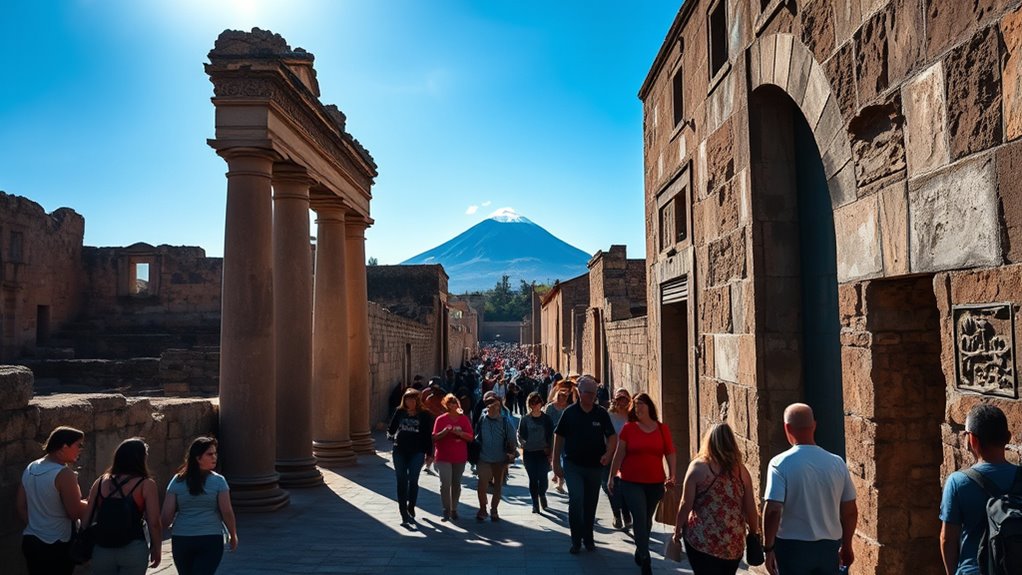
Arriving mid-morning means you’ll face large crowds and long lines, making it hard to enjoy the site at your own pace. The midday sun also exposes you to intense heat, which can quickly drain your energy and reduce your sightseeing time. To truly appreciate Pompeii, consider arriving early or late in the day when crowds are thinner and the weather is cooler. Additionally, choosing energy-efficient cloud solutions can help you plan your visit more effectively by providing reliable access to online resources and maps, enhancing your experience. Implementing seasonal checklists for planning can also ensure you select the best times and conditions for your visit, making the most of your time at the site. Using accessory recommendations like portable fans or hats can further improve your comfort during hot days. Planning ahead with visitor management strategies can also minimize wait times and improve overall enjoyment. Being aware of crowd patterns and peak hours can help you avoid the busiest times for a more relaxed visit.
Peak Crowd Surge
Mid-morning is often the worst time to arrive at Pompeii because it coincides with the peak influx of tour groups and other visitors. By then, the site is crowded, making it difficult to appreciate the ruins and enjoy a peaceful experience. You’ll likely face long lines at entrances and struggle to navigate narrow streets and open areas. The crowds can also hinder access to key sites like the Forum, House of the Faun, or baths, forcing you to rush or settle for partial views. Plus, mid-morning visits mean you’ll miss the calm early hours when fewer people are around. To avoid this chaos, aim to arrive right at opening time or later in the afternoon when crowds thin out, providing a more immersive and relaxed experience.
Sun Exposure Risks
By arriving mid-morning, you expose yourself to the strongest and most intense sunlight of the day, which can quickly turn your visit uncomfortable and even risky. The midday sun hits hard, increasing your chances of sunburn, heat exhaustion, and dehydration. Without proper protection, you might find yourself exhausted before seeing the best sites. The heat also accelerates fatigue, making it harder to walk and appreciate Pompeii’s ruins. If you’re not prepared with sunscreen, a hat, and plenty of water, your experience can be cut short or become unpleasant. Arriving too late in the day means rushing through sites just to beat closing times, but arriving too late exposes you to peak sun. To enjoy Pompeii safely, aim for early morning or late afternoon visits when the sun’s strength is lower. Planning your visit around shaded areas can help you stay cooler and more comfortable throughout your exploration.
Limited Sightseeing Time
Visiting Pompeii during mid-morning often means you’ll have only a limited window to enjoy its highlights before the crowds and midday heat set in. By arriving around 10 or 11 AM, you risk missing the quieter early hours when the site is less crowded and more comfortable to explore. Tour groups arrive en masse shortly after opening, making key areas crowded and hurried. The intense midday sun also hampers your ability to see and appreciate the ruins fully. If you want a meaningful visit, plan to arrive early or late in the day. This way, you’ll maximize your time at the major sites, avoid the crush of tourists, and enjoy a more relaxed, insightful experience of Pompeii’s ancient wonders.
The Benefits of Early-Morning and Late-Afternoon Visits
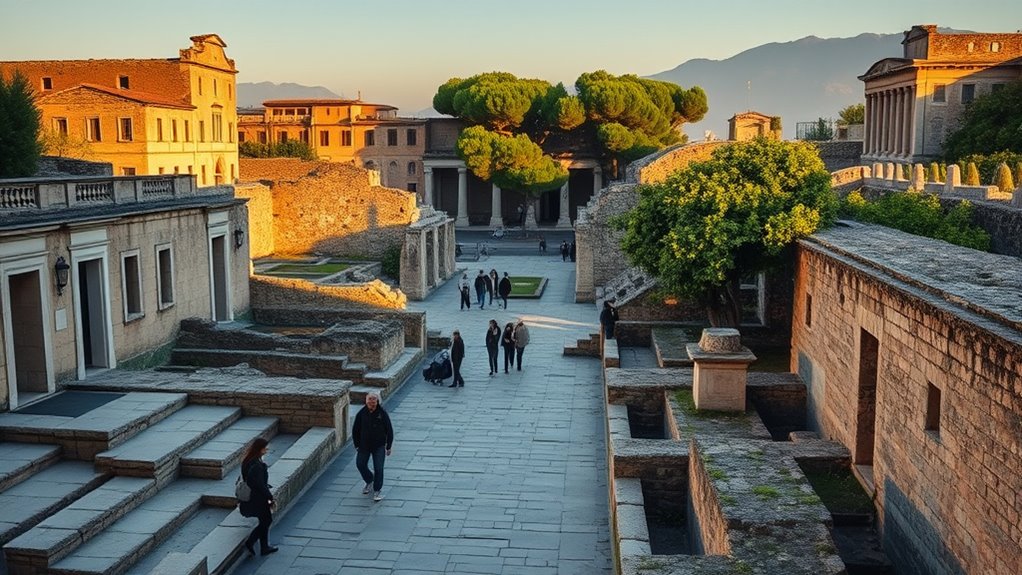
Visiting Pompeii early in the morning or late in the afternoon means you’ll encounter fewer crowds and have more space to explore comfortably. Cooler temperatures make walking around more pleasant, allowing you to enjoy the site longer without overheating. These times also give you uninterrupted time to see the highlights at a relaxed pace. Additionally, visiting during these times can enhance your experience by allowing you to better appreciate the site’s atmosphere and historical ambiance, much like experiencing authentic Café culture and ordering basics or enjoying a quieter moment in European museums. Choosing these optimal times can also help you better understand the timing mistakes many tourists make, ensuring a more immersive and rewarding visit. Moreover, being aware of energy consumption and the best times to visit can help you plan your day more efficiently.
Fewer Crowds, More Space
Arriving early in the morning or later in the afternoon allows you to enjoy Pompeii with fewer crowds and more space to explore comfortably. During these times, you’ll encounter fewer tour groups and locals, giving you a quieter, more personal experience. Early mornings often mean you can start your visit as the site opens, offering a few hours of unobstructed sightseeing before the crowds arrive around mid-morning. Late afternoons, especially during extended summer hours, let you wind down after peak hours, reducing the hustle and bustle. These slots also help you avoid the intense heat, making walking and exploring more pleasant. Additionally, timing optimization can significantly enhance your overall experience by allowing more relaxed exploration. Being aware of visitor patterns is key to planning your trip effectively. Just remember to confirm your ticket time in advance and arrive promptly to maximize your time in this historic site. Recognizing peak visiting hours can help you choose the best windows for a more tranquil visit.
Cooler Temperatures, Better Comfort
Choosing to explore Pompeii during the early morning or late afternoon means you’ll enjoy more comfortable temperatures and a more pleasant experience. During these times, the intense heat and crowds are markedly reduced, allowing you to focus on the site’s details without discomfort. Optimal visiting times can significantly enhance your overall experience. Consider these benefits: 1. Enhanced Comfort: Cooler temperatures prevent fatigue and dehydration, making walking and exploring more manageable. 2. Better Visibility: Soft morning or evening light highlights the ruins’ textures and colors, enriching your visual experience. 3. Fewer Crowds: Less foot traffic means you can explore at a relaxed pace, avoiding bottlenecks and enjoying quieter moments in popular spots. Timing your visit this way maximizes your enjoyment and minimizes stress, giving you a richer, more comfortable Pompeii experience.
Longer, Uninterrupted Exploration
Opting for early-morning or late-afternoon visits allows you to enjoy longer, uninterrupted periods to explore Pompeii without the disruptions of crowds or midday heat. During these times, you can focus on key sites at your own pace, capture better photos, and truly absorb the atmosphere. Early visits often give you a head start before groups arrive, while late afternoons can extend your stay if the site remains open. Planning around these windows helps maximize your experience and minimizes fatigue. To visualize, consider the following ideas:
| Time of Day | Benefits | Challenges |
|---|---|---|
| Early morning | Less crowd, cooler temps | Limited afternoon hours |
| Late afternoon | Fewer visitors, extended hours | Rapid entry limits possibility |
| Both | Longer, peaceful exploration | Need precise planning |
Being aware of timing mistakes and how they can affect your experience can help you plan more effectively and avoid common pitfalls during your visit. Additionally, understanding peak visiting times can help you better prepare for the best possible experience. Recognizing the importance of timing in relation to weather conditions and crowd patterns can significantly enhance your visit. Moreover, timing awareness can help you avoid missing out on ideal lighting conditions for photography.
Navigating Seasonal Variations in Opening Hours and Crowds
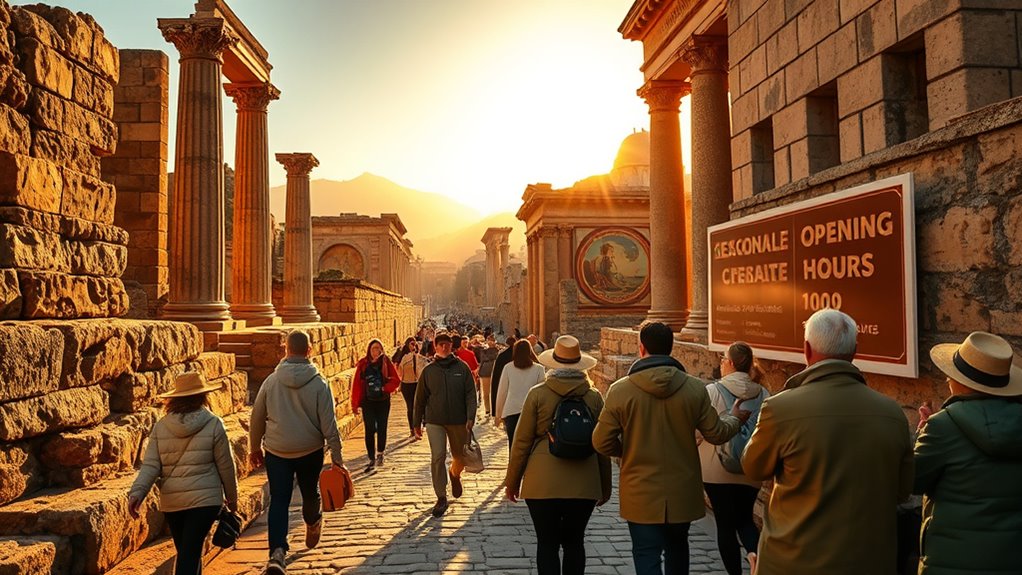
Seasonal variations considerably influence Pompeii’s opening hours and crowd levels, so planning your visit around these changes can greatly enhance your experience. To optimize your trip, consider these key points:
Adjust your visit timing to enjoy Pompeii’s ruins with fewer crowds and better weather.
- Choose shoulder seasons (April–May, September–October) for milder weather and fewer visitors, making exploration more comfortable.
- Visit early in the day during high season, arriving at opening time to avoid peak crowds and the midday heat.
- Be aware of winter hours, which often close earlier and reduce available time, so plan accordingly to see major sites.
- Understanding seasonal variations and their impact on visitor flow can help you select the best time to visit and avoid the busiest periods. Being aware of wave and wind conditions can also influence your outdoor experience, especially if visiting during less predictable weather seasons.
Adjusting your schedule based on seasonal patterns helps you enjoy Pompeii’s ruins without the stress of overwhelming crowds or limited access.
The Importance of Booking Tickets in Advance
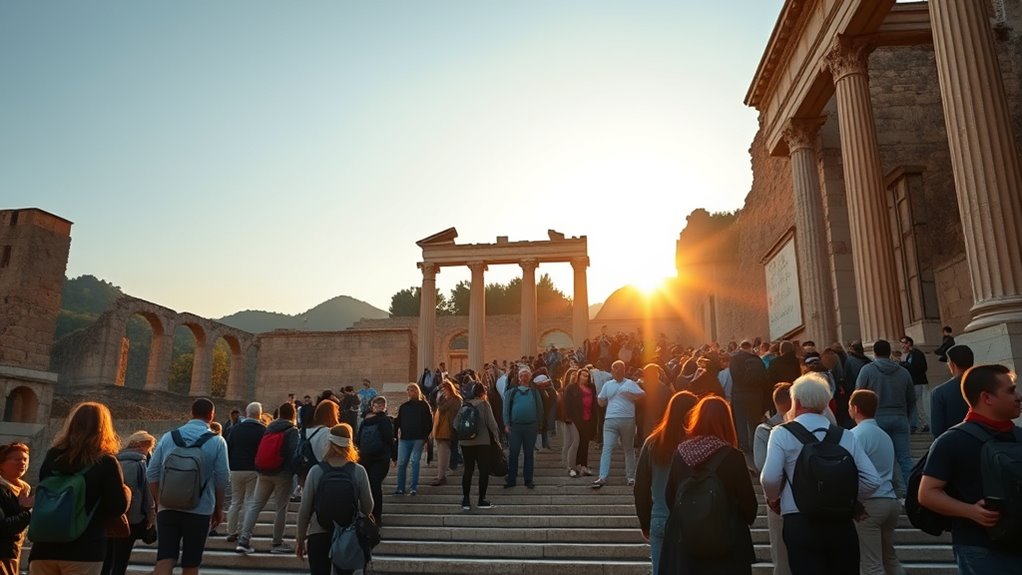
Booking your tickets in advance is essential to guarantee you gain entry to Pompeii, especially during peak seasons when daily capacity limits are quickly reached. Without pre-booked tickets, you risk arriving only to find the site sold out or facing long queues that waste valuable sightseeing time. Personalized, timed tickets help you select the most convenient entry slot, reducing stress and ensuring you maximize your visit. During busy periods, on-site ticket sales often sell out early, leaving you unable to explore. Booking ahead also allows you to plan your arrival around your preferred times—early morning or late afternoon—when crowds are lighter. Skipping this step can lead to disappointment and rushed visits, diminishing your experience of this incredible archaeological site.
How Timing Affects Your Ability to See Key Highlights

Timing plays a crucial role in whether you can see Pompeii’s key highlights without feeling rushed or overwhelmed. Visiting at the right time ensures you experience the site’s best without excessive crowds or heat.
Consider these factors:
- Early mornings allow 2–3 hours of relatively uncrowded exploration before groups arrive around 11:00 AM.
- Late afternoons can offer quieter views, but limited hours and potential entry caps reduce your available time.
- Seasons matter—spring and fall provide milder weather and fewer visitors, making it easier to see major highlights comfortably.
Managing Queues and Entry Limitations Effectively
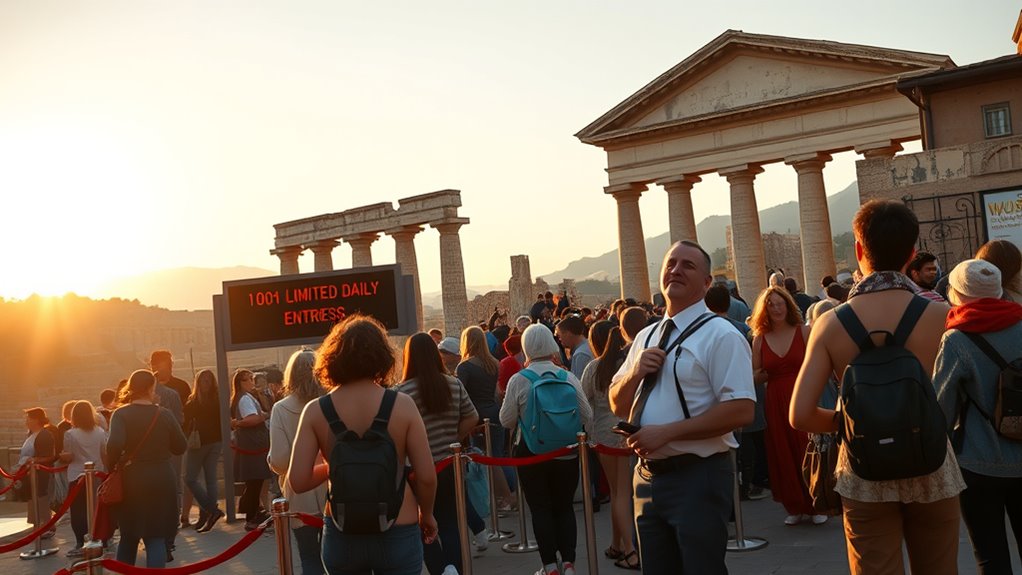
To manage queues and entry limitations effectively at Pompeii, you need to plan ahead and use official resources to secure your visit. Book your tickets online early, choosing timed slots that suit your schedule. Arriving at off-peak hours, like early morning or late afternoon, helps avoid crowds and long lines. Be aware that capacity limits mean you might get turned away if you arrive without a reservation during busy times. Keeping track of real-time updates on the official website or app can prevent surprises. Use the table below to understand your emotional journey during peak and off-peak visits:
| Peak Hours | Off-Peak Hours |
|---|---|
| Crowded, stressful | Quiet, relaxed |
| Long queues | Short or no queues |
| Overheated, exhausted | Comfortable, enjoyable |
| Rushed experience | Leisurely exploration |
| Frustration and fatigue | Satisfaction and awe |
Planning Your Visit to Avoid the Common Timing Mistakes
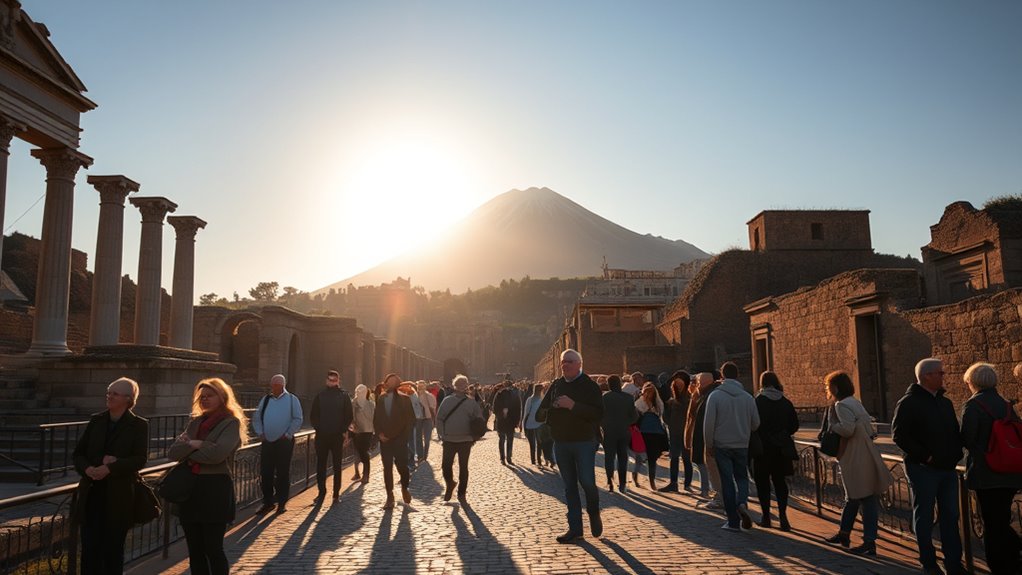
Planning your visit carefully can make a significant difference in experiencing Pompeii without the frustrations of overcrowding and heat. To do this effectively, consider these key strategies:
- Aim for early mornings or late afternoons, when crowds are thinner and temperatures cooler, maximizing comfort and exploration time.
- Book your tickets online in advance, selecting specific time slots to avoid waiting in long queues or being turned away during peak hours.
- Visit during shoulder seasons (April–May or September–October), when the weather is mild and visitor numbers are lower, ensuring a more relaxed experience.
Frequently Asked Questions
How Early Should I Arrive to Avoid Crowds at Pompeii?
You should aim to arrive at Pompeii right when it opens, usually early morning, to avoid the worst crowds. You’ll get 2–3 hours of relatively quiet exploration before tour groups arrive around 11:00 AM. Be sure to book your timed ticket in advance to secure your spot. Arriving early also helps you enjoy cooler temperatures and more comfortable conditions, making your visit more pleasant and less rushed.
Can I Visit Pompeii During Winter With Shorter Hours?
Sure, you can visit Pompeii in winter, but don’t expect a prolonged adventure. Shorter hours mean you’ll need to hustle, skipping some sights or rushing through the ruins like a hurried ghost. Prepare for chilly breezes, possible rain, and a less lively atmosphere. Book tickets in advance, arrive early, and accept that your winter visit is a quick snapshot, not a leisurely exploration—like trying to enjoy a sunset in a blink.
Is It Necessary to Book Tickets Weeks in Advance?
Yes, you should book tickets weeks in advance, especially during peak season or free-entry days. Online reservations secure your spot and help you avoid long queues or being turned away when daily limits are reached. Without advance booking, you risk missing out entirely or spending valuable time waiting in line. Planning ahead guarantees you get preferred time slots, making your visit smoother and more enjoyable.
How Long Should I Plan for a Comprehensive Pompeii Visit?
You should plan at least 4 to 6 hours for a thorough Pompeii visit. This allows you to explore key sites like the Forum, House of the Faun, and Stabian Baths without rushing. If you want a deeper experience, allocate more time, especially if you’re interested in seeing less-visited areas or taking guided tours. Remember, arriving early or late can help you avoid crowds and make the most of your day.
What Are the Best Times of Day to Explore Comfortably?
Imagine catching the sunrise’s gentle glow—this is your best time to explore Pompeii comfortably. Arrive early at the site opening to enjoy peaceful, uncrowded ruins before the crowds and heat arrive. Avoid midday when the sun’s glare and busy tour groups dominate. Late afternoon can also be ideal, offering cooler temperatures and fewer visitors. Book your tickets in advance to guarantee smooth entry and make the most of these prime times.
Conclusion
Ironically, the best way to enjoy Pompeii is by avoiding its busiest hours. Skip the crowds, arrive early or late, and you’ll see more than you’d expect — without the stress. Instead of rushing through, you’ll actually get to soak in the ancient ruins at a relaxed pace. So, the next time you plan your visit, remember: sometimes, the secret to a perfect experience is simply timing it right and avoiding the peak chaos.