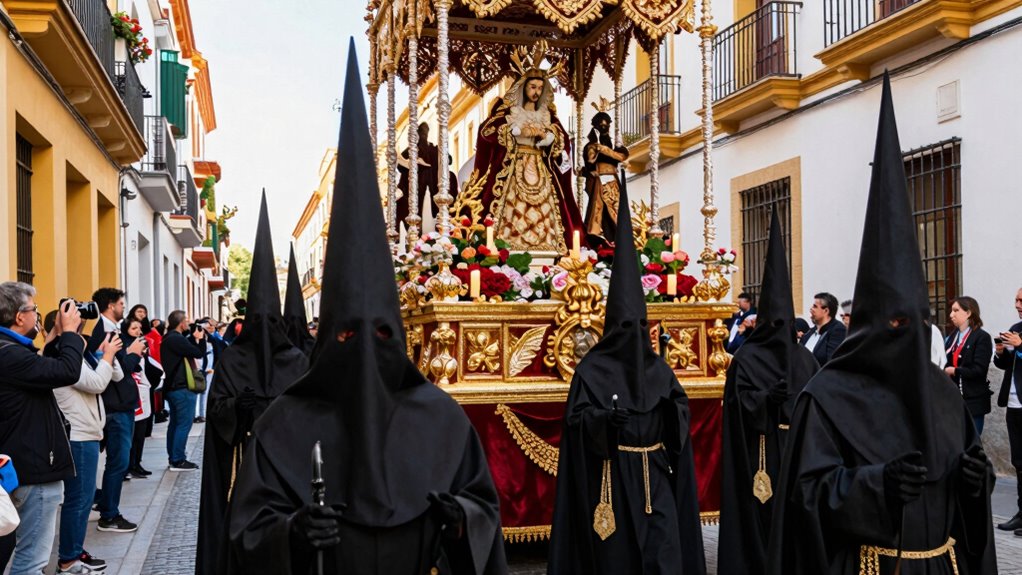

During Easter in Spain, especially during Semana Santa, you’ll witness impressive processions featuring floats called pasos, with religious icons carried through streets. People wear traditional robes and accessories, and each region has its own customs, foods, and rituals. From solemn processions on Good Friday to lively celebrations on Easter Sunday, this festival is rooted in faith and culture. Keep exploring to discover how you can make the most of these unforgettable traditions.

Get travel and outdoor gear delivered free — and shop member deals
- Fast, free delivery on millions of items
- Access to Prime Big Deal Days deals on October 6–7
- Prime Video, Amazon Music and more included
Key Takeaways
- Semana Santa is a deeply spiritual and cultural celebration featuring processions, religious icons, and traditional music across Spain’s regions.
- Key days include Domingo de Ramos, Jueves Santo, Viernes Santo, La Madrugá, and Easter Sunday, each with unique rituals and processions.
- Participants wear modest, traditional attire like hooded robes (nazarenos) and mantillas, demonstrating reverence and penitence.
- Typical customs involve elaborate floats (pasos), acts of penance, and regional dishes such as torrijas and Potaje de Vigilia.
- To respectfully enjoy Semana Santa, arrive early, dress modestly, avoid blocking processions, and observe local customs and silence.
As an affiliate, we earn on qualifying purchases.
The Significance of Semana Santa in Spain
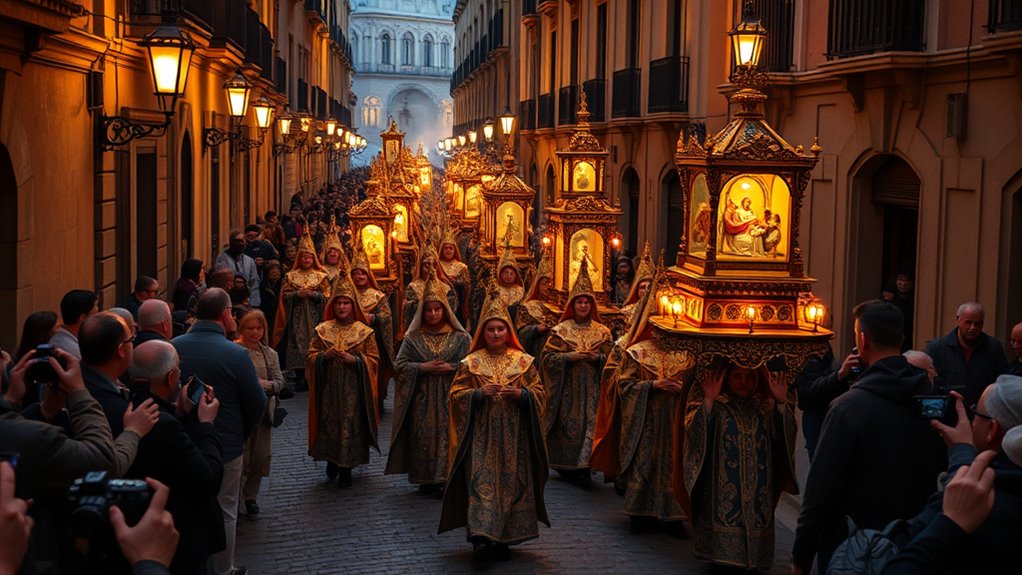
Semana Santa holds deep spiritual and cultural significance in Spain, serving as a powerful expression of faith and community identity. During this week, you witness a profound display of devotion, with processions that connect generations through shared traditions. It’s a time when religious beliefs are vividly brought to life through elaborate floats, somber music, and acts of penance. For many, it’s more than just a religious observance; it’s a communal event that unites neighborhoods and families. The emotional weight of these rituals reflects Spain’s historic Catholic roots, reinforcing cultural values like humility, reflection, and collective identity. Modern kitchen technology has even found a way to enhance the way communities prepare traditional foods for these celebrations, blending tradition with innovation. Additionally, the use of cultural symbolism during processions deepens the spiritual experience and highlights regional identities. Incorporating traditional culinary methods ensures that the authenticity of the festivities is preserved while embracing contemporary techniques. These ritualistic elements often involve symbolic objects and gestures that deepen the spiritual significance of the celebrations. The integration of security measures during large gatherings has become essential to ensure safety and smooth proceedings, reflecting the importance of community well-being. Whether in solemn silence or jubilant celebration, Semana Santa embodies a collective reverence that deepens your sense of belonging and spiritual connection.
As an affiliate, we earn on qualifying purchases.
Key Days and Their Unique Rituals
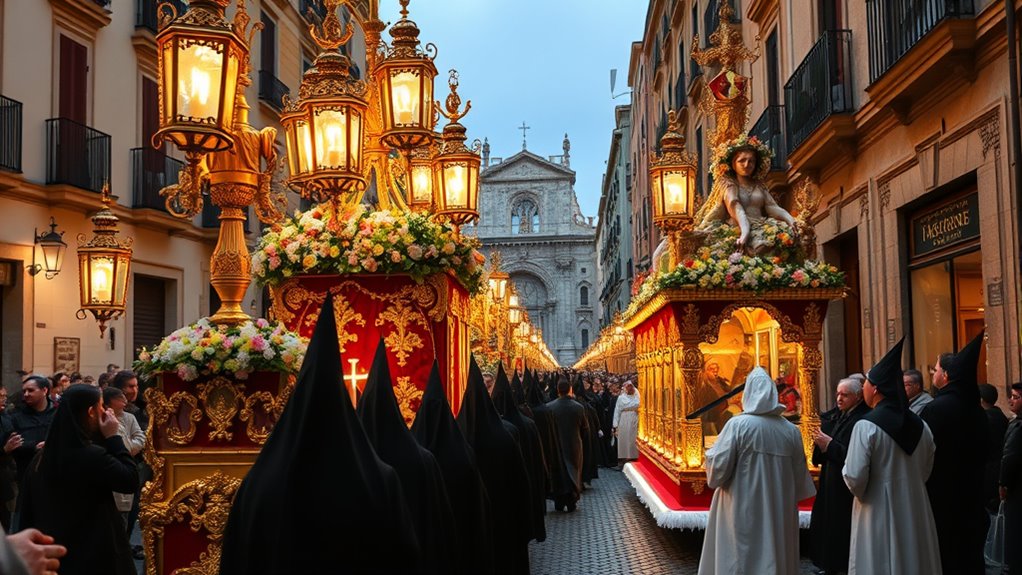
Each key day during Holy Week features distinct rituals that deepen the community’s connection to faith and tradition. On Domingo de Ramos, you’ll see palm leaves woven into intricate shapes, blessed, and carried in processions symbolizing Jesus’ entry into Jerusalem. Jueves Santo emphasizes solemnity; church bells are silenced, and processions focus on the Last Supper with quiet vigils. On Viernes Santo, you’ll witness day-long silent processions with elaborate floats depicting Passion scenes, often accompanied by fasting and penance. La Madrugá in Seville stands out, with overnight processions featuring iconic images like Virgen de la Macarena. Easter Sunday shifts to celebration, marked by lively parades, music, and resurrection themes. Each day’s rituals offer a unique glimpse into Spain’s deep-rooted faith and cultural customs during Holy Week, highlighting religious processions that are central to Spanish Holy Week traditions. The cultural significance of these rituals underscores their role in preserving Spain’s rich religious heritage. Additionally, these processions often involve traditional music, which enhances the solemn and celebratory atmospheres throughout the week. The use of auditory cues plays a vital role in engaging participants and spectators alike, enriching the sensory experience. The community participation during these events fosters a strong sense of unity and shared identity among locals and visitors alike.
traditional Spanish religious float models
As an affiliate, we earn on qualifying purchases.
As an affiliate, we earn on qualifying purchases.
The Spectacle of Processions and Floats
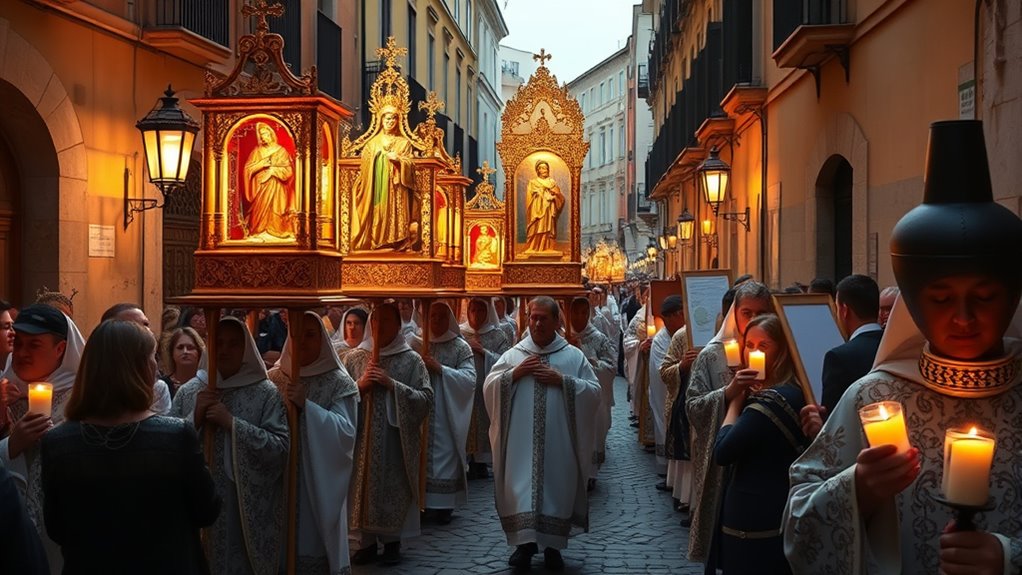
The processions during Holy Week in Spain transform the streets into living displays of faith and artistry. You’ll witness floats, or pasos, depicting scenes from the Passion, carried by up to 40 porters called costaleros. These floats are elaborately decorated and often feature religious icons like Virgen de la Macarena or Cristo del Gran Poder. As you watch, you’ll hear solemn music from drums, chants, and coronets echoing through the streets, creating a reverent atmosphere. Brotherhoods, or cofradías, organize these processions, each with distinct colors and insignias passed down through generations. In Seville’s La Madrugá, the night sky lights up with images of revered saints, making it a breathtaking moment you won’t forget. Procession routes are carefully planned to respect the tradition and enhance the communal experience. Religious icons are central to these displays, often serving as the focal points of the floats and inspiring deep devotion among spectators. Additionally, the historical significance of these processions reflects centuries of Spanish religious and cultural heritage. The tradition of elaborate decoration and craftsmanship on the floats highlights the rich artistic heritage behind these processions. Furthermore, the use of traditional music amplifies the emotional and spiritual impact of the events, drawing spectators into a shared experience of faith and community.
modest attire for religious processions
As an affiliate, we earn on qualifying purchases.
As an affiliate, we earn on qualifying purchases.
Traditional Attire and Symbolic Accessories
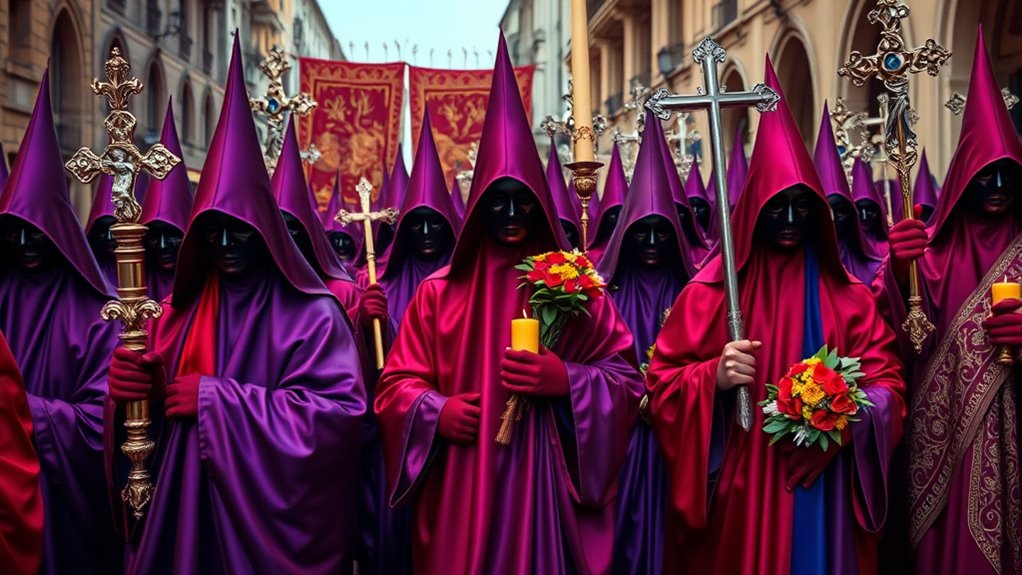
During Holy Week processions, participants wear distinctive attire and symbolic accessories that convey their devotion and penitence. Nazarenos dress in hooded robes called túnicas, with pointed caps called capirotes that cover their faces, symbolizing mourning and anonymity. The colors of their robes and belts vary by brotherhood, often representing specific themes or devotions. Ropes or cords worn around their waists or shoulders symbolize penance and are often heirlooms passed down through generations. Women in Seville typically wear mantillas—delicate black lace veils—with elegant black dresses, emphasizing solemnity. Costaleros, the bearers of floats, wear simple clothing, carrying religious images on their shoulders. These attire choices and accessories serve to express humility, reverence, and the spiritual purpose of the procession. Understanding the regulations and traditions surrounding Holy Week attire enhances appreciation of their cultural significance. Proper adherence to these practices reflects the vibrant customs that have been preserved over centuries to honor religious devotion. Additionally, the materials and craftsmanship involved in creating these garments often have historical and regional significance, further enriching the experience. Recognizing the symbolic meanings behind each element deepens the connection to the spiritual traditions they represent and highlights the importance of traditional craftsmanship in maintaining authenticity.
Regional Variations Across Spain
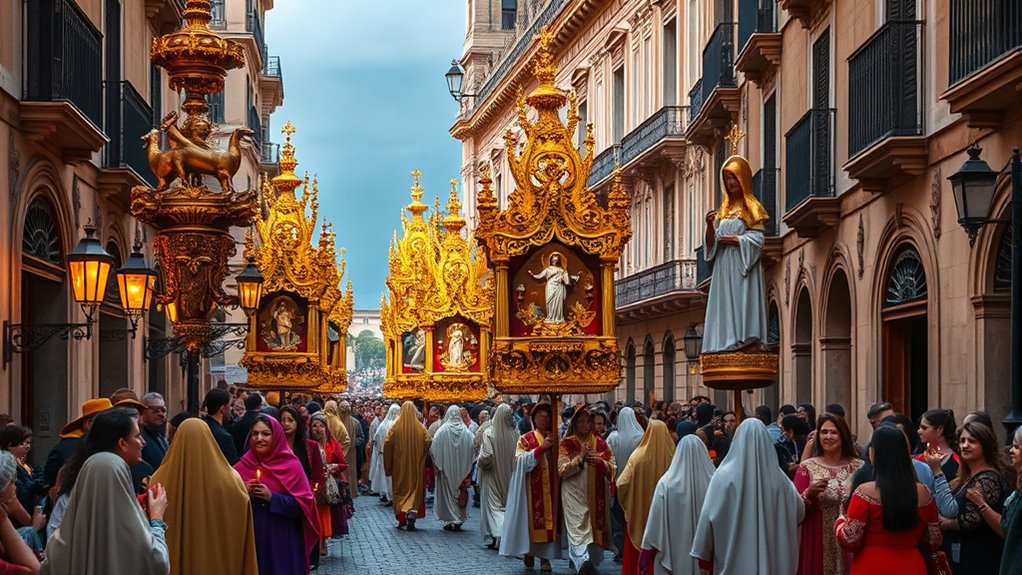
Spain’s regions showcase a rich tapestry of Easter traditions, with each area adding its own unique flavor to the nationwide celebrations. You’ll notice differences in processions, customs, and intensity across the country. For example:
- In Seville, expect elaborate, theatrical processions with thousands of participants and iconic overnight events like La Madrugá.
- In Cáceres, penitents called Los Empalaos are bound with ropes and chains, emphasizing extreme penance.
- Tudela features the Volatín, where firecrackers and drum dances mark historical invasions, adding a lively, historic touch.
These regional variations reflect local history, culture, and religious expression, making each celebration uniquely memorable. You can also observe how local traditions influence the style and scale of the festivities, enriching the cultural tapestry of Spain. The historical roots of each region’s customs contribute to the diversity seen in Semana Santa celebrations. For instance, regional history often shapes the specific rituals and symbolism incorporated into each procession. Your experience will differ depending on where you are, offering authentic insights into Spain’s diverse Easter traditions. Understanding the regional customs can enhance your appreciation of Spain’s cultural diversity during Semana Santa.
Food, Customs, and Acts of Penitence
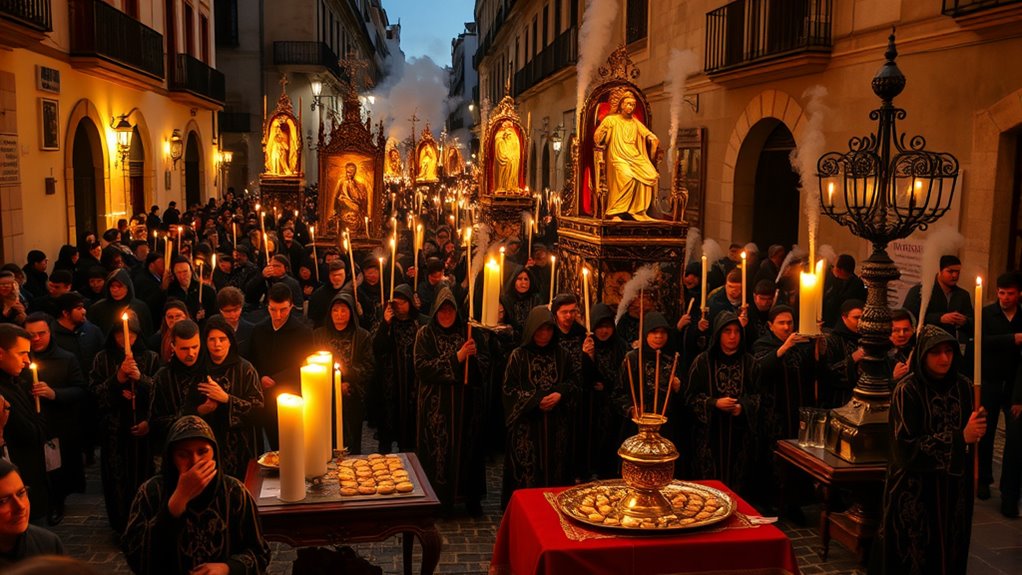
During Easter in Spain, you’ll find traditional dishes like torrijas and various fish or vegetable meals that honor the season’s restrictions. Acts of personal penance, such as carrying crosses or participating in processions, are common ways to express devotion. You’ll also notice cultural penitence rituals, like firecrackers or symbolic acts, that reflect deep-rooted religious customs.
Traditional Easter Dishes
Traditional Easter dishes in Spain are deeply rooted in religious customs and seasonal traditions. During this time, you’ll find many special foods that reflect the penitential spirit and festive mood. Lent restrictions mean meat is avoided, so fish and vegetable dishes take center stage. Sweets also play a big role, especially in Easter celebrations.
Here are some typical dishes you’ll encounter:
- Torrijas: Fried bread soaked in milk, eggs, and sugar, similar to French toast.
- Potaje de Vigilia: A hearty chickpea stew with spinach and cod, perfect for Fridays.
- Mona de Pascua: A traditional Easter cake decorated with colorful eggs and chocolate.
These dishes connect you to Spain’s culinary history and regional customs, making your Easter experience richer and more authentic.
Acts of Personal Penance
Acts of personal penance are a meaningful way for individuals to deepen their spiritual reflection during Easter. You might choose to fast, skip indulgent foods, or abstain from certain pleasures as a sign of repentance. Many participate in processions, carrying crosses or walking barefoot to symbolize humility and sacrifice. Some write prayers or perform acts of charity, focusing on self-discipline and spiritual renewal. It’s common to give up favorite foods or habits during Lent, culminating in Easter acts of penitence. These acts aren’t just symbolic; they’re personal commitments to reflect on Jesus’ suffering and resurrection. Engaging in such practices helps you connect more deeply with the spiritual significance of Easter, fostering humility, gratitude, and a renewed sense of faith.
Cultural Penitence Rituals
Cultural penitence rituals in Spain’s Easter celebrations often involve specific foods, customs, and acts of sacrifice that deepen your spiritual reflection. You might observe traditional practices like weaving palmas (palm leaves) or venerate religious icons during processions. Acts of penance often include carrying crosses or participating in silent walks, symbolizing your devotion. Food also plays a role, with restrictions on meat and special dishes like torrijas—fried bread soaked in milk and eggs—serving as seasonal staples. Some regions incorporate unique customs, such as the los Empalaos in Cáceres, where penitents are bound with ropes, or firecracker dances in Tudela. These rituals help you connect with tradition and reflect on sacrifice, fostering a deeper spiritual experience during Holy Week.
Preparing to Experience Semana Santa
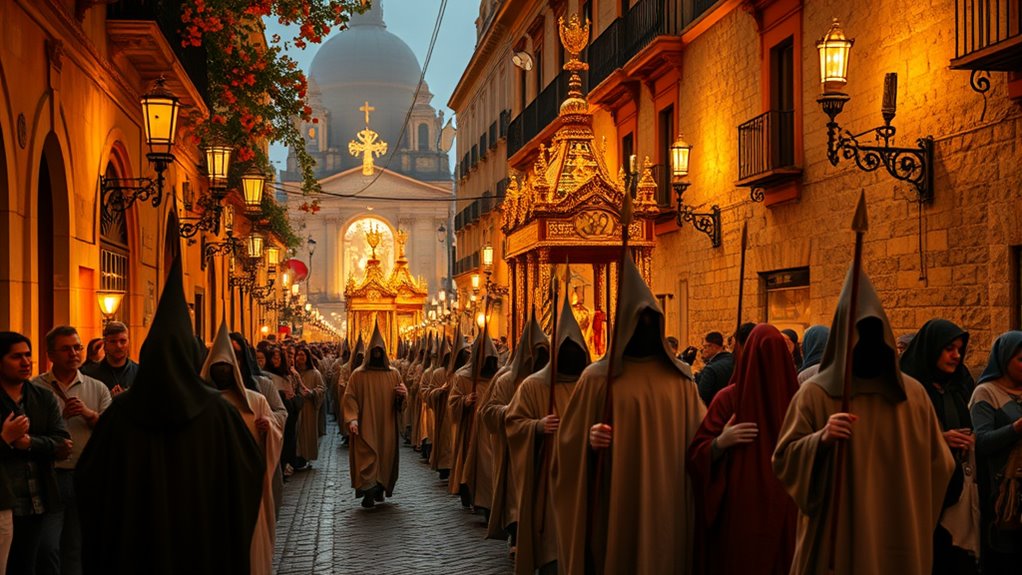
When you attend Semana Santa processions, dressing appropriately shows respect for the traditions and participants. Keep in mind that modest, respectful clothing is expected, especially near religious icons and during solemn moments. By understanding the proper etiquette, you’ll help honor the significance of these powerful events.
Dress and Attire Tips
To fully immerse yourself in Semana Santa, it’s important to dress respectfully and comfortably, considering the solemnity and tradition of the events. Opt for modest clothing that covers shoulders and knees, especially if you plan to view processions up close. Neutral colors like black, navy, or gray are appropriate, reflecting the somber mood. Avoid flashy accessories or bright patterns that may distract from the reverence. Comfortable shoes are essential since you’ll be walking or standing for long periods.
- Wear closed-toe shoes suitable for cobblestone streets
- Bring a lightweight scarf or shawl for added modesty or shade
- Carry a small, discreet bag to hold essentials without clutter
Respect and Etiquette
As you prepare to experience Semana Santa, showing respect and observing proper etiquette will help you fully appreciate the solemnity and significance of the celebrations. Keep a respectful distance from processions and avoid blocking the path of pasos or participants. Dress modestly and quietly, refraining from loud conversations or inappropriate behavior around religious images. Silence during moments of prayer or reflection, especially in churches or during processions, is appreciated. Refrain from taking flash photos near sacred images or disturbing the procession’s flow. When watching from the sidelines, stand still and avoid unnecessary movement. If you’re invited to participate in acts of penance or customs, accept with reverence. Respect the traditions and the community’s devotion, allowing yourself to fully absorb the spiritual atmosphere.
Tips for Visitors to Make the Most of the Festivities
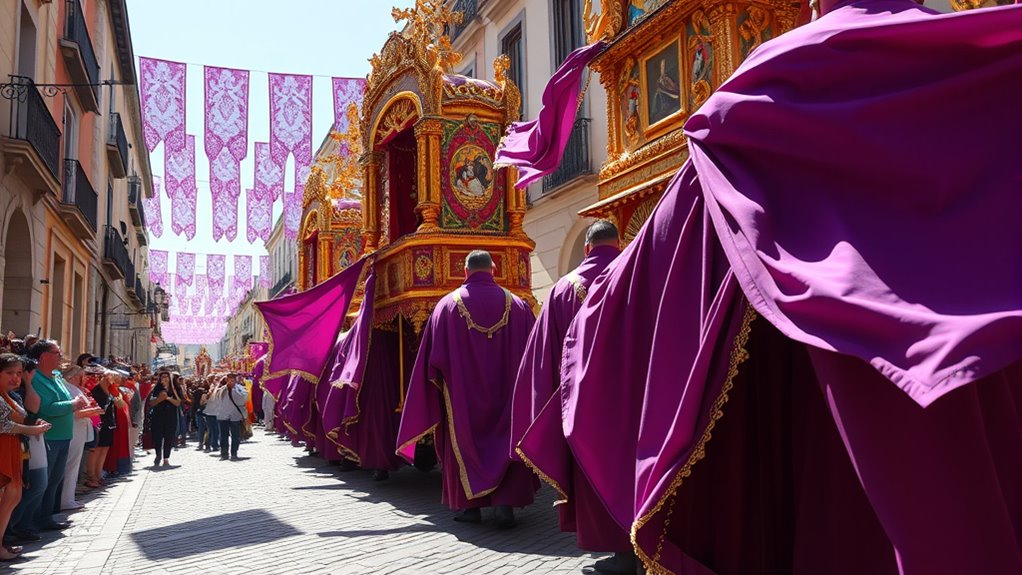
Attending Semana Santa in Spain offers a unique and unforgettable experience, but to truly enjoy the festivities, it’s helpful to plan ahead. First, familiarize yourself with the schedule and routes of processions in your chosen city. Arrive early to secure a good spot, especially for popular events like La Madrugá in Seville. Be respectful during processions—stay quiet, avoid blocking views, and follow local customs. Dress appropriately, often in modest, dark clothing, and don’t forget to bring a flashlight if you’re out early in the morning.
- Arrive early and find a comfortable viewing spot
- Respect the processions and local customs
- Dress modestly and carry a small flashlight
Frequently Asked Questions
How Early Should I Arrive to See the Main Processions?
You should arrive at least an hour before the main processions start to get a good spot along the route. In popular cities like Seville, processions can begin early morning, sometimes around 5 or 6 am, especially during La Madrugá. Arriving early guarantees you find a vantage point, soak in the atmosphere, and fully experience the significance of these solemn or jubilant events.
Are Non-Religious Visitors Welcome to Participate or Observe?
Non-religious visitors are warmly welcomed to observe Semana Santa processions, as millions of tourists join locals. An impressive 300 brotherhoods organize over 1,500 processions nationwide, creating a vibrant, inclusive atmosphere. You can stand along the routes, enjoy the music, and admire the elaborate floats and costumes. Participating in acts like lighting candles or simply soaking in the solemn or jubilant mood enhances your experience, making it more meaningful and memorable.
What Are the Best Locations for Viewing the Processions?
You should head to Seville’s Carrera Oficial for the most iconic processions, especially during La Madrugá, when the city’s atmosphere is electric. Other top spots include Málaga’s streets and Granada’s Albaicín neighborhood, where processions wind through narrow alleys. In Cádiz and Murcia, you find lively yet slightly less crowded celebrations. Arrive early to find good spots, and be prepared for large crowds and vibrant, immersive experiences.
Is Dress Code Important for Attending Semana Santa Events?
You should dress respectfully when attending Semana Santa events, as if you’re stepping into a sacred space. While there’s no strict dress code, opting for modest attire shows reverence for the solemnity. Avoid flashy clothes or casual wear like shorts and tank tops. Instead, choose dark, conservative outfits, and women often wear mantillas. Your attire helps honor the tradition and blends seamlessly into the sea of faithful participating in these historic processions.
Are There Any Safety Tips for Large Crowds During Processions?
When attending Semana Santa processions, stay aware of large crowds and keep close to your group to avoid getting lost. Wear comfortable shoes, and hold onto your belongings to prevent pickpocketing. Follow any instructions from event organizers or security personnel, and avoid blocking the procession route. If you feel overwhelmed, step aside to a quieter spot. Keep hydrated and respectful of religious customs to guarantee a safe, enjoyable experience.
Conclusion
As you step into Spain’s Semana Santa, think of it as entering a living, breathing tapestry woven with devotion and tradition. Just like a visitor who once found themselves mesmerized by the rhythmic processions echoing through narrow streets, you’ll discover that embracing these customs transforms your trip into a meaningful journey. So, immerse yourself fully—every float, prayer, and dish brings you closer to Spain’s heart, turning fleeting moments into unforgettable memories.
Fall Picks
fall essentials
As an affiliate, we earn on qualifying purchases.