
In France, coffee culture is a cherished tradition blending history with social etiquette. When ordering, you might specify a “café crème” or say “Je voudrais un café, s’il vous plaît,” while greeting staff politely. Remember, modest tones and proper table manners are appreciated. From historic cafés to modern spots, each offers a unique experience. If you’re curious about more tips and the stories behind these drinks, there’s plenty more to discover.
Open a free Amazon Business account
Business pricing, bulk buying and tax-exempt orders.
As an affiliate, we earn on qualifying purchases.
Key Takeaways
- French coffee culture blends historical traditions like café crème with modern innovations, emphasizing quality, presentation, and social rituals.
- The term “café” encompasses various drinks, including petit noir, café au lait, and café crème, each with distinct origins and preparation styles.
- When ordering, use polite phrases such as “Je voudrais un café, s’il vous plaît” and specify your preferred type clearly.
- Proper café etiquette includes greeting staff, keeping voices moderate, and respecting table manners and communal sharing customs.
- Notable cafés like Café Procope and La Caféothèque offer authentic experiences, highlighting the importance of tradition and sustainability.
A Brief History of Coffee in France

Coffee made its way to France in the mid-17th century, first arriving in Marseille in 1644 through Pierre de La Roque. Soon after, it spread to Paris, where Suleyman Aga introduced it to Louis XIV’s court in 1669. By 1671, Pascal opened the first Paris coffee booth at St. Germain fair, marking the start of a burgeoning café scene. The legendary Café Procope opened in 1686, becoming France’s oldest café and a hub for intellectuals. François Damame was licensed in 1692 as the first official Paris coffee merchant. These early developments laid the groundwork for France’s deep-rooted coffee culture, transforming from exotic novelty to a staple of social, political, and artistic life. Coffee’s arrival sparked a lasting legacy that continues to influence French café culture today. The growth of coffee consumption in France was also driven by its role in social bonding and the emergence of the modern café as a center of conversation and political discourse. As modern energy-efficient fans became more common, they contributed to the comfort of these social spaces by improving airflow and ambiance.
The Evolution of Café Culture in Paris

As Paris’s social and political landscape evolved, so did its café culture, transforming from exclusive aristocratic gathering spots into lively centers of public life. You’ll notice how cafes shifted from aristocratic salons to bustling hubs for thinkers, artists, and revolutionaries. This evolution includes:
- The rise of cafés as meeting spots for Enlightenment thinkers and writers in the 18th century.
- Post-Revolution, merging high-end venues with working-class zinc bars, making cafes more accessible.
- The role of cafés in social movements, from civil rights to political debates, fostering community and dialogue. Over time, the café culture became a symbol of free expression and social change.
- Modern cafés continue to adapt, incorporating sustainable practices and technology to meet contemporary needs.
Today, Paris cafes balance tradition with modernity, serving as spaces for both leisure and cultural exchange. You experience this rich history every time you sit at a café, soaking in the layered evolution of Parisian social life.
Popular French Coffee Beverages and Their Origins
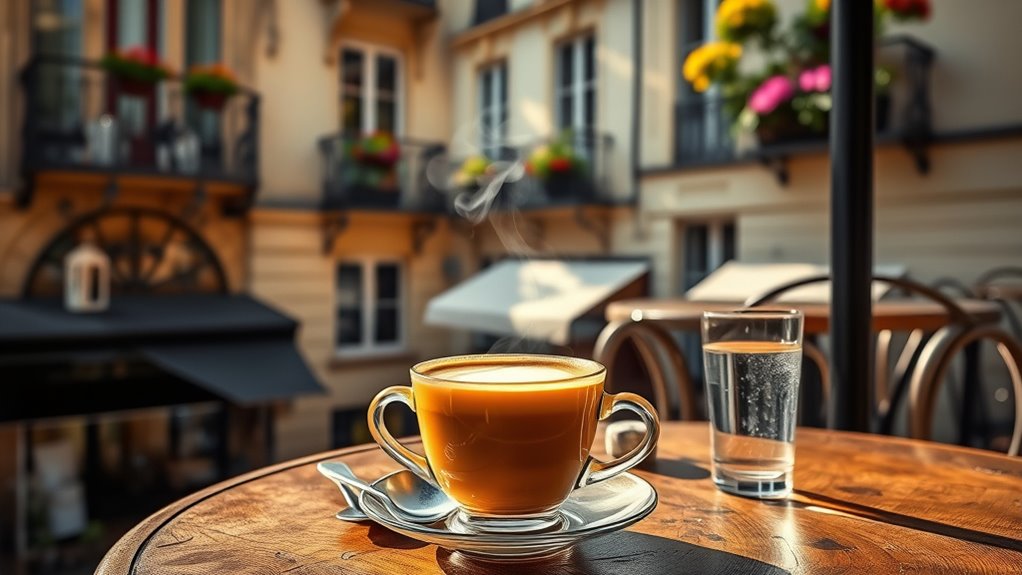
You’ll find that many French coffee favorites have fascinating origins. For example, the petit noir stems from Turkish-style coffee introduced through trade routes, while café au lait has roots in 18th-century Paris cafés. Café crème, on the other hand, developed as a popular espresso with steamed milk, blending Italian influence with French café culture.
Petit Noir Origins
Ever wonder where the beloved French beverage petit noir originated? This simple yet iconic drink traces back to Turkish-style coffee, brought to France through trade and cultural exchange. It evolved as a quick, strong shot of black coffee, favored for its intensity and straightforward flavor. The name “petit noir” literally means “little black,” reflecting its dark, concentrated nature. Its roots are linked to the Ottoman influence on European coffee habits, especially during the 17th and 18th centuries. Over time, it became a staple in Parisian cafés, appreciated by intellectuals and workers alike. The drink’s popularity persisted through centuries, embodying France’s love for bold, unadorned coffee. Today, petit noir remains a symbol of tradition, simple yet deeply ingrained in French coffee culture.
Café Au Lait Roots
Café au lait is a classic French coffee beverage that traces its origins to the lively cafés of 18th-century Paris. Back then, Parisians started combining brewed coffee with hot milk, creating a smooth, milder drink suited for leisurely mornings. This practice grew in popularity among the bourgeoisie and intellectuals, who appreciated its comforting quality. The concept spread across cafés, becoming a staple in Parisian social life. Unlike the more concentrated espresso-based drinks, café au lait emphasizes balance and creaminess, often served in large bowls or cups. Its roots reflect the French love for blending simple ingredients into refined, everyday pleasures. Over time, the beverage symbolized a relaxed, elegant way to enjoy coffee, establishing itself as a quintessential part of French coffee culture.
Café Crème Development
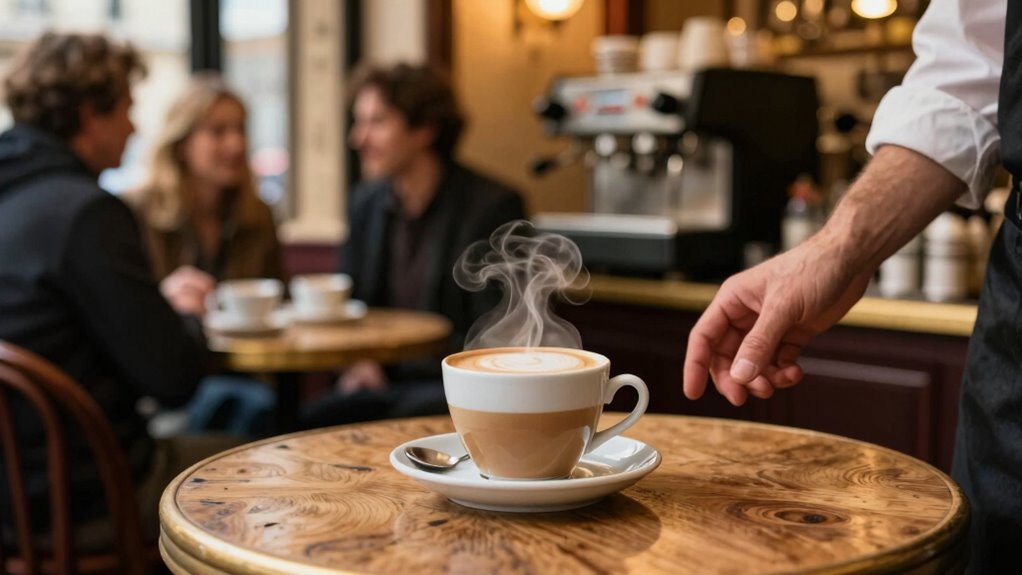
Building on the tradition of blending simple ingredients into refined drinks, the café crème emerged in 19th-century France as a natural evolution of the café au lait. It became popular in Paris cafes, offering a smooth, balanced coffee experience. The drink features a shot of espresso topped with steamed milk, creating a creamy, luxurious texture. To deepen your understanding, consider these key points:
- The café crème’s origin ties to early espresso innovations in France, emphasizing a richer flavor.
- It gained popularity among urban professionals seeking a refined, quick coffee break.
- The beverage evolved alongside Parisian café culture, symbolizing elegance and leisurely socializing.
- The introduction of wave and wind in French coastal regions influenced the café culture, fostering a vibrant social atmosphere in cafes.
- The ongoing technological integration in French coffee shops continues to enhance the brewing process and customer experience.
- Modern advancements in espresso machine technology have further refined the preparation of café crème, ensuring consistency and quality.
Today, café crème remains a staple, blending tradition with modern sophistication in French coffee culture.
The Art of Asking for Coffee in France
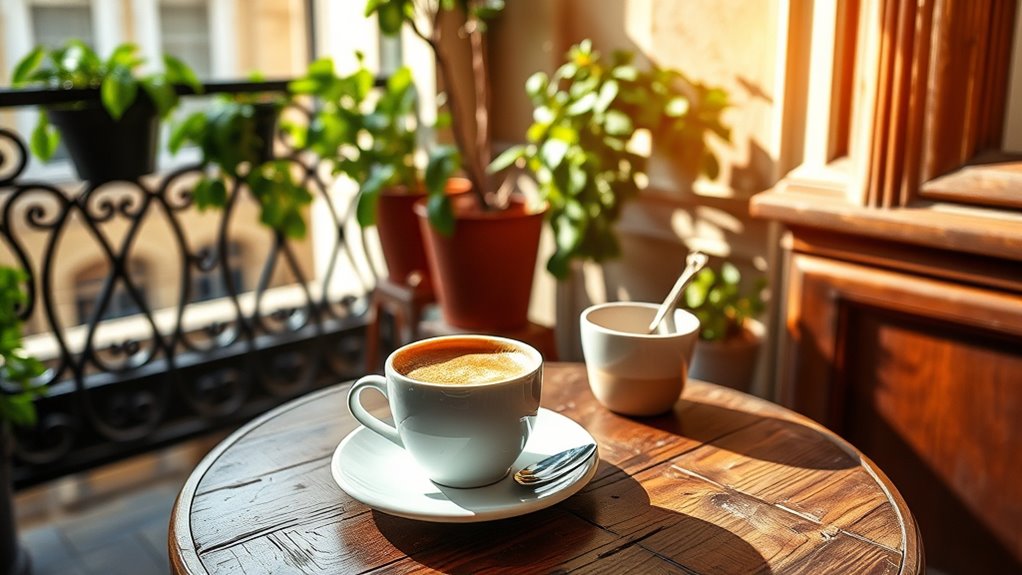
Asking for coffee in France involves more than just ordering a drink; it’s about understanding the local etiquette and subtle social cues that shape the experience. When you step up to the counter or sit at a café table, use polite phrases like “Je voudrais un café, s’il vous plaît” (I would like a coffee, please). Maintain eye contact and smile; it shows respect. If you want a specific type, specify clearly—“Un café crème” or “Un petit noir.” In cafés, it’s common to order directly from the bar or to sit and wait for service. Remember, French cafés value courtesy and discretion, so avoid rushing or demanding. A gentle, respectful approach guarantees a smooth, authentic interaction. Understanding local customs can greatly enhance your experience and help you connect with the culture more deeply. Being familiar with the coffee culture and its nuances can further enrich your interactions and appreciation, especially considering how artistic expression influences social behaviors in the café setting. Additionally, observing the tactical tea traditions practiced by some patrons can provide insights into the cultural emphasis on ritual and presentation. Recognizing the importance of politeness in communication can also foster more positive exchanges in these social spaces.
Coffee Etiquette and Customs in French Cafés
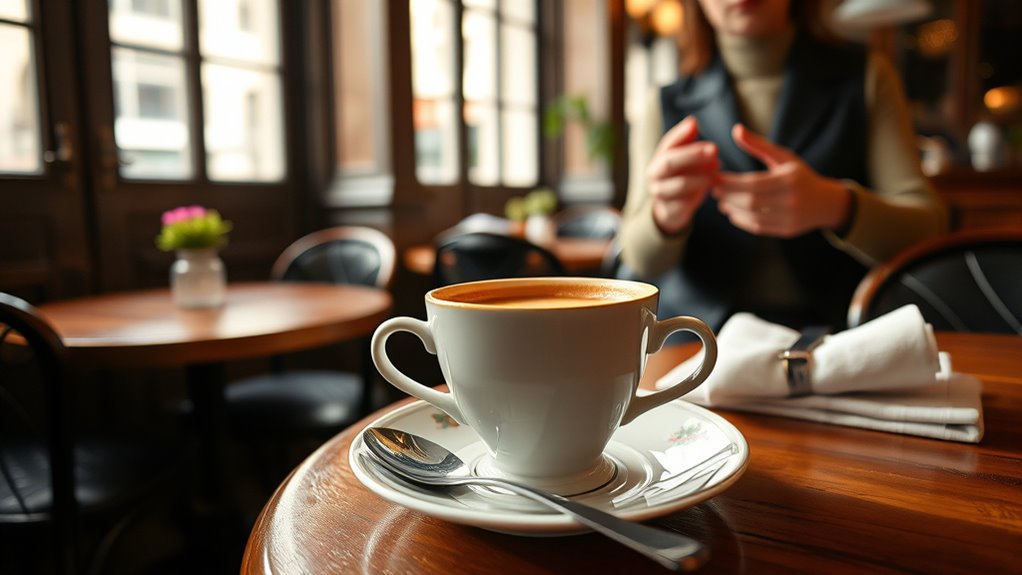
When you visit a French café, you’ll notice that greetings like a simple “Bonjour” set a respectful tone before ordering. As you relax at your table, remember to keep your voice moderate and avoid loud conversations out of courtesy. When it’s time to pay, it’s customary to settle the bill promptly and leave a small tip if service isn’t included. Additionally, observing water etiquette by avoiding wasting water and keeping your glass filled discreetly is appreciated in many cafés. Being mindful of cultural customs such as these enhances your experience and shows respect for local traditions. Staying aware of market trends can also help you appreciate the current atmosphere in French cafés, especially if they serve as hubs for social and economic exchange. Recognizing piercing care practices can also serve as a reminder of the importance of hygiene and respectful interactions in various settings. Moreover, understanding local cultural norms like these can deepen your connection with the community and enrich your overall experience.
Ordering and Greetings
In French cafés, greeting the staff with a polite “Bonjour” or “Bonsoir” is essential before placing your order, as it shows respect and sets a friendly tone. Once greeted, follow these tips: 1. Clearly state your order, such as “Je voudrais un café crème, s’il vous plaît,” to be polite and precise. 2. Use “s’il vous plaît” to show courtesy, especially when requesting something. 3. Maintain eye contact and smile; it fosters a warm interaction and reflects good manners. 4. Understanding Gold IRA Markets in French cafés will enhance your experience and help you connect more authentically with the staff. Additionally, being aware of café etiquette can make your visit more enjoyable and respectful of local customs. Developing familiarity with auditory processing skills can also improve your ability to follow conversations and orders in busy café environments.
Table Manners and Behavior
In French cafés, good table manners are essential to show respect for tradition and fellow patrons. Keep your voice moderate; loud conversations are frowned upon. Always greet staff politely with a “Bonjour” or “Bonsoir” before ordering, and say “Merci” when you receive your drink. Sit upright and avoid resting elbows on the table, as this is considered impolite. Use the small spoon provided to stir your coffee gently—never tap the spoon on the cup. When finished, leave your cup and saucer in place, and avoid rushing your server. If you’re sharing a table, be courteous and don’t monopolize space. Maintaining these simple courtesies shows appreciation for French café culture and guarantees a respectful environment for everyone. Additionally, understanding credit card terms can be helpful if you plan to pay electronically, as some cafés may prefer card payments over cash.
Tipping and Payment Customs
Tipping and payment customs in French cafés reflect a culture that values politeness and discretion. When paying, you typically tell the waiter the amount you wish to settle, and they will handle the rest. It’s common to round up the bill or leave a small tip, usually around 5-10%, if you’re satisfied with the service. Here’s what you should know:
- Always pay at the counter or table, depending on the café’s style.
- Tipping is appreciated but not obligatory; a few euros suffice.
- When paying, say “L’addition, s’il vous plaît” to request the bill politely.
Notable Coffee Spots and Their Unique Offerings

Some of Paris’s most iconic coffee spots stand out not just for their historic significance but also for their unique offerings that reflect the city’s rich coffee culture. Café Procope, opened in 1686, is famous for its literary history and classic ambiance, where you can enjoy a traditional café crème in an atmosphere steeped in history. La Caféothèque, established in 2005, pioneered the specialty coffee movement in Paris, serving single-origin beans roasted on-site. L’Arbre à Café, founded in 2009, supplies restaurants with exclusive beans like Bourbon varieties, emphasizing terroir. Le Consulat in Montmartre offers a charming setting with artisanal brews, blending artistic history with modern coffee craftsmanship. These spots showcase diverse approaches, from tradition to innovation, embodying Paris’s evolving yet timeless coffee scene. Understanding coffee brewing techniques can enhance your appreciation of the flavors and methods used at these iconic venues. Additionally, many of these cafés focus on sustainable sourcing, ensuring high-quality beans while supporting environmentally responsible practices.
Trends Shaping Modern French Coffee Drinking
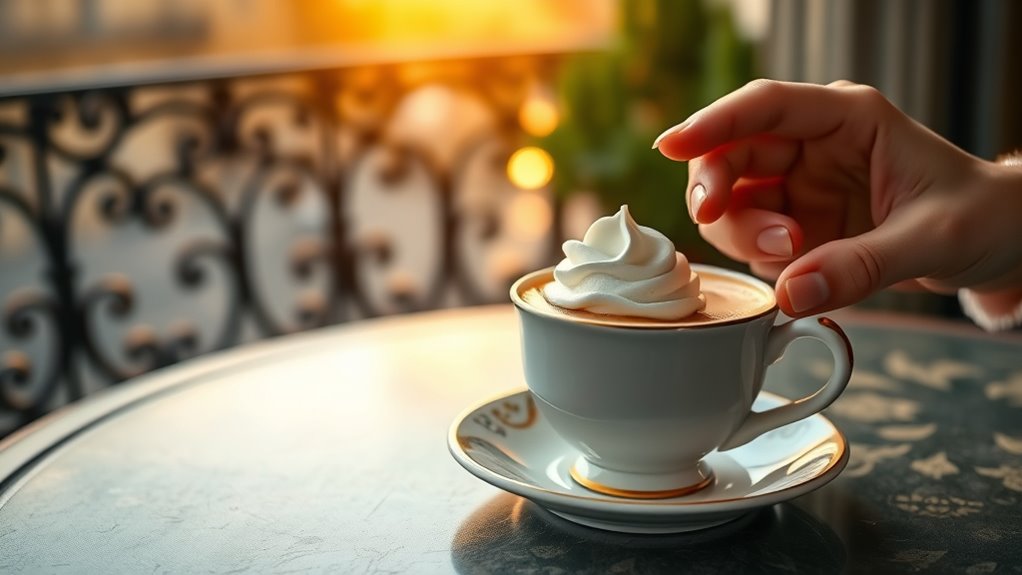
Modern French coffee drinking is increasingly shaped by a shift toward specialty brews and a focus on quality over quantity. This movement reflects a desire for richer flavors and unique experiences. You’ll notice more cafés emphasizing single-origin beans, highlighting terroir and craftsmanship.
Here are three key trends:
- Rise of Specialty Coffee Shops – New venues prioritize artisanal brewing methods like pour-over and AeroPress.
- Focus on Ethical Sourcing – Consumers demand fair-trade, organic beans, supporting sustainable farming practices.
- Café Culture Reinvented – Cafés serve as co-working spaces, blending socializing with work, while traditional petit noir remains a staple.
This shift elevates French coffee from simple daily fuel to an appreciation of craftsmanship and culture.
Frequently Asked Questions
How Do I Order Coffee Politely in a French Café?
To order coffee politely in a French café, start with a friendly “Bonjour” or “Bonsoir,” then say, “Je voudrais un café, s’il vous plaît,” for a regular coffee. If you want a specific type like a café crème, ask, “Je prendrai une crème, s’il vous plaît.” Remember to make eye contact, smile, and say “merci” after receiving your order to show your appreciation.
What Distinguishes a Café Crème From Other Espresso Drinks?
A café crème stands out with its creamy, velvety top, unlike a sharp, black espresso or a frothy cappuccino. Imagine rich, dark coffee gently blended with steamed milk, creating a smooth, inviting texture. While espresso is strong and straightforward, café crème offers a softer, more luxurious experience. You’ll enjoy the perfect balance of bold flavor and creamy warmth, making it a quintessential French morning ritual.
Are There Regional Coffee Specialties Across France?
You’ll find regional coffee specialties across France, each with unique traditions. In Provence, you might enjoy a café crème, often served with a croissant at a local bistro. In Brittany, try a café noisette, an espresso with a splash of hot milk. The Basque Country offers flavorful, robust coffees, sometimes infused with local ingredients. Exploring these regional variations gives you a richer taste of France’s diverse coffee culture.
How Do French Cafés Incorporate Modern Co-Working Trends?
French cafés incorporate modern co-working trends by transforming their spaces into flexible work environments. You’ll find cafés offering free Wi-Fi, power outlets, and comfortable seating to support remote workers. Many cafés host events or provide dedicated zones for productivity, blending social ambiance with work needs. As a customer, you can enjoy your coffee while connecting, collaborating, or even attending workshops, making cafés vibrant hubs for both leisure and professional activities.
What Are the Traditional Customs for Tipping in French Cafés?
Ever wondered about tipping customs in France? Typically, you don’t have to tip much in cafés—rounding up the bill or leaving a euro or two is appreciated but not obligatory. Service charge is usually included, so extra tipping is optional. If you receive exceptional service, feel free to leave a small tip as a thank you. Remember, a polite “Merci” always goes a long way in French cafés.
Conclusion
Now that you know the rich history and customs of French coffee culture, you’ll feel more confident when ordering your favorite brew. Did you know that France ranks among the top European countries in coffee consumption per capita? Embrace the café atmosphere, ask politely, and enjoy the authentic experience. With this knowledge, you’re all set to savor France’s unique coffee scene and make every sip memorable. Cheers to your coffee adventures!
NFL season / tailgating Picks
team gear
As an affiliate, we earn on qualifying purchases.