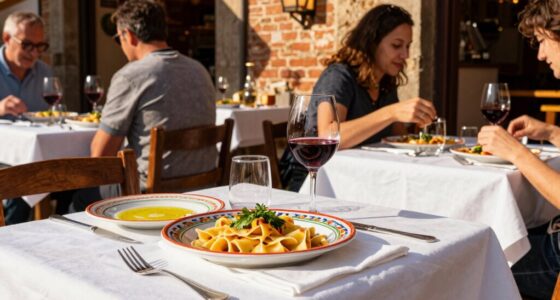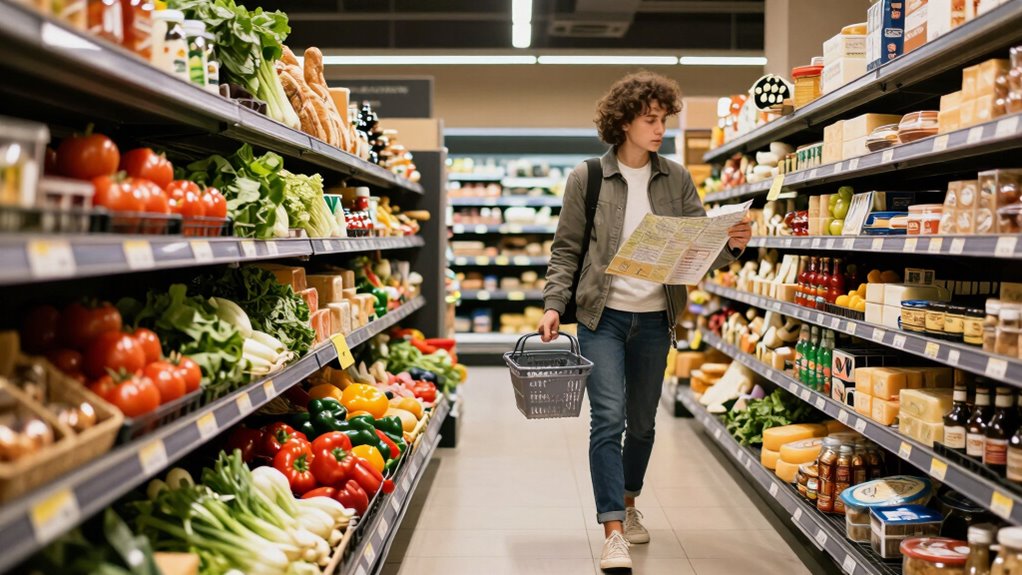

To shop like a savvy traveler in Europe, start by understanding store layouts—essentials are near the entrance, and seasonal or local products catch your eye early. Look for local labels, markets, and peak shopping times to find fresh, authentic items at better prices. Compare deals, buy in bulk, and watch for promotions on overstocked items. Embrace local traditions and language to navigate market days smoothly. If you keep exploring, you’ll uncover even more tips for making your supermarket visits smart and enjoyable.

Get travel and outdoor gear delivered free with Prime
- Fast, free delivery on millions of items
- Prime Video, Amazon Music and more included
- Member-only deals all year
Key Takeaways
- Familiarize yourself with store layouts and seasonal specialties to navigate efficiently and find the best local deals.
- Prioritize local labels and markets for fresher, budget-friendly, authentic products.
- Watch for in-store promotions and compare prices across brands and sizes for maximum savings.
- Shop during local festivals or market days to access exclusive discounts and seasonal specialties.
- Learn regional shopping customs and phrases to enhance cultural experience and avoid tourist traps.
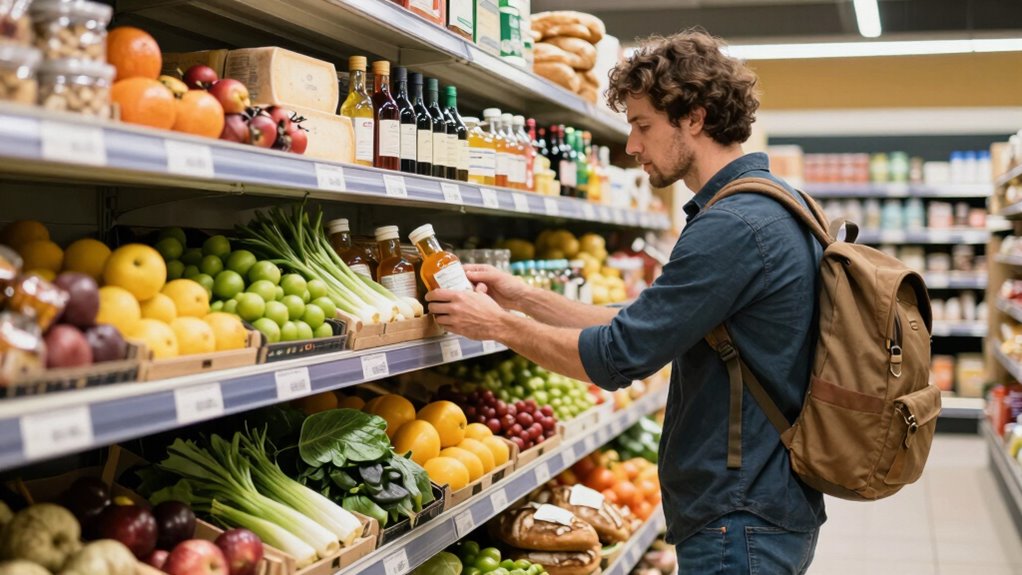
Traveling through Europe often means exploring unfamiliar supermarkets, but with a few simple tips, you can shop like a local and make the most of your visits. The key is to understand how to navigate these stores efficiently, spotting local shopping tips that help you find authentic products without overspending. First, don’t hesitate to step away from the international brands and look for local labels. These often carry better prices and fresher options, giving you a taste of regional cuisine. Keep an eye out for small, family-run shops or markets attached to larger supermarkets—they often have unique, budget-friendly finds you won’t see elsewhere.
Explore local labels and markets for authentic, budget-friendly European shopping experiences.
As you shop, pay attention to store layouts. In many European supermarkets, essentials like bread, cheese, and produce are grouped near the entrance, making it easier to grab what you need quickly. Use this to your advantage by planning a quick walk through the store before grabbing a cart. This helps you spot local products and identify good deals early on. Remember, many European countries have their own seasonal specialties, so shopping during peak seasons can lead to budget-friendly finds that also add local flavor to your meals. Additionally, understanding the supermarket layout can help you navigate more efficiently and find hidden discounts. Being aware of regional shopping tips can also help you identify authentic products and avoid tourist traps. Incorporating knowledge of biodiversity can also enhance your shopping experience, guiding you to select sustainably sourced and environmentally friendly products.
Paying attention to local market traditions can also provide insight into the best times to shop and discover seasonal bargains, enriching your cultural experience. Shopping during the local festivals or market days can sometimes unlock special discounts or unique products not available at other times. Another tip is to compare prices across different brands and sizes. Larger packages or store brands often deliver better value, and in some countries, discount chains are particularly affordable. Don’t forget to look for in-store promotions or discount stickers; many supermarkets mark down products close to expiration or those that are overstocked, providing you with budget-friendly finds. If you’re staying in one place for a few days, consider buying staples in bulk, especially non-perishables, to save money.
Finally, learn a few local phrases related to shopping—this can help you ask for help or find out if there are any ongoing sales. When you know how to ask about prices or where certain items are, you’ll move through the store more confidently. By applying these local shopping tips, you’ll not only stretch your budget but also gain a richer experience of the local culture. Embrace the quirks of each supermarket, and soon, shopping becomes part of your adventure rather than just a chore. With a little preparation, you’ll find the best budget-friendly finds and shop like a true traveler who knows what they’re doing.
European supermarket shopping guide
As an affiliate, we earn on qualifying purchases.
As an affiliate, we earn on qualifying purchases.
Frequently Asked Questions
Are European Supermarkets Cheaper Than Local Markets?
European supermarkets can often be cheaper than local markets, especially if you use local market tips and supermarket shopping strategies. You’ll find better deals on packaged and staple items in supermarkets, while local markets excel in fresh produce and artisanal goods. To save money, compare prices, buy seasonal items, and shop during sales. Balancing supermarket shopping strategies with exploring local markets helps you get the best value and authentic experiences.
How Can I Find International Products in European Stores?
To find international products in European stores, look for dedicated international aisles or sections. Many supermarkets feature international brands that highlight cultural product diversity, making it easy to discover familiar items from home. Don’t hesitate to ask staff for help locating specific international products, as they often know exactly where to find them. Exploring these sections enhances your shopping experience and allows you to enjoy a taste of home abroad.
Do Supermarkets Accept International Credit Cards?
Think of your credit card as a passport, opening doors with ease. Most European supermarkets accept international credit cards, but watch out for credit card fees that can add up. Always check the payment methods accepted beforehand—Visa, MasterCard, or American Express—so you’re prepared. Using your card simplifies shopping, letting you focus on discovering local flavors without worrying about payment issues. Keep your card handy, and enjoy seamless transactions across Europe.
What Are Common Supermarket Opening Hours in Europe?
In Europe, supermarkets usually open around 7-9 AM and close by 8-10 PM, with some opening 24 hours, especially in larger cities. To follow supermarket etiquette, avoid shopping during peak hours, and be mindful of local customs, like quiet shopping or limited Sunday hours. Use shopping tips like bringing a reusable bag and checking store hours online before visiting, ensuring a smooth and respectful shopping experience.
How Do I Navigate Labels in Different European Languages?
When steering labels in different European languages, rely on label translation apps or tools to break down language barriers quickly. Look for familiar symbols like nutritional info or allergy icons, which often stay consistent. Pay attention to keywords like “lait” for milk in French or “Milch” in German. Practice recognizing common product categories, and don’t hesitate to ask staff if you’re unsure—most are happy to help.
As an affiliate, we earn on qualifying purchases.
Conclusion
So next time you step into a European supermarket, remember you’re not just shopping—you’re immersing yourself in local life. It’s easy to think you’re just saving money, but some say shopping this way reveals a deeper connection to the culture. Maybe it’s a coincidence, or maybe it’s the secret to truly experiencing Europe like a seasoned traveler. Either way, embrace the adventure—your journey’s richer when you shop with curiosity and confidence.
European food market shopping list
As an affiliate, we earn on qualifying purchases.
As an affiliate, we earn on qualifying purchases.
budget European supermarket finds
As an affiliate, we earn on qualifying purchases.
As an affiliate, we earn on qualifying purchases.
Columbus Day / Indigenous Peoples' Day Picks
long weekend sales
As an affiliate, we earn on qualifying purchases.