
To avoid being ignored at a French restaurant, wait for the host to signal before you start eating, and follow others’ cues. Use cutlery correctly by holding utensils lightly and avoiding stabbing. Be respectful by not requesting unnecessary menu changes or speaking too loudly. Pour drinks politely from the right, serve others first, and keep your hands relaxed and visible. Paying attention to these small manners shows your respect—continue to explore more tips to truly impress.
Key Takeaways
- Wait for “bon appétit” before eating, and follow others’ cues to begin your meal.
- Keep hands relaxed and visible; avoid elbows on the table or hands in the lap.
- Use utensils properly to push food, not stab, and signal meal end by placing utensils across the plate.
- Serve others first, especially women, and pour drinks from the right with eye contact and politeness.
- Maintain a low voice, avoid loud noises, and be mindful of social cues to preserve an elegant atmosphere.
Top picks for "french restaurant etiquette"
Open Amazon search results for this keyword.
As an affiliate, we earn on qualifying purchases.
Forgetting to Wait for the Signal to Start Eating
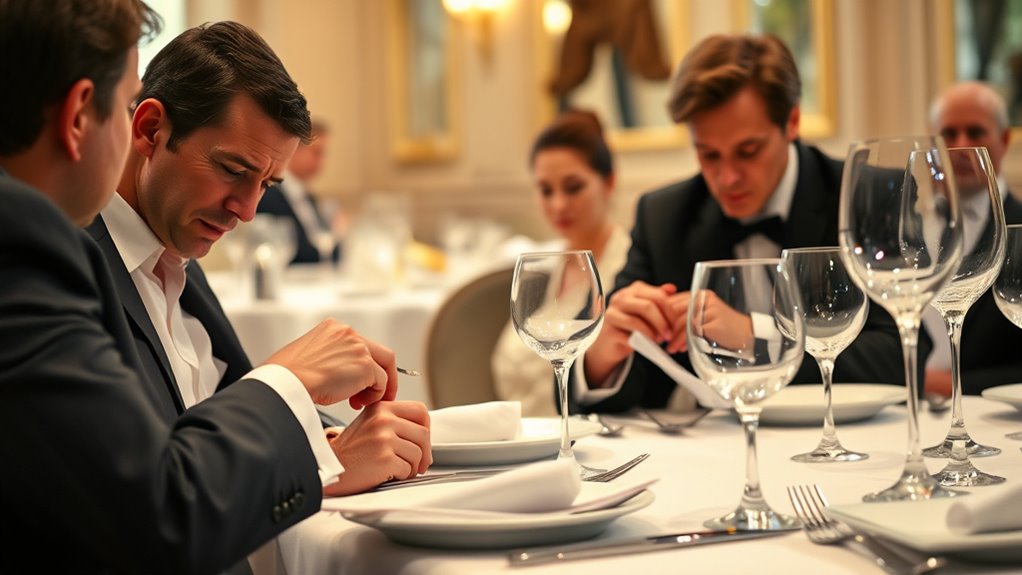
Forgetting to wait for the hostess or host to give the signal to start eating is a common mistake that can disrupt the meal’s etiquette. In France, the host sets the tone for the meal, so you should always wait until they say “bon appétit” before diving in. Jumping ahead can seem impatient or rude. Stay attentive, observe when others begin, and follow their lead. Remember, no one should start eating or drinking until everyone is served and the host gives the cue. This shows respect for the shared experience and maintains the meal’s elegance. Patience is key—wait until the official signal, then enjoy your meal with proper decorum. Demonstrating awareness of dining customs, such as waiting for the official cue, highlights your understanding of refined dining manners. Being mindful of cultural dining norms further enhances the experience and shows genuine respect for the host’s hospitality. Recognizing these social cues can help you navigate the nuances of French dining etiquette with confidence.
Incorrect Use of Cutlery and Hands
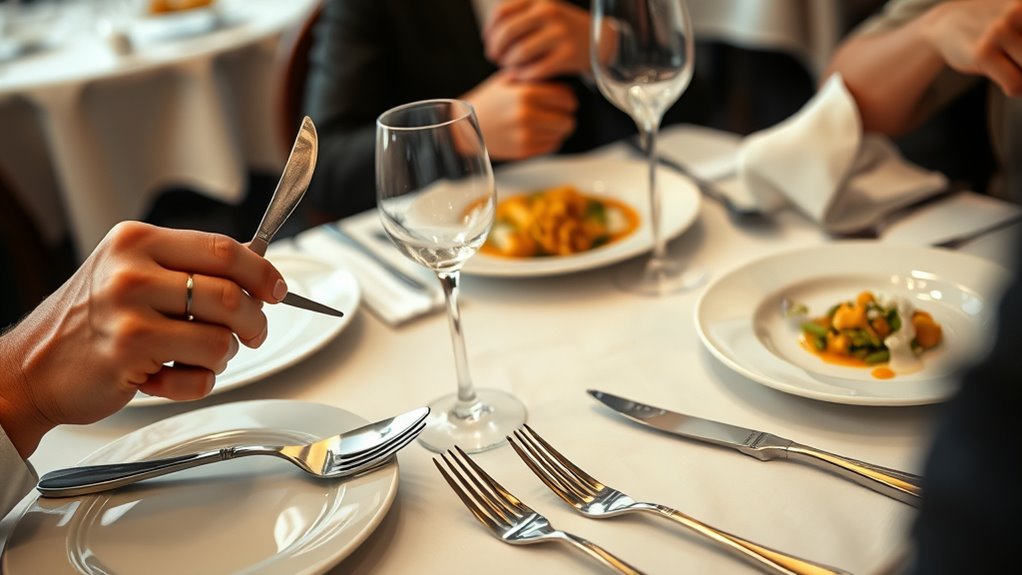
Make sure your hands stay relaxed on each side of the plate with palms down, and keep them visible at all times. Don’t place your elbows on the table or rest your hands in your lap, as it signals poor etiquette. Use your fork and knife correctly—hold the knife in your right hand and the fork in your left, extending your index finger along the handle rather than gripping it tightly. Additionally, being mindful of table manners helps convey respect and enhances your dining experience. Remember that proper dining etiquette also involves avoiding distractions like using your phone at the table, which can be considered impolite. Practicing consistent crochet techniques can also improve your confidence in mastering new skills and ensuring neat, professional-looking results. Maintaining good posture and awareness of flat iron bike accessories can further demonstrate your attentiveness to detail during meals.
Proper Hand Placement
Improper hand placement can quickly undermine your dining etiquette, so it’s important to use your cutlery correctly. Keep your hands relaxed on each side of the plate with palms down, avoiding resting your elbows on the table or placing hands in your lap. Always keep your hands visible to signal proper manners and attentiveness. Hold your knife in your right hand and your fork in your left, extending your index finger along the handle rather than gripping in a fist. Use the fork and knife for all foods, pushing rather than stabbing, and place your utensils across the plate when finished. Maintaining correct hand placement shows respect for the dining experience and helps you blend seamlessly into the French dining culture.
Avoid Fist Grip
Holding your fork and knife with a clenched fist signals a lack of refinement and can disrupt the elegant flow of the meal. Instead, keep your hands relaxed, with your palms down on the table, and grasp the utensils lightly. Extend your index finger along the handle for better control, avoiding a tight grip that looks aggressive or awkward. This subtle adjustment shows respect for the dining setting and helps maintain a poised appearance. Remember, French etiquette favors finesse over force, so handle your cutlery softly and steadily. Avoid stabbing your food or gripping utensils tightly. When you’re finished, place your fork and knife across your plate to signal completion. Proper handling demonstrates good manners and ensures you blend seamlessly into the refined dining atmosphere.
Using Fork and Knife Correctly
Using your fork and knife correctly is essential for maintaining elegance at the table. Keep your hands relaxed on each side of the plate with palms down, and avoid resting elbows on the table. Hold the knife in your right hand and the fork in your left, extending your index finger along the handle—never a fist grip. Use the knife to push food onto your fork, not stabbing. When finished, place both utensils across the plate. Remember, in France, you shouldn’t switch hands or use your hands directly for eating.
| Proper Grip | Usage | Signal of Completion |
|---|---|---|
| Extend index finger | Push food | Cross utensils on plate |
| Relaxed hands | All foods | Signal finished |
| Palms down | Maintains elegance | – |
Requesting Unnecessary Items or Changes to the Menu

When dining at a French restaurant, it’s important to respect the established etiquette regarding menu requests. French dining culture values tradition and authenticity, so asking for unnecessary items or making last-minute changes can be seen as inconsiderate. Stick to the menu options provided, and avoid requesting substitutions or modifications unless absolutely necessary. If you have dietary restrictions, politely mention them upfront rather than requesting alterations during the meal. Remember, the chef prepares dishes based on traditional recipes, and insisting on changes may be perceived as disrespectful. Keep your requests simple and respectful. This shows appreciation for the cuisine and the effort that went into preparing your meal. Avoiding menu modifications and respecting the culinary traditions help you blend in and enjoy a seamless, culturally appropriate dining experience. Being aware of cultural dining norms can also enhance your overall experience and prevent unintentional faux pas.
Speaking Too Loudly or Disrupting the Atmosphere
You should keep your voice low to maintain the quiet, elegant atmosphere of the restaurant. Speaking loudly or making disruptive noises can disturb other diners and break the ambiance. Remember, a soft tone shows respect and helps everyone enjoy their meal. Additionally, being mindful of your surroundings by avoiding disruptive behavior can further contribute to a refined dining experience. Being aware of restaurant etiquette such as this ensures an enjoyable environment for all guests. Maintaining proper decorum by controlling noise levels demonstrates consideration for others and enhances the overall dining atmosphere.
Maintaining Quiet Conversation Levels
Maintaining a quiet conversation level is essential to preserving the elegant atmosphere of a fine dining setting. You should speak softly, ensuring your voice doesn’t carry across the room. Avoid loud laughing, shouting, or making disruptive noises like slurping or burping, which can disturb other diners. Be mindful of foreign language speech; speaking loudly in a different language can draw unnecessary attention. Keep your tone controlled and lively but not boisterous. If you need to discuss something important, lower your voice further to maintain discretion. Remember, the goal is to enjoy your meal without overshadowing others’ experience. Keeping conversation subdued shows respect for the ambiance and the other guests, ensuring everyone feels comfortable and welcomed. Conversational volume is a key aspect of maintaining an elegant environment.
Avoiding Disruptive Noises
Disruptive noises, such as speaking too loudly or making unexpected sounds, can quickly spoil the refined atmosphere of a fine dining experience. Keep your voice soft and controlled, especially in upscale restaurants. Avoid loud laughing, slurping, or burping, which draw unwanted attention. If you’re speaking with companions, monitor your volume so others don’t feel uncomfortable or need to shout to be heard. Refrain from making noises that disturb other diners, like tapping utensils or clearing your throat excessively. Remember, maintaining a quiet, respectful tone promotes a pleasant environment. If you’re tempted to speak loudly or make noise, take a moment to lower your voice. Respecting the ambiance ensures everyone enjoys their meal without disruptions or discomfort. Being mindful of restaurant etiquette helps preserve the sophisticated atmosphere and shows consideration for fellow diners. Additionally, practicing mindful noise levels demonstrates your awareness of the social setting and contributes to a more enjoyable experience for everyone. Developing an understanding of social cues can further help you gauge appropriate noise levels and avoid unintended disruptions. Recognizing the importance of self-awareness in social situations can also guide your behavior in maintaining a respectful dining environment. Moreover, understanding customer service standards can help you better appreciate the importance of maintaining a calm and courteous demeanor during your meal.
Pouring Drinks Incorrectly or Failing to Serve Others First
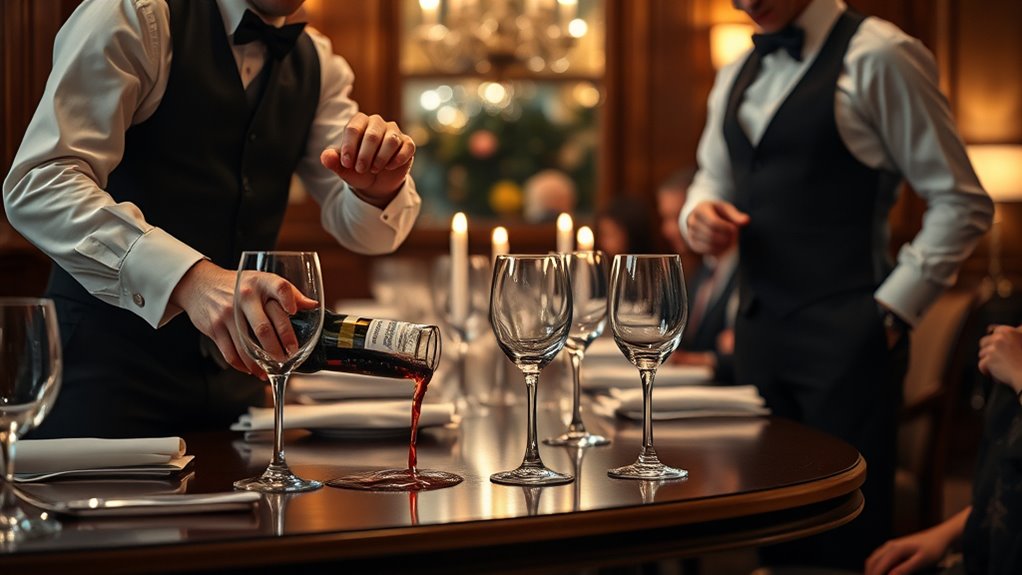
Are you aware that pouring drinks improperly or serving others out of order can disrupt the flow of a refined meal? In French etiquette, it’s essential to serve others first, especially women, before pouring your own drink. When pouring wine, hold the bottle by the neck, tilt gently, and pour slowly to avoid splashing. Always serve others from your right side, maintaining eye contact and a polite smile. Don’t start pouring until everyone is served, and wait for the host to signal the start of the meal. Rushing or overfilling glasses can seem impolite and disrupt the dining harmony. Remember, the goal is to demonstrate respect and attentiveness, ensuring everyone feels valued. Small gestures like serving others properly uphold the elegance and harmony of the dining experience. Incorporating vintage tableware can further elevate the ambiance and demonstrate attention to detail. Being aware of table manners and the correct service sequence ensures you adhere to the subtle nuances that can make or break a refined dining atmosphere.
Overlooking Table Manners When Finishing the Meal

When finishing your meal, paying attention to table manners is essential to leave a good impression. Place your knife and fork parallel across your plate, with the handles resting on the rim, signaling you’re finished. Avoid stacking or crossing utensils in a haphazard way. Keep your hands visible and avoid resting elbows on the table as you wait for the plate to be cleared. When the staff approaches, do not rush to stand; remain seated until they remove your plate. If you’re finished, gently signal with a slight nod or a calm gesture. Remember, displaying patience and proper etiquette during this moment shows respect for the service and your dining companions, ensuring you’re remembered positively.
Frequently Asked Questions
Is It Acceptable to Start Eating if I’M Hungry Before the Signal?
No, you shouldn’t start eating before the signal. Wait for the host or hostess to say “bon appétit” and guarantee everyone is served first. Rushing to eat early can seem impolite and disrupt the meal’s flow. Instead, sit patiently, keep your hands on the table, and enjoy the anticipation. Showing restraint demonstrates good manners and respect for the dining experience, making you more appreciated at the table.
Can I Use My Hands to Eat Certain Foods Like Bread or Cheese?
Of course, you can use your hands to eat bread or cheese—because nothing says refined dining like crumbs on your lap. But in a French restaurant, you’re expected to use cutlery for most foods, with bread often served on the side to accompany your meal. If you choose to indulge with your hands, do so discreetly, keeping hands visible, and avoid making a mess or drawing undue attention.
How Should I Handle Requesting a Different Wine Than Recommended?
If you want a different wine than what’s recommended, politely ask your server, “Je préférerais un autre vin, s’il vous plaît,” with a smile. Be respectful and avoid sounding demanding. Show appreciation for their suggestions first, then make your request gently. Remember to maintain eye contact and speak softly. This courteous approach maintains the atmosphere friendly and ensures you’re well-received without disrupting the refined dining experience.
Is It Okay to Speak in My Native Language Loudly at the Table?
You shouldn’t speak loudly in your native language at the table, as it disrupts the elegant ambiance. Picture a gentle ripple across a calm pond—your loud voice creates unnecessary waves. Keep your voice soft and controlled, blending quietly with the restaurant’s refined atmosphere. Lively conversation is fine, but volume matters; speak low enough so others don’t need to raise their voices or feel uncomfortable. Respect the subtle harmony around you.
When Is the Appropriate Time to Refill Someone’s Glass of Wine?
You should refill someone’s glass of wine after they’ve finished their current pour or when you notice their glass is nearly empty. Wait for an appropriate moment, like when the conversation flows smoothly or during a natural pause. Serve others first, especially women, and make eye contact to show politeness. Avoid pouring too quickly or frequently, so the flow remains relaxed and elegant.
Conclusion
By minding these subtle nuances, you’ll navigate the French dining scene like a seasoned conductor guiding a delicate symphony. Each gesture, each pause, becomes a note in the melody of refined etiquette. Remember, it’s not just about the food, but the artistry of respect and grace that transforms a simple meal into a memorable affair. With a gentle touch and keen awareness, you’ll turn small gestures into the grand harmony of true French savoir-faire.