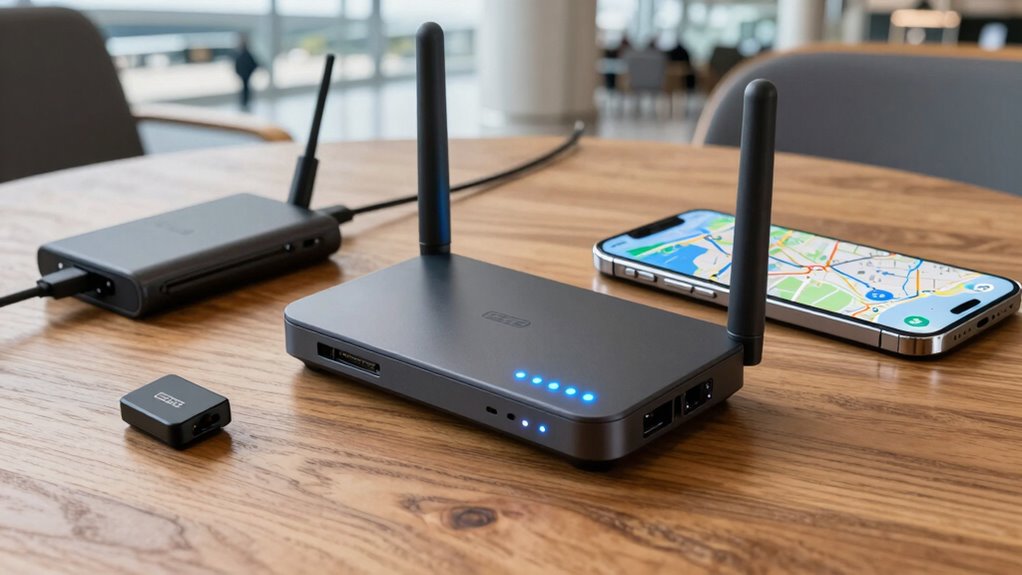

Choosing between a travel router, hotspot, or eSIM depends on your devices, data needs, and trip duration. If you prefer simplicity and portability, a hotspot or eSIM offers quick setup, with eSIMs providing instant access to plans without swapping SIM cards. Travel routers are great if you’re traveling with multiple devices and need flexible connections. Understanding your device compatibility and network standards helps you pick the best option—stay tuned to find out which setup suits your trip perfectly.
Key Takeaways
- Consider device compatibility: not all devices support hotspots, travel routers, or eSIMs equally.
- Evaluate connectivity needs: travel routers support multiple devices, ideal for group trips.
- Assess data plan options: eSIMs offer flexible plans without physical SIM swaps.
- Factor in convenience and cost: eSIMs enable instant activation, while local SIMs may require physical swaps.
- Check network standards: ensure your device supports the local network bands for reliable connectivity.
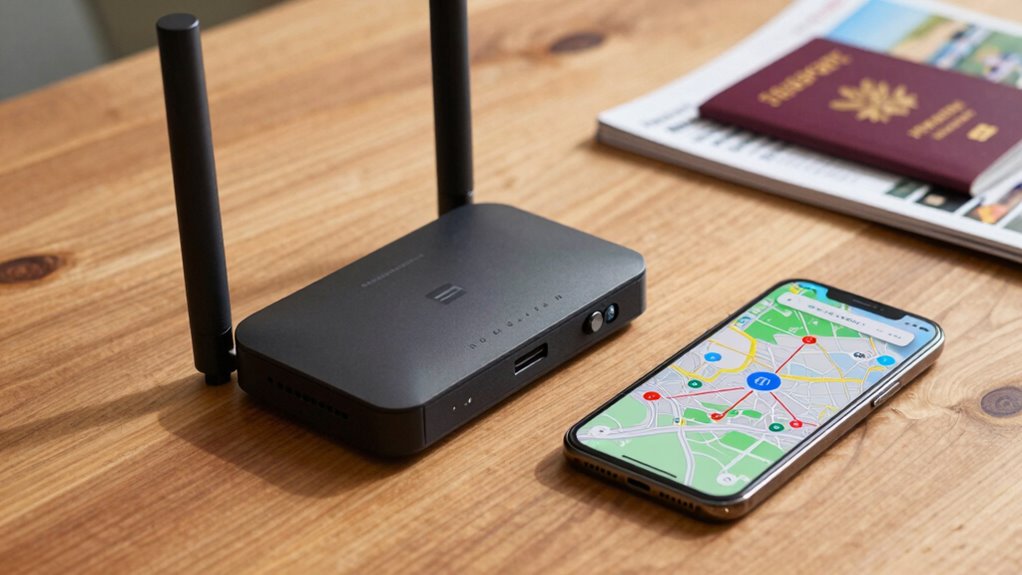
Are you wondering which travel setup options best suit your journey? Picking the right setup depends on your needs, destinations, and how much connectivity you require. One of the first things to take into account is device compatibility. Not all travel devices work seamlessly with every setup. For example, a portable Wi-Fi hotspot might connect effortlessly with smartphones, tablets, and laptops, but some devices could have trouble recognizing certain hotspots, especially if they use unfamiliar frequency bands or network standards. On the other hand, a travel router can often be more versatile, allowing multiple devices to connect simultaneously, which is perfect if you’re traveling with others or need to share internet across several gadgets. An eSIM, however, relies on your device supporting embedded SIM technology, so if your phone isn’t eSIM-compatible, you’re out of luck there.
Next, think about your data plan options. Your choice might hinge on how much data you’ll need during your trip. A hotspot or travel router typically requires a local SIM card with a data plan, which means you’ll need to buy a plan tailored to your destination. These plans can vary widely in price and data limits, so consider your browsing, streaming, or work needs. If you’re planning to stay connected for extended periods or do bandwidth-intensive tasks, look for plans offering generous data allowances or unlimited data options. Conversely, an eSIM can offer more flexible data plan options, sometimes allowing you to purchase local or international plans instantly through an app, saving you the hassle of swapping physical SIMs or searching for local providers. Additionally, understanding the network standards supported by your devices can help you avoid connection issues abroad. It’s also worth noting that some devices may support multiple connectivity options, giving you more choices for your travel setup.
As an affiliate, we earn on qualifying purchases.
Frequently Asked Questions
How Secure Is Each Travel Setup for My Personal Data?
You might wonder how secure each setup is for your personal data. Travel routers, hotspots, and eSIMs all use data encryption, but their security levels vary. Travel routers often offer better control over your network’s privacy, reducing privacy concerns. Hotspots rely on public networks, which can be less secure. eSIMs provide a secure connection, but it’s crucial to choose reputable providers to minimize privacy concerns and guarantee your data stays protected.
Can I Use Multiple Devices Simultaneously With These Options?
Yes, you can use multiple devices simultaneously, but watch out for device compatibility and data usage limits. Some setups handle several connections easily, while others might slow down or restrict bandwidth. If your devices are compatible, you’ll enjoy seamless sharing, but exceeding data limits can cause interruptions. Stay aware of your plan’s restrictions and compatibility to keep your connection smooth and your trip stress-free.
What Is the Cost Difference Between Setups for Long Trips?
For long trips, the cost difference depends on your setup. Travel routers may have higher upfront costs but offer long-term savings and better device compatibility, especially if you need to connect multiple devices. Hotspots often have monthly plans, which can add up over time. eSIMs usually have flexible pricing options, but consider battery life, as some devices drain power faster. Choose based on your budget, device compatibility, and how long you’ll be traveling.
Are There Any Country-Specific Restrictions for eSIMs?
Think of eSIMs as international passports—powerful but with some borders. You’ll face country-specific restrictions, especially with regional compatibility and eSIM limitations. Before you travel, check if your eSIM provider supports the countries on your itinerary. Some nations may restrict or block certain eSIMs, so it’s smart to research regional compatibility to prevent surprises. Planning ahead ensures a smoother journey, free of connectivity hiccups.
How Easy Is It to Switch Between Setups During Travel?
Switching between setups during travel is fairly straightforward if your devices are compatible, but it can vary. You’ll find it easy to switch if your device supports multiple options like a travel router, hotspot, or eSIM, but make certain each setup offers good signal stability. Keep in mind that some devices may require reconfiguration, so check device compatibility beforehand to make changes seamless and avoid connectivity issues during your trip.

eSIM for Global Travel for 1GB 30 Days, 77+ Countries, Data Only
- Compatibility: eSIM-compatible and unlocked phones required
- Easy Activation: Follow instructions and enter Amazon order number
- Instant Connection: Enable data roaming for immediate access
As an affiliate, we earn on qualifying purchases.
As an affiliate, we earn on qualifying purchases.
Conclusion
Choosing the right travel setup depends on your needs and destination. For instance, if you’re visiting multiple countries, a travel router or eSIM offers seamless connectivity without swapping SIM cards. Imagine you’re on a business trip across Europe; an eSIM keeps you connected effortlessly, while a hotspot might require multiple devices. Assess your data needs, convenience, and budget to pick the best option. With the right setup, you stay connected, worry-free, and ready to explore.

Roam 6 AX1500 Portable Wi-Fi 6 Travel Router Dual-Band USB C 3.0
- Wi-Fi 6 Dual-Band Speeds: Up to 1,201 Mbps (5 GHz) and 300 Mbps (2.4 GHz)
- Supports Multiple Devices: Connects up to 60 devices simultaneously
- Compact Travel Design: Pocket-sized with wired ports for reliability
As an affiliate, we earn on qualifying purchases.
As an affiliate, we earn on qualifying purchases.
Roam 6 AX1500 Portable Wi-Fi 6 Travel Router Dual-Band USB C 3.0
- Wi-Fi 6 Dual-Band Speeds: Up to 1,201 Mbps (5 GHz) and 300 Mbps (2.4 GHz)
- Supports Multiple Devices: Connects up to 60 devices simultaneously
- Compact Travel Design: Pocket-sized with wired ports for reliability
As an affiliate, we earn on qualifying purchases.
As an affiliate, we earn on qualifying purchases.