

Europe spans multiple time zones, from UTC-1 to UTC+3, and switches to daylight saving time twice a year. These shifts can mess up your itinerary by causing jet lag, missed connections, and scheduling confusion, especially when crossing zones. The inconsistency of DST start and end dates only adds to the chaos. If you want to understand how standardizing time zones could ease these issues, there’s more to contemplate.
Key Takeaways
- Europe’s multiple time zones and daylight saving shifts cause confusion, leading to jet lag and scheduling errors for travelers.
- DST changes, especially when crossing zones, disrupt circadian rhythms, worsening jet lag and affecting alertness.
- Variations in start and end dates of DST across countries complicate trip planning and time management.
- Crossing multiple zones with differing offsets can result in significant time differences, causing missed connections.
- Standardizing or adopting permanent time zones could reduce jet lag and improve travel itinerary accuracy.

Geevon Small Atomic Travel Alarm Clock with Auto/8s Backlight, 2 Alarm Settings, Temperature, Increasing Beep Sounds Digital Atomic Travel Clock Battery Operated for Bedroom, Bedside, Black
- Two Backlight Modes: Auto and 8-second backlight options
- Accurate Atomic Time: Receives daily WWVB updates for precision
- Indoor Temperature Display: Shows indoor temperature for convenience
As an affiliate, we earn on qualifying purchases.
As an affiliate, we earn on qualifying purchases.
The Current European Time Zone Landscape

Europe currently spans seven primary time zones, ranging from UTC-01:00 to UTC+05:00, when excluding summer offsets. The Azores use UTC-1, covering Portugal and Iceland. Western Europe, including the UK, France, and Spain, follows UTC+0. Central Europe, home to Germany, Italy, and Poland, observes UTC+1. The eastern region, such as Finland, the Baltic States, and Ukraine, operates on UTC+2. Russia’s western part, including Moscow, aligns with UTC+3. Some countries, like Greece, are shifting zones or considering changes. This variation affects daily schedules, travel, and communication across borders. The differences are often subtle but significant, creating a complex landscape of timekeeping that impacts millions. The current system, while functional, leads to inconsistencies and challenges in coordinating activities across Europe. Additionally, time zone complexities can influence international business operations and digital infrastructure synchronization throughout the continent, especially as standardization efforts are debated to improve efficiency. Furthermore, technological solutions are increasingly being explored to mitigate these challenges and streamline cross-border coordination. Notably, the use of accurate timekeeping devices such as atomic clocks is essential for maintaining synchronization across diverse regions. Moreover, public awareness about these differences plays a crucial role in enhancing regional coordination and reducing scheduling conflicts.

Spritech PCP Air Compressor,Built-in Power Converter,Portable 4500Psi/30Mpa,Water/Oil-Free,PCP Paintball Tank Air Pump, Powered by 12V Car DC or Home 110V AC with Oil-Moisture Filter
- Built-in Power Converter: Supports AC 110V and DC 12V
- High-Pressure Capacity: Inflates up to 4500 PSI/30 MPa
- Water/Oil-Free Operation: No external cooling water or oil needed
As an affiliate, we earn on qualifying purchases.
As an affiliate, we earn on qualifying purchases.
How Daylight Saving Time Disrupts Schedules
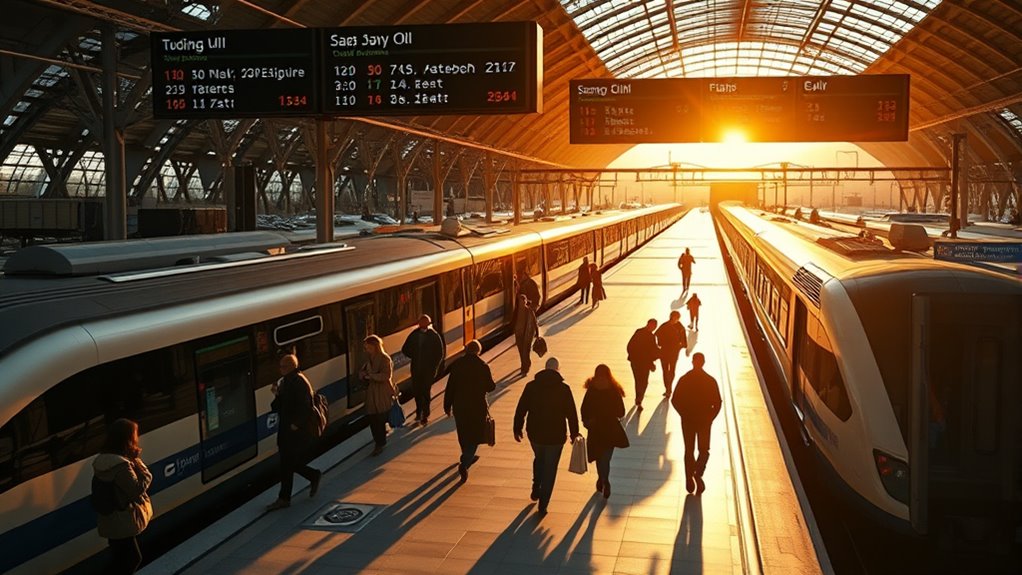
Daylight Saving Time (DST) disrupts schedules by shifting clocks forward in spring and back in fall, which can throw off your body’s internal clock. When clocks spring forward, you lose an hour of sleep, making you feel groggy and reducing alertness. Conversely, falling back can cause you to sleep longer, but your body still struggles to adjust immediately. These abrupt changes mess with your circadian rhythms, affecting sleep quality, mood, and productivity. For travelers, DST shifts create confusion, especially when crossing time zones, leading to jet lag and missed appointments. The inconsistent start and end dates across countries make planning even trickier. Overall, DST interrupts your routine and hampers your ability to synchronize with natural daylight, impacting health and daily activities. Additionally, the role of contrast ratio in projectors demonstrates how visual inconsistencies can similarly affect user experience and perception. Adjusting to DST can also influence AI-powered scheduling systems, which may struggle to adapt quickly to time changes, further complicating daily planning. Moreover, the varying time zone boundaries across Europe can exacerbate these scheduling challenges, making it harder to coordinate across regions. Changes in standard time policies can also lead to discrepancies in timekeeping and planning. Furthermore, the diverse heritage and ethnicity of populations across Europe can influence regional attitudes toward DST and time policies, complicating harmonization efforts.

MZOO Luxury Sleep Mask for Women Men Patented Light Blocking Design
- Zero Eye Pressure: Deep 13mm arc-shaped eye cups
- Ideal for Side Sleepers: 15° curved thin sides for comfort
- Complete Light Blocking: Contoured eye cups and 22mm nose padding
As an affiliate, we earn on qualifying purchases.
As an affiliate, we earn on qualifying purchases.
The Proposal for Permanent Time Zones in Europe

To address the disruptions caused by changing clocks twice a year, several European organizations propose adopting permanent time zones, eliminating the need for seasonal adjustments. This move aims to align clocks with solar time, improving health, safety, and economic efficiency. The plan involves ending DST, with countries choosing their standard time year-round. Some nations would shift one hour back or forward to better match daylight hours.
| Current Plan | Proposed Change |
|---|---|
| Use DST seasonally | Stay on fixed standard time all year |
| Clocks shift twice annually | No clock changes after initial shift |
| Countries vary in DST adoption | Uniform, permanent zones across Europe |
| Solar time misalignments occur | Better solar alignment, less jet lag |

Casio AE-1200WH-1AV Digital World Time Watch for Men, 10-Year Battery, 100M Water Resistant, LED Light, Multi Time, Stopwatch, Countdown Timer, Black Resin Band
- Dual Analog-Digital Display: Includes world map for global time
- Bright LED Light: Selectable duration with amber afterglow
- Precise Stopwatch & Timer: 1/100-second stopwatch with countdown
As an affiliate, we earn on qualifying purchases.
As an affiliate, we earn on qualifying purchases.
Challenges Faced by Travelers Crossing Multiple Zones

Traveling across multiple European time zones can be challenging because the differences in clock times often lead to confusion and scheduling problems. You may find yourself constantly adjusting your plans to match local times, which can cause missed connections or late arrivals. The varying start and end of daylight saving time further complicate things, making it harder to keep track of exact hours. For example, moving from the UK (UTC+0) to Finland (UTC+2) involves a two-hour shift, but if DST is in effect, that difference can stretch to three hours. These fluctuations disrupt your internal clock, leading to jet lag and fatigue. Coordinating meetings, transportation, and activities becomes more difficult, especially when multiple zones and time changes are involved.
Benefits of Standardized, Solar-Aligned Time Zones
Standardizing time zones to align with solar time can substantially improve your daily life by reducing the health risks associated with irregular sleep patterns. When your clock matches the sun’s position, you naturally wake up and fall asleep, promoting better circadian rhythm health. This alignment helps you feel more alert during the day and improves sleep quality at night. It also minimizes jet lag and simplifies scheduling, especially across borders. With consistent, solar-based zones, you avoid the confusion caused by seasonal clock changes and regional discrepancies. This system supports safer, more efficient transportation and communication. Supporting Free Floating time zones allows for greater flexibility in daily routines and reduces the need for abrupt time adjustments. Additionally, aligning time zones with solar cycles can lead to improved energy efficiency and environmental benefits. Standardization can also foster greater social cohesion by creating a shared, predictable time reference across regions. Moreover, time zone boundaries that follow natural landmarks or longitudinal lines can help reduce regional disparities and promote fairness. Ultimately, adopting standardized, solar-aligned time zones fosters societal well-being by synchronizing human activity with the natural day-night cycle, making your routines more predictable, healthy, and less stressful.
Frequently Asked Questions
How Do Different European Time Zones Affect Daily Business Operations?
Different European time zones can complicate your daily business operations by causing delays, miscommunications, and scheduling conflicts. When colleagues or clients are in different zones, meetings may need rescheduling or require early or late hours. The varying start times affect productivity, deadlines, and coordination, especially across borders. If time zones aren’t aligned or managed well, you risk inefficiencies, misunderstandings, and slower decision-making, impacting your overall business performance.
What Are the Health Risks Associated With Time Zone Misalignments?
You face health risks like disrupted circadian rhythms, sleep problems, and increased stress due to time zone misalignments. When your internal clock doesn’t match the local time, you might experience fatigue, reduced alertness, and weakened immunity. These disruptions can also elevate the risk of heart issues and mental health struggles. To stay healthy, try to adjust gradually, maintain consistent sleep routines, and get plenty of natural light when crossing zones.
Are There Countries in Europe Already Using Permanent Standard Time?
You might think all European countries are on seasonal time changes, but several, like Spain, Portugal, and Ireland, already use permanent standard time. This means they don’t shift clocks twice a year, reducing disruptions. Although some nations are considering permanent daylight saving, these countries have opted for stability, aligning with natural daylight hours. Choosing permanent standard time helps maintain circadian health and simplifies scheduling, especially for travelers and businesses.
How Will Changes in Time Zones Impact International Travel and Tourism?
Changes in time zones will make international travel and tourism smoother by reducing jet lag and simplifying scheduling. You’ll find it easier to plan trips, as crossing borders won’t involve confusing clock adjustments. With more consistent time zones, travel becomes more predictable, saving time and energy. It’ll boost tourism confidence, encourage longer stays, and improve overall travel experiences, making Europe more accessible and enjoyable for visitors like you.
What Are the Main Obstacles to Implementing Permanent Solar Time Zones in Europe?
You might think aligning European time zones permanently with solar time is simple, but the main obstacles are political and economic. Countries fear losing control over their schedules, impacting business hours and daily routines. There’s also resistance from regions that prefer their current time, plus concerns about harmonizing transportation and communication systems. These factors make it tough to reach consensus, delaying the adoption of a unified, permanent solar time zone across Europe.
Conclusion
So, next time you plan your European trip, consider how time zones and daylight saving shifts can throw off your schedule. Wouldn’t it be easier if all countries aligned their clocks to natural daylight? Standardizing time zones could save you from jet lag and missed connections. While change isn’t easy, embracing solar-aligned time might just make your journeys smoother and more predictable. Isn’t it time to rethink how we move through Europe’s time zones?