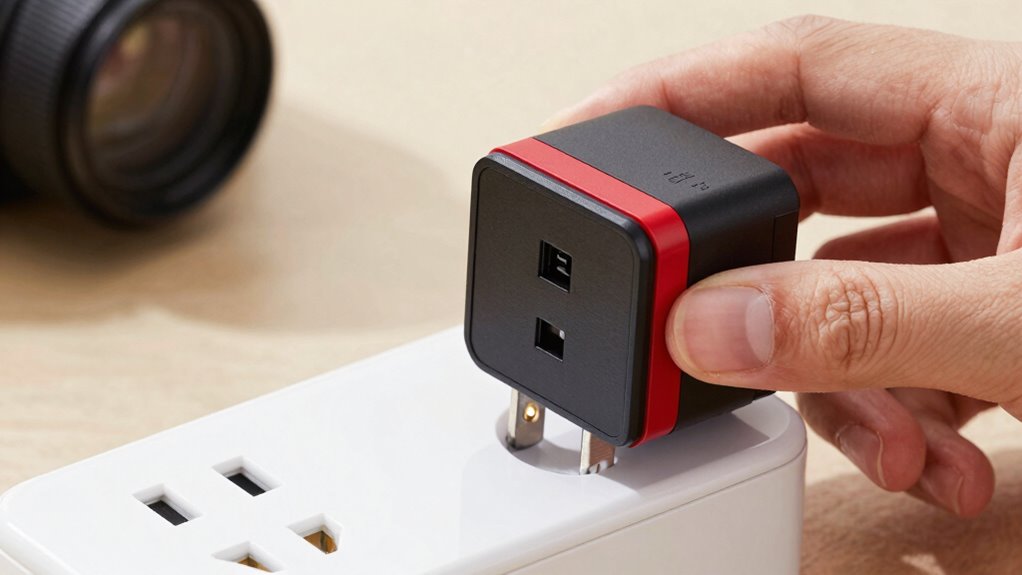

When traveling from the U.S. to the UK, you need to know that the UK uses 230V at 50Hz and has Type G plugs with three rectangular pins. U.S. devices usually work on 120V, so check if yours are dual voltage; if not, you’ll need a voltage converter. Use a plug adapter to fit your U.S. plugs into UK outlets, and be aware of safety features like fuses and shutters. Learn more about staying safe and prepared for your trip.

Get travel and outdoor gear delivered free — and shop member deals
- Fast, free delivery on millions of items
- Access to Prime Big Deal Days deals on October 6–7
- Prime Video, Amazon Music and more included
Key Takeaways
- The UK uses Type G sockets with 230V and 50Hz, while the US uses Type A/B sockets with 120V and 60Hz.
- Many modern devices are dual voltage (100-240V), suitable for UK use with just a plug adapter.
- US travelers need a Type G travel adapter to fit UK outlets; voltage converters are necessary for non-dual voltage devices.
- High-power appliances like hair dryers require separate voltage converters rated for their wattage to prevent damage.
- Safety features like fuse protection and socket shutters are standard in UK plugs, ensuring safe use when connecting US devices.
As an affiliate, we earn on qualifying purchases.
Understanding the UK Power System and Voltage Standards
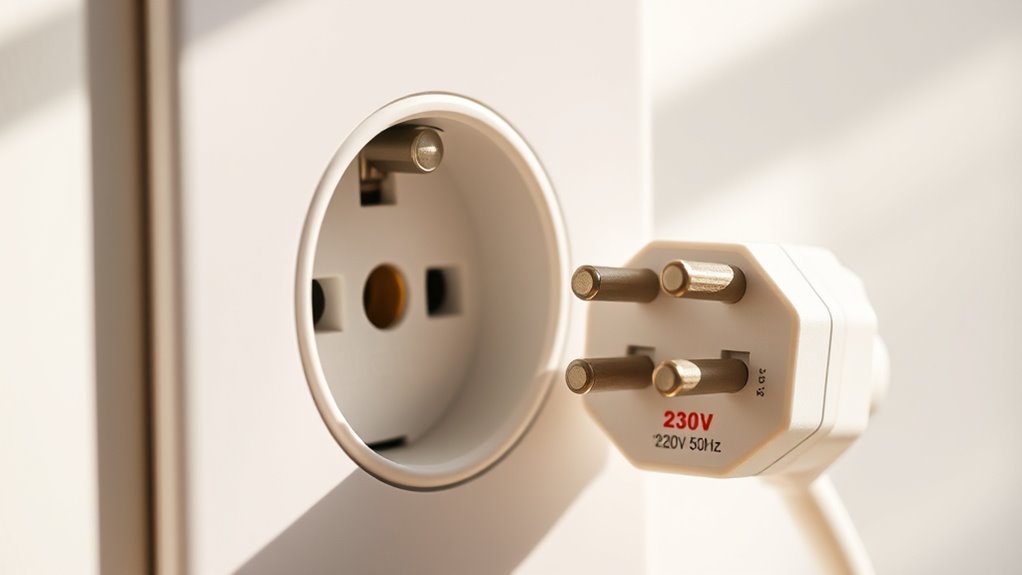
The UK power system operates on a standard voltage of 230V and a frequency of 50Hz, which differs considerably from the US system. This means that your US devices, designed for 120V and 60Hz, may not work safely without a converter. Many modern electronics like chargers are dual voltage (100-240V, 50/60Hz), so they can handle UK voltage and frequency with just a plug adapter. However, high-power appliances such as hair dryers or kitchen equipment could be damaged if plugged directly into UK outlets. Always check your device’s label to confirm voltage compatibility. If your device isn’t dual voltage, you’ll need a voltage converter to step down the UK’s 230V supply to US standards. Ignoring this can lead to damage or unsafe operation. Additionally, understanding power ratings can help ensure your devices operate safely and efficiently in the UK. It’s also wise to consider plug type differences, as UK outlets use a distinct socket design that requires appropriate adapters for safe connection. Moreover, being aware of surge protection can help safeguard your electronics from voltage fluctuations during your stay. A voltage stabilizer can further protect sensitive devices from unexpected power surges. Being informed about electrical safety practices is essential to prevent hazards during your travels.
voltage converter for UK outlets
As an affiliate, we earn on qualifying purchases.
As an affiliate, we earn on qualifying purchases.
The UK Plug Design and Safety Features
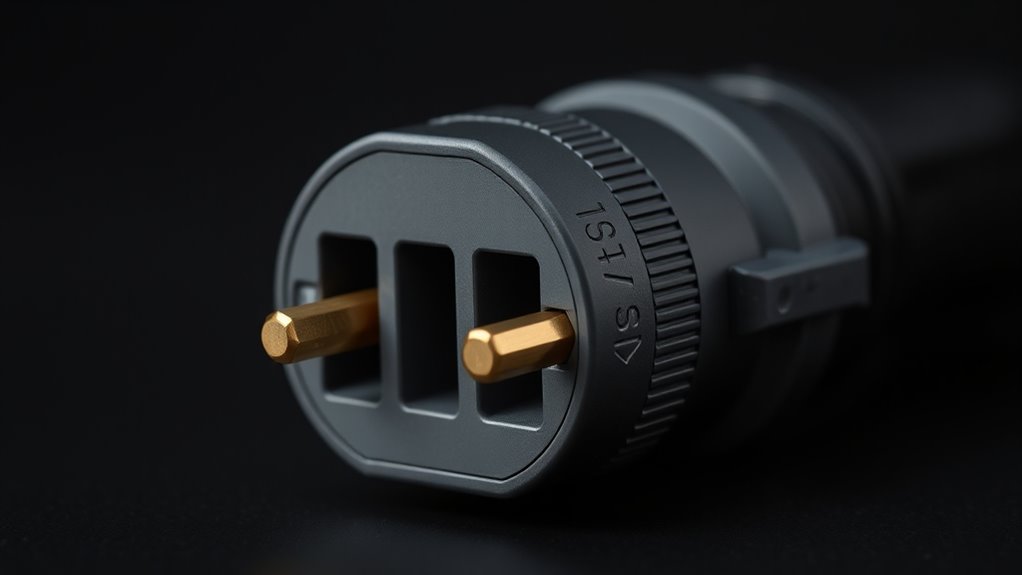
You’ll notice that UK plugs are designed with safety in mind, featuring internal fuses and protective shutters on sockets. These safety features help prevent electrical accidents and protect your devices from faults. Understanding how the fuse and plug design work together guarantees you use them safely and effectively. Additionally, proper handling and regular inspection of these safety components ensure ongoing protection and reliability. Regular inspection and maintenance of safety features can help you recognize the importance of organized safety in electrical setups. Incorporating the use of correct oil for maintenance can also extend the lifespan of your equipment and ensure consistent performance. Maintaining these safety features and understanding their functions is essential for electrical safety and device longevity.
Fuse and Safety Mechanisms
UK plugs incorporate multiple safety features designed to protect users and wiring. One key element is the internal fuse, which acts as a safeguard against overloads and faults, preventing excessive current from damaging the device or wiring. Additionally, the fuse rated at 6.3 x 25.4mm and conforming to BS 1362 ensures quick disconnection during faults.
Here are three safety mechanisms to keep in mind:
- Built-in Fuse – Provides secondary protection by disconnecting power if a fault occurs.
- Socket Shutters – Prevent foreign objects from entering live contacts, reducing shock risk.
- Earthed Pins – Ensures proper grounding, avoiding accidental electrical shocks or damage.
These features work together to make UK plugs among the safest worldwide.
The UK plug design and safety features are carefully engineered to minimize electrical hazards and enhance user safety.
Plug and Socket Design
Designed with safety and functionality in mind, UK plugs feature a robust and distinctive shape that incorporates multiple protective elements. The Type G plug has three rectangular pins arranged in a triangular pattern, ensuring proper grounding and polarization. Its solid construction includes an internal fuse that protects against overcurrent, adding a safety layer. The sockets are fitted with shutters that prevent foreign objects from entering live or neutral contacts, reducing electrical hazards. The spacing between live, neutral, and earth pins ensures only compatible plugs fit, preventing accidental contact. Additionally, the safety features of UK plugs are designed to meet strict standards, making them among the safest electrical connectors worldwide. The design’s sturdy build and safety features make UK sockets reliable for everyday use. Moreover, the compliance with safety standards is regularly reviewed to maintain high safety levels. These safety features are complemented by the rigorous testing and certification processes that UK electrical components undergo, ensuring ongoing reliability. Regular updates to safety standards reflect ongoing efforts to incorporate new safety innovations, further enhancing user protection. If you’re traveling with US devices, you’ll need an adapter, but always check for devices that are dual voltage to avoid damage.
As an affiliate, we earn on qualifying purchases.
Comparing UK and US Electrical Outlets and Plugs

Have you ever wondered how UK and US electrical outlets and plugs differ? Here’s a quick comparison:
- Shape and Pins: UK outlets use Type G with three rectangular pins in a triangular pattern, while US outlets use Type A or B with flat pins—two for A, plus grounding for B.
- Voltage and Frequency: UK supplies 230V at 50Hz; US supplies 120V at 60Hz. This means US devices may need a converter for UK use.
- Safety Features: UK outlets have shutters and fused plugs for safety, whereas US outlets lack shutters and use grounding plugs for protection.
These differences mean you’ll need adapters and possibly voltage converters when traveling between the two countries.
As an affiliate, we earn on qualifying purchases.
Using Travel Adapters for UK Plugs in the US

When traveling from the US to the UK, using a travel adapter is essential to connect your devices to UK outlets. Since US plugs are incompatible with UK sockets, an adapter converts your American plug into the UK Type G standard. This allows you to plug in chargers, small appliances, and gadgets without issue. Remember, this adapter only changes the physical connector; it doesn’t convert voltage or frequency. Check if your device supports dual voltage—if not, you’ll need a separate voltage converter. Use the following table to understand the differences:
| US Device | UK Adapter Compatibility | Notes |
|---|---|---|
| Phone Charger | Yes, with adapter | Usually dual voltage |
| Laptop | Yes, with adapter | Verify voltage support |
| Hair Dryer | No, needs converter | High power, risk damage |
| Shaver | Yes, with specific adapter | Check device label |
| Small Appliance | Yes, with converter | For single voltage devices |
Additionally, understanding voltage differences can help prevent damage to your electronic devices. It is also advisable to research power compatibility before using certain appliances to avoid potential issues. To ensure safe usage, always verify whether your devices are dual voltage compatible before plugging them into UK outlets. Being aware of plug type standards can further facilitate seamless device use abroad. Moreover, some modern devices may automatically adapt to different voltages if they are multi-voltage capable, making travel even easier.
Voltage Compatibility and Device Requirements
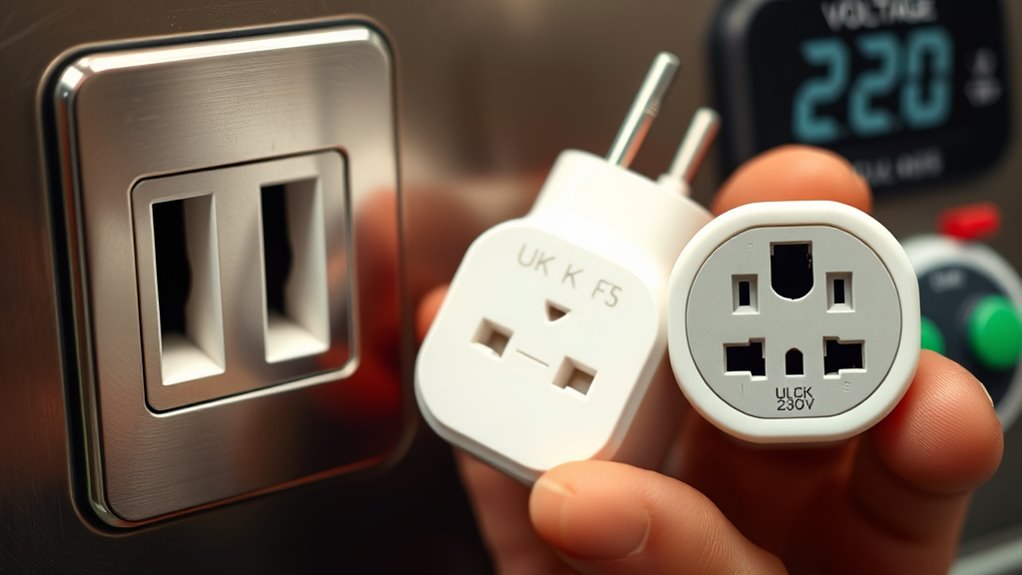
When traveling to the UK, you need to pay attention to voltage standards and your device labels to avoid damage. Most devices are marked as dual voltage, meaning they can handle both 120V and 230V, but if yours isn’t, you’ll need a converter. Always verify your device’s requirements to make certain of safe and proper operation with the UK’s higher voltage. Additionally, ensure that your device’s piercing jewelry materials are compatible with the local electrical standards to prevent any damage or safety issues. Being aware of the plug type used in the UK can also help you prepare appropriate adapters for your devices. Since many electronics are designed for dual voltage, checking the voltage compatibility label helps prevent mishaps during your trip.
Voltage Standards Difference
Are you aware of the critical differences in voltage standards between the UK and other countries like the US? If not, you could risk damaging your devices or facing safety hazards. Here are key points to beware of:
- The UK uses 230V at 50Hz, while the US operates at 120V and 60Hz.
- Many modern devices are dual voltage (100-240V, 50/60Hz), so they adapt easily with just a plug adapter.
- Single-voltage US appliances require a voltage converter to handle the higher UK voltage safely.
Always check your device labels before plugging in. Failing to match voltage can lead to overheating, damage, or fire. Using the right converter or dual-voltage devices protects your gadgets and keeps you safe during your trip.
Device Voltage Labels
Device voltage labels provide essential information about whether your gadgets can safely operate in different electrical environments. Always check these labels before plugging in your devices abroad. Many modern electronics are dual voltage, marked as “INPUT: 100-240V, 50/60Hz,” meaning you can use them in the UK with just an adapter. Single-voltage devices, however, require a voltage converter to prevent damage. Here’s a quick reference:
| Label Type | Compatibility |
|---|---|
| 100-240V, 50/60Hz | Compatible with UK, no converter needed |
| 110V or 120V only | Needs a voltage converter for UK |
| 230V, 50Hz | Compatible, no converter needed |
| 240V only | May require a converter |
Always verify your device’s label to avoid damage or malfunction.
Using Converters Safely
Using converters safely starts with verifying your device’s voltage requirements. Check the label to see if it’s dual voltage (100-240V). If it is, you only need a plug adapter. If not, you must use a voltage converter to prevent damage.
Here are key steps:
- Confirm your device’s voltage and wattage—overloading a converter can be dangerous.
- Use a converter rated for your device’s wattage; high-power appliances like hair dryers need heavy-duty models.
- Always turn off and unplug devices before connecting or disconnecting converters to avoid electrical surges.
The Different Types of UK Plugs and Their Uses

Have you ever wondered about the different types of UK plugs and when to use each one? The most common is the Type G plug, with three rectangular pins in a triangular pattern, used for most appliances. Older buildings may have the BS 546, with 2A, 5A, 15A, or 30A plugs, mainly in commercial or historic sites. Shaver plugs, or BS 4573, feature round pins for low-voltage devices. The Europlug (Type C) with two round pins is common for smaller appliances and may need an adapter. Here’s a quick overview:
| Plug Type | Pins | Typical Use |
|---|---|---|
| Type G | Rectangular | Heavy appliances, sockets |
| BS 546 | Round | Older buildings, lighting |
| BS 4573 | Round | Shavers, low-voltage devices |
Safety Precautions for Electrical Devices in the UK
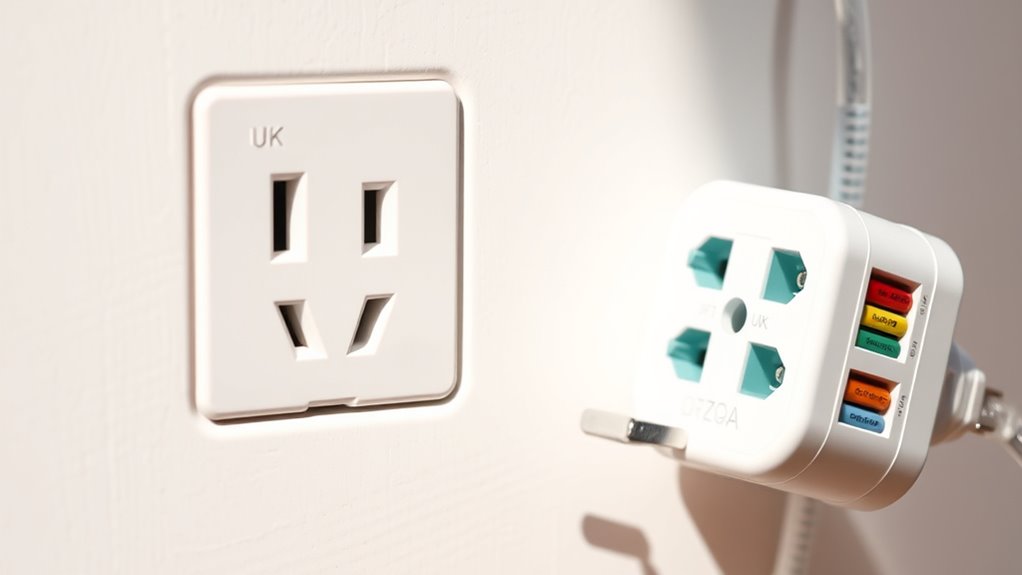
To guarantee safety when connecting electrical devices in the UK, it’s essential to follow proper precautions from the outset. First, always check if your device is dual voltage (100-240V). If not, use a voltage converter to prevent damage. Second, make sure you use a UK Type G adapter to connect your US plug, and avoid forcing incompatible plugs into sockets. Third, inspect the fuse in your plug; if it blows, replace it with one of the same rating to maintain safety. Also, keep socket shutters closed when not in use to prevent foreign objects from entering. Never bypass safety features or attempt to modify plugs. Following these steps helps protect you from electrical shocks, fires, or damage to your devices while traveling in the UK.
Choosing the Right Adapter and Converter for Your Devices
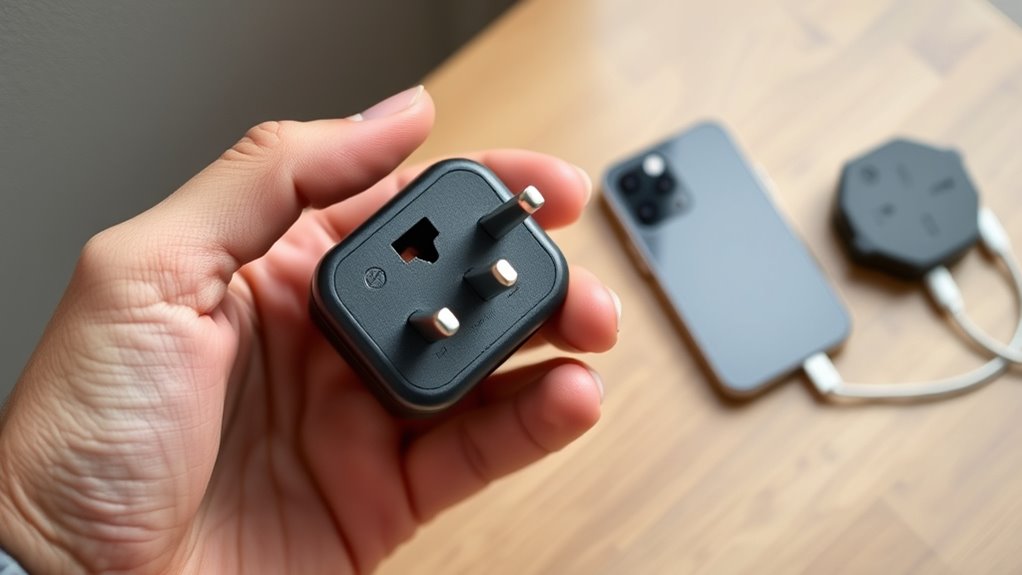
To make certain your devices work safely in the UK, you need to match the right adapter type and check their voltage compatibility. You should also be aware of your device’s power rating to avoid overloads or damage. Taking these steps helps you choose the proper converter and adapter for a smooth travel experience.
Matching Adapter Types
Are you unsure how to choose the right adapter and converter for your UK trip? Here’s a simple guide to match your devices effectively:
- Check your device labels—if it says 100-240V, 50/60Hz, you only need an adapter, not a converter.
- For devices limited to 120V, get a voltage converter to prevent damage.
- Use a UK Type G travel adapter to connect your US plugs securely into UK outlets.
Voltage Compatibility Checks
Wondering if your devices can handle UK voltage? Check the labels on your chargers, appliances, and electronics. Devices marked “100-240V” and “50/60Hz” are dual voltage and don’t need a converter—they only require a plug adapter. If your device says “120V” only, you’ll need a voltage converter to avoid damage. High-power devices like hair dryers usually aren’t dual voltage, so a converter is essential. Always verify your device’s voltage and wattage ratings before plugging in. Using the wrong voltage can cause overheating, failure, or safety hazards. When in doubt, consult your device’s manual or manufacturer. Remember, even dual-voltage devices need the correct plug adapter to fit UK outlets. Taking these steps helps ensure safe, reliable operation during your trip.
Power Rating Awareness
Understanding your device’s power rating is essential for choosing the right adapter and converter. If your device draws more current than the adapter or converter can handle, you risk damage or safety hazards. To stay safe and ensure proper functionality, consider these points:
- Check the device’s label for its wattage or amperage; most chargers list this info.
- Use an adapter that matches your device’s plug type but doesn’t need to handle more than its rated power.
- For high-power devices like hair dryers or irons, select a voltage converter rated above the device’s wattage to prevent overheating or failure.
Always verify your device’s specifications before plugging in, ensuring compatibility and safety during your UK trip.
Common Mistakes to Avoid When Traveling With Electronics
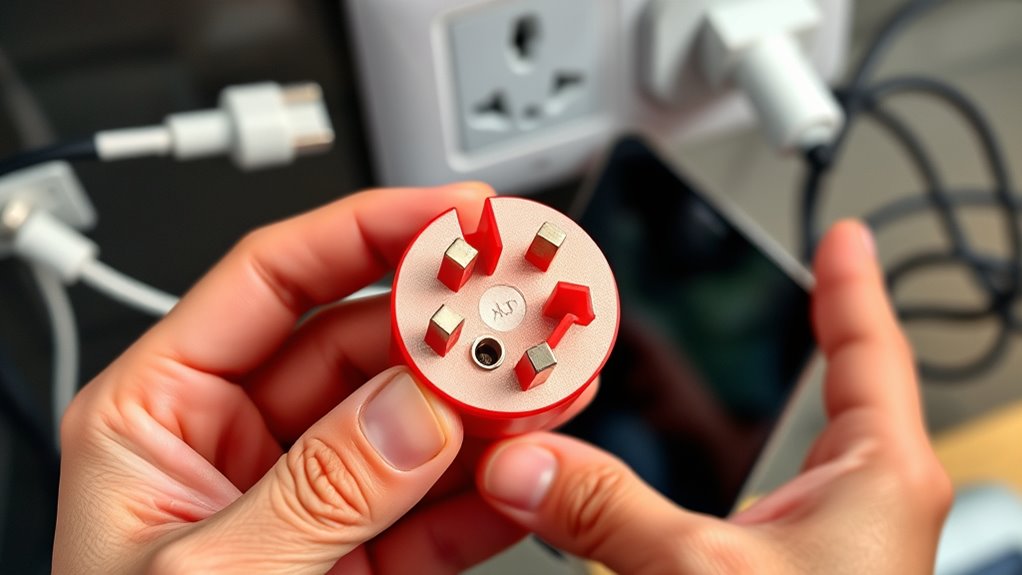
Traveling with electronics often leads to common mistakes that can damage your devices or leave you powerless abroad. First, don’t assume your chargers are compatible with UK voltage and outlets. Check if your devices are dual voltage (100-240V); if not, a voltage converter is essential. Using a US charger directly risks overheating or failure. Second, avoid forgetting a proper UK plug adapter; US plugs won’t fit UK outlets. Always ensure your adapter matches the UK Type G socket. Third, don’t ignore safety features like fuses or socket shutters—using incompatible or damaged plugs can be dangerous. Finally, don’t leave your devices plugged into outlets for too long without monitoring, especially high-power appliances like hair dryers. Being mindful of these mistakes helps prevent damage and keeps your electronics running smoothly during your trip.
Tips for Ensuring Safe and Efficient Power Usage in the UK

To guarantee safe and efficient power use in the UK, start by verifying whether your electronic devices are dual voltage (100-240V). If they are, you won’t need a voltage converter—just a UK travel adapter. If not, a converter is essential to prevent damage.
Here are tips to help:
- Always check device labels for voltage and frequency info before plugging in.
- Use a reputable UK travel adapter that includes a fuse for safety.
- Avoid overloading outlets; plug in high-power devices separately and use surge protectors when possible.
Following these steps ensures your devices stay safe and function properly, saving you time and money during your trip.
Frequently Asked Questions
Can I USe My US Appliances Directly in the UK Without an Adapter?
You can’t use your US appliances directly in the UK without an adapter. US devices with non-dual voltage aren’t built for 230V, so you’ll need a travel adapter to fit UK outlets and a voltage converter to step down from 230V to 120V. Dual voltage devices labeled 100-240V can work with just an adapter, but always check your device’s label before plugging in to avoid damage or safety hazards.
Are All UK Sockets Compatible With UK Plugs and Adapters?
You can’t assume all UK sockets fit all UK plugs or adapters. UK sockets are designed with safety shutters and specific pin spacing, mainly compatible with Type G plugs. Older sockets, like BS 546 or BS 4573, may differ in size or shape. Always check the socket type before plugging in your device, and use the correct adapter to guarantee a secure, safe connection.
Do I Need a Voltage Converter for My US Device in the UK?
Yes, you need a voltage converter for your US device in the UK unless it’s dual voltage. US devices operate at 120V, while UK outlets supply 230V. Using a device not rated for higher voltage can damage it or cause safety hazards. Check your device’s label; if it says 100-240V, 50/60Hz, you only need an adapter. Otherwise, a converter is essential to prevent damage.
How Do I Identify if My Device Is Dual Voltage?
Nearly 80% of modern electronics are dual voltage, making travel easier. To identify if your device is dual voltage, check its power label or user manual. Look for a voltage range like “100-240V” or “AC 100-240V.” If you see this, you only need a plug adapter for the UK; no converter needed. If it only says “120V” or similar, you’ll need a voltage converter to avoid damage.
What Safety Features Should I Look for in UK Travel Adapters?
You should look for UK travel adapters with built-in safety features like a fuse, socket shutters, and proper grounding. The fuse protects against high fault currents, while shutters prevent foreign objects from entering live contacts. Make certain the adapter is approved by relevant safety standards, marked with certifications like ASTA or BSI. These features keep you safe from electrical shocks and short circuits during your travels.
Conclusion
Traveling to the UK? Remember, over 50% of travelers report device issues due to incompatible plugs or voltage mishaps. By understanding UK plug types, voltage standards, and using the right adapters, you can avoid common pitfalls. Always double-check your devices’ compatibility and safety features. With proper preparation, you’ll enjoy your trip without electrical worries—keeping your gadgets safe and your experience smooth. Stay informed, stay safe, and make the most of your UK adventure!
Halloween Picks
halloween
As an affiliate, we earn on qualifying purchases.