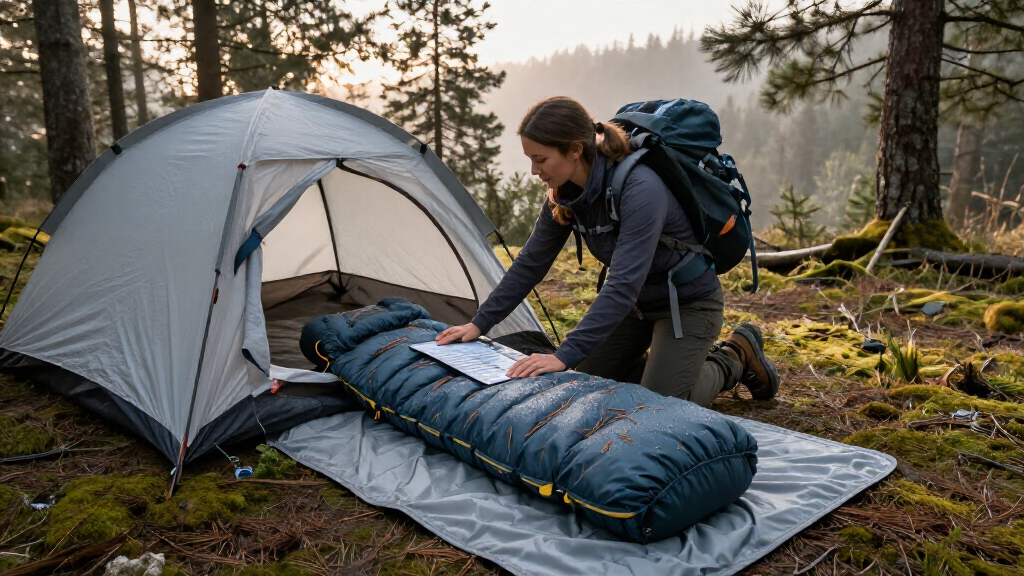

This checklist is for backpackers choosing sleep gear for overnight trips, from a streamlined bag-and-pad setup to a few comfort-focused extras. Think about your route, expected conditions, and how much space you can devote to sleep gear; your trip needs should guide each choice.

Get travel and outdoor gear delivered free with Prime
- Fast, free delivery on millions of items
- Prime Video, Amazon Music and more included
- Member-only deals all year
The sections follow the main sleep system pieces: sleeping bag, pad, pillow, liner, trekking-pole tent option, and inflatable mattress. Some slots include a named pick, while the pillow and mattress sections offer selection advice without a specific product.
Use the checklist to compare fit, packed size, compatibility, and the details provided by each manufacturer. Check sizing and care instructions before buying, and make sure each piece works with the rest of your setup; compatibility matters as much as individual features.
Lightweight Sleeping Bag
A sleeping bag is central to your overnight comfort, so match its shape and temperature rating to the conditions you expect and the way you sleep. The Therm-a-Rest Parsec 32°F Ultralight Down Mummy Sleeping Bag is the named pick for this slot. Before choosing it, compare its rating with your route’s likely nighttime conditions and review the manufacturer’s guidance; temperature rating is a starting point, not a guarantee of personal comfort.
Mummy bags taper toward the feet, so check the listed length and shoulder and hip measurements against your body and preferred sleep position. A common mistake is choosing a bag based only on its “ultralight” name without checking whether the cut leaves enough room to move or whether its packed dimensions suit your pack. Review the closure, hood, and care instructions, and confirm that the bag fits your intended pad setup. Fit and layering can affect how comfortable the bag feels, so account for the sleep clothing you plan to wear.
What to look for:
- Compare the 32°F rating with expected overnight conditions and manufacturer guidance.
- Check listed length and shoulder and hip dimensions against your body.
- Review packed dimensions for a fit with your backpack.
- Confirm the bag’s shape suits your sleep position and planned layers.
- Read the care instructions for the down bag.
Therm-a-Rest Parsec 32°F Ultralight Down Mummy Sleeping Bag

The Parsec is a lightweight sleeping bag designed for summer alpine trips and milder spring or fall nights. It features 800-fill hydrophobic down, recycled nylon fabric, heat-mapped insulation, and connectors that secure it to a sleeping pad.
Pros:
- Lightweight and compressible for backpacking
- Hydrophobic down absorbs less water and dries faster than untreated down
- Recycled nylon shell and PFC-free materials
- Pad connectors and insulated foot pocket support warmth and comfort
Cons:
- Designed for warmer conditions, with a 32°F temperature rating
- Long size may not suit shorter users
Best for: Backpackers considering a named down mummy bag for their sleep system.
Not ideal for: Anyone who needs a roomier cut or a different temperature rating.
Bottom line: Check the fit, rating, and packed dimensions before selecting the Parsec.
Inflatable Sleeping Pad
A sleeping pad separates you from the ground and is a key part of a sleep setup. The Therm-a-Rest Basecamp Self-Inflating Camping Sleeping Pad is the listed pick, but its name alone does not establish suitability for backpacking. Compare its weight and packed dimensions with your carrying capacity, and check the manufacturer’s information for insulation and intended use; carry size and insulation are central to the decision.
Check the pad’s length and width against your height and sleep position, then make sure it fits inside your shelter with your other gear. A common buying mistake is selecting a pad for comfort at camp without considering how much room it takes in a pack. Confirm the valve and inflation instructions, and see whether the pad’s thickness works with how you sleep. Also compare its stated insulation information with the conditions you expect, rather than assuming that every self-inflating pad suits every season. Measure your shelter space before buying so the pad and sleeping bag can lie flat together.
What to look for:
- Check weight and packed dimensions for your backpacking setup.
- Compare length and width with your height and sleep position.
- Confirm the pad fits within your shelter alongside other gear.
- Review the manufacturer’s insulation and intended-use information.
- Read valve, inflation, and care instructions.
Therm-a-Rest Basecamp Self-Inflating Camping Sleeping Pad
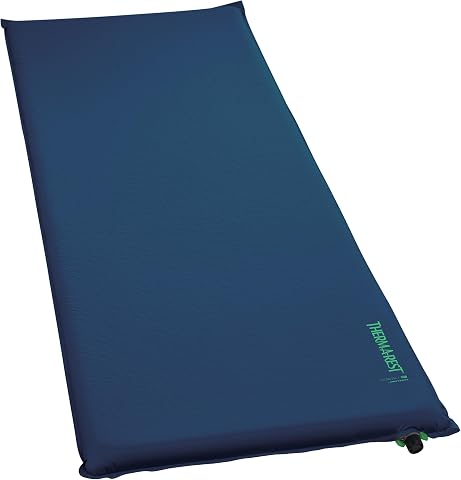
The Therm-a-Rest Basecamp is a self-inflating sleeping pad designed for camping, offering quick inflation with its WingLock valve and year-round insulation with a 6 R-value. It provides a warm, comfortable sleep surface with eco-friendly features and easy packing.
Pros:
- Fast self-inflation with WingLock valve
- Excellent insulation for year-round use
- Eco-friendly, PFAS-free coating
- Comfortable and spacious for XL size
Cons:
- Heavy for backpacking trips
- Requires 2-4 hours to fully inflate and acclimate
- Bulkier when packed compared to ultralight pads
Best for: Campers whose shelter and carrying setup can accommodate its listed dimensions.
Not ideal for: Backpackers who need a compact pad unless its packed size meets their needs.
Bottom line: Verify packability, fit, and insulation details for the Basecamp before choosing it.
Backpacking Pillow
A pillow can make a night outdoors feel more familiar, but it also takes space in a sleep system. Decide whether you want a dedicated camping pillow or plan to use clothing inside a soft stuff sack. Compare packed size and weight with the comfort you expect from the shape and support; comfort-to-carry tradeoff is personal.
Check the pillow’s dimensions and how it stays in place on your pad, especially if you move during sleep. A common mistake is choosing by softness alone without checking whether the height suits your sleeping position. Side sleepers may want a different amount of loft than back sleepers, so consider your usual posture and whether the pillow can be adjusted. Review materials and cleaning instructions, and make sure the pillow’s surface feels suitable for direct contact. Try your sleep position when assessing shape and height, and account for any clothing you might otherwise pack as a pillow substitute.
What to look for:
- Compare packed size and weight with the comfort you want.
- Check dimensions and support for your usual sleep position.
- Consider whether the pillow stays in place on your sleeping pad.
- Review adjustability, surface material, and cleaning instructions.
- Decide whether packed clothing can serve as an acceptable alternative.
Sleeping Bag Liner
A liner is an optional layer inside a sleeping bag, and the Sea to Summit Silk Blend Sleeping Bag Liner is the named pick here. Before buying, check its dimensions against your bag’s interior and verify the maker’s material and care information. Bag compatibility matters: a liner that bunches or feels restrictive can make the whole sleep setup less comfortable.
Compare the liner’s shape and closure with your bag, and consider how much room you need to turn or stretch. A common mistake is assuming that a liner automatically changes a bag’s temperature performance by a predictable amount; rely on product guidance rather than assumptions. Check how the liner is washed and dried, particularly if you expect to use it often. Also weigh its packed size against the convenience of having a separate layer. Fit inside the bag should be checked before a trip, so you can tell whether the liner moves freely and remains comfortable in your usual sleep position.
What to look for:
- Compare liner dimensions with the sleeping bag’s interior.
- Check the liner’s shape and closure for compatibility with your bag.
- Review material details and washing and drying instructions.
- Use manufacturer guidance for any claims about warmth or performance.
- Consider packed size and room to move inside the bag.
Sea to Summit Silk Blend Sleeping Bag Liner

This sleeping bag liner adds warmth and a soft feel to a sleep system. Hollow-core Thermolite Pro fibers and infrared-absorbing ceramic pigments help retain warmth, while HeiQ odor control helps keep the liner fresh during extended use.
Pros:
- Adds warmth to a sleeping bag
- Soft, luxurious feel
- Odor control helps keep it fresh
- Adjustable footbox
Cons:
- Availability can vary
Best for: Backpackers who want a separate liner layer and have a compatible bag.
Not ideal for: Anyone whose bag leaves little room for an additional layer.
Bottom line: Check fit and care details before adding the Silk Blend liner to your kit.
Trekking Pole Tent
The listed pick for this slot is “Trekking Poles for Seniors, 2 Pack Flip-Lock Adjustable Walking Sticks.” The product name describes walking sticks, so do not assume they are suitable tent supports: confirm the tent maker’s requirements and the poles’ specifications first. Support compatibility is essential before treating any trekking poles as part of a shelter setup.
Check the pole’s adjustment range, locking mechanism, handle and tip details, and the manufacturer’s stated use. Compare the required support height and attachment method for your tent with the poles’ listed dimensions and construction. A common mistake is assuming that any adjustable walking stick can safely hold a tent under expected conditions. Verify the tent’s setup instructions and whether it calls for particular pole characteristics; also consider how these sticks fit your hiking use if you plan to carry them for both purposes. Confirm specifications directly before relying on the named pick for shelter support.
What to look for:
- Confirm the poles meet the tent manufacturer’s support requirements.
- Compare adjustment range with the tent’s required support height.
- Review flip-lock instructions and the maker’s stated use.
- Check tip and attachment compatibility with the tent setup.
- Verify that the poles suit your intended hiking use as well.
Trekking Poles for Seniors, 2 Pack Flip-Lock Adjustable Walking Sticks, 240g

This set of two lightweight trekking poles features flip-lock height adjustment, anti-slip rubber tips, and ergonomic EVA foam grips, making them suitable for seniors and active adults. Designed for various terrains, they include baskets for snow and mud, ideal for outdoor walks, trails, and rehabilitation exercises.
Pros:
- Easy flip-lock adjustment suitable for seniors and those with reduced grip strength
- Lightweight and durable aluminum construction for all-day use
- Versatile with different baskets for various terrains
Cons:
- Limited warranty period of 1 year
Best for: Hikers considering adjustable sticks for a compatible trekking-pole shelter.
Not ideal for: Anyone whose tent requires support specifications these sticks do not meet.
Bottom line: Confirm the shelter’s requirements and the sticks’ specifications before relying on them.
Inflatable Camping Mattress
An inflatable camping mattress can add a more bed-like surface, but its size and intended use may make it a different choice from a compact backpacking pad. Decide how much comfort you want and how much space you can carry. Compare the mattress’s packed dimensions and weight with your backpack and shelter; space and carrying capacity shape whether it belongs on a backpacking trip.
Check the sleeping surface dimensions against your body and the floor area inside your shelter. Review the manufacturer’s insulation information, inflation method, and care instructions, and consider whether you can inflate it with the equipment you plan to bring. A common mistake is focusing on inflated comfort while overlooking packed bulk or assuming a mattress provides enough insulation for the ground conditions. Check insulation and fit together, and compare the mattress with a backpacking pad if you need to reduce the space devoted to sleep gear.
What to look for:
- Compare packed weight and dimensions with your carrying capacity.
- Check inflated length and width against your body and shelter floor.
- Review insulation information for the conditions you expect.
- Confirm the inflation method works with your planned equipment.
- Read care instructions and compare bulk with a backpacking pad.
Build your sleep setup in order of need: first choose a sleeping bag and pad that match your conditions and fit, then consider a shelter-compatible support system. Add a pillow or liner if their comfort benefits justify the space, and weigh an inflatable mattress against your carrying capacity. Start with the essentials and confirm each item’s specifications before filling gaps.
Use the checklist as a guide, then compare manufacturer details for your route, body, and shelter. A few careful fit and compatibility checks can make packing decisions clearer and help you arrive with a sleep system that suits the trip. Choose deliberately, and enjoy planning your next night outdoors.