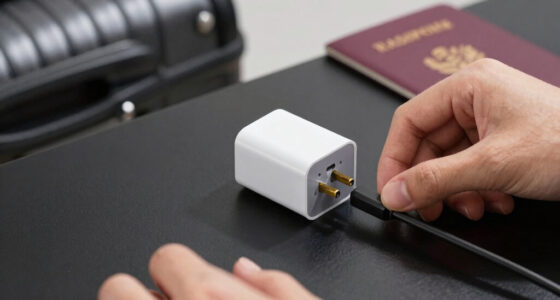
A compact travel power bank has one job: keeping your phone and earbuds alive through long travel days without adding bulk to your bag. After comparing 14 of the most popular options, the Anker Nano Power Bank (45W, 10,000mAh) earns the top spot for its rare combination of pocketable size and laptop-grade charging speed. If you want maximum convenience on a budget, the VRURC Portable Charger with built-in cables eliminates the number one travel frustration: forgotten cables. And for travelers who refuse to compromise on capacity, the INIU 20,000mAh model doubles your phone charges while staying carry-on friendly. The main tradeoffs in this category come down to charging speed versus price, built-in cables versus slimness, and 10,000mAh portability versus 20,000mAh endurance. Read on for the full breakdown of which model fits your travel style.
Listen free for 30 days with Audible
Thousands of audiobooks and originals — cancel anytime.
Start your free trialAs an affiliate, we earn on qualifying purchases.
Complete the kit


Key Takeaways
- Anker‘s three entries dominated the speed-and-reliability rankings, but the 45W Nano justifies its premium only if you charge laptops or USB-C tablets — phone-only travelers can save money with the 30W version.
- Built-in cable models (VRURC, Aaoyun, HELLEE, Nanotechnology) consistently won on convenience but lost points on thickness and cable durability, making them better for occasional travelers than daily commuters.
- Every pick that made the top half of this list charges at 22.5W or above; older 10–15W models were excluded because slow recharging of the bank itself becomes the real bottleneck on multi-day trips.
- The Miady 2-Pack is the only option that solves the two-device household problem — two full power banks for less than most single Anker units — at the cost of individually weaker performance.
- The INIU 20,000mAh was the only high-capacity model compact enough to keep pace with the 10,000mAh field, though it still fails the shirt-pocket test that defines this category.


| compact travel power bank | Capacity | Weight | Dimensions |
|---|---|---|---|
| Anker Nano Power Bank | 10,000mAh | 8.2 oz | 3.21 × 1.99 × 1.42 inches |
| VRURC Portable Charger with Bu | 10,000mAh | 9.17 oz | 5.7 × 2.57 × 0.72 inches |
| Aaoyun 10000mAh Portable Power | 10,000mAh | 6.8 oz | — |
| INIU Power Bank | 10,000mAh | 6.5 oz | 4.4 × 2.7 × 0.7 inches |
| Anker Power Bank 10,000mAh 30W | 10,000mAh | — | 4.32 × 2.58 × 0.98 inches |
| Portable Charger Power Bank 10 | 10000mAh | 7.05 oz | 3.66 x 2.36 inches |
| Nanotechnology Portable Charge | 10000mAh | — | — |
| Miady 2-Pack Portable Charger | 10000mAh per unit | 7.68 oz per unit | 5.5 x 2.6 x 0.6 inches |
| VEEKTOMX 10000mAh Mini Power B | — | 5.76 ounces | 4.33 x 2.81 x 0.67 inches |
| Anker Power Bank | 10,000mAh | 8.6 oz | 5.99 x 2.81 x 0.61 inches |
| INIU 10000mAh 45W Fast Chargin | 10,000mAh | — | — |
| INIU Portable Charger | 10,000mAh | 38% lighter than similar models | — |
| INIU Portable Charger | 20,000mAh | Approx. 11 oz | — |
| HELLEE 15000mAh Portable Charg | 15,000mAh | 45% lighter than conventional models | — |
More Details on Our Top Picks
Anker Nano Power Bank, 45W 10,000mAh Portable Charger
The Anker Nano stands out for balancing raw charging speed with genuine pocketability — a combination most competitors in this category sacrifice one side of. Its 45W output is enough to fast-charge an iPhone or even a small tablet at near-full speed, and the built-in retractable USB-C cable means one less thing to pack. Compared with the Anker 30W model later in this list, the Nano charges devices noticeably faster and adds a smart display, though it costs more per milliamp-hour. Against the VRURC, it trades multi-cable versatility for speed and a more refined build. The tradeoff: 10,000mAh means roughly two phone charges, so multi-day travelers will want more capacity.
Pros:- 45W output fast-charges phones and tablets at full speed
- Retractable built-in USB-C cable keeps pockets and bags clutter-free
- Smart display shows exact remaining battery
- Flight-approved capacity and compact footprint
Cons:- Only about two full phone charges per refill
- Premium price for the capacity compared with budget rivals
Best for: Travelers who want the fastest pocketable charge for a modern USB-C phone without carrying cables
Not ideal for: Multi-device families or multi-day trips — the 10,000mAh capacity and single cable limit its reach
- Capacity:10,000mAh
- Max Output:45W
- Input:30W
- Dimensions:3.21 × 1.99 × 1.42 inches
- Weight:8.2 oz
- Built-in Cable:Retractable USB-C
Our verdict“If you carry one modern phone and value speed over capacity, this is the one to buy.”
VRURC Portable Charger with Built-in Cables, 10000mAh Slim Power Bank
Where the Anker Nano bets everything on speed, the VRURC bets on never needing a cable at all. With built-in Micro USB, USB-C, and Lightning connectors plus USB-A and USB-C ports, it can charge up to five devices at once — a rarity at this size. That makes it the obvious choice for a family sharing one power bank at an airport gate, or for households still juggling older and newer devices. The compromise is real, though: 12W maximum output shared across ports means slow charging compared with the Aaoyun’s 22.5W, and the six-hour recharge time is the slowest in this lineup. It’s a convenience-first pick, not a speed pick.
Pros:- Built-in Lightning, USB-C, and Micro USB cables cover nearly any device
- Charges up to five devices simultaneously
- Slim profile with lanyard for easy carrying
- LED display shows remaining charge precisely
Cons:- Only 12W maximum output — no true fast charging
- Six hours to fully recharge the bank itself
Best for: Families or groups with a mix of device types who want one power bank to serve everyone at once
Not ideal for: Owners of fast-charging phones — 12W shared output feels sluggish next to 45W rivals
- Capacity:10,000mAh
- Max Output:12W
- Ports:USB-C, USB-A
- Built-in Cables:Micro USB, Lightning, USB-C
- Simultaneous Devices:Up to 5
- Dimensions:5.7 × 2.57 × 0.72 inches
- Weight:9.17 oz
- Recharge Time:6 hours
Our verdict“Buy this for cable-free versatility across mixed devices, not for charging speed.”
Aaoyun 10000mAh Portable Power Bank with 22.5W PD Fast Charging and Built-in USB-C Cable
At 0.6 inches thick and 6.8 ounces, the Aaoyun is the thinnest bank in this batch, sliding into a jacket pocket where the chunkier Anker Nano would bulge. Its aluminum casing also feels more premium than the plastic shells on the VRURC, and its 22.5W PD charging comfortably outpaces that model’s 12W — enough to fast-charge most Android phones. The built-in USB-C cable covers modern devices, but iPhone 14-and-earlier owners are out of luck without an adapter. Compared with the INIU 45W, you give up top-end speed and extras like the stand, but you gain a slimmer profile at what is typically a lower price. A solid middle path for minimalists.
Pros:- Ultra-thin 0.6-inch profile slips into pockets easily
- 22.5W PD fast charging beats budget rivals
- Durable aluminum casing resists travel wear
- Built-in USB-C cable removes cable clutter
Cons:- Caps at three simultaneous devices
- 3.5-hour recharge time lags faster 30W+ competitors
Best for: Minimalist travelers who prioritize a slim, pocket-friendly profile with decent fast charging
Not ideal for: Lightning-only iPhone owners — the single built-in USB-C cable leaves them without a native connection
- Capacity:10,000mAh
- Fast Charging:22.5W PD
- Thickness:0.6 inches
- Weight:6.8 oz
- Built-in Cable:USB-C
- Recharge Time:3.5 hours
- Casing:Aluminum
Our verdict“The pick for anyone whose first requirement is thinness without giving up fast charging entirely.”
INIU Power Bank, 10000mAh 45W PD Fast Charging Portable Charger
The INIU 45W matches the Anker Nano’s charging speed while undercutting it on price and adding surprises: a built-in phone stand for hands-free video on a plane, a flashlight, and a nylon-braided USB-C lanyard that doubles as a carrying strap and charging cable. At 6.5 ounces it’s also the lightest here, edging out even the Aaoyun. The compromises are subtler than the specs suggest — the lanyard cable is detachable and easier to lose than a retractable unit, and the 10,000mAh cell still tops out around two iPhone charges, same as everything else in this batch. For buyers who want maximum utility per dollar rather than brand polish, this model makes the most sense.
Pros:- 45W PD output matches the Anker Nano at a lower price
- Built-in stand is genuinely useful for flights and video calls
- Lightest pick in this batch at 6.5 oz
- Braided lanyard doubles as a durable charging cable
Cons:- Detachable cable is easier to lose than built-in designs
- 10,000mAh limits it to roughly two phone charges
Best for: Budget-conscious travelers who want 45W speed plus travel-friendly extras like a stand and lanyard
Not ideal for: Buyers who want a permanently attached cable — the detachable lanyard cable can be misplaced
- Capacity:10,000mAh
- Max Output:45W PD
- Dimensions:4.4 × 2.7 × 0.7 inches
- Weight:6.5 oz
- Extras:Phone stand, flashlight, USB-C lanyard cable
- Charge Rating:Up to 2 iPhones or 1.2 iPads
Our verdict“The best value-for-money choice if you want flagship charging speed with bonus travel features.”
Anker Power Bank 10,000mAh 30W Portable Charger with USB-C
This Anker 30W occupies the sensible middle of the lineup: faster than the VRURC’s 12W, cheaper than the Anker Nano’s 45W, and built around a built-in USB-C cable rated for 10,000+ bends — a durability claim no other pick here makes explicit. Bi-directional fast charging means the bank itself refills quickly over the same cable. The tradeoff is straightforward: older iPhone owners need to supply their own Lightning cable, and 30W won’t hit peak speeds on larger tablets the way the INIU 45W can. For a single modern phone user on a tighter budget who still wants Anker’s reliability and warranty support, this model is better suited than either pricier or flimsier alternatives.
Pros:- 30W bi-directional fast charging for device and bank
- Built-in cable tested to 10,000+ bends for long-term durability
- Trusted brand with strong warranty support
- Compact travel-friendly footprint
Cons:- 30W won’t fast-charge larger tablets at full speed
- No Lightning connector for older iPhones
Best for: Budget-minded buyers who want Anker reliability and a rugged built-in cable for one USB-C device
Not ideal for: iPhone 14-and-earlier owners — no Lightning support without bringing your own cable
- Capacity:10,000mAh
- Wattage:30W
- Dimensions:4.32 × 2.58 × 0.98 inches
- Built-in Cable:USB-C, 5.4-inch
- Charging:Bi-directional fast charging
- Cable Durability:Tested 10,000+ bends
Our verdict“A dependable, durable middle ground for USB-C phone users who don’t need 45W speed.”
Portable Charger Power Bank 10000mAh with Built-in Cables & AC Plug
Most compact power banks still ask you to carry a cable somewhere, which is exactly the friction this model eliminates. With built-in USB-C and USB-A cables plus an integrated AC plug, it recharges itself straight from a wall outlet — no adapter brick, no extra cord, nothing to forget in a hotel room. That self-contained design is what separates it from the VEEKTOMX Mini, which assumes you’ll pack a cable for both directions. Charging at 22.5W, it’s quick enough for phones, and pass-through support lets it top up a device while plugged into the wall. The tradeoff is capacity discipline: 10,000mAh means roughly two phone charges, so tablet-heavy travelers will burn through it fast.
Pros:- Built-in cables and AC wall plug eliminate every extra accessory
- 22.5W fast charging keeps phone top-ups quick
- Pass-through charging lets it power a device while recharging
- Fits in a pocket at 3.66 x 2.36 inches
Cons:- Only around 2 full charges for most smartphones
- No wireless charging option for cable-averse users
Best for: Minimalist travelers who want one pocketable unit with zero loose accessories
Not ideal for: Power-hungry users with tablets or multiple devices — 10,000mAh runs dry after about two phone charges
- Capacity:10000mAh
- Dimensions:3.66 x 2.36 inches
- Weight:7.05 oz
- Charging Speed:22.5W
- Recharging Time:2-2.5 hours
- Built-in Features:USB-C cable, USB-A cable, AC plug
Our verdict“This is the pick for travelers who hate carrying cables more than they hate charging pauses.”
Nanotechnology Portable Charger 10000mAh with 2 Built-in Cables
Where the Anker PowerIQ bank offers a single USB-C port, this charger flips the script: built-in Apple and Type-C cables plus a USB-A port let it feed up to four devices at once. For a parent juggling two kids’ iPads and a phone during a layover, that’s the difference between peace and negotiations. The high-density battery keeps it 45% smaller than comparable banks, and TSA/FAA approval means it clears carry-on checks without a second thought. The compromise is raw speed — its 20W PD output splits across ports when everything’s plugged in, and those attached cables, while convenient, are the first thing to fail if tossed loose into a bag.
Pros:- Charges up to four devices simultaneously
- Built-in Apple and Type-C cables cover most devices without extras
- 45% smaller than traditional 10000mAh banks
- TSA/FAA approved for stress-free flights
Cons:- Only two built-in cables — a third or fourth device needs its own cord
- Shared output means slower charging when multiple devices are attached
- Attached cables can wear out with rough handling
Best for: Families or couples sharing one charger across phones, earbuds, and tablets
Not ideal for: Solo travelers who treat gear roughly — the built-in cables are damage-prone without a case
- Capacity:10000mAh
- Built-in Cables:Apple & Type-C
- Output Power:15W (Apple), 20W PD (Type-C), 18W USB-A
- Size:45% smaller than traditional models
- Safety Features:Over-current, over-voltage, short-circuit protection
- Certification:TSA/FAA approved
Our verdict“Buy this if one charger needs to serve a whole family’s devices on travel days.”
Miady 2-Pack Portable Charger, Slim 10000mAh Power Bank
Two banks for the price most brands charge for one — that’s the entire pitch, and it’s a good one. Compared with the HELLEE single-unit option, this Miady 2-pack means you can leave one in a carry-on and one in a day bag, or hand the second to a travel partner instead of splitting charging time. Each unit offers 2 USB-A ports plus USB-C, so a single bank handles three devices, and the slim 0.6-inch profile slides into a jacket pocket easily. The honest downside: there’s no Lightning cable in the box, so iPhone owners need to bring their own, and the per-unit 10,000mAh capacity won’t sustain a laptop beyond a partial top-up.
Pros:- Two full power banks included for outstanding per-unit value
- Charges up to 3 devices simultaneously per bank
- Slim 0.6-inch profile slips into pockets and bags
- USB-C and USB-A cover both modern and older devices
Cons:- No Lightning cable included — iPhone owners must supply their own
- 10,000mAh per unit limits laptop charging to partial top-ups
Best for: Budget-conscious travelers or couples who want redundant power without paying twice
Not ideal for: Laptop users — 10,000mAh per unit is backup territory, not a workday power source
- Capacity:10000mAh per unit
- Ports:2 USB-A, 1 USB-C
- Dimensions:5.5 x 2.6 x 0.6 inches
- Weight:7.68 oz per unit
- Includes:2 power banks, 2 USB-C cables, 1 user manual
- Simultaneous Charging:Up to 3 devices per bank
Our verdict“The smartest spend here if redundancy or sharing matters more than cutting-edge speed.”
VEEKTOMX 10000mAh Mini Power Bank, 22.5W Fast Charger for iPhone and Android
At 5.76 ounces, this is the lightest bank in the lineup, and for anyone counting grams in a personal item or a hiking pack, that matters more than any spec sheet. The VEEKTOMX Mini undercuts the Anker PowerIQ by nearly 3 ounces while still delivering 22.5W output — enough for roughly two iPhone charges or 1.5 Galaxy fills. Its rounded, pocket-friendly shape is genuinely comfortable to carry, unlike some brick-shaped alternatives. What you give up is recharge patience: 4-5 hours to refill, versus the 2-2.5 hours of the built-in-cable AC-plug model, and the micro-USB input alongside USB-C feels like a leftover from another era.
Pros:- Lightest option in the roundup at 5.76 ounces
- 22.5W output delivers genuinely fast phone charging
- Palm-sized shape fits comfortably in pockets
- Charges iPhone up to 2 times per fill
Cons:- 4-5 hour recharge time is slow for the capacity
- Legacy micro-USB input alongside USB-C adds confusion
- No wireless charging capability
Best for: Ultralight travelers, hikers, and commuters who prioritize ounces above all else
Not ideal for: Impatient rechargers — a 4-5 hour refill time makes overnight or pre-trip planning mandatory
- Battery Capacity:10000mAh
- Dimensions:4.33 x 2.81 x 0.67 inches
- Weight:5.76 ounces
- Input:USB-C or Micro-USB
- Output:5V/2.4A (22.5W max)
- Charging Time:4-5 hours
Our verdict“The clear choice when every ounce counts and you can recharge it overnight.”
Anker Power Bank, 10,000mAh Portable Charger, PowerIQ USB-C Battery Pack
Anker’s reputation for longevity isn’t marketing fluff, and this bank backs it with scratch resistance and drop-test certification — something no other pick in this batch can claim. If your power bank lives at the bottom of a backpack next to keys and water bottles, that durability gap matters more than a few watts. Compared with the Nanotechnology charger, this Anker is simpler: one two-way USB-C port, no attached cables to snap off, just a clean, dependable slab. PowerIQ negotiating with each device keeps charging efficient without guesswork. The honest limitation is single-port life — charging two devices means waiting your turn — and it’s the heaviest 10,000mAh option here at 8.6 ounces.
Pros:- Drop-test certified and scratch resistant for real-world durability
- Two-way USB-C recharges the bank quickly
- Trusted Anker build quality and warranty support
- Slim profile despite sturdy construction
Cons:- Only one port — no simultaneous device charging
- Heaviest 10,000mAh option in this lineup at 8.6 ounces
- Fast charging support varies by device
Best for: Daily commuters and rough-and-tumble travelers who want a bank that survives years of bag abuse
Not ideal for: Multi-device chargers — a single USB-C port means one device at a time
- Capacity:10,000mAh
- Dimensions:5.99 x 2.81 x 0.61 inches
- Weight:8.6 oz
- Ports:USB-C (input/output)
- Durability:Scratch resistance, drop test certified
- Charging Tech:PowerIQ
Our verdict“Pick this if you’d rather buy one durable bank now than replace a cheaper one every year.”
INIU 10000mAh 45W Fast Charging Portable Charger, Smaller Travel Power Bank
45W output is what separates this model from the crowd of 10,000mAh banks clustered around 22.5W. That extra headroom matters if you carry a tablet or a USB-C laptop, since most compact options — including the INIU 10000mAh 22.5W further down this list — simply can’t negotiate those higher power profiles. The detachable braided USB-C cable is a smarter design than fixed built-in cables because it can be replaced if it frays, though you’ll still need to pack extra cables for multi-device days. Compared with the Anker Nano 45W, the port selection here is broader: two USB-C plus a USB-A gives you more flexibility for older gear. The tradeoff is the same one every 10,000mAh bank makes — roughly two phone charges before it needs its own outlet.
Pros:- 45W output is enough for tablets and many USB-C laptops, not just phones
- Three ports (2 x USB-C, 1 x USB-A) offer rare flexibility at this size
- Detachable braided cable is replaceable, unlike fixed built-in cables
- TSA-compliant and airline-safe
Cons:- 10,000mAh capacity limits it to roughly two full phone charges
- Single included cable means packing extras for multi-device households
Best for: Travelers who carry a tablet or small laptop and need one pocketable bank that can fast-charge everything
Not ideal for: Multi-day trips away from outlets — 10,000mAh runs dry after about two phone charges
- Capacity:10,000mAh
- Max Output:45W fast charging
- Ports:2 x USB-C, 1 x USB-A
- Cable:Detachable braided USB-C
- Size:Smaller and lighter than conventional chargers
- Travel Rating:TSA-compliant
Our verdict“The pick if charging speed matters more to you than raw capacity — it’s the pocket-size bank that can actually top up a laptop.”
INIU Portable Charger, 10000mAh, 22.5W Fast Charging Power Bank
Where the 45W INIU model justifies a premium with laptop-grade power, this one wins on price-to-practicality. It still charges three devices at once, covers both PD 3.0 and QC 4+, and undercuts its faster sibling noticeably on cost. The built-in phone stand is the detail nobody else in this lineup offers — fold it out on a plane tray table and stream without holding your phone, something neither the Anker PowerIQ 10,000mAh nor the VEEKTOMX Mini can do. It’s also 38% lighter and 17% thinner than comparable banks, which shows: this slips into a jeans pocket where the 20,000mAh INIU would create a bulge. The honest tradeoff is charging speed — 22.5W is fine for phones, sluggish for tablets — and no wireless charging at this price.
Pros:- Charges three devices simultaneously
- Built-in phone holder for hands-free viewing
- Notably lighter and thinner than similar 10,000mAh banks
- Broad compatibility via PD 3.0 and QC 4+
Cons:- 22.5W ceiling is slow for tablets and useless for laptops
- No wireless charging option
Best for: Commuters and students who want a cheap, pocketable backup for phone-heavy days and watch videos on the go
Not ideal for: Tablet or laptop owners — 22.5W won’t meaningfully fast-charge larger devices
- Capacity:10,000mAh
- Max Output:22.5W
- Fast Charging Tech:PD 3.0 & QC 4+
- Simultaneous Devices:3
- Weight:38% lighter than similar models
- Size:17% thinner, 23% smaller
- Extra Feature:Built-in phone holder
Our verdict“The sensible budget default: buy it if you charge phones only, skip it the moment a tablet enters your bag.”
INIU Portable Charger, 20000mAh, 22.5W Fast Charging Power Bank
Capacity is the whole argument here, and it’s a good one: 20,000mAh means roughly four to five phone charges, double what any 10,000mAh pick in this roundup delivers. That’s the difference between surviving a long-haul flight plus a hotel night versus hunting for an airport outlet. The built-in USB-C cable with a nylon lanyard solves the forgotten-cable problem that plagues the Anker models, and the flashlight is genuinely useful for camping or blackout scenarios. You pay for that endurance in weight — around 11 ounces, noticeably heavier than the 22.5W INIU 10,000mAh — and the 22.5W ceiling means it refills phones briskly but tablets slowly. A three-year warranty, while decent, is shorter than Anker’s coverage.
Pros:- 20,000mAh provides 4-5 full phone charges
- Built-in USB-C cable means one less thing to forget
- Flashlight adds utility for camping and emergencies
- TSA-approved for carry-on travel
Cons:- Heaviest option in this batch at ~11 oz
- 22.5W output charges tablets slowly; no laptop support
Best for: Long-haul flyers, campers, and anyone going a full day or more without reliable outlet access
Not ideal for: Minimalist everyday carry — at roughly 11 oz it’s the heaviest pick here and shows in a pocket
- Capacity:20,000mAh
- Max Output:22.5W
- Built-in Cable:USB-C with nylon lanyard
- Weight:Approx. 11 oz
- Extra Feature:Flashlight
- Travel Rating:TSA-approved
- Warranty:3 years
Our verdict“Choose this when days between outlets matter more than grams in your bag — it’s the endurance pick of the bunch.”
HELLEE 15000mAh Portable Charger Power Bank with Built-in Cables
This is the bank for people who never want to pack a cable again. Four built-in connectors — USB-A, Type-C, Lightning, and Micro — plus six total outputs means it can feed a mixed group of devices with nothing extra in the bag. Compared with the VRURC 10,000mAh, which also has built-in cables but less capacity, the 15,000mAh cell buys you an extra phone charge or two, and the claimed 50% in 30 minutes refills phones at a competitive clip. The compromise is baked into the design: built-in cables are only as long as the bank itself, so charging while using your phone is awkward, and if any connector breaks there’s no replacing it the way you can with the detachable cable on the INIU 45W. No wireless charging either.
Pros:- Four built-in cables cover iOS, USB-C, Micro, and USB-A with no extras to carry
- Charges up to six devices simultaneously
- 15,000mAh strikes a middle ground between size and endurance
- 40% smaller and 45% lighter than conventional models
Cons:- Fixed cables can’t be replaced if they fail and are short for in-hand use
- Lightning and Micro connectors may go unused and add bulk
- No wireless charging
Best for: Families and mixed-device households who want one grab-and-go bank with every connector already attached
Not ideal for: Anyone who charges while actively using their device — the short fixed cables make that clumsy
- Capacity:15,000mAh
- Charging Speed:50% in 30 minutes
- Built-in Cables:USB-A, Type-C, iOS, Micro
- Total Outputs:6
- Size:40% smaller than conventional models
- Weight:45% lighter than conventional models
Our verdict“Buy it if you value never hunting for a cable over charging speed — it’s the most self-contained option in this roundup.”

How We Picked
Because a compact travel power bank lives and dies by its footprint, I weighted size and weight more heavily than raw capacity. A 10,000mAh unit that bulges in a jacket pocket fails its core mission, so I compared physical dimensions and real-world carry comfort rather than trusting marketing photos. The second major criterion was charging speed in both directions — how fast the bank charges your phone, and just as importantly, how fast the bank itself refills overnight in a hotel room.
From there, I scored each model on cable strategy (built-in cables, included cables, or bring-your-own), port flexibility for charging multiple devices, build quality signals like warranty length and brand track record, and price per useful feature. Products that packed in gimmicks — inflated capacity claims, fragile pull-out cables, pointless LED displays — were penalized even when their spec sheets looked strong. The final ranking balances these factors through the travel lens: a model that is perfect for a desk is merely adequate for an airport, and this list rewards the ones built for the airport.
Factors to Consider When Choosing Compact Travel Power Bank
Before settling on a specific model, it helps to understand what actually separates a satisfying travel power bank from one that ends up forgotten in a drawer. These are the factors that shaped my rankings and should shape your decision.Real Capacity Versus Stated Capacity
Every bank in this roundup is marketed as 10,000mAh or more, but that number refers to the internal cell, not what reaches your phone. Because of voltage conversion losses, a 10,000mAh bank delivers roughly 6,000–7,000mAh to your device — about 1.2 to 1.5 full charges for a modern iPhone. Buyers who expect three charges from a 10,000mAh unit are the most common source of disappointment in this category. If you need two guaranteed full charges plus a top-up, a 15,000–20,000mAh model like the INIU 20,000mAh or HELLEE 15,000mAh is the honest choice, and the extra thickness is the price you pay. Also be wary of no-name brands claiming identical capacity at half the price of Anker or INIU; independent teardowns repeatedly show understated cells in that segment. Paying a little more for a brand with a track record is effectively buying insurance on the capacity claim itself.
Charging Speed Works in Two Directions
Most shoppers only look at output wattage — 22.5W, 30W, 45W — and assume higher is automatically better. That matters for how fast your phone recovers during a 20-minute layover, but the input speed of the bank itself is often the bigger travel bottleneck. A slow bank that takes six hours to refill can leave you starting each day at 60% if your hotel charging window is short. Higher-wattage models like the Anker Nano 45W and INIU 45W refill themselves in roughly half the time of budget 10W units. My advice: match the wattage to your device, not to bragging rights. Phone-only travelers get nearly full benefit at 20–30W, while anyone carrying a USB-C laptop or tablet should treat 45W as the floor, since below that threshold a laptop barely charges at all. Buying 45W for a phone-only setup mostly means paying for speed you cannot use.
Built-In Cables: Convenience With an Expiration Date
The built-in cable trend addresses a genuine problem — cables are the most forgotten travel item — but it introduces a failure point that separate cables never have. Once a pull-out or fold-out cable frays or loosens, that feature is dead weight, and integrated cables typically cannot be replaced or repaired. Models like the VRUC and Aaoyun make sense for people who travel a few times a year and value grab-and-go simplicity over long-term durability. Frequent travelers and daily commuters are usually better served by a separate short cable, which costs a few dollars to replace and lets the bank itself last for years. There is also a thickness penalty: the mechanism and cable housing add several millimeters, which matters when the whole point is compactness. A reasonable middle path is the model with a built-in AC plug, which trades cable storage for wall-charging independence — genuinely useful in airports with scarce outlets, less useful on planes.
Airport Rules and Airline Restrictions
Lithium-ion power banks are restricted to carry-on baggage only on virtually every airline, and capacity limits apply: most carriers cap banks at 100Wh, which a 20,000mAh unit sits comfortably under but a 27,000mAh unit does not. A second, newer wrinkle: several airlines now require the capacity label to be physically printed on the bank, and unlabeled or sticker-only units have been confiscated at security in reported cases. This is a quiet argument against white-label brands whose markings rub off or never existed. If you fly often, choose a bank with clear, permanent capacity labeling from an established brand. Budget travelers should also know that ultra-cheap banks occasionally fail to meet the UN 38.3 safety certification that airlines technically require, even if enforcement is inconsistent. A compliant 10,000–20,000mAh bank from Anker, INIU, or Miady clears every major airline’s policy without a second thought.
Warranty and Brand Longevity as Value
Power banks degrade — lithium cells lose capacity after a few hundred charge cycles, and budget units often degrade faster due to cheaper cell chemistry and weaker charging circuitry. This is why warranty length is a genuine value signal, not marketing fluff: Anker’s multi-year coverage and INIU’s extended warranty mean a failure in year two is a replacement, not a purchase you repeat. No-name brands with 30-day guarantees effectively admit their expected lifespan. When comparing prices, divide the cost by the realistic lifespan: a $50 bank lasting four years beats a $20 bank lasting one. This math is also why the Miady 2-Pack ranks as a value pick despite unremarkable individual performance — redundancy across two travelers or two bags has real worth. The mistake to avoid is treating all 10,000mAh banks as interchangeable commodities when their usable lifespans can differ by three to four times.
Frequently Asked Questions
Is 10,000mAh enough for a full travel day, or do I need 20,000mAh?
For most travelers, 10,000mAh covers a single long day of heavy phone use — roughly 1.2 to 1.5 full charges after conversion losses, which handles navigation, photos, and streaming comfortably if you top up at intervals rather than draining to zero. You need 20,000mAh when your trip involves two or more days away from an outlet, when you are charging a phone plus earbuds plus a second person’s device, or when you are powering something hungrier like a tablet. The tradeoff is real: 20,000mAh models like the INIU in this roundup are noticeably heavier and thicker, and they push against the limit of what fits comfortably in a pocket. My rule of thumb is 10,000mAh for city trips and layovers, 20,000mAh for camping, festivals, long-haul flights, and power-outage-prone destinations. If you charge nightly at a hotel, the larger capacity is mostly wasted weight.
Are built-in cables a smart feature or a weak point?
They are both, and which one dominates depends on how you travel. The convenience is undeniable — no cable to forget, nothing to coil, one object that does the whole job, which is exactly why models like the VRURC and Aaoyun appeal to light travelers. The weakness is durability: integrated cables endure repeated bending at a fixed hinge point, and once one breaks, the feature is permanently lost since it cannot be swapped out. Thickness also increases because the bank must house the cable mechanism. Frequent travelers and anyone hard on gear should prioritize a bank with good ports and carry a short aftermarket cable instead — the total system lasts longer and the bank stays slimmer. Occasional vacationers, students, and backup-kit builders get genuine value from built-in cables because the convenience outweighs a shorter lifespan on a bank used a dozen times a year.
Do I need 45W charging if I only charge a phone?
Generally no, and paying for it is one of the most common overspending patterns in this category. Most phones max out between 20W and 30W of input, so a 45W bank like the Anker Nano delivers nothing extra to a phone-only setup — the device simply will not draw the additional power. Where 45W earns its price is with USB-C laptops, iPads, Steam Decks, and similar devices that charge slowly or not at all below roughly 30W. There is one secondary benefit worth knowing: higher-wattage banks usually refill themselves faster, which can matter if your charging windows are short. But if your travel kit is a phone and earbuds, a well-made 22.5W model from INIU or the 30W Anker delivers the same real-world phone charging speed for less money. Spend the savings on a quality cable instead.
Can I take any of these power banks on a plane?
Yes, every model in this roundup qualifies for carry-on travel under standard airline rules. The universal limit is 100Wh, and even the largest pick here — the 20,000mAh INIU — sits around 74Wh, comfortably below the ceiling. What trips people up are three details: power banks must go in carry-on or personal bags, never checked luggage; the capacity should be legibly labeled on the unit, which some airlines now actively check; and spare banks must not be connected to a device or daisy-chained during screening in airports that have tightened rules. Established brands like Anker and INIU print compliant, durable labels, which is one quiet advantage over white-label competitors. If you carry multiple banks, such as the Miady 2-Pack split between family members, each one is evaluated individually and each stays well within limits.
Why do cheaper 10,000mAh banks often deliver fewer charges than promised?
Two reasons, and understanding them prevents most frustration. First, physics: the 10,000mAh rating describes the internal cell at 3.7 volts, but your phone charges at 5 volts or higher, and the voltage conversion loses 25–35% of the energy as heat. So even a perfectly honest 10,000mAh bank delivers roughly 6,500mAh of usable charge. Second, quality: budget brands sometimes use cells that test below their rating or degrade sharply after a few dozen cycles, so a bank that performed acceptably new may deliver noticeably less within a year. Established brands also include better charging circuitry that minimizes conversion losses and protects the cell from the heat damage that accelerates decline. The practical takeaway is to buy on realistic expectations — plan for roughly one and a third phone charges from a quality 10,000mAh unit — and to treat a suspiciously cheap bank as a capacity gamble rather than a bargain.
Conclusion
The right compact travel power bank depends less on specs and more on how you actually travel. For the best overall pick, the Anker Nano 45W stands out for travelers who want one bank that handles a phone today and maybe a laptop tomorrow, with the fastest self-recharging in the lineup. The best value goes to the INIU 22.5W 10,000mAh, which covers everything a phone-centric traveler needs at a price that leaves room for a good cable. For beginners and occasional travelers, the VRURC with built-in cables removes every possible mistake — no forgotten cable, no confusing ports, just plug in and charge. The premium choice is the Anker Nano 45W again for multi-device travelers, or the INIU 20,000mAh if your priority is endurance over wattage. For specific needs: households and families should look at the Miady 2-Pack, outlet-scarce airport warriors benefit from the built-in AC plug model, and the HELLEE 15,000mAh splits the difference between capacity and portability. Match the pick to your travel pattern, not the spec sheet, and you will not be searching for a wall socket again.
NFL season / tailgating Picks
team gear
As an affiliate, we earn on qualifying purchases.