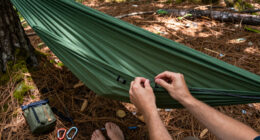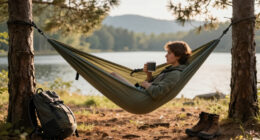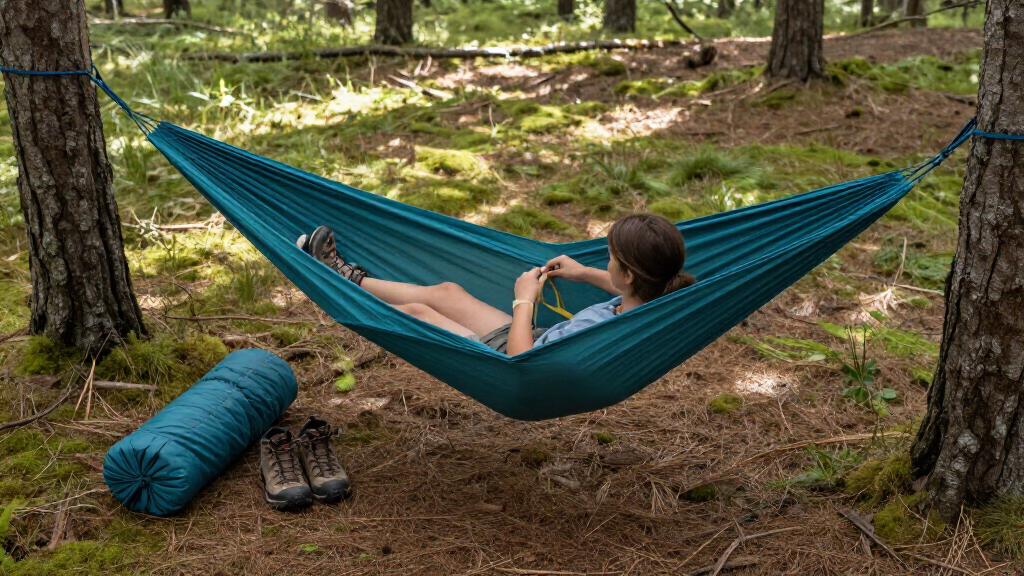
Portable travel hammocks usually force a choice between carrying the smallest, simplest seat or sleep system and carrying enough shelter to spend the night outdoors with fewer compromises. The Lightweight Single-Layer Travel Hammock is a fabric bed with suspension, suited to breaks, warm-weather lounging, and trips where a separate shelter is available. The Integrated Bug-Net-and-Tarp Hammock combines a hammock with insect protection and overhead rain coverage, making it a more self-contained option for overnight use.

Get travel and outdoor gear delivered free — and shop member deals
- Fast, free delivery on millions of items
- Access to Prime Big Deal Days deals on October 6–7
- Prime Video, Amazon Music and more included
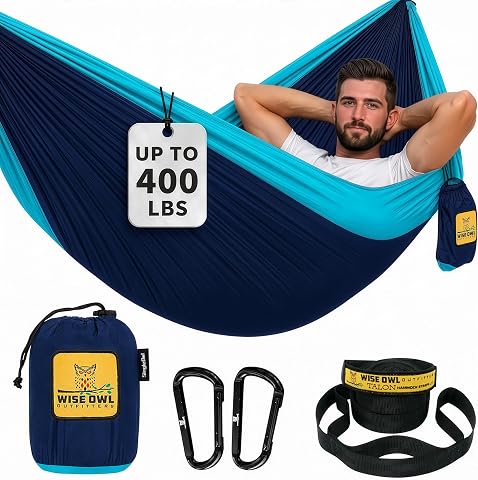
Wise Owl Outfitters Camping Hammock with Tree Straps – Single or Double, up to 500 lbs
- ✔ Material: Quick-dry parachute nylon
- ✔ Single dimensions: 9 ft × 4.5 ft
- ✔ Double dimensions: 10 ft × 6.5 ft
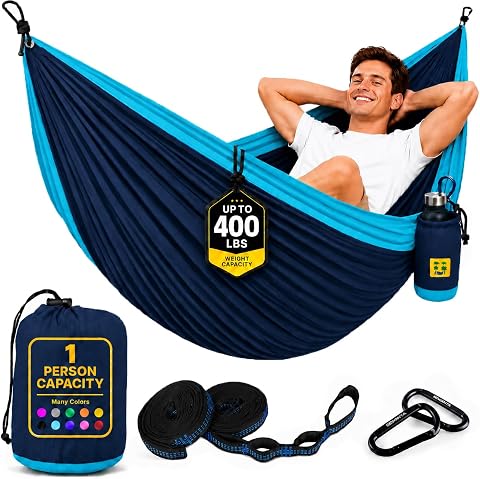
SEWANTA Portable Camping Hammock with Tree Straps, Blue
- ✔ Material: Nylon
- ✔ Capacity: Single: 400 lb; Double: 500 lb
- ✔ Straps: Two 9 ft tree straps
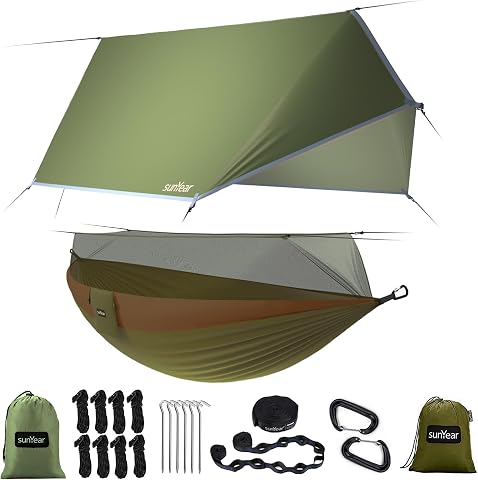
Sunyear Camping Hammock with Mosquito Net & Rain Fly, Single & Double Options, Includes Tree Straps
- ✔ Material: Nylon and Oxford fabric
- ✔ Single dimensions: 106 × 55 in
- ✔ Double dimensions: 118 × 78 in
The practical difference is protection versus portability. The basic hammock packs smaller, weighs less, and is easier to use casually. The integrated setup handles bugs and light rain better, but it asks you to carry and pitch more equipment. Choose A for day trips, travel lounging, or a backup bed; choose B when you expect to sleep outside in buggy or changeable conditions. Neither replaces appropriate insulation in cold weather.
At a Glance
| Criteria | Lightweight Single-Layer Travel Hammock | Integrated Bug-Net-and-Tarp Hammock | Winner |
|---|---|---|---|
| Packed weight and bulk | Lower; usually just hammock and suspension | Higher due to net, tarp, and added suspension or hardware | A |
| Insect protection | None unless a separate net is added | Integrated net helps keep insects away while lying down | B |
| Rain and wind coverage | None unless a separate tarp is carried | Tarp adds overhead coverage; side protection depends on pitch and design | B |
| Setup and adjustment | Fast and relatively simple | More steps and adjustments to pitch well | A |
| Comfort and sleep readiness | Good for lounging; overnight comfort depends on insulation and accessories | More ready for overnight use in suitable conditions | B |
| Cost and overall value | Lower entry cost, but accessories add up | Higher upfront cost, with more shelter features included | Depends |
Wise Owl Outfitters Camping Hammock with Tree Straps – Single or Double, up to 500 lbs
For travelers who want a hammock they can pack without building a separate suspension kit, Wise Owl makes the clearest all-around case. The 16-ounce listed weight, built-in stuff sack, carabiners, and 9-foot tree straps cover the basics in one package. Five adjustment loops on each strap give us several attachment positions, which can make it easier to find a workable hang between suitable anchor points without tying knots.The size choice matters more here than the headline capacity. The single is 9 by 4.5 feet and rated to 400 pounds; the double stretches to 10 by 6.5 feet and lists a 500-pound limit. The larger model gives more room to shift position or share space, but the supplied weight figure is not separated by size, so buyers should check the exact variant if pack weight is critical. Compared with SEWANTA, Wise Owl provides more detail on dimensions and care; compared with Sunyear, it keeps the carried kit simpler by omitting a net and rain fly.That simplicity is also the main limitation. This is a fabric hammock rather than an insect-protected or weather-sheltered sleeping system, and it needs two suitable trees or other anchors. The quick-dry, triple-stitched nylon is described as machine washable on a cold gentle cycle and air dry, but the listing does not make it a substitute for a tarp in rain. We’d pick it for breaks and fair-weather overnights where low carry weight matters more than built-in protection.
Pros:
- Listed weight is 16 ounces, with a built-in stuff sack for compact carrying.
- Includes 9-foot tree straps and carabiners, so the basic suspension components are supplied.
- Five-loop straps allow adjustment without tying suspension knots.
- Single and double sizes have distinct dimensions and stated capacities.
Cons:
- No mosquito net, rain fly, or freestanding stand is included in the described kit.
- The single version is rated to 400 pounds; buyers seeking more room or capacity must choose the larger version.
Best for: Backpackers and travelers who want a light, simple hammock kit with suspension hardware included.
Not ideal for: Campers who need a mosquito net or rain cover in the same kit, or anyone without suitable anchor points.
Bottom line: We’d choose Wise Owl for a lightweight, ready-to-hang travel hammock when simple packing matters more than built-in weather or insect protection.
“We’d choose Wise Owl for a lightweight, ready-to-hang travel hammock when simple packing matters more than built-in weather or insect protection.”
SEWANTA Portable Camping Hammock with Tree Straps, Blue
SEWANTA is a practical pick for travelers who want the familiar hammock-and-straps format, plus a small convenience Wise Owl does not emphasize: the attached carry pouch doubles as a pocket. That gives us somewhere to put small items while lounging, and the supplied two 9-foot straps and steel carabiners keep the setup kit self-contained. The listing estimates setup at one to two minutes, though actual time will depend on the anchors and the user’s familiarity with the suspension.Its single and double capacities match Wise Owl’s stated figures—400 and 500 pounds—so the distinction is less about capacity than about the details each seller supplies. Wise Owl specifies the two sizes’ dimensions and a 16-ounce weight; SEWANTA’s provided information simply describes the hammock as lightweight and compact. For buyers comparing pack loads, the missing exact weight and dimensions make SEWANTA harder to assess. It is more clearly differentiated from Sunyear: the simpler nylon sling has fewer components to pack, but it does not include the latter’s listed mosquito net or rain fly.The tradeoff is that “portable” does not mean ready for every campsite. SEWANTA still needs two suitable anchors, and no stand or weather enclosure is described. Its guidance to test hammock strength before use is a reminder to inspect the fabric, seams, hardware, and setup rather than treating a capacity number as a guarantee for any hang. The double is listed to 500 pounds combined, so two-person buyers should consider both the limit and the room available in the selected size. We see it as a straightforward travel option for casual use, especially for anyone who values a pocket within reach and can verify the size and weight before packing.
Pros:
- Includes two 9-foot straps and steel carabiners for suspension.
- Attached pouch doubles as a small pocket while the hammock is in use.
- Single and double versions have stated capacities of 400 and 500 pounds.
- The listing describes the hammock as lightweight and estimates a quick setup.
Cons:
- Exact hammock weight and dimensions are not included in the supplied specifications.
- No mosquito net, rain fly, or stand is described as included.
- The double version is limited to a stated 500-pound combined capacity.
Best for: Casual campers who want a straightforward nylon hammock kit and an attached pouch for small essentials.
Not ideal for: Buyers who need precise pack-weight or dimension information before choosing, or want built-in rain and insect protection.
Bottom line: We’d choose SEWANTA when a simple strap kit and reachable storage matter, provided its exact size and packed weight suit the trip.
“We’d choose SEWANTA when a simple strap kit and reachable storage matter, provided its exact size and packed weight suit the trip.”
Sunyear Camping Hammock with Mosquito Net & Rain Fly, Single & Double Options, Includes Tree Straps
Sunyear serves a different travel problem from the two simpler hammocks: spending time outdoors when insects or changing weather make an open sling less useful. Its listed package pairs the hammock with a dense mosquito net and a 3000 mm PU rain fly, plus tree straps, ropes, stakes, hooks, carabiners, and portable bags. If the selected configuration includes those pieces, it is the most shelter-oriented option in this comparison and the only one described with both insect and overhead rain protection.That capability has a packing and setup cost. Wise Owl weighs a stated 16 ounces, while Sunyear’s supplied specifications do not give an overall packed weight; its multiple accessories will also take more space than a basic hammock-and-strap kit. The size options are listed as 106 by 55 inches for single and 118 by 78 inches for double, with stated capacities of 500 and 600 pounds. Those figures exceed the capacities listed for Wise Owl and SEWANTA, but they do not answer how compact the complete kit is or establish durability beyond the product claims.We would pay close attention to the selected variant before ordering: the provided description says the rain fly may require a separate purchase depending on configuration. That uncertainty affects whether Sunyear truly offers a complete weather kit, so buyers should verify the exact contents rather than relying only on the product title. Setup is claimed to take under five minutes, but more ropes, stakes, and coverage mean more steps than hanging a simple sling. Compared with the other picks, Sunyear is a better fit for overnight trips where protection matters enough to justify extra gear; for lightweight travel or quick lounging, Wise Owl or SEWANTA is easier to justify.
Pros:
- Mosquito net is included in the described setup for insect protection.
- Rain fly is specified with 3000 mm PU waterproofing, subject to variant contents.
- Lists higher capacity figures than the other two picks for both size options.
- The kit description includes straps, ropes, stakes, carabiners, and portable bags.
Cons:
- The supplied specifications do not state the complete kit’s weight.
- Rain fly inclusion may depend on the selected configuration and should be confirmed.
- More components mean additional packing space and setup steps than a basic hammock kit.
Best for: Campers who expect insects or rain and are willing to carry and set up a multi-piece hammock shelter.
Not ideal for: Minimalist backpackers, buyers prioritizing a verified low packed weight, or anyone unable to confirm whether their selected variant includes the fly.
Bottom line: We’d pick Sunyear for trips that call for insect and rain protection, after confirming the exact kit contents and accepting the extra bulk.
“We’d pick Sunyear for trips that call for insect and rain protection, after confirming the exact kit contents and accepting the extra bulk.”
As an Amazon Associate we earn from qualifying purchases.
Key Differences
The largest gap is how much protection comes in the packed bundle. A single-layer hammock is an open fabric bed. It can be comfortable and convenient, but mosquitoes, rain, wind, and cold require other solutions. The integrated option addresses two common outdoor annoyances with a bug net and tarp. That can make the difference between a pleasant overnight and a night spent swatting insects or seeking cover. Its protection still has limits: a tarp must be pitched correctly, and a hammock does not automatically provide warmth underneath.
That added readiness has a carrying and setup cost. Option A is the easier choice to leave in a daypack or take on a trip where trees are available and the hammock is mainly for relaxing. Option B takes more space, costs more, and requires more attention when pitching. If you camp overnight often, that added kit may replace separate shelter items and earn its place. If you mostly want an outdoor seat, carrying a net and tarp is unnecessary weight.
Value depends on the use you expect. A lower-priced hammock is strong value when it covers lounging and occasional fair-weather use. Once you add a compatible net and tarp, its total cost and packed load may approach a bundled system. The integrated option is better value for frequent overnight users who will use both protections. Pay extra for it when bugs or rain are likely parts of your trips, not simply because a more complete bundle sounds reassuring.
Detailed Comparison
Packed weight and bulk (Lightweight Single-Layer Travel Hammock wins — major)
Option A wins by a major margin. A hammock and suspension take less room than a hammock plus net and tarp. That difference matters for air travel, daypacks, and trips where every item must serve several purposes. Option B trades that easy carry for a more complete sleep setup. If you will carry the hammock only a short distance from a car, the extra bulk may be minor; if it goes into a small backpack, it is a real cost.
Insect protection (Integrated Bug-Net-and-Tarp Hammock wins — major)
Option B wins by a major margin. Its integrated net creates a barrier around the sleeper, an advantage in mosquito-heavy places or when sleeping near water and woodland. Option A leaves skin exposed unless you bring a separate net, apply repellent, or sleep somewhere insects are not a concern. A net does add material and setup, but for overnight use in buggy weather it can matter more than shaving a little weight.
Rain and wind coverage (Integrated Bug-Net-and-Tarp Hammock wins — moderate)
Option B wins by a moderate margin. Its tarp provides overhead rain cover and can reduce exposure to wind when pitched low and angled well. Option A offers no cover on its own, so a separate tarp or another shelter is needed if rain is possible. Coverage varies with tarp size, pitch, and conditions; the bundled setup is not a promise of protection in severe weather. For dry-weather lounging, this advantage may never be used.
Setup and adjustment (Lightweight Single-Layer Travel Hammock wins — moderate)
Option A wins by a moderate margin. It has fewer parts to connect and fewer decisions about tarp height, angle, and net position. That makes it convenient for a brief rest or a quick campsite hang. Option B takes longer to pitch and may need adjustment as the weather changes. The learning curve is manageable, but a buyer who expects to use a hammock only occasionally may find the extra steps discourage casual use.
Comfort and sleep readiness (Integrated Bug-Net-and-Tarp Hammock wins — moderate)
Option B wins by a minor to moderate margin for overnight use. The bug net and tarp make it easier to settle in when insects or passing rain are likely, while Option A is comfortable for resting in fair conditions. Neither design alone solves cold from air moving beneath the hammock. Both may need suitable insulation, and fit, fabric dimensions, suspension, and sleeping position affect comfort. For an afternoon nap, the extra shelter has little benefit.
Cost and overall value (moderate difference)
This depends on how often you need the added features. Option A wins on initial outlay and is the better value for occasional lounging or trips with other shelter already available. Option B costs more, but its price buys integrated insect and rain coverage. Frequent overnight users may prefer that bundled readiness to buying compatible pieces separately. For rare use in mild conditions, paying more for features that stay packed away is poor value.
Lightweight Single-Layer Travel Hammock: Pros and Cons
Pros:
- Light and compact for travel, day hikes, and casual use.
- Quick to hang, with fewer parts to manage.
- Lower purchase cost for buyers who need a simple hammock.
Cons:
- No built-in insect barrier or rain cover.
- May need separate shelter pieces for overnight trips.
- Cold air beneath the fabric can make sleeping uncomfortable without insulation.
Integrated Bug-Net-and-Tarp Hammock: Pros and Cons
Pros:
- Bug net and tarp make it more ready for overnight use.
- Better coverage in buggy or changeable weather.
- Bundled features can be good value for regular hammock campers.
Cons:
- Heavier and bulkier to carry.
- More parts and adjustments make setup slower.
- Higher upfront cost, especially for users who rarely sleep outdoors.
Who Should Choose What
Choose Lightweight Single-Layer Travel Hammock if:
- You mainly want a portable place to lounge at a campsite, park, or beach.
- You pack light and expect dry, relatively insect-free conditions.
- You already carry a tent or other shelter for overnight trips.
- You want a low-cost entry point and may add accessories later.
Choose Integrated Bug-Net-and-Tarp Hammock if:
- You plan to sleep overnight in places where mosquitoes or other insects are common.
- You want overhead rain coverage without assembling a shelter from unrelated pieces.
- You hammock camp often enough to justify carrying and learning a larger setup.
- You value a ready-to-use shelter package more than the smallest packed size.
Skip both if: You lack suitable anchor points, need a fully enclosed shelter for severe weather, or expect cold conditions without a plan for insulation and suitable coverage.
Value for Money
Option A is the better value when the job is lounging, brief rests, or fair-weather use alongside another shelter. Its low initial cost and small packed size are benefits you will notice on every trip. Paying more for Option B makes sense when the net and tarp solve problems you expect to face repeatedly. For regular overnight use in buggy or showery conditions, buying the integrated setup may be more practical than collecting separate compatible pieces.
Do not judge the price difference by the hammock fabric alone. Ask whether you will use the added protection, whether you already own a tarp or net that fits, and how much weight you are willing to carry. If you already have suitable accessories, a basic hammock may be the economical choice. If you would otherwise buy all the parts, compare the complete packed system and its compatibility. The higher-priced option is worth paying for when it gets used often; otherwise, Option A delivers more value.
Final Verdict
For most people seeking a portable hammock for breaks and casual travel, choose the Lightweight Single-Layer Travel Hammock. It is simpler, lighter, and less expensive, and those benefits suit the most common use: relaxing outdoors without carrying a full sleep shelter. Choose the Integrated Bug-Net-and-Tarp Hammock if overnight hammock camping is a regular plan and you expect insects or rain. Its extra weight and setup effort are justified by the protection it adds.
The deciding factor is whether the hammock must serve as your overnight shelter. If not, Option A is the clear pick. If yes, and you will use the net and tarp, Option B is the more sensible buy. In either case, plan for appropriate insulation in cool conditions and check that your chosen suspension and shelter components suit your intended setup.
Frequently Asked Questions
Can a lightweight travel hammock work for overnight camping?
Yes, in suitable conditions and with the right supporting gear. The hammock alone does not keep insects or rain off you, and it may not keep you warm. Bring a compatible bug net or tarp when needed, plus insulation beneath you when temperatures call for it.
Is an integrated bug net worth carrying?
It is worth the extra weight if you sleep outdoors where insects are common. For short rests in places with few bugs, the net adds bulk without much practical benefit. Consider how often you camp overnight before paying for it.
Does the tarp make the integrated hammock weatherproof?
No. A tarp provides overhead coverage, and its protection depends on its size, pitch, and the conditions. Wind-driven rain can reach the hammock, and a tarp does not provide warmth beneath you. Check the setup against the weather you expect.
Which option is better for air travel?
Option A is generally easier to pack because it has fewer and smaller components. Option B takes more space because it includes a net and tarp. Actual packed size varies by product, so compare packed dimensions and weight before choosing.
Fall Picks
fall essentials
As an affiliate, we earn on qualifying purchases.