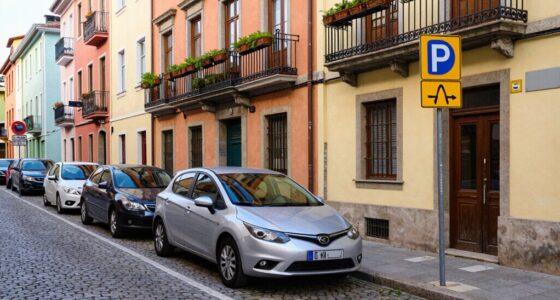
When using city bikes in Europe, follow local rules like dismounting in pedestrian zones, respecting bike lane directions, and keeping within speed limits, often around 25 km/h. Always wear a helmet if required, use lights and reflectors, and be courteous by signaling with a bell before passing. Stay aware of signage and restrictions, such as e-scooter bans or age limits. Understanding varies across countries—keep exploring to guarantee a safe and smooth cycling experience.
Key Takeaways
- Always wear a helmet and ensure your bike has functioning lights, brakes, and a bell for safety and compliance.
- Observe local signage, dismount in pedestrian zones, and stay on designated bike lanes to follow regulations.
- Keep to speed limits, pass pedestrians on the left, and use bells to alert others before passing.
- Yield to pedestrians, especially in shared or pedestrian-only areas, and maintain proper cycling etiquette.
- Stay updated on regional rules and infrastructure changes to ride responsibly and avoid fines.
Top picks for "city europe safety"
Open Amazon search results for this keyword.
As an affiliate, we earn on qualifying purchases.
Understanding Local Bike Laws and Regulations
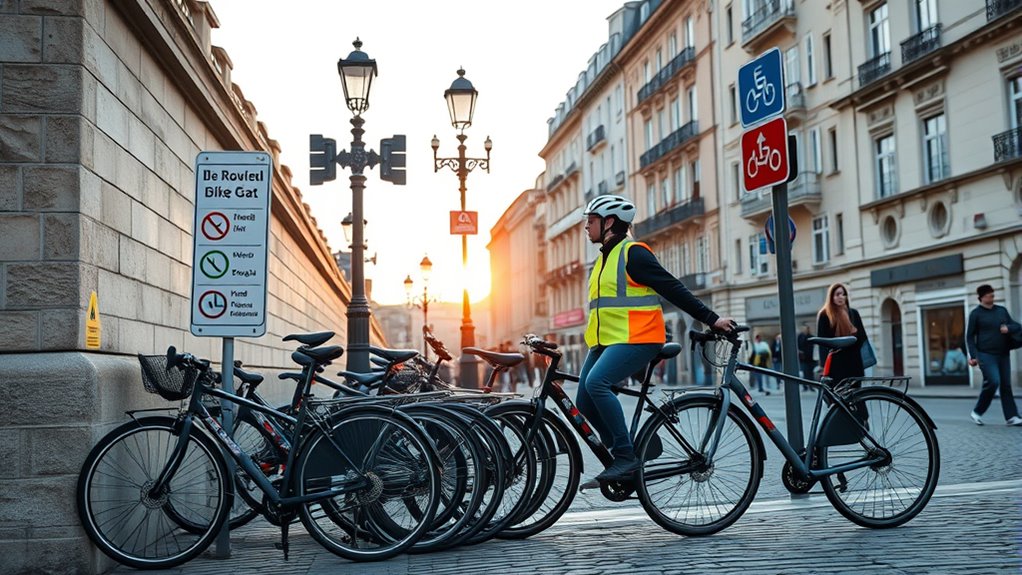
Understanding local bike laws and regulations is essential for safe and legal cycling across European cities. Each country has unique rules you need to abide by. For example, Brussels bans bikes from its central pedestrian zone during certain hours, requiring you to dismount and walk. Speed limits vary: 25 km/h for EU-standard pedelecs, but lower in countries like Germany and Denmark. Age restrictions differ too; you must be at least 14 in Belgium, France, and Spain, or 16 in the Netherlands for e-bikes. Certain e-scooters and S-Pedelecs need licenses, registration, and insurance, especially if they reach higher speeds. Always check local signage and rules before riding, and ensure your bike has proper lights, brakes, and reflectors to meet safety standards. Adhering to European cloud innovation standards can also help ensure your bike is compliant with regional regulations, including bike safety equipment requirements. Additionally, staying informed about local enforcement practices can help you avoid fines or penalties during your cycling adventures. Being aware of regional traffic laws can further improve your safety and legal compliance while riding, and consulting local cycling communities or resources can provide valuable insights into city-specific rules.
Navigating Pedestrian Zones and Bike Lanes
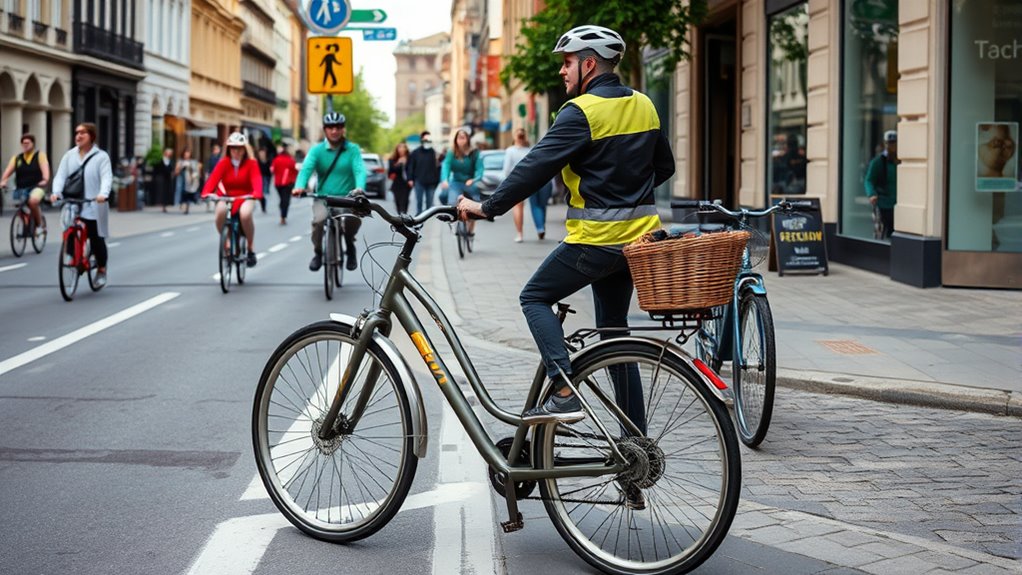
Moving through pedestrian zones and bike lanes in European cities requires paying close attention to local rules and signage. You must dismount and walk your bike in pedestrian-only areas where cycling is banned, like Brussels’ Le Piétonnier outside specific hours. In bike lanes, stay right and pass on the left, using your bell to alert pedestrians or other cyclists. Keep your speed within the limits—usually 25 km/h for e-bikes, but lower in some countries or zones. Be mindful of signage indicating restrictions or special conditions, such as dismount zones or one-way contraflow bike lanes. Respect pedestrian priorities, especially in shared spaces, and avoid sudden stops or swerving. Incorporating modern cycling technology can enhance safety and navigation in busy urban environments. Additionally, being aware of bike lane markings can help you better understand designated areas and avoid unintended violations. Awareness of local cycling regulations is essential for compliance and safety, especially when navigating unfamiliar cities. Staying informed about bike lane signage can further improve your riding experience and help you adhere to local rules, reducing the risk of fines or accidents. Following these guidelines helps guarantee a smooth, safe experience while orchestrating city streets.
Ensuring Safety With Proper Equipment and Gear
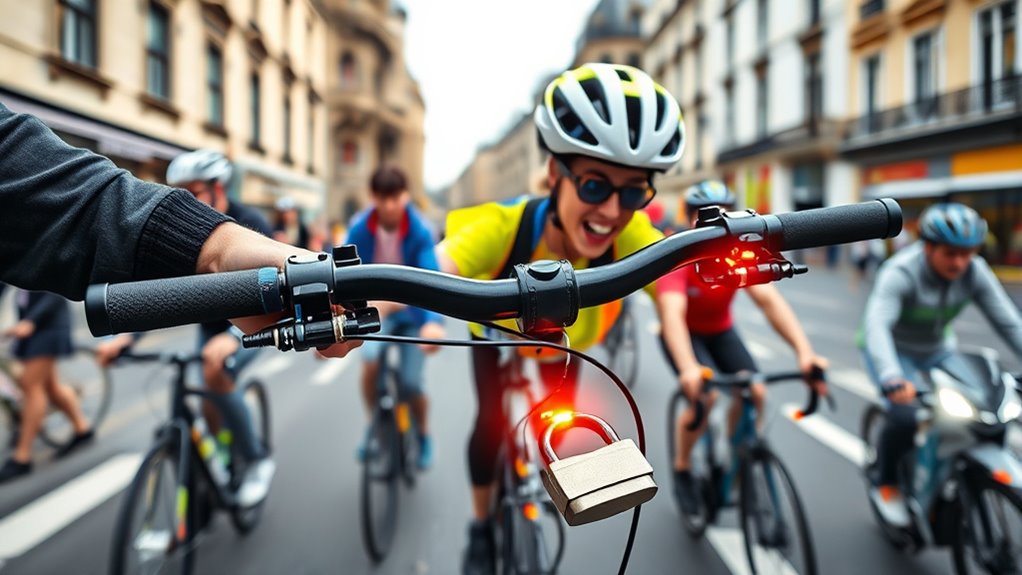
Ensuring safety while riding city bikes in Europe depends heavily on using the right equipment and gear. You should always wear a helmet, especially if you’re under 18 or riding an S-Pedelec, as some countries mandate. Make sure your bike has efficient brakes, a bell audible at a distance, and proper lighting—white or yellow in front, red at the rear—especially when riding at night or in poor visibility. Reflectors are essential on the rear, and lights should be used during low-light conditions. Consider high-visibility clothing or accessories for added safety. Checking your bike’s brakes and lights before each ride helps prevent accidents. Proper gear not only keeps you safe but also guarantees you’re compliant with local regulations across Europe. Additionally, understanding bike safety regulations can help you navigate different countries’ rules more effectively. Regularly inspecting and maintaining your bike’s braking system ensures optimal performance and safety during your rides.
Respectful Riding Etiquette in Urban Environments

Respectful riding in urban environments is essential to guarantee safety and harmony among all road users. Always yield to pedestrians, especially in shared spaces or pedestrian zones, and keep your speed within 6 km/h if required. Use your bell to alert others before passing, and listen for cyclist bells in bike lanes. Stay on the right side of bike lanes, passing on the left, and avoid sudden stops or swerving. Dismount and walk your bike in pedestrian-only zones or when dismounting is mandated by local rules. Respect local signage and restrictions, such as dismounting in Brussels’ pedestrian zones or respecting speed limits for e-bikes. Additionally, maintaining your bike’s proper care and maintenance ensures safe and reliable riding experiences. Practicing courteous riding also involves being aware of urban cycling etiquette, which helps to create a safer and more enjoyable environment for everyone. Being familiar with local cycling laws can further help you stay compliant and avoid fines or accidents. Moreover, understanding bank SWIFT/BIC codes can be useful if you need to make international payments or financial transactions related to cycling-related purchases or travel arrangements. Staying informed about additional safety gear options, such as helmets or reflective clothing, further enhances your safety during urban rides. By practicing courteous riding, you help create a safer, more enjoyable environment for everyone.
Adapting to Country-Specific Rules and Restrictions
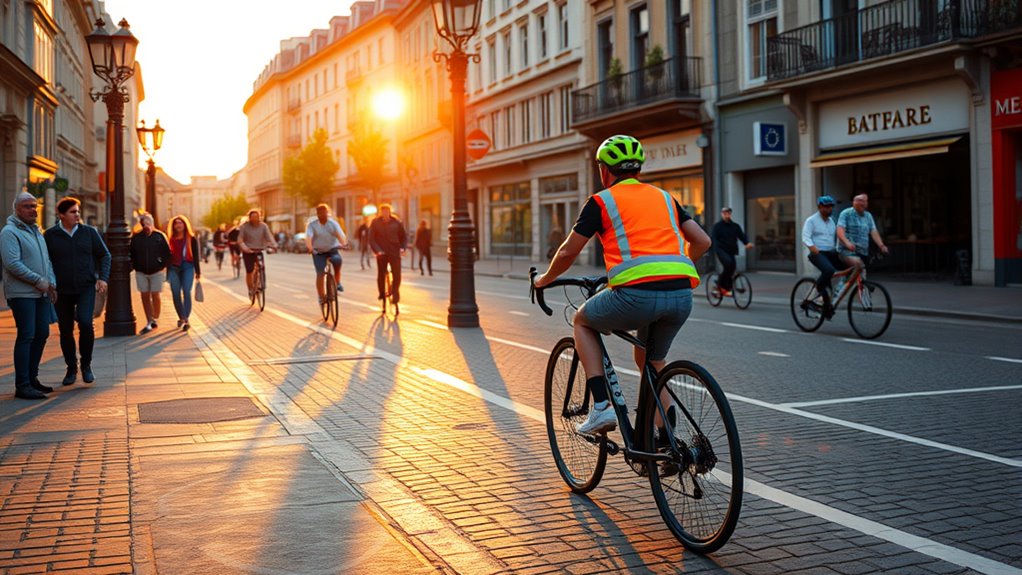
Adapting to country-specific rules is essential when riding city bikes across Europe, as each nation enforces unique regulations that affect your safety and convenience. For example, in Brussels, bicycles are banned from the central pedestrian zone during certain hours, requiring dismounting and walking. Speed limits vary: 25 km/h for EU standard pedelecs, but lower in countries like Germany and Denmark. Age restrictions differ too—14 in Belgium, France, and Spain, while the Netherlands require 16 for e-bikes. Some countries, like Italy, prohibit e-scooters from sidewalks and bike lanes, with hefty fines for violations. Always check local signage and regulations before riding. Understanding these differences helps you stay compliant, avoid fines, and ensure a smooth cycling experience across Europe.
Staying Updated on Recent Changes and Enforcement
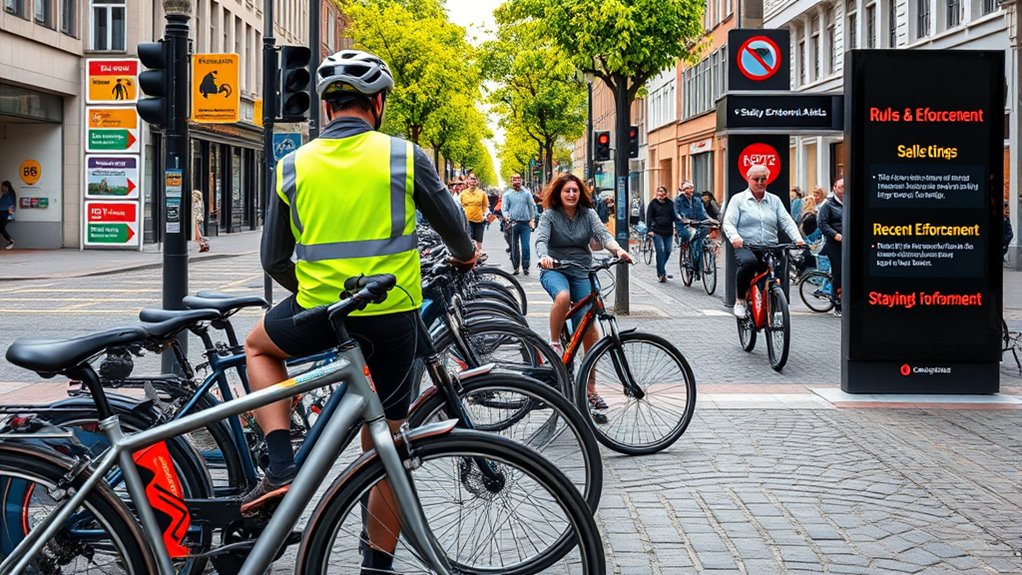
Staying updated on recent bicycle regulations and enforcement trends guarantees you ride safely and avoid fines. Local policies change frequently, like Brussels’ upcoming pedestrian zone ban or Italy’s e-scooter restrictions. Keeping informed helps you adapt quickly to new rules and ride confidently across European cities. Regularly reviewing regulatory updates ensures you remain compliant and aware of evolving guidelines, including local enforcement practices that may vary from city to city.
New Bicycle Regulations
Recent updates to bicycle regulations across Europe aim to enhance safety and address local concerns, making it essential to stay informed about the latest rules and enforcement practices. For example, Brussels plans to ban bicycles from the central pedestrian zone outside certain hours starting in 2026, responding to complaints from vulnerable groups. Italy has imposed stricter restrictions on e-scooters, banning them from sidewalks, bike lanes, and pedestrian areas from December 2024, with fines up to €150. Barcelona will require all cyclists under 18 to wear helmets by February 2025. Additionally, the EU has introduced a Bicycle Safety Directive, setting new technical standards for bike safety and marketing. Germany has updated its code to allow contraflow cycling in one‑way streets and optional quality cycle tracks, reflecting ongoing efforts to improve cycling infrastructure and safety. Exploring the philosophical themes behind safe and responsible cycling can deepen your understanding of the importance of adherence to these regulations. Staying informed about bicycle regulations helps cyclists navigate legal obligations and contribute to safer urban environments. Moreover, advancements in sound healing science are being studied for their potential to improve mental focus and reduce stress for commuters, promoting safer and more mindful riding practices. Understanding the technological advancements in bike safety features can further promote responsible cycling practices.
Recent Enforcement Trends
Across Europe, enforcement of bicycle regulations has become more targeted and consistent as authorities respond to evolving safety concerns and public feedback. You’ll notice stricter monitoring of bike lane use, especially in busy city centers, where dismount zones and pedestrian restrictions are actively enforced more rigorously. In some countries, fines for violations like riding in pedestrian zones or ignoring lights have increased. Italy’s new e-scooter restrictions, effective December 2024, are actively enforced, with penalties for sidewalk or bike lane use. Germany has updated its code to better regulate contraflow and quality cycle tracks, with authorities paying closer attention. These trends aim to improve safety, reduce conflicts, and ensure compliance, so staying aware of local enforcement practices will help you avoid fines and navigate European cities smoothly.
Updated Local Policies
As enforcement efforts tighten, keeping up with local policy updates becomes essential for cyclists steering European cities. Recently, many places have introduced new rules to improve safety and manage traffic. Brussels, for example, plans to ban bicycles from its central pedestrian zone starting in 2026, responding to safety concerns. Italy has restricted e-scooters from sidewalks, bike lanes, and pedestrian areas as of December 2024, with hefty fines for violations. Barcelona will make helmet use mandatory from February 2025, affecting all riders 14 and older. Germany has updated its code, allowing contraflow on one-way streets and emphasizing quality cycle tracks. Staying informed about these changes ensures you comply with local laws, avoid fines, and keep your rides safe and smooth across Europe. Rhythm Failure Additionally, being aware of juice extraction techniques can help you prepare healthy drinks to stay energized during long rides.
Frequently Asked Questions
Can I Rent a Bike in One Country and Ride in Another?
Yes, you can rent a bike in one country and ride in another, but you should verify local rules and restrictions first. Different countries have varying speed limits, age requirements, and safety gear laws. Be aware of specific regulations, like Brussels’ pedestrian zone bans or Italy’s e-scooter restrictions. Always carry necessary documents, respect local cycling etiquette, and make certain your bike meets safety standards to enjoy smooth cross-border riding.
Are Electric Bikes Allowed on Public Transport in European Cities?
You can usually take electric bikes on public transport in European cities, but rules vary. Always check local policies, as some cities permit e-bikes on trains, buses, or trams, while others restrict them during peak hours or in certain areas. Make sure your e-bike complies with size and power limits, and be aware of any additional fees or regulations. Following local guidelines guarantees a smooth, hassle-free experience.
What Should I Do if I Get a Traffic Ticket While Cycling?
If you get a traffic ticket while cycling, don’t ignore it. You should pay it promptly or follow the local procedure to contest it if you believe it’s unfair. Some cities allow you to settle fines online or in person. Remember, even if you’re unfamiliar with local rules, respecting the citation shows good intent. Ignoring tickets can lead to fines, court appearances, or restrictions on future cycling in the city.
How Do I Identify Designated Bike Parking Areas?
You’ll spot designated bike parking areas by looking for bike racks, stands, or marked zones with bike symbols. These are usually near public transport stations, shopping centers, or busy streets. Follow signs that indicate bike parking or zones with painted bike symbols. Always lock your bike securely to the racks or stands provided. Avoid parking on sidewalks or in non-designated areas to prevent fines or bike removal.
Are There Specific Rules for Cycling During Festivals or Events?
When in Rome, do as the Romans do, especially during festivals or events. You should check local event rules beforehand, as some areas may restrict cycling or require dismounting. Always respect pedestrian zones, yield to crowds, and use your bell to alert others. Follow temporary signage, avoid blocking entrances, and stay alert for changes in traffic flow. Keeping these tips in mind helps you enjoy festivities safely and responsibly.
Conclusion
Riding city bikes in Europe is an enjoyable way to explore, but it’s crucial to stay informed about local laws and etiquette. Did you know that over 60% of European cities have expanded their bike lanes in recent years? By following the rules, wearing proper gear, and respecting pedestrians, you’ll guarantee a safe, courteous experience. Keep updated on regulations to ride confidently and make the most of your urban adventures on two wheels.