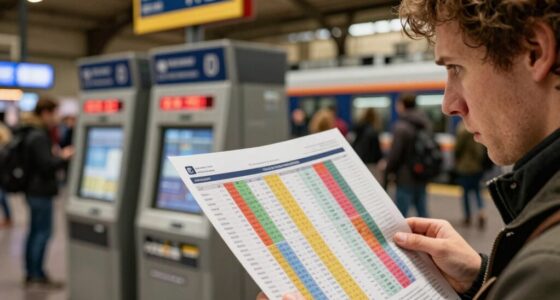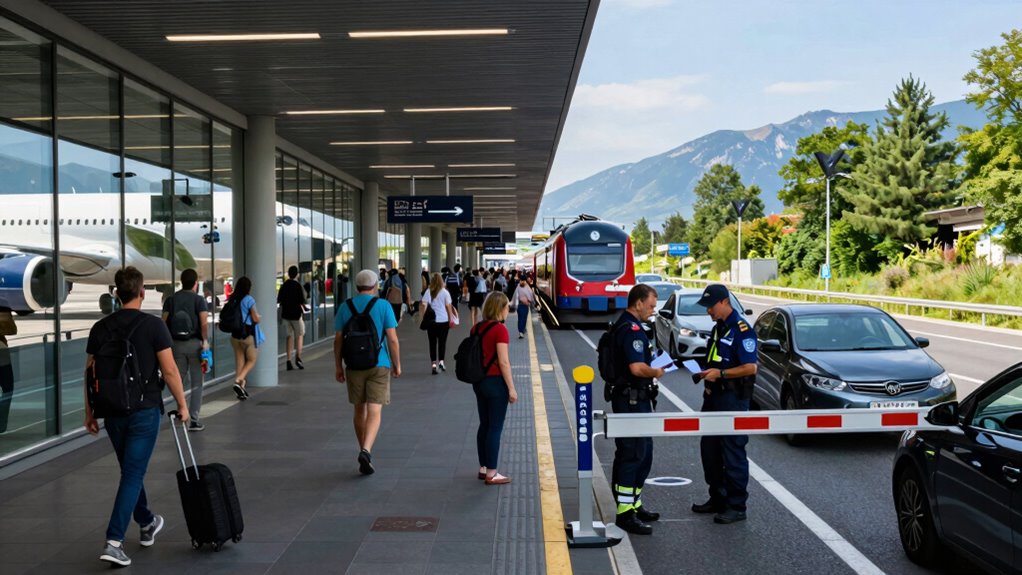

In Europe, your border check experience varies by travel mode. Flights have centralized checkpoints with biometric kiosks using facial recognition and the Entry/Exit System (EES) to speed verified travelers through quickly. For trains, border checks are often simplified with automated kiosks or biometric verification at specific stations. Road crossings may involve manual stamps or automated systems, depending on the country. To understand how these processes work and how security is improved, keep exploring the details below.
Key Takeaways
- Air travel border checks are centralized at airports with biometric kiosks and the EES for rapid biometric verification.
- Train border controls occur at specific stations with automated kiosks or manual checks, often streamlined by EES.
- Road border procedures vary widely, with some crossings using quick automated systems and others relying on manual inspections.
- The EES speeds border crossings by replacing manual stamping with digital biometric verification for both flights and trains.
- Biometric technology enhances security and efficiency across all border types, reducing processing times and enabling real-time identification.

Traveler's Choice Pagosa Hardshell Expandable Luggage with Spinner Wheels, Black, 22-Inch Carry-on
Impact Resistant: Durable polypropylene hardshell that’s abrasion-, scratch-, and water-resistant. Expansion gusset provide up to 2" to make...
As an affiliate, we earn on qualifying purchases.
Differences in Border Control Procedures for Air Travel, Rail, and Road
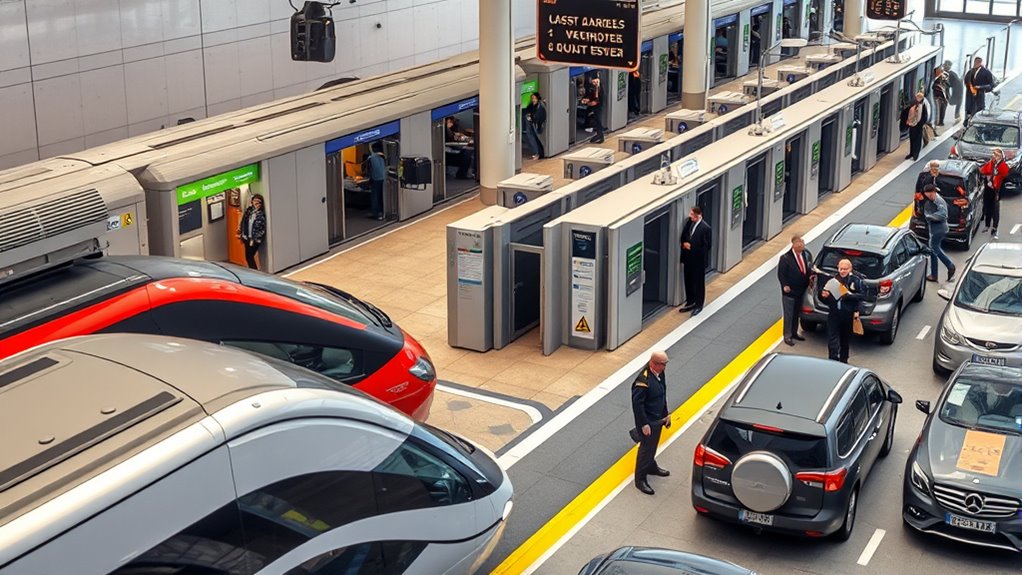
Border control procedures differ markedly depending on the mode of travel—air, rail, or road—mainly due to the infrastructure and operational requirements of each. For air travel, border checks are typically centralized at airports with dedicated biometric kiosks and passport control booths. You’ll often go through automated biometric scans or manual checks, especially during peak hours. Rail border controls are usually simpler; they often occur at specific stations or border crossings, sometimes with automated systems but more frequently with manual passport checks. Additionally, the security protocols at rail crossings are designed to be efficient to accommodate high passenger volumes. To further streamline border processing, many countries are adopting innovative solutions. Moreover, border processing times can vary significantly between modes, affecting travel planning and scheduling. Road border procedures vary widely—some crossings have quick automated systems, while others require stopping for manual inspection. You might face random checks or full inspections, depending on the country’s security protocols. Furthermore, many European countries are adopting innovative border management systems to streamline the process and enhance security. Each mode demands different procedures to balance efficiency, security, and traveler convenience, often influenced by the security measures implemented at each point.
Samsonite Freeform Large Checked Luggage with Dual 360° Spinner Wheels - TSA Lock, Airline-Approved - Lightweight Durable Polypropylene Expandable Hardshell - Black
Durable & Stylish: This large checked spinner luggage features a scratch-resistant Polypropylene hardshell, measuring 31.1" x 20.9" x...
As an affiliate, we earn on qualifying purchases.
How the Entry/Exit System Transforms Airport Border Checks
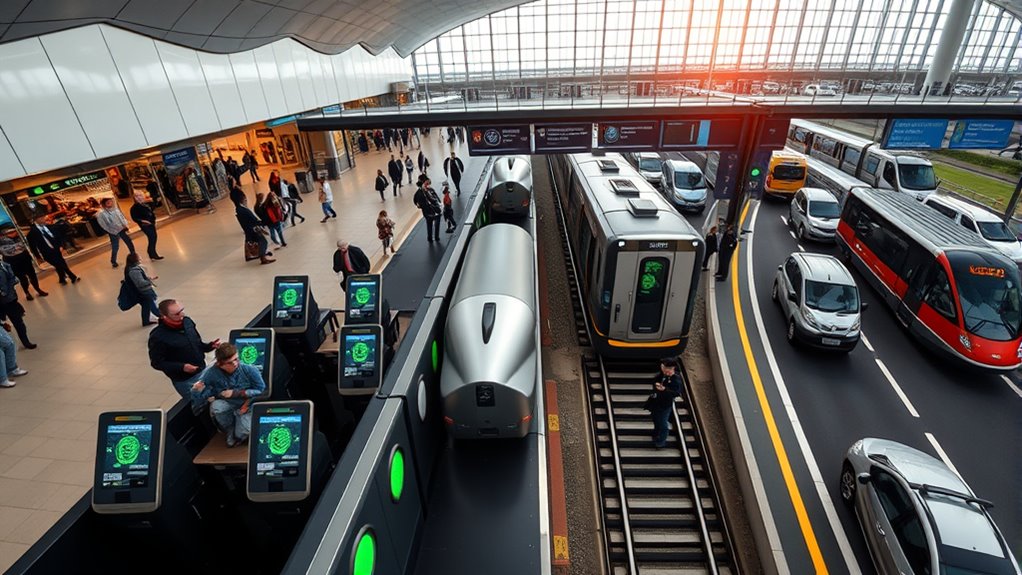
The Entry/Exit System speeds up airport border checks by using biometric verification, allowing you to pass through faster. It reduces the need for manual stamping, making the process more streamlined and less cumbersome. Plus, it enhances security by automatically confirming your identity and monitoring travel patterns. Incorporating ergonomics and workflow into the system design helps ensure smooth and efficient processing for both travelers and border officials. Additionally, integrating modern kitchen technology principles such as automation and user-centered design can inspire innovations that improve the overall efficiency of border control systems. Embracing cutting-edge technology and adaptive automation in these processes can lead to even more seamless and reliable border management solutions. Understanding science-driven insights can further help optimize these systems for better performance and user experience.
Faster Biometric Verification
Thanks to the Entry/Exit System, airport biometric verification now happens more quickly and smoothly. When you arrive at the border, automated kiosks and control booths use facial recognition and fingerprint scans to verify your identity in seconds. Your biometric data is matched instantly with the centralized EU database, reducing manual checks and long lines. If you’ve traveled before, the system recognizes you through facial recognition, speeding up the process even further. You no longer need to present multiple documents; your passport details are automatically linked to your biometric profile. This seamless process minimizes delays, allowing you to move through border control faster. The digital verification offers a more efficient, secure, and hassle-free experience for travelers, considerably improving airport border checks across participating countries.
Reduced Manual Stamping
As the Entry/Exit System takes over airport border checks, manual stamping of passports becomes a thing of the past. Instead of traditional ink stamps, your biometric data is automatically recorded through digital registration. When you arrive or depart, automated kiosks or border control booths scan your face and fingerprints, linking this data to your passport details. This process speeds up entry and exit, reduces paperwork, and minimizes human error. You no longer need to worry about losing stamps or delays caused by manual processing. The system guarantees your travel history is accurately maintained in centralized EU databases, facilitating quicker re-entries and smoother border crossings. Overall, this shift streamlines airport procedures, making border checks faster, more efficient, and less intrusive.
Enhanced Security Measures
By automating biometric data collection and eliminating manual passport stamps, the Entry/Exit System considerably enhances airport security measures. You benefit from faster, more accurate identity verification through facial recognition and fingerprint scans at automated kiosks and border control booths. This technological advancement streamlines processing, reducing wait times while increasing reliability. The system maintains a centralized database of biometric profiles, enabling authorities to quickly identify overstayers, detect fraud, and flag potential security threats. It strengthens border security by providing real-time data access across participating countries, facilitating seamless cross-border cooperation. Automated checks help law enforcement swiftly investigate serious crimes or terrorism links. Additionally, the system’s compliance with privacy policies ensures that data collection is performed responsibly and transparently. The biometric matching process is continually refined to improve accuracy and reduce false positives, further enhancing security. Moreover, ongoing system updates ensure that security measures stay ahead of emerging threats, making border crossings safer for everyone. Biometric data collection and processing are conducted under strict regulations to protect individual rights and maintain public trust. Overall, EES transforms airport border checks into a more secure, efficient process that better protects borders and travelers alike.
LEVEL8 Grace Carry on Luggage Airline Approved, 20 Inch Expandable Hard Sided Luggages with Spinner Wheels, Harshell Small Rolling Suitcase for Women Men with Tsa Lock, Blue
Expandable Design: The Grace Expandable (6576 Series) suitcase is thoughtfully engineered to provide extra packing space whenever you...
As an affiliate, we earn on qualifying purchases.
Border Checks for Train Travelers: Processes and Technologies
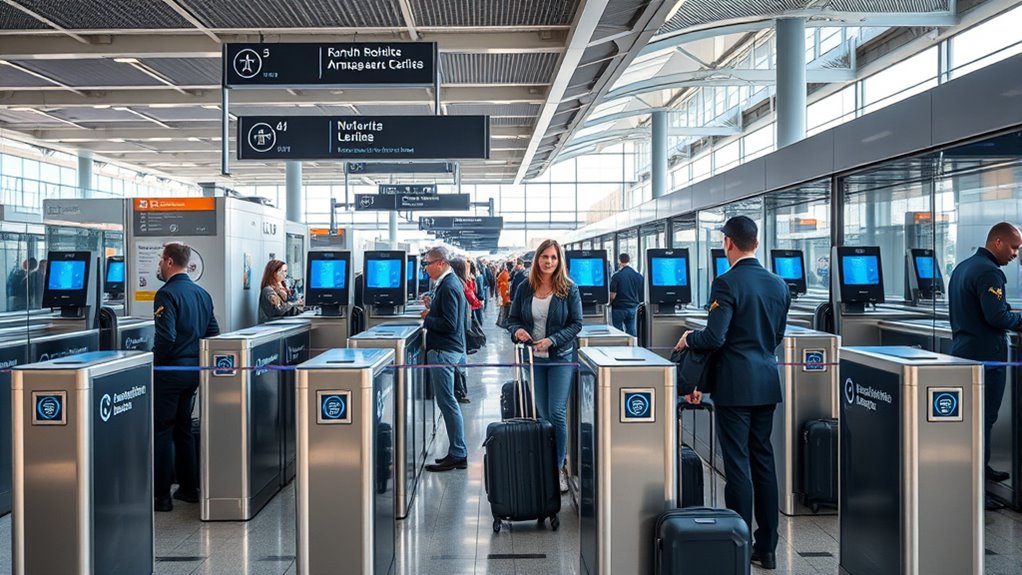
Train travelers crossing borders within the Schengen Area now go through streamlined digital checks powered by the Entry/Exit System (EES). As you approach the border, automated kiosks or control booths scan your facial image and fingerprints, instantly verifying your identity. The system pulls up your biometric data and travel details from a centralized EU database, allowing for quick confirmation. Picture yourself:
- Standing at a sleek kiosk with a touchscreen interface
- Looking into a camera for facial recognition
- Placing your fingers on a scanner for fingerprint capture
- Watching a green light or digital confirmation signal your clearance
This process replaces manual stamping, reducing wait times and administrative tasks. It ensures faster, more secure border crossings, especially as the system gradually expands across all train routes in participating countries. Biometric verification enhances security by providing reliable identification methods. Additionally, automated border controls are being adopted to further improve efficiency and security in cross-border travel. The integration of supportive technology helps streamline the entire process and adapt to increasing passenger flows. These innovations rely on digital identity verification systems to function seamlessly and accurately.

Samsonite Freeform Hardside Carry-On Luggage with Spinner Wheels - Hardshell Suitcase - TSA, Airline-Approved - Expandable Hard Shell, Smooth Rolling Wheels for Lightweight Travel – Black
The Perfect Size: The textured, scratch-resistant exterior of this hardshell carry-on luggage is 15 x 10 x 23...
As an affiliate, we earn on qualifying purchases.
Road Border Crossings: Manual Stamping Vs Digital Verification
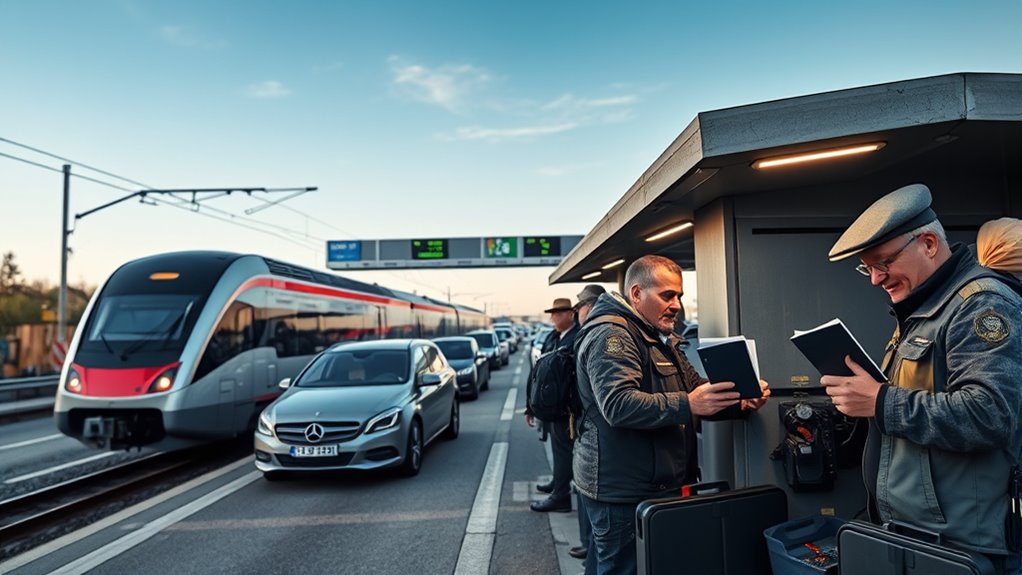
Manual stamping has long been the standard at road borders, but it can slow down your crossing and increase administrative work. Digital verification speeds up the process, reducing wait times and minimizing errors. As technology advances, more borders are shifting toward automated systems to make crossings smoother and more secure. Smart border technology is increasingly being adopted to enhance security and efficiency. Incorporating reliable verification methods can further improve border crossing procedures, especially those that utilize auditory processing techniques to ensure accurate identification. Additionally, integrating power tools and heavy‑duty equipment in border infrastructure maintenance can support more durable and reliable systems. Leveraging advances in nanotechnology may also contribute to developing more robust and miniaturized security sensors for border monitoring.
Manual Stamping Process
At road border crossings, officials traditionally used passport stamps to record entry and exit, providing a physical proof of your travel history. You might see officers inspecting your document closely, pressing a stamp firmly onto a blank page, or flipping through pages to find the right spot. You could feel the weight of the passport in your hand as they:
- Carefully align the passport with the stamping pad
- Press the stamp with precise pressure
- Check the date and location stamped
- Hand back the passport with a quick nod
This manual process creates a tangible record of your journey, with ink impressions marking each crossing. It’s straightforward but relies heavily on physical documentation, which can slow down border checks during busy periods.
Digital Verification Benefits
Digital verification streamlines border crossings by replacing inked stamps with quick, automated biometric checks. With biometric data like facial recognition and fingerprints, your entry process becomes faster and more efficient. Instead of waiting for manual stamps, your identity is verified instantly through automated kiosks or border control booths. This reduces queues and minimizes human error. The system also makes it easier for border authorities to track your movements over time, ensuring smoother re-entries and faster processing. Plus, your biometric data is securely stored and linked to your passport, enabling quick recognition on subsequent visits. Overall, digital verification enhances security, saves time, and simplifies travel, making border crossings less stressful and more seamless.
Impact of the EES on Short-Term Travelers and Transit Passengers
Although the EES aims to streamline border crossings, short-term travelers and transit passengers may face initial delays as border staff get used to biometric procedures. You might see longer waits at border points during this changeover. As personnel adapt, expect:
Initially, border delays may occur as staff adapt to biometric procedures.
- Slower processing times at busy border crossings
- Increased checks for facial recognition and fingerprints
- Potential queues during peak travel hours
- Temporary manual stamping alongside digital registration
These delays are temporary, and once systems are fully operational, processing should speed up. You won’t need to do anything extra; the system works automatically, but patience is key. For transit passengers, biometric verification may add a few minutes to your journey, especially during peak times. Overall, the impact should decrease as the system stabilizes.
Security and Efficiency Gains Across Different Border Types
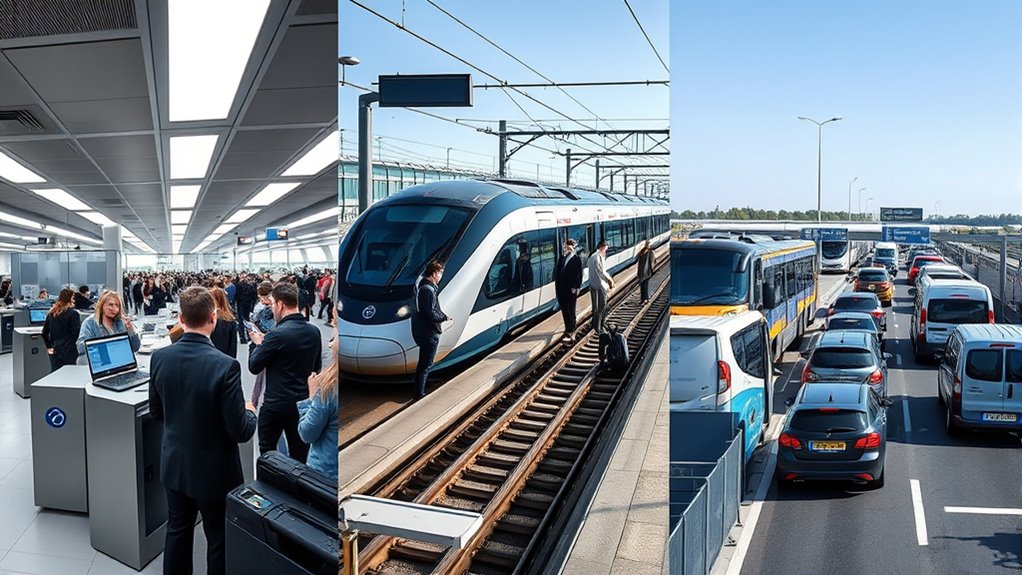
The implementation of the EES enhances security and efficiency across various border types by enabling automated identity verification and real-time data sharing. Whether you’re flying, taking a train, or driving, border checks become faster and more secure. Automated biometric scans and shared databases quickly confirm your identity, reducing delays and preventing illegal activities. This system strengthens border management by enabling authorities to spot overstayers and track movements more effectively. Shared data across countries boosts cooperation, ensuring smoother crossings and heightened security.
| Border Type | Security Benefits | Efficiency Gains | Personal Impact | Future Potential |
|---|---|---|---|---|
| Flights | Faster checks, fraud detection | Shorter queues | Less waiting time | Seamless entry |
| Trains | Improved traveler tracking | Reduced congestion | Smoother journeys | Smarter border control |
| Road | Enhanced vehicle screening | Faster crossings | Less hassle | Integrated systems |
Challenges and Future Developments in Cross-Border Border Checks
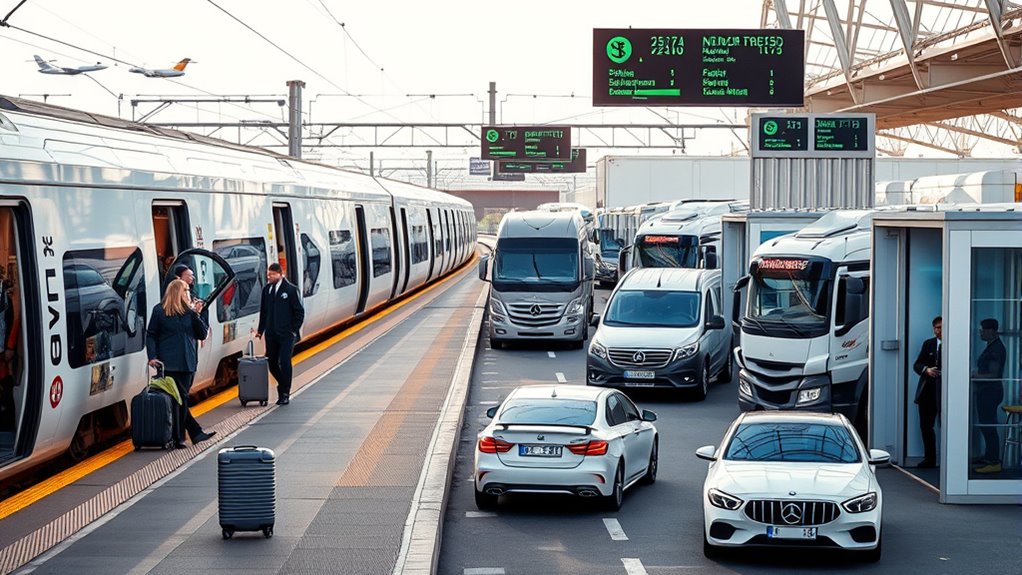
Implementing the Entry/Exit System has revealed several challenges that could hinder its effectiveness. You might face issues like:
- Technical glitches, causing delays or misidentifications at border points
- Data privacy concerns, raising questions about biometric security and misuse
- Integration hurdles between different countries’ systems, slowing down processing
- Resistance from border staff adapting to new technology, risking errors or inconsistencies
These obstacles could affect travel smoothness and security goals. Looking ahead, future developments aim to address these problems by enhancing system stability, strengthening data protection measures, and improving interoperability across nations. Additional innovations like AI-driven verification and expanded biometric modalities could further streamline border checks, making them faster and more secure. However, balancing efficiency with privacy and security remains a critical challenge for the system’s evolution.
Frequently Asked Questions
How Does Biometric Data Affect Travelers With Disabilities or Special Needs?
Biometric data collection at borders can be challenging for travelers with disabilities or special needs. You might find facial recognition or fingerprint scans difficult or uncomfortable. To help, border authorities often provide assistance or alternative procedures, like manual checks. It’s a good idea to inform staff beforehand and carry any necessary documentation or assistive devices. This way, your travel remains smooth while ensuring your needs are accommodated during border processes.
Are There Privacy Concerns With Storing Biometric Data in the EES?
You might be concerned about privacy with the EES storing biometric data. The system collects facial images, fingerprints, and travel info, which are stored centrally for three years. While this helps improve security and streamline border checks, it raises questions about data misuse or breaches. Authorities assure that data is securely protected and used solely for border management, but privacy concerns persist among travelers worried about potential surveillance or unauthorized access.
How Are Border Checks Adapted for Emergency or Urgent Travel Situations?
In emergency or urgent travel situations, border checks adapt by prioritizing quick processing. You might be allowed expedited entry through special lanes or procedures, enabling faster biometric verification or manual checks if needed. Authorities aim to minimize delays while maintaining security, so you may provide essential documents or identification at dedicated points. These measures guarantee you can travel swiftly during emergencies without compromising border security or safety protocols.
What Measures Are in Place to Prevent Biometric Data Misuse or Theft?
You’re protected by strict security measures to prevent biometric data misuse or theft. The EU encrypts all biometric information stored in centralized databases, making unauthorized access nearly impossible. Access is limited to authorized law enforcement and border officials, with audits regularly conducted. Plus, your biometric data is retained only for three years, and you can request data deletion. These safeguards ensure your information stays secure and private.
Will EES Delay Border Processing for Travelers With Complex or Multiple Visas?
Yes, EES might slow down travelers with complex or multiple visas, despite its promise of faster processing. Irony strikes again—your detailed visa history now gets scrutinized by automated systems, which can stumble over intricate cases. Instead of quick passes, you may find yourself waiting longer, as the system double-checks every detail. So, while it aims to streamline, it might just turn your smooth journey into a patience-testing ordeal.
Conclusion
Understanding how border checks work across flights, trains, and roads reveals a complex dance of security and efficiency. As technology advances, these procedures become smoother, yet challenges remain. You see, whether through digital verification or manual stamping, each method plays its part in safeguarding borders. Embrace the evolving system—it’s the heartbeat of seamless travel, the rhythm that keeps Europe connected and secure, one border crossing at a time.