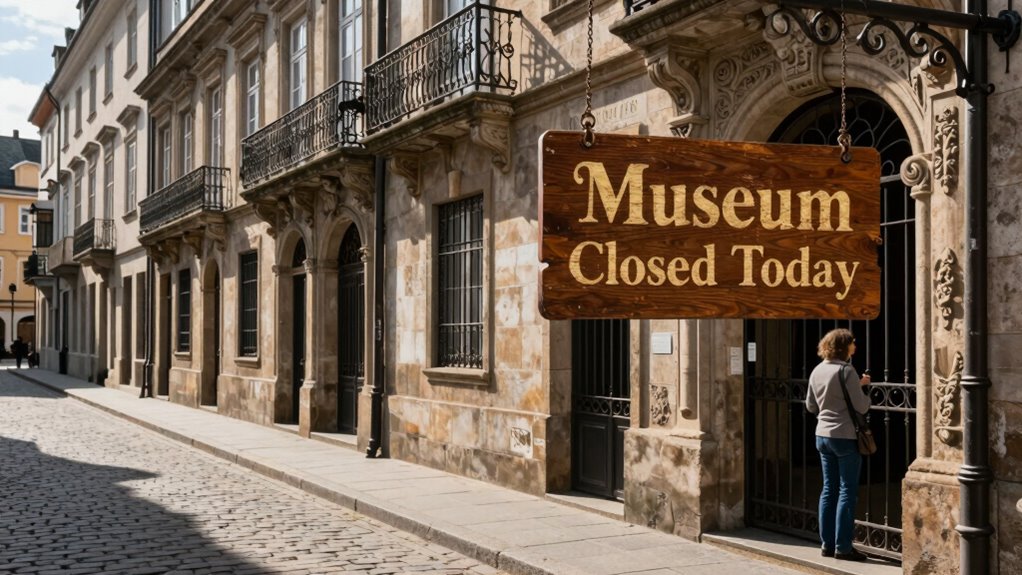

Museum closures in Europe often stem from financial struggles, staff shortages, or cost-cutting measures that lead to the ‘closed day’ trap, reducing visitor access and funding opportunities. To avoid this, you can diversify revenue sources, explore innovative programming, and optimize operational schedules to keep museums open and engaging. Many effective strategies exist to sustain your institution, and exploring these options in detail will help you turn challenges into long-term solutions.
Key Takeaways
- Implement strategic scheduling, including themed events and staggered hours, to maximize open days and visitor engagement.
- Diversify revenue streams through memberships, donations, and commercial activities to reduce reliance on public funding.
- Adjust operational plans by rotating opening days and hours to optimize staff workload and visitor access.
- Strengthen financial sustainability with proactive fundraising and innovative investment strategies.
- Tailor regional strategies considering local funding, economic conditions, and visitor trends to improve resilience and reduce closures.
Top picks for "museum closur europe"
As an affiliate, we earn on qualifying purchases.
Understanding the ‘Closed Day’ Phenomenon and Its Impact on Museums

The ‘closed day’ phenomenon refers to the specific days when museums are shut to the public, and understanding its impact is crucial for evaluating how museums operate and serve their communities. Closed days limit visitor access, reducing opportunities for education, engagement, and revenue. When museums close regularly or during key periods, it can discourage repeat visits and weaken community ties. This practice often results from budget constraints, staffing issues, or operational decisions aimed at reducing costs. Closed days also influence marketing strategies, as museums must communicate their schedules clearly to avoid disappointment. Over time, frequent closures can contribute to declining visitor numbers and increased financial strain, creating a cycle that challenges a museum’s sustainability and its ability to fulfill its cultural and educational mission. Additionally, understanding the reliance on cloud services that museums use for digital engagement can help institutions develop alternative plans during outages or closures. Ensuring consistent access to digital resources can mitigate some of the negative effects of these Closed days and support ongoing community involvement. Recognizing patterns in museum scheduling can also help visitors plan their visits more effectively and maintain engagement, especially as many institutions are exploring digital outreach to reach audiences beyond their physical sites. Moreover, adopting energy-efficient cloud servers can enhance the resilience and sustainability of digital services, ensuring that museums continue to provide access even during physical closures.
Financial Challenges Driving Museum Closures Across Europe
Financial challenges are the primary drivers behind museum closures across Europe, as many institutions struggle to secure stable funding in an increasingly competitive environment. You face issues such as:
- Funding cuts from local authorities, which often reduce museum budgets or reclassify them as non-statutory services.
- Decreased visitor revenue, with some museums experiencing significant drops compared to pre-pandemic levels.
- Rising operational costs that outpace income, forcing many to cut programs or reduce opening days.
- The reliance on public funding, which makes museums vulnerable to budget reallocations and policy changes. This reliance can lead to a cycle of financial instability, making it difficult for museums to sustain operations. Additionally, the lack of efficient fundraising strategies further hampers their ability to adapt financially. Many museums also struggle with donor engagement, which is crucial for long-term financial health.
These factors lead to a cycle of financial instability, making it difficult for museums to sustain operations. Smaller institutions are particularly vulnerable, with many closing or downsizing due to insufficient funds. The ongoing financial strain, combined with the competitive funding landscape, threatens the future of many cultural establishments across Europe.
Regional Variations: How Different Countries Are Affected

Regional differences substantially shape how museums across Europe face closures and operational challenges. In the UK, Scotland has seen the highest number of closures, especially among local authority museums, while London has gained museums but lost public provision. Northern Ireland has experienced notable growth in museum numbers, driven by new initiatives. Wales, on the other hand, benefits from independent projects that boost the sector. Elsewhere, Finland’s museums face financial strain, with expectations of weakened finances in 2025. Countries like France, Spain, and the Netherlands recovered more quickly post-pandemic, while the UK’s recovery lags behind. The cost-of-living crisis hits the UK harder than many European nations, intensifying financial pressures. These regional variations influence the severity and nature of closures, shaping each country’s museum landscape uniquely. Additionally, regional funding structures play a crucial role in determining the resilience and sustainability of museums across different countries. The diverse economic conditions across regions further impact the level of support museums receive and their ability to adapt to ongoing challenges, with some regions benefiting from more stable public-private partnerships that help sustain operations during tough times. Moreover, the increasing recognition of integrating herbal remedies in community health initiatives highlights innovative approaches to supporting mental well-being among museum staff working through these challenges.
Operational Adjustments and Strategies to Mitigate Closure Risks
To stay afloat amid mounting financial pressures, many museums are implementing operational adjustments such as reducing programming, cutting open days, and limiting exhibition production. These strategies help control costs and extend resources. To further mitigate closure risks, you can:
- Diversify revenue streams by developing online content, memberships, and special events.
- Collaborate with local communities and businesses to share resources and attract visitors.
- Prioritize high-impact exhibitions and programming that maximize visitor engagement and revenue potential.
- Wave and wind considerations can also influence visitor access, making adaptive planning essential for long-term sustainability. Incorporating filtration systems can also improve indoor air quality, enhancing visitor comfort and safety. Additionally, understanding closure patterns helps in designing preventative measures to minimize the likelihood of unexpected closures. Implementing climate control strategies can further protect exhibits and ensure a comfortable environment for visitors and staff alike. Engaging in climate monitoring can provide early warnings of environmental risks, supporting proactive management.
The Role of Funding and Revenue in Sustaining Museum Operations

Funding and revenue are the lifeblood of museum operations, directly influencing your ability to maintain exhibitions, staff, and community programs. Without reliable income, you risk falling behind on essential expenses or cutting back on vital services. Public funding often makes up a significant portion of your budget, but cuts and austerity measures can threaten stability. You may need to diversify revenue streams, such as ticket sales, memberships, donations, and commercial activities, to reduce dependency on government support. Effective financial planning and proactive fundraising become essential in steering economic uncertainties. Additionally, understanding the importance of sustainable funding can help museums develop long-term strategies to avoid the ‘Closed Day’ trap. Recognizing the role of 16PF insights can also support better organizational management and stakeholder engagement. By strengthening your revenue sources, you ensure your museum remains operational, accessible, and vibrant for visitors, safeguarding against closures driven by financial shortfalls. Moreover, exploring innovative funding models and alternative revenue sources can further enhance financial resilience.
Practical Approaches to Prevent the ‘Closed Day’ Trap

Implementing strategic scheduling and diversifying programming are key to avoiding the ‘closed day’ trap. To keep your museum open consistently, consider these approaches:
Strategic scheduling and diverse programming keep your museum open and engaging year-round.
- Staggered Hours: Rotate opening days or hours to distribute staff workload and attract different visitor groups.
- Flexible Staffing: Use part-time or seasonal staff to cover peak times and reduce costs on quieter days.
- Themed Events: Schedule special exhibitions or events on traditionally closed days to boost revenue and interest.
- Effective scheduling of precious metals investments can also help diversify revenue streams and stabilize financial resources.
Frequently Asked Questions
What Are the Long-Term Cultural Impacts of Widespread Museum Closures?
You risk losing crucial cultural knowledge and community identity when museums close long-term. Without access to diverse exhibits and heritage sites, future generations miss out on learning and connection. This erosion of cultural memory can lead to diminished local pride and understanding. To avoid these impacts, you should support funding, advocate for policies that protect museums, and participate in local initiatives that keep cultural institutions open and thriving for years to come.
How Can Digital Technology Help Museums Stay Operational During Crises?
You can leverage digital technology to keep museums operational during crises by creating virtual tours, online exhibitions, and interactive content. These tools engage visitors remotely, generate revenue, and maintain community connections. By adopting digital platforms, you guarantee continuous access to your collections, even when physical visits decline. Embrace social media, live streaming, and immersive experiences to adapt quickly, reach wider audiences, and sustain your museum’s relevance during challenging times.
What Role Do Private Donors Play in Preventing Closures?
You can leverage private donors to prevent closures by actively cultivating relationships and demonstrating your museum’s value. Private donors often provide essential funding during financial crises, filling gaps left by cuts in public funding. Engage them through targeted campaigns, special events, and transparent communication about your needs. Their support can sustain operations, fund new exhibits, and keep your museum accessible, ensuring you avoid the ‘closed day’ trap and continue serving your community.
Are There Successful Case Studies of Museums Avoiding the ‘Closed Day’ Trap?
Yes, some museums successfully avoid the ‘closed day’ trap by diversifying their funding sources and engaging communities. For example, a small UK museum partnered with local businesses for sponsorships and hosted special events to boost attendance on traditionally closed days. These strategies increase revenue and visitor engagement, helping museums remain open consistently. By actively seeking innovative partnerships and programming, you can prevent closures and guarantee sustainable operations.
How Can Community Involvement Influence Museum Resilience and Funding?
Community involvement acts like a sturdy roots system, anchoring your museum through storms of funding cuts and declining visitors. When you actively engage locals, volunteers, and schools, you create a lifeline of support and shared ownership. This vibrant network boosts resilience, attracts new funding sources, and transforms the museum into a beloved local hub. Your community becomes your strongest shield, ensuring your institution thrives even in tough economic times.
Conclusion
To avoid the ‘closed day’ trap, you need to navigate the financial storms and regional currents that threaten museum doors. Think of your museum as a ship; steady funding and smart strategies act as anchors, keeping it afloat. By embracing innovative operational adjustments and diversifying revenue streams, you can steer clear of silent halls and empty galleries. Keep the doors open, and let your museum be a vibrant beacon instead of a forgotten, closed chapter.