

Travel insurance for Europe typically covers medical emergencies, trip cancellations, delays, and baggage issues, giving you peace of mind while exploring. It also offers support for missed connections, legal help, and some adventure activities, but high-risk sports or pre-existing conditions may be excluded unless you pay extra. Keep in mind coverage limits and exclusions. Want to know how to maximize your protection and avoid surprises? Stick around for more helpful insights.
Key Takeaways
- Travel insurance in Europe typically covers medical expenses, emergency dental care, and ambulance services.
- It includes trip disruption protections like cancellations, delays, and missed connections.
- Baggage loss, delay, and support services help manage belongings issues during travel.
- Legal, visa assistance, and coverage for adventure activities vary; verify policy details.
- Exclusions often apply to high-risk activities, pre-existing conditions, and specific regions; optional upgrades are available.
Medical Coverage and Emergency Services

When traveling in Europe, having extensive medical coverage is essential, especially since healthcare costs can be high and insurance policies vary widely. If you experience a sudden illness or injury, your travel insurance should include emergency dental care to handle urgent dental issues that can’t wait. It’s also vital that your policy covers ambulance services, so you can get prompt medical attention without worrying about the costs. Knowing that emergency dental treatments and ambulance services are covered provides peace of mind during your trip, ensuring you can access necessary care quickly. Additionally, many policies now include performance ratings that can help you assess the reliability of your chosen coverage, giving you added confidence in your plan. Being prepared helps you stay safe and stress-free, no matter what surprises come your way. Additionally, understanding your total‑cost clarity for potential medical expenses can help you plan more effectively and avoid unexpected financial burdens. Having clear coverage details and understanding policy limitations can make navigating claims and benefits much simpler if needed. Moreover, familiarizing yourself with medical network access can ensure you receive care from trusted providers during emergencies.
Trip Cancellations and Interruption Protections

Having thorough trip cancellation and interruption protection guarantees you’re financially safeguarded if unexpected events force you to change or cancel your plans. If you encounter issues like cancelled flights, your insurance can help secure travel refunds, minimizing your financial loss. This coverage typically applies if illness, emergencies, or other covered reasons prevent you from continuing your trip. It also offers protection if you need to cut your journey short due to unforeseen circumstances, ensuring you’re not left footing the bill. By having this protection, you gain peace of mind, knowing that unexpected disruptions won’t derail your travel budget. Additionally, understanding the importance of emotional needs can help you select the right coverage to address your specific concerns, ensuring comprehensive protection. Recognizing the types of covered events is essential to ensure your policy aligns with your travel plans and potential risks. Being aware of coverage limits can help you avoid surprises if you need to make a claim. For example, some policies may exclude certain specific risks, so reviewing these details is crucial before purchasing.
Lost, Stolen, or Delayed Baggage
If your baggage gets lost, stolen, or delayed, your travel insurance can provide compensation to help cover your belongings. Handling delayed luggage means you can get essentials quickly, reducing stress during your trip. Understanding your coverage options assures you’re prepared for these common travel mishaps. Additionally, being aware of compassionate support options can help you navigate unexpected situations with confidence and peace of mind. It’s also important to know that some policies include wave and wind coverage, which can be crucial if your delays are caused by weather-related disruptions. Being aware of the water chemistry involved in proper luggage storage can prevent damage to your belongings if they are exposed to moisture or humidity during delays. Knowing the horsepower of your electric luggage or mobility devices can ensure you select the right level of support if assistance is needed. Incorporating creative storytelling principles can also help you communicate effectively with your insurance provider during claims.
Baggage Loss Compensation
Baggage loss compensation is a crucial aspect of travel insurance that can help you recover costs if your luggage is lost, stolen, or delayed. If your bags don’t arrive on time, your policy may cover clothing reimbursement so you can buy essentials. When belongings are stolen or never arrive, insurance can also assist with electronics replacement, helping you replace gadgets like smartphones or cameras. Keep in mind, coverage limits vary, so check your policy for specific caps on items. To maximize your protection, report lost or stolen baggage immediately and keep receipts for purchases made due to baggage delays or loss. Understanding these details ensures you’re prepared financially if your luggage situation disrupts your trip. Infographics and data visualizations can help clarify your coverage options and limits, ensuring you understand your policy thoroughly, including the importance of coverage caps in your policy. Additionally, being aware of declaration requirements can prevent claim denials in case of baggage issues. Familiarizing yourself with claim procedures can also streamline the process when reporting baggage problems. Being aware of potential vulnerabilities, such as cybersecurity threats, can further protect your personal information during your travels.
Handling Delayed Luggage
When your luggage is delayed, lost, or stolen, acting quickly can make a significant difference. Notify your airline immediately and file a report to start the claims process. While waiting for your bags, focus on securing essentials like clothing and toiletries, especially if you’re staying in luxury accommodations. If your luggage contains items for cultural tours, such as cameras or souvenirs, document everything for insurance purposes. Travel insurance can help cover the cost of necessary purchases while your baggage is delayed. Keep receipts for any expenses related to replacements or urgent needs. Additionally, understanding the proper packing techniques for your luggage can help minimize damage or loss during transit. Being familiar with coverage limits ensures you’re aware of what expenses are reimbursable and prevents surprises during claims. It’s also advisable to review claim procedures beforehand so that you can act efficiently if needed. Familiarizing yourself with insurance policies related to travel can help clarify what is covered in case of baggage issues. Remember, prompt action minimizes inconvenience and helps you get back to enjoying your trip, whether exploring museums or relaxing in luxury accommodations.
Coverage for Travel Delays and Missed Connections

When your travel plans are disrupted by delays or missed connections, understanding how to claim reimbursement is key. You should know the process for submitting claims and what documentation is required. Keep in mind, there are limitations and exclusions that might affect your coverage, so it’s important to review your policy carefully.
Reimbursement Processes Explained
Ever wondered how travel insurance handles delays or missed connections? When you experience a covered delay, you’ll need to file a claim submission, providing relevant documentation like boarding passes or delay notices. Once your claim is submitted, the insurer reviews your case and determines your reimbursement eligibility. Reimbursement timelines vary but typically range from a few days to several weeks, depending on the insurer and complexity of your claim. To guarantee a smooth process, keep copies of all receipts, communication, and proof of delays. Promptly follow the insurer’s instructions to avoid delays in processing. Understanding these steps helps you navigate the reimbursement process confidently, ensuring you get the compensation you’re entitled to when travel hiccups occur.
Limitations and Exclusions
Travel insurance for Europe often comes with specific limitations and exclusions regarding delays and missed connections. These policy loopholes can leave you facing coverage gaps when delays occur due to weather, strikes, or airline issues. It’s essential to understand what’s not covered, as some policies exclude delays caused by certain events. If your flight is missed because of an airline strike or technical fault, your claim might be denied. Additionally, some policies only cover delays beyond a certain number of hours, leaving you unprotected for shorter disruptions. Always read the fine print to identify potential coverage gaps. Knowing these limitations helps you plan better and avoid surprises, ensuring you don’t rely on coverage that doesn’t exist when you need it most.
- Delays caused by weather or strikes may be excluded
- Shorter delays often aren’t covered
- Missed connections due to airline error may be excluded
- Coverage may depend on specific delay durations
- Policy loopholes can limit reimbursement
Assistance for Travel-Related Legal Issues

Legal issues that arise during your trip can be stressful, but travel insurance often provides essential assistance to help you navigate these challenges. Many policies include legal assistance, offering guidance on local laws and procedures. If you encounter legal trouble, your insurer can connect you with qualified legal professionals who understand European regulations. Additionally, visa support is a key benefit, helping you address issues related to visa refusals, extensions, or document verification. This support can save you time and reduce anxiety, ensuring you understand your rights and obligations while abroad. Keep in mind that coverage varies by policy, so review your plan carefully to confirm it includes legal assistance and visa support services tailored to your travel destination.
Coverage for Adventure and Sports Activities

If you plan to participate in adventure or sports activities during your trip to Europe, it’s essential to check if your travel insurance covers these pursuits. Many standard policies exclude extreme sports and adventure activities, leaving you vulnerable to high costs if accidents occur. To avoid surprises, verify whether your coverage includes activities like mountain biking, skiing, rock climbing, or bungee jumping. Some policies require an additional premium for adventure activities, so read the fine print carefully.
- Confirm if extreme sports are covered before participating
- Check for specific activity restrictions or exclusions
- Consider additional coverage for high-risk pursuits
- Understand the limits on medical and evacuation support
- Know the process for claiming if an accident happens during adventure activities
Exclusions and Limitations in Standard Policies
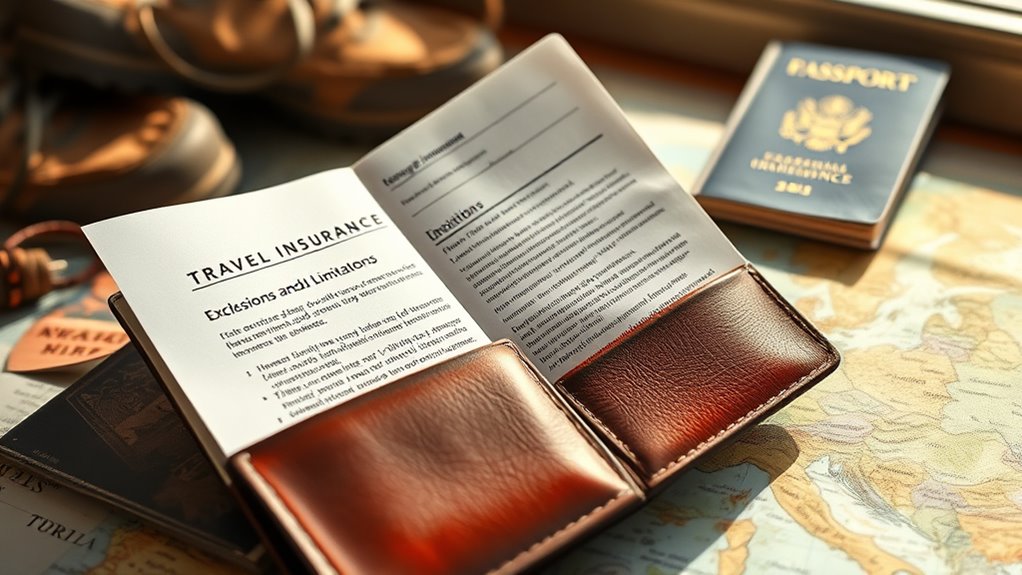
Standard travel insurance policies often have specific exclusions and limitations that travelers need to be aware of, especially when engaging in adventure or sports activities. The fine print in your policy outlines these restrictions clearly. Policy exclusions typically include high-risk activities like extreme sports or dangerous excursions unless you’ve purchased additional coverage. Limitations may also apply to pre-existing conditions, certain regions, or specific incidents such as natural disasters or acts of terrorism. It’s vital to read the policy exclusions carefully, as they determine what’s covered and what’s not. Ignoring these details could leave you unprotected during emergencies. Always review the fine print thoroughly before traveling to ensure your coverage aligns with your plans and activities.
Optional Add-Ons and Enhancements

To guarantee you’re fully protected during your European trip, consider adding optional enhancements to your travel insurance policy. These coverage upgrades and customization options let you tailor your plan to your specific needs. For example, you can opt for adventure sports coverage if you plan on hiking or skiing, or add rental car protection for easier mobility. Some enhancements include:
- Emergency dental coverage
- Trip cancellation and interruption
- Lost luggage and personal belongings
- Travel assistance services
- Pandemic or quarantine coverage
These add-ons give you flexibility and peace of mind, ensuring you’re covered for situations beyond standard policies. By choosing the right optional enhancements, you make your insurance more all-inclusive and suited to your travel plans.
Tips for Comparing and Choosing the Right Policy

When choosing the right travel insurance policy for your European trip, it’s important to compare options carefully to guarantee you get the coverage that best fits your needs. Start with a thorough premium comparison to identify affordable plans that offer extensive coverage. Pay attention to policy renewal terms—some policies automatically renew, while others require you to reapply. Check if the renewal process is straightforward and if premiums increase upon renewal, so you aren’t caught off guard. Review what’s included and excluded in each policy, focusing on medical coverage, trip cancellations, and baggage. Comparing these details helps you select a plan that provides adequate protection without overspending. Taking your time to evaluate policies ensures you choose the most suitable coverage for your European adventure.
Frequently Asked Questions
Does Travel Insurance Cover COVID-19 Related Issues in Europe?
Yes, travel insurance in Europe often covers Covid-19 related issues, including medical expenses and trip cancellations, but check your policy for Covid-19 coverage specifics. Be aware of pandemic exclusions, as some policies exclude Covid-19 claims or limit coverage. Always read the fine print and confirm that your policy includes Covid-19 coverage before traveling; otherwise, you might face high costs if you get sick or need to cancel.
Are Pre-Existing Medical Conditions Covered Under Standard Policies?
Pre-existing conditions are typically not covered under standard travel insurance policies. You need to check your policy carefully, as some plans offer optional medical coverage for pre-existing conditions if you meet certain criteria. Always disclose your medical history honestly to avoid denied claims later. If your pre-existing conditions are covered, you’ll get financial protection for related treatments during your trip, ensuring peace of mind throughout your European travels.
How Does Insurance Handle Cancellations Due to Political Unrest?
If political instability causes travel cancellations, your insurance may cover your costs, depending on your policy. Many plans include coverage for travel disruptions due to political unrest, but it’s essential to check the specific terms. You should notify your insurer promptly if unrest arises. Keep in mind that coverage varies, so review your policy details to understand what’s included and any exclusions related to political instability and travel cancellations.
Is Personal Liability Coverage Included in Basic Travel Insurance Plans?
Most basic travel insurance plans include personal liability coverage, but coverage limits can vary. You’ll be protected if you accidentally cause damage or injury to others, but it’s essential to verify the specific limits and exclusions. You might need to upgrade your policy for higher coverage limits or additional protection. Always review your plan carefully to ensure that personal liability coverage meets your needs while traveling in Europe.
What Are the Procedures for Filing a Claim for Lost Valuables?
When you lose valuables, start by gathering claim documentation like receipts, photos, and police reports. Contact your insurer promptly to report the loss and initiate the claim. They’ll guide you through the valuation process, which helps determine the value of your lost items. Be honest and detailed, providing all requested documents, so your claim can be processed smoothly and efficiently, increasing your chances of a successful resolution.
Conclusion
Travel insurance for Europe acts as your safety net, catching you when life throws unexpected hurdles. By understanding what’s covered—and what’s not—you can navigate your trip with confidence and peace of mind. Think of it as a trusted companion, ready to step in when you need it most. So, choose your policy wisely, and let your adventure unfold with the assurance that you’re protected every step of the way.