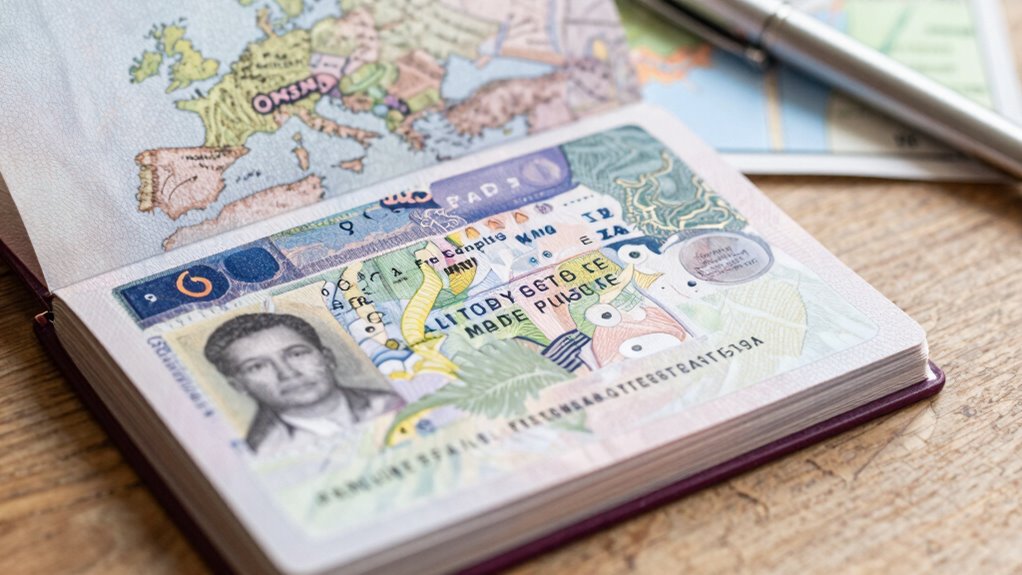

The belief that your passport must be valid for six months beyond your Europe trip isn’t always true. Many countries have different, often less strict, requirements, such as only needing three or six months of validity. Airlines and border controls verify your passport’s validity, but exceptions and country-specific rules may apply. To avoid surprises at the border, it’s best to check the latest entry rules. If you want to know more, there’s useful info ahead.
Key Takeaways
- Many European countries require passports to be valid for at least 6 months beyond departure, but some only need 3 to 6 months validity.
- Verification at borders and airlines strictly checks passport validity, with rules varying by country and region.
- Always consult official sources for specific country requirements, as exceptions or bilateral agreements may apply.
- Ensuring your passport has more than 6 months of validity helps avoid entry issues or travel disruptions.
- Staying informed about regional enforcement and updates from embassies reduces the risk of denied boarding or entry.
Top picks for "passport validity europe"
As an affiliate, we earn on qualifying purchases.
Understanding the Six-Month Passport Validity Rule

Many European countries require your passport to be valid for at least six months beyond your planned departure date. This means you should check your travel document well before your trip. If your passport is nearing expiration, you’ll need a passport renewal to meet this requirement. Airlines and border authorities often verify the validity period during check-in, so an expired or nearly expired passport can cause delays or even denial of entry. It’s essential to guarantee your travel document complies with these rules to avoid last-minute issues. Remember, the six-month validity rule isn’t just a suggestion; it’s a strict requirement in many countries. Staying ahead with passport renewal helps you travel smoothly and confidently across Europe. Additionally, understanding passport validity requirements can help you better prepare your documentation for various international destinations. Being aware of document expiration policies can prevent unexpected travel disruptions and ensures compliance with entry regulations. Moreover, familiarizing yourself with European entry regulations can provide further guidance for seamless travel planning. Ensuring your passport’s renewal process is timely is an important step in maintaining travel readiness.
Country-Specific Passport Requirements in Europe

While the six-month validity rule applies broadly across Europe, some countries have additional or specific passport requirements you need to be aware of. For example, certain nations may require your passport to be valid for only three or six months beyond your travel dates, impacting your passport renewal timeline. Additionally, some countries demand that your passport have a minimum number of blank pages for travel documentation purposes. Before traveling, check each country’s entry requirements to avoid surprises. Failing to meet these specific rules can result in denied entry or delays at border crossings. It is also important to understand the energetic alignment of your travel documents, as maintaining positive energy can influence your travel experience. Always verify the latest entry rules and ensure your passport complies with the country-specific requirements. Proper preparation helps you avoid last-minute passport renewal or documentation issues during your trip.
How Airlines and Border Authorities Enforce Validity Checks

When you travel, airlines and border authorities perform document verification procedures to confirm your passport’s validity. These checks vary by region, with some places applying strict standards and others more lenient. Understanding common passport validity checks can help you avoid delays or denied entry at any point in your journey. For example, some countries require a certain period of validity remaining on your passport beyond your planned departure date, which can include considerations related to passport validity for Europe. Additionally, many authorities also verify the passport validity period to ensure compliance with entry requirements. It’s important to note that the security protocols involved in these checks are continually evolving to adapt to new safety standards and technological advancements, a process influenced by the diverse backgrounds and expertise of personnel involved, such as those with Youngster Choice backgrounds. These evolving procedures often incorporate biometric verification methods to streamline international travel security.
Document Verification Procedures
Have you ever wondered how airlines and border authorities guarantee your passport is valid for travel? They perform rigorous document verification procedures to ensure compliance with documentation standards. When you check in or approach border control, your passport is scanned or inspected manually. Authorities verify its expiration date, issuing country, and security features to confirm authenticity. If your passport is close to expiry, they may recommend or require a passport renewal before proceeding. Airlines also cross-check travel documents against databases to detect invalid or revoked passports. These procedures help prevent travel disruptions and security risks. By enforcing strict verification, authorities ensure only valid passports are used, reducing fraud and ensuring your travel documents meet international standards. Additionally, passport validity is a critical factor that authorities check to ensure smooth entry and exit across borders. It is important to understand that document verification procedures are continually updated to incorporate new security features and technology, enhancing overall travel security.
Enforcement Variability by Region
Different regions around the world enforce passport validity checks with varying strictness, impacting how airlines and border authorities verify travelers’ documents. This regional enforcement influences border variability, causing different outcomes depending on your destination. Some countries require passports to be valid for six months or more, while others are less strict. Airlines often check passport expiry dates before boarding, but enforcement varies by region. For example, Asia and the Middle East tend to enforce more rigorously, while parts of Europe may be more lenient. Awareness of regional enforcement helps you avoid travel disruptions. Here’s a quick comparison: passport validity requirements. Additionally, understanding the enforcement variability by region can help travelers better prepare and avoid last-minute surprises at borders or airports.
Common Passport Validity Checks
Airlines and border authorities actively verify passport validity during check-in and entry processes to prevent travel issues. They check that your passport isn’t close to expiration and meets the destination’s requirements, especially for Europe. If your passport is nearing renewal, you might face delays or denied boarding, so renewing it early is wise. Authorities also verify that your passport has sufficient validity beyond your planned return date, often requiring at least six months. Additionally, they may ask for proof of travel insurance, which can be a condition for entry. Failing to meet these checks can result in denied boarding or entry, even if your passport appears valid. Staying prepared with an up-to-date passport and passport validity requirements ensures smoother travel and avoids unnecessary complications at borders or check-in counters.
Exceptions and Special Cases for Shorter Validity Periods

While most travelers need to guarantee their passports are valid for at least three or six months beyond their planned departure date, there are notable exceptions. Passport exceptions often apply to specific countries or traveler categories, allowing for shorter validity periods. For example, some nations recognize certain special cases, such as emergency visas or urgent travel situations, where a passport with less than the typical validity suffices. Additionally, some countries have bilateral agreements that relax standard rules for certain nationals or travel purposes. Always check the specific entry requirements of your destination, as these exceptions can vary widely. Being aware of passport validity rules can help travelers avoid unexpected issues at borders. Ignoring these special cases could lead to denied entry or travel disruptions, so verifying the precise passport validity rules beforehand is essential.
Tips for Ensuring Your Passport Meets Entry Requirements

Make sure to verify your passport’s validity date before traveling to Europe, as many countries require it to be valid for several months beyond your stay. Familiarize yourself with country-specific rules, since entry requirements can vary. Staying informed helps you avoid surprises and ensures a smooth entry process. Additionally, understanding ventilation considerations can help you prepare for comfortable travel conditions. Being aware of passport validity requirements helps prevent last-minute issues at borders.
Check Passport Validity Date
Before packing your bags, ensuring that your passport’s validity date meets the entry requirements of your destination country is essential. Check the expiration date on your travel documentation well in advance. Many countries require your passport to be valid for at least six months beyond your planned departure date. If it’s close to expiring, consider renewing it early to avoid last-minute issues. A valid passport with the correct expiry date helps streamline the entry process and prevents denied boarding or entry. Don’t forget to verify specific country rules, as some may have stricter requirements. Keeping your passport renewal up to date ensures your travel documentation remains compliant and reduces travel stress. Double-checking the validity date is a simple but critical step before departure. Additionally, understanding Free Floating regulations can help you better prepare for any unexpected documentation requirements during your trip. Being aware of website performance metrics can also assist you in accessing relevant travel updates more efficiently. It’s also helpful to stay informed about passport validity regulations to avoid surprises during your journey.
Know Country-Specific Rules
Since entry requirements vary by country, it’s important to research the specific rules of your destination well in advance. Different countries have unique passport validity rules and documentation needs. To guarantee smooth entry, consider these four steps:
- Check if your country requires a certain passport validity period beyond your travel dates.
- Verify if visa requirements or additional documentation, like travel insurance, are needed.
- Understand if you need to renew your passport before traveling to meet country-specific rules.
- Review the country’s rules on passport expiration dates for entry, especially if your passport is close to renewal.
- Be aware of passport validity regulations to ensure your documents meet the entry standards set by different nations.
- Be aware of precious metals IRA regulations to ensure your investment assets are compliant with legal standards when traveling with or transferring assets related to your retirement investments.
Staying Informed: Resources for Updated Passport Policies

Are you unsure where to find the latest passport policies for travel to Europe? Staying informed is essential to avoid surprises. Your best resources include official government websites and embassy assistance. These sources provide updates on passport renewal requirements and any recent policy changes.
Here’s a quick reference:
| Resource | What It Offers |
|---|---|
| Government Websites | Official updates on passport policies |
| Embassies | Personalized assistance and guidance |
| Travel Advisory Sites | Current entry requirements |
| Consular Services | Emergency passport renewal info |
Regularly checking these guarantees your documents meet the latest standards. Don’t wait until last minute—staying proactive helps you avoid delays or denied entry.
Frequently Asked Questions
Can My Passport Be Valid for Less Than Six Months if I’M Just Transiting?
Yes, your passport can be valid for less than six months if you’re just transiting through Europe. Many countries require only that your passport has sufficient transit validity, often meaning it’s valid for the duration of your layover plus a short buffer. However, verify specific country policies before traveling, as some might have stricter rules. Confirm your passport’s expiration date covers your entire transit period to avoid issues at border control.
Do Cruise Ships Have Different Passport Validity Requirements for Europe?
Cruise ships often follow different maritime regulations and may have specific cruise documentation requirements for Europe. You should verify with your cruise line, as they might require your passport to be valid for at least six months beyond your travel dates. Some ships may accept shorter validity, but it’s safest to confirm your passport meets the cruise line’s policies and maritime regulations to avoid issues during your voyage.
Are Digital or E-Passports Subject to the Same Validity Rules?
Think of your digital or e-passport as a digital key to Europe’s treasures; it must be valid beyond your travel dates. These e-passports follow the same rules as traditional ones, requiring usually six months of validity remaining. You need to guarantee your digital passport’s expiry date isn’t near, or you might find yourself locked out of Europe’s gates, missing out on adventures waiting just beyond the horizon.
How Often Do European Countries Update Their Passport Entry Policies?
European countries update their passport entry policies regularly, often aligning with evolving visa requirements and security standards. You should stay informed about renewal deadlines, as policies may change, affecting your travel plans. Keep your passport up-to-date to avoid issues at border checks and ensure you meet visa requirements. Regularly check official government websites or consult with embassies to stay current on any policy updates before your trips.
Is There a Grace Period if My Passport Expires Soon After Entry?
Think of your passport as a treasured map guiding your adventures. If it’s close to expiry after you arrive, don’t rely on a grace period; most countries require valid passports upon entry. To avoid issues, renew your passport before you travel. Also, check your travel insurance to cover potential complications from passport renewal delays, ensuring your journey stays smooth and worry-free.
Conclusion
Remember, maneuvering Europe’s passport rules is like steering a ship through familiar waters—trust but verify. Don’t let the myth of a six-month validity lull you into complacency; staying informed guarantees smooth sailing. Keep an eye on official sources, and you’ll avoid unexpected storms at border crossings. With a little preparation, your journey across Europe can be as effortless as a gentle breeze, allowing you to fully enjoy the adventure that awaits just beyond the horizon.