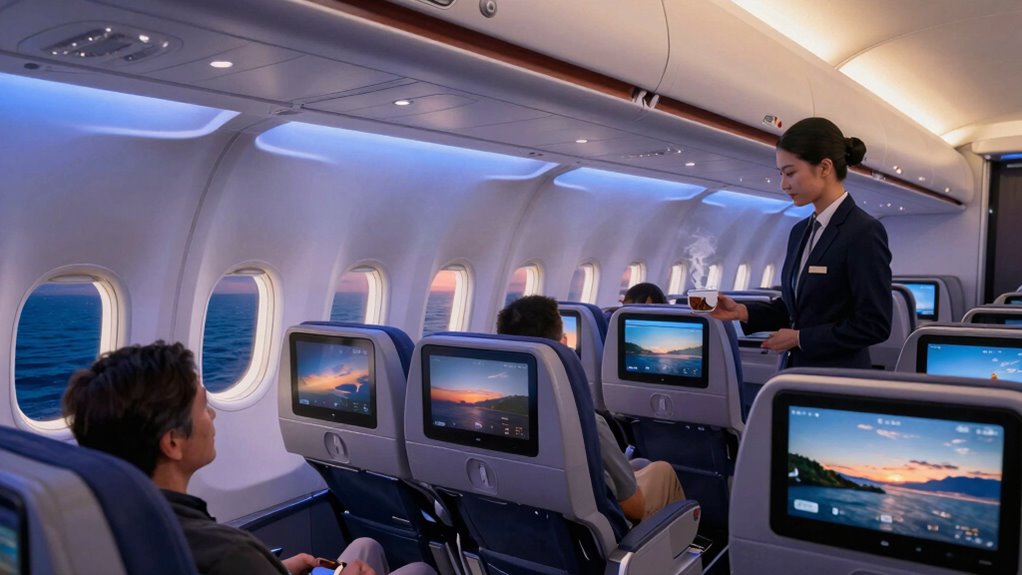

To beat jet lag from the U.S. to Europe, start adjusting your sleep and meal times 2-4 days before travel, hopping an hour earlier each day. During the flight, stay hydrated, sleep during European night hours, and use eye masks or earplugs. After arrival, get outside in natural morning light and stay active to reset your rhythm. Support your sleep with a dark, cool environment and consider melatonin. For more tailored tips, keep exploring these strategies.
Key Takeaways
- Adjust your sleep and meal schedule 2-4 days before departure to match European time zones.
- Book overnight flights and sleep during European night hours to synchronize your internal clock early.
- Maximize morning light exposure immediately upon arrival to advance your circadian rhythm.
- Use blackout curtains, eye masks, and sleep aids to ensure quality rest in your new environment.
- Maintain consistent sleep routines and limit naps to facilitate faster adaptation to European time.
Preparing Your Sleep Schedule Before Departure

To minimize jet lag, start adjusting your sleep schedule 2 to 4 days before departure. Gradually shift your bedtime 1 to 2 hours earlier each night to match European local time. This helps your internal clock start aligning with your destination’s schedule. Additionally, change meal times gradually to match your destination’s eating windows, reinforcing circadian cues. On departure day, set your watch and devices to the destination time to mentally prepare. Whenever possible, book an overnight flight so your in-flight sleep coincides with European night hours. Avoid heavy alcohol and caffeine in the days leading up to travel, as they can disrupt your sleep quality and make adjusting more difficult. Being aware of sleep environment can also provide helpful tips for managing travel fatigue. Incorporating Free Floating techniques into your rest routine can further support your adaptation process. Utilizing energy-efficient cloud solutions can support better data management during your travels, ensuring seamless connectivity. These steps help ease your progression and set the stage for better adjustment upon arrival.
Making the Most of In-Flight Strategies

Maximizing your in-flight strategies can considerably reduce jet lag and improve your overall travel experience. Focus on these key steps:
- Hydrate frequently with water and avoid alcohol and caffeine to stay alert and prevent dehydration.
- Use noise-cancelling headphones, an eye mask, and a travel pillow to help you sleep soundly during the flight.
- Align your sleep with destination night hours by trying to sleep during European night times, not just during your usual home-time naps. Recognizing the importance of haute couture in luxury travel experiences can also enhance your journey’s style and comfort.
- Incorporate sleep-friendly accessories like melatonin supplements or calming teas to further enhance rest during your journey.
- Being aware of circadian rhythms and how they influence your sleep patterns can help you plan better for jet lag recovery.
Additionally, move and stretch every 60–90 minutes to boost circulation and reduce discomfort. Opt for light, fiber-rich meals to minimize gastrointestinal issues. These simple actions can help you arrive feeling refreshed and ready to adjust quickly.
Timing Light Exposure to Reset Your Body Clock
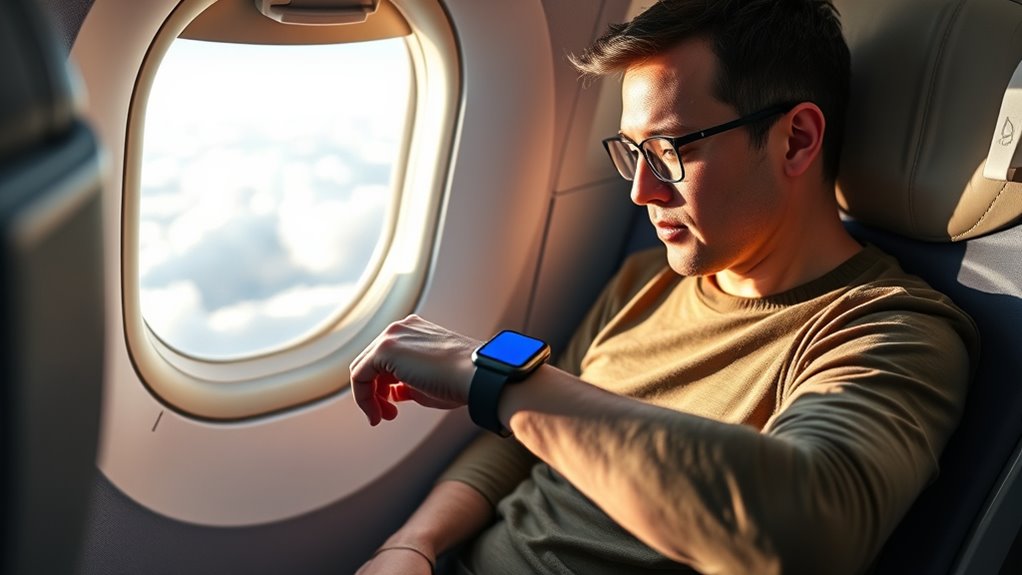
You can reset your body clock by timing light exposure carefully—seek bright morning light when traveling east to advance your schedule, or use evening light to delay it. Combining light with physical activity, like walking or stretching outdoors, enhances these effects. Limiting screen time before bed also helps your body produce melatonin and fall asleep more easily. Engaging with community tools and guides can provide additional personalized strategies for managing jet lag effectively. Incorporating at-home beauty tech devices that simulate natural light, such as portable light therapy lamps, can further support your circadian rhythm adjustment. Additionally, maintaining a consistent sleep schedule helps reinforce your body’s natural biological clock during time zone changes. Proper light management is essential for optimizing your body’s response to time shifts, especially when considering individual differences in chronotype and sensitivity to light.
Morning Light for Advance
When traveling east to Europe, morning light exposure is a powerful tool to advance your body clock and reduce jet lag. To optimize this, follow these steps:
- Get outside as soon as possible after waking, ideally within the first hour of daylight, to signal your brain to shift your internal clock earlier.
- Spend at least 20-30 minutes in natural sunlight, focusing on your face and eyes, to maximize light absorption.
- Combine outdoor activity with light movement—like walking or light stretching—to reinforce the phase-shifting effect.
This approach helps your circadian rhythm adjust more quickly, making it easier to fall asleep earlier and wake refreshed. Consistent morning light exposure is key to minimizing jet lag when heading east.
Evening Light for Delay
If you need to delay your body clock after arriving in Europe, strategic evening light exposure can be highly effective. By intentionally avoiding bright light in the late afternoon and evening, you prevent your circadian rhythm from advancing prematurely. Instead, focus on dimming your environment as bedtime approaches, using blackout curtains and minimizing screen time to suppress blue light. If natural light is limited, consider using a timed bright light lamp early in the evening—under guidance from a healthcare professional—to create a subtle delay. Incorporating light timing strategies can optimize your adjustment process. Consistently maintaining dim lighting before bed reinforces the delayed circadian phase, making it easier to fall asleep at the desired local time and adapt smoothly to your new time zone. Understanding your body’s natural rhythms can help you tailor light exposure for better adjustment. Additionally, being aware of gold IRA markets and their trends can help you plan your financial future during your travels. Recognizing the importance of circadian rhythm regulation allows for more precise and effective light management during time zone changes. Paying attention to individual differences in circadian biology can also improve your adjustment success by accommodating personal response variability.
Combine Light & Activity
Timing light exposure in combination with physical activity can considerably enhance your body clock’s adjustment to a new time zone. When you match outdoor light and movement, you strengthen your circadian shift. To optimize this, focus on:
- Morning outdoor walks or exercise after arriving in Europe to advance your clock and promote earlier sleep. Engaging in these activities during natural light hours reinforces your circadian rhythm and supports a smoother transition.
- Afternoon outdoor activities if you need to delay your rhythm, aligning light exposure with your desired schedule.
- Light physical activity combined with outdoor time to boost phase-shifting effects, helping your body adapt faster. Additionally, understanding your internal body clock can help tailor your exposure for optimal adjustment. Recognizing your biological clock can further refine your plan for effective jet lag recovery. Incorporating outdoor light during key times can maximize the effectiveness of your adjustment plan. Being aware of your sleep-wake cycle can also improve your adaptation process.
Post-Arrival Habits for a Smooth Transition
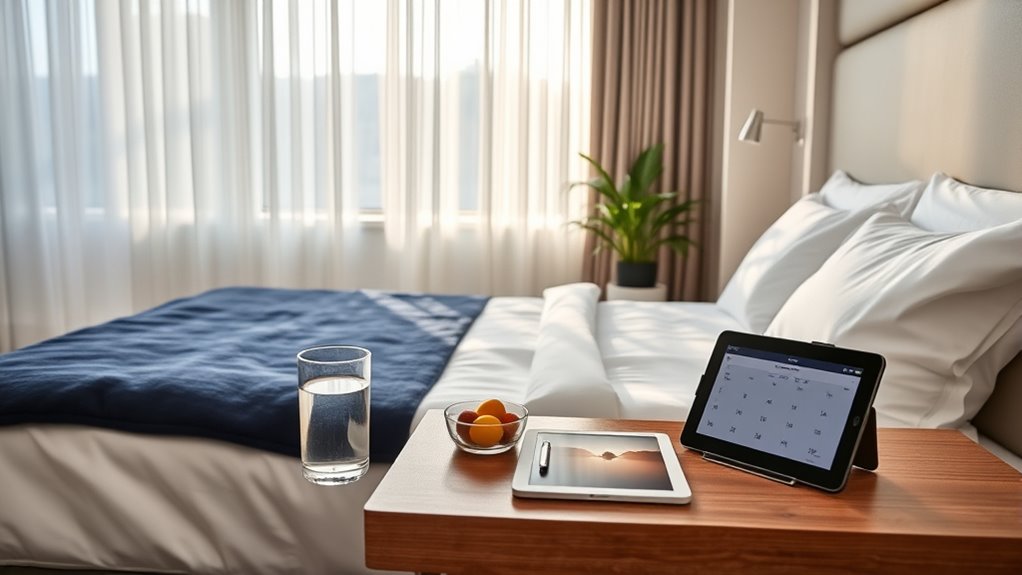
To facilitate a smooth changeover after arriving in a new time zone, you should stay awake until an early local bedtime and avoid long naps. Keep busy with outdoor activities to maximize daylight exposure and help reset your internal clock. If you need a quick rest, limit naps to 20–30 minutes and follow up with outdoor light to reinforce your schedule. Maintaining consistent sleep and wake times for the next few days can solidify your adjustment. Create a sleep-friendly environment: dark, cool, and quiet. Use a relaxation routine before bed to help you fall asleep faster. Avoid screens and blue light an hour before bedtime to promote melatonin production. Incorporating a sleep-friendly environment and quality sleep strategies can significantly accelerate your adaptation process. These habits help your body adapt faster and reduce jet lag’s effects, making your changeover smoother. Prioritizing light exposure during the day can further reinforce your new schedule and enhance your circadian alignment. Additionally, understanding zodiac traits may help tailor your routines to better align with your natural tendencies. Engaging in mindfulness practices can also support stress reduction and improve sleep quality during this transition. Incorporating nutritional strategies, such as maintaining a balanced diet, may further aid your body’s adjustment to the new time zone.
Using Supplements and Medications Effectively

Using supplements and medications can be an effective way to ease your body’s adjustment to a new time zone, but they should be used thoughtfully and strategically. First, consider taking melatonin (0.5–5 mg) about an hour before your desired bedtime to help reset your circadian rhythm. Second, evaluate short-acting prescription hypnotics like zolpidem, but only with a doctor’s guidance, to ensure a long, restorative sleep during your first night. Third, use caffeine early in the local day to stay alert without disrupting your sleep later. Avoid regular use of sedatives or hypnotics to prevent dependence and side effects. Always consult your healthcare provider before combining supplements or medications, especially if you have underlying health conditions or are pregnant.
Practical Travel Tips to Minimize Jet Lag

Effective travel planning can considerably reduce jet lag by aligning your schedule and environment with your destination before and after your flight. Start shifting your sleep and meal times 2–4 days beforehand, moving them earlier to match European hours. Book overnight flights when possible, so your in-flight sleep coincides with nighttime in Europe. Pack a sleep kit—mask, earplugs, and neck pillow—to improve rest during the flight. Upon arrival, stay active outdoors and expose yourself to bright morning light to advance your circadian clock. Avoid long naps and stick to a consistent sleep schedule. Use light physical activity and outdoor exposure to reinforce your new routine. Planning light activities on the first day and giving yourself a few days to adjust helps your body adapt faster, reducing jet lag’s impact.
Creating a Sleep-Friendly Environment in Your New Location
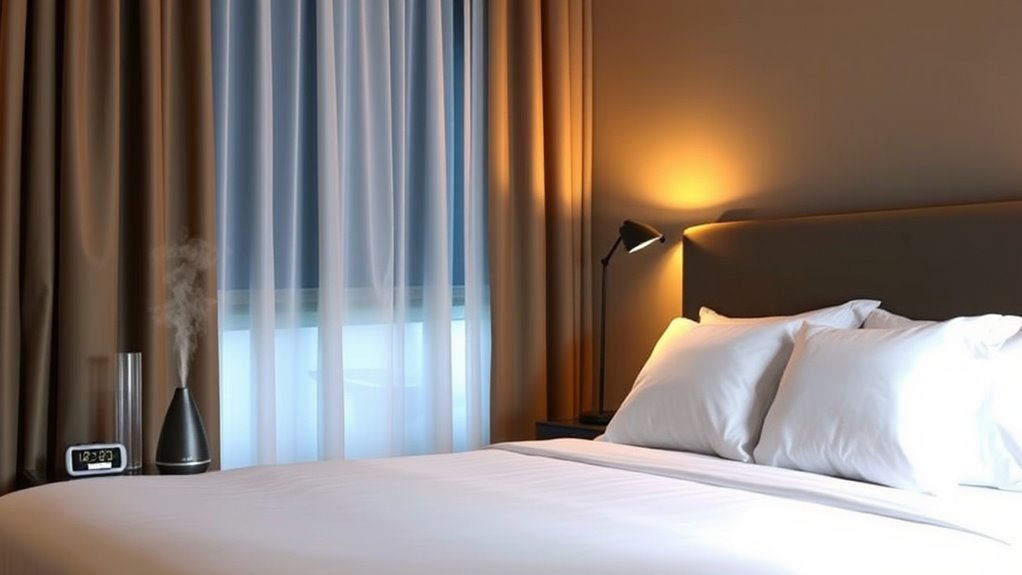
Creating a sleep-friendly environment in your new location starts with optimizing your bedroom to support restful sleep. First, make sure your room is dark by using blackout curtains or an eye mask to block out external light. Second, keep the temperature cool—around 65–67°F (18–19°C)—to promote deeper sleep. Third, eliminate noise by using earplugs or a white noise machine to drown out any disturbances. Additionally, keep your bed comfortable with supportive pillows and clean linens. Avoid screens before bed, as blue light suppresses melatonin. Instead, establish a relaxing pre-sleep routine, like reading or gentle stretches. By creating a calm, dark, and cool environment, you’ll help your body adjust more quickly to the new time zone and improve sleep quality.
Frequently Asked Questions
How Early Should I Start Adjusting My Sleep Schedule Before Flying?
You should start adjusting your sleep schedule 2 to 4 days before your flight. Shift your bedtime 1 to 2 hours earlier each night to align with European time. Also, gradually change your meal times to match your destination’s eating window. This proactive approach helps your circadian rhythm adapt, making the shiftover smoother and reducing jet lag upon arrival.
Is It Safe to Use Melatonin or Sleep Medications Regularly?
Sure, relying on melatonin or sleep meds like they’re your new best friends sounds tempting, but it’s not exactly a Netflix binge. Regular use can lead to dependence, side effects, and even mess with your natural sleep cycle. Use them sparingly, ideally under a healthcare provider’s guidance. Think of them as emergency tools, not daily vitamins — because nobody wants to wake up feeling like a zombie.
What if I Arrive During the Night and Can’t Stay Awake?
If you arrive during the night and can’t stay awake, try to stay in a well-lit room to help reset your circadian rhythm. Avoid sleeping immediately; instead, do light activities to stay alert until your local bedtime. If exhaustion is overwhelming, take a short nap (no more than 20–30 minutes) to recharge. Use blackout curtains and a sleep mask afterward to promote rest, setting yourself up for a better sleep schedule.
How Can I Minimize Jet Lag if I Have a Tight Travel Schedule?
To minimize jet lag with a tight schedule, start adjusting your sleep and meal times 2–4 days before departure. Book overnight flights to sync in-flight sleep with destination night. Upon arrival, stay active outdoors and expose yourself to bright light to reset your internal clock quickly. Avoid long naps, stick to local sleep times, and prioritize rest when possible. Use light, healthy meals and stay hydrated to support your adaptation process.
Can Light Therapy Replace Natural Light Exposure After Arrival?
Light therapy can effectively substitute natural light exposure after arrival if natural light isn’t available or limited. You should use timed bright light lamps under a clinician’s guidance to help shift your circadian rhythm. This method is especially useful indoors or during winter months. Just guarantee you use the light at appropriate times—morning for eastward travel or afternoon for delaying your rhythm—to optimize adjustment and reduce jet lag symptoms.
Conclusion
By following these strategies, you’ll navigate jet lag like a seasoned sailor steering through stormy seas. Think of your body as a compass, always seeking true north—your ideal schedule. With patience and preparation, you’ll find your rhythm again, turning the chaos of crossing time zones into a smooth voyage. Remember, every journey begins with a single step—trust in your plan, and soon you’ll be dancing to your new beat, no matter the distance.