
To handle European hotel room keys and power switches, familiarize yourself with the common systems like RFID cards, magnetic stripes, and digital keys, which often combine contactless and mobile options for convenience and security. Manage power switches by integrating smart controls, key-activated master switches, or occupancy sensors to optimize energy use. Ensuring smooth operation involves regular maintenance, quick troubleshooting, and understanding security features. If you keep exploring, you’ll discover ways to improve efficiency and guest experience even further.
Key Takeaways
- Familiarize yourself with the hotel’s key system, such as RFID, magnetic, or mobile keys, to ensure proper use.
- Use designated power switches or key card slots to activate room electricity and lighting.
- Remember to remove or deactivate electronic keys upon check-out to maintain security.
- Follow hotel instructions for energy-saving features like master switches or smart thermostats.
- Report any issues with keys or power switches promptly to hotel staff for quick resolution.
As an affiliate, we earn on qualifying purchases.
Understanding Different Types of Room Keys in Europe
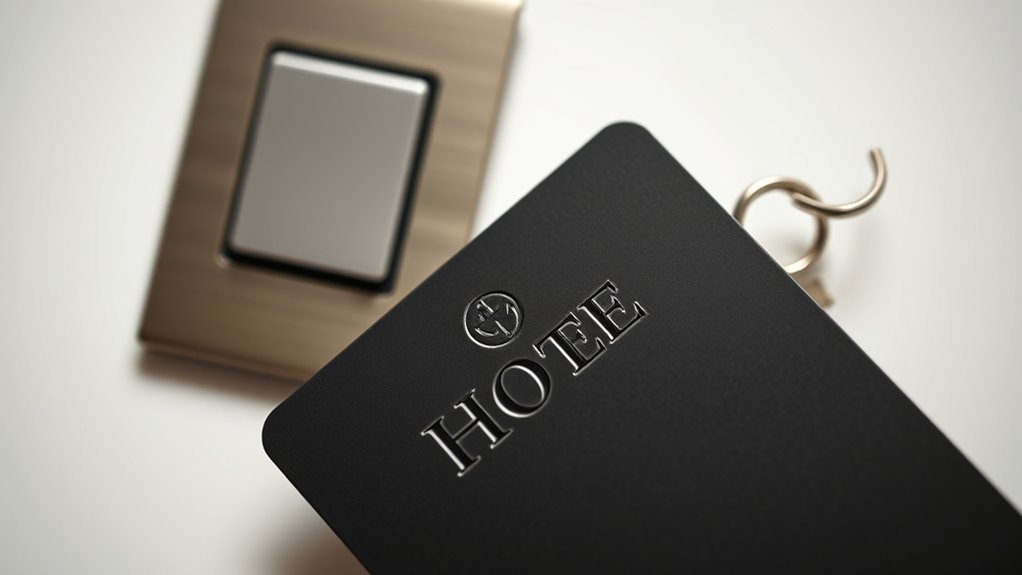
In Europe, hotels use a variety of room keys to suit different styles and security needs. You’ll encounter magnetic stripe cards, which are common in budget and mid-range hotels due to their low cost and familiarity. RFID key cards are also popular, offering contactless entry and higher security. Smart cards with embedded microchips provide multifunctional access, allowing guests to use the same card for room entry and payments. Mobile keys, delivered through smartphone apps, are increasingly standard in luxury and tech-forward hotels, offering remote access without physical keys. Additionally, keypad systems with numeric codes are common in short-term rentals, Airbnb listings, and apartment hotels. Each type balances convenience, security, and operational efficiency, catering to diverse guest preferences across European accommodations. Moreover, understanding the security features of different key types can help travelers choose options that best protect their belongings during their stay. Many modern locks incorporate advanced encryption to prevent unauthorized access and enhance overall safety. Some locks also include biometric authentication, adding an extra layer of security for guests. Being aware of the different lock mechanisms can also assist guests in handling hotel procedures smoothly during check-in and check-out.

HERNAS 20pcs Rewritable UID Smart Key Fobs, Premium 13.56MHz ABS Blank Keys for Door Access Control, Mi-Fare 1K S50 Copy Card NFC Tags Duplicate Keys, Block 0 Sector, Comply ISO 14443A
- Compatibility with MI-FARE Classic 1K: Supports 13.56MHz RFID systems
- Memory Capacity: 1024 bytes organized in 16 sectors
- Protocol Compliance: ISO 14443A compliant
As an affiliate, we earn on qualifying purchases.
As an affiliate, we earn on qualifying purchases.
Managing Magnetic Stripe and RFID Card Systems
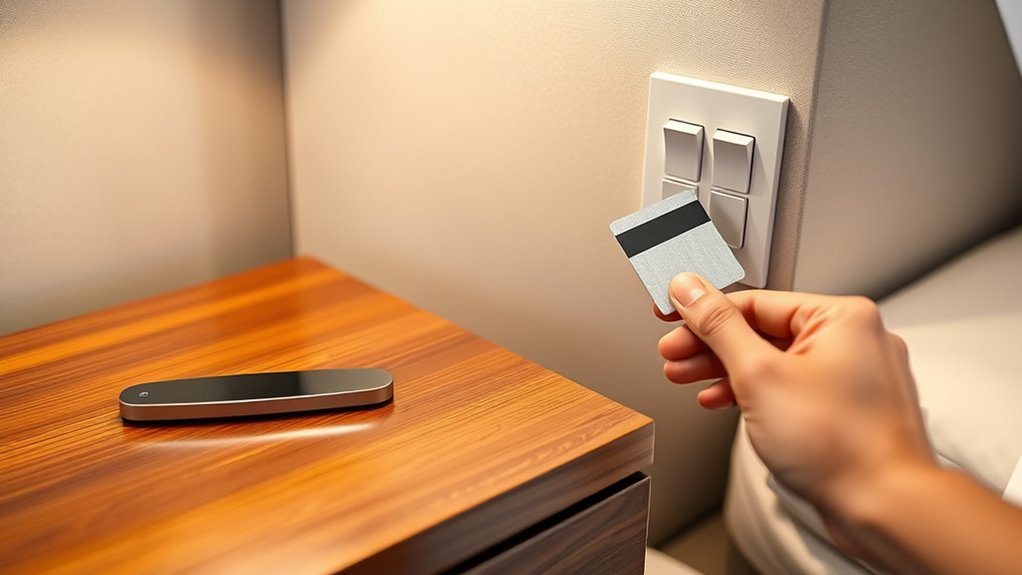
Managing magnetic stripe and RFID card systems requires careful attention to programming and security measures. You need to regularly update access permissions and monitor for potential vulnerabilities. Keeping maintenance simple and troubleshooting efficient helps guarantee smooth operation and guest satisfaction. Additionally, using proper tools and techniques for system diagnostics can help identify and resolve issues quickly. Staying informed about cryptocurrency regulations, such as those emerging in Kenya and Germany, can also influence security standards and compliance requirements for your systems. Incorporating security best practices into your system management can further enhance protection against unauthorized access. Moreover, implementing smart automation features can streamline management tasks and improve overall system reliability. Regular system audits and the use of advanced encryption methods add an extra layer of security to prevent breaches.
Card Programming and Management
Effective card programming and management are essential for ensuring secure and efficient access control in European hotels. You should regularly update and customize card data to match guest check-in and check-out times, minimizing security risks. Use centralized systems to assign permissions, restrict access to specific areas, and deactivate cards promptly upon guest departure or staff turnover. RFID and magnetic stripe cards require precise encoding to prevent duplication or tampering. Implementing audit trails helps track card usage, enhancing security oversight. Maintain secure databases with restricted access, and enforce strict procedures for issuing, reprogramming, and disabling cards. Properly cookie management ensures that sensitive data remains protected and that access controls are enforced accurately. Staying informed about security protocols helps hotel staff respond effectively to potential breaches, further safeguarding guest information. Regular staff training on card security best practices can also reduce the risk of internal threats. Additionally, adopting advanced encryption methods can bolster the protection of card data against cyber threats. Staying updated on encryption standards and implementing multi-factor authentication can further strengthen your system’s defenses. By staying vigilant with card management, you ensure smooth operations, protect guest safety, and uphold your hotel’s security standards effectively.
Security and Access Control
Securely managing magnetic stripe and RFID card systems is essential to prevent unauthorized access and safeguard guest data. You should regularly update access permissions and deactivate lost or stolen cards immediately to maintain security. Use encrypted RFID systems that resist cloning and tampering, reducing risks of breaches. Implement audit trails to track card usage, helping identify suspicious activity. Group access management allows you to restrict entry to sensitive areas, ensuring only authorized staff or guests gain access. Contactless RFID technology minimizes wear and demagnetization issues, enhancing system reliability. Combining multiple security layers—such as PIN codes, RFID, and digital keys—provides redundancy and improves overall safety. Regularly reviewing your security protocols ensures you stay ahead of emerging threats and adapt your measures accordingly. Incorporating security and access control best practices from the hospitality industry can further strengthen your system’s defenses. Additionally, adopting compliance standards helps ensure your security measures meet industry regulations and best practices.
Maintenance and Troubleshooting
Regular maintenance and prompt troubleshooting are essential to keep magnetic stripe and RFID card systems running smoothly. Regularly inspect cards for scratches, dirt, or damage that can interfere with reading. Clean card readers and contactless modules using manufacturer-approved solutions to prevent dirt buildup. If guests experience access issues, verify the card’s validity, reprogram it if needed, or replace damaged cards. Ensure the system’s software is up to date to prevent compatibility problems. Check power supplies and network connections during malfunctions. For RFID systems, confirm antenna alignment and functionality. Keep detailed logs of issues to identify recurring problems. Training staff on troubleshooting procedures helps resolve common problems quickly, minimizing guest disruptions and maintaining security. Regular checks and swift responses keep your system reliable and efficient. Incorporating system diagnostics can help identify underlying hardware or software issues before they impact guests. Additionally, implementing preventive maintenance routines can prolong the lifespan of the equipment and reduce unexpected failures. Performing routine inspections of hardware components can further prevent unexpected malfunctions and ensure smooth operation. Conducting performance monitoring can also help detect early signs of hardware degradation, ensuring proactive repairs. Utilizing advanced diagnostic tools can streamline the troubleshooting process and improve overall system reliability.

Hotel & Motel Magnetic Stripe Key Cards (1000)
- Design: Welcome hotel key card
- Magnetic Stripe: Includes instructions on back
- Compatibility: Not compatible with RFID tap readers
As an affiliate, we earn on qualifying purchases.
As an affiliate, we earn on qualifying purchases.
Incorporating Digital and Mobile Key Technologies
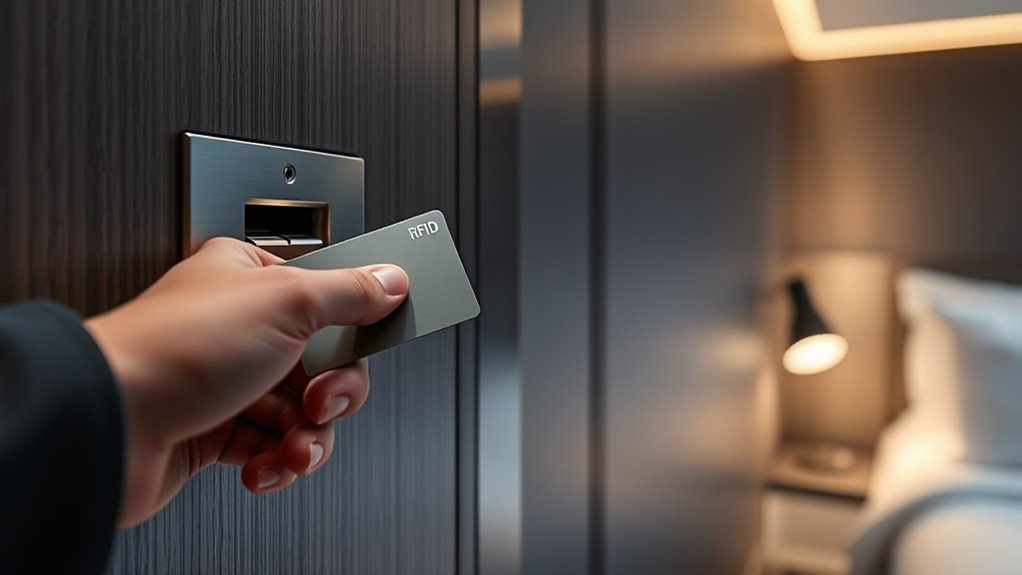
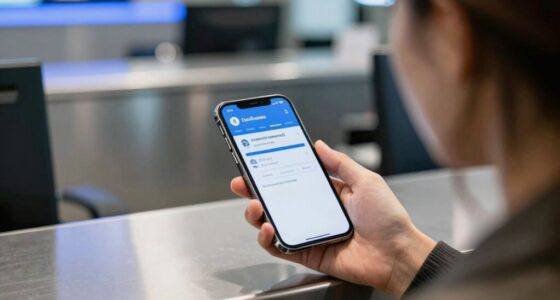
Incorporating digital and mobile key technologies transforms how hotels manage guest access, offering a seamless and contactless experience. These systems enable guests to release doors via smartphone apps, one-time passcodes, or wallet integrations, reducing physical contact and streamlining check-in. Hybrid systems combine RFID, keypad, and mobile access, enhancing flexibility. To understand their capabilities, consider this table:
| Technology | Features | Benefits |
|---|---|---|
| Mobile keys | App-based unlocking, remote management | Convenient, contactless, quick deployment |
| One-time passcodes | Text/email delivery, time-sensitive codes | Secure, no physical keys needed |
| Wallet integration | Unlock via smartphone wallets (Apple Pay, Google Pay) | Effortless, reduces lost keys |
| Hybrid systems | Combine multiple methods for layered security | Flexible, resilient access control |
Additionally, understanding time zone differences can be crucial for managing international guest check-ins and communications effectively.

Lutron Motion Sensor Light Switch, 2 Amp Single Pole, for Any Bulb
- Automatic On/Off: Turns lights on/off with motion detection
- Energy Saving: Automatically turns off lights to save energy
- Hands-Free Operation: Allows focus on tasks without manual switching
As an affiliate, we earn on qualifying purchases.
As an affiliate, we earn on qualifying purchases.
Optimizing Power Switches and Energy Management

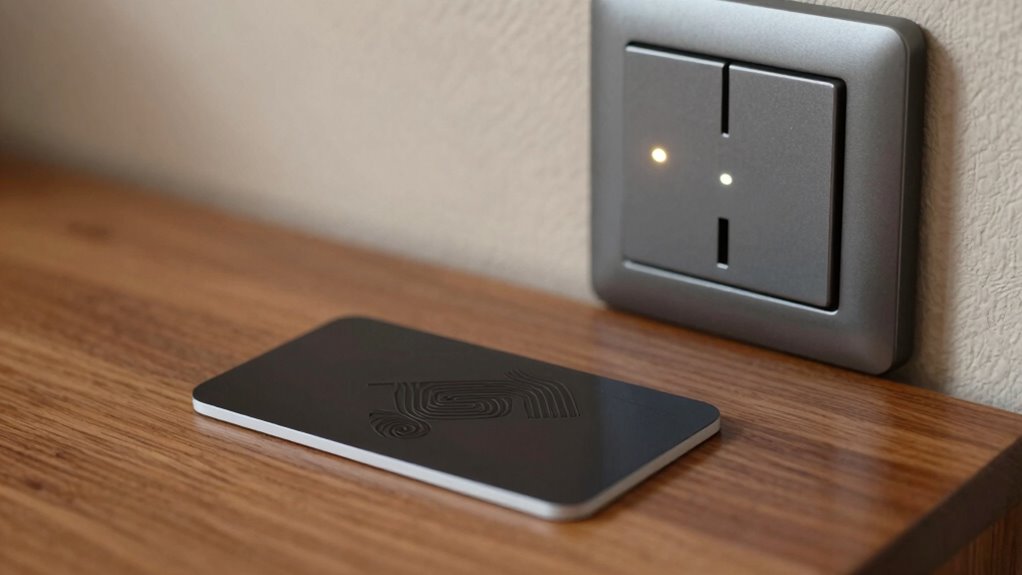
Optimizing power switches and energy management systems is essential for modern hotels aiming to reduce energy consumption and enhance guest comfort. By integrating smart technology, you can automatically control lighting, heating, and cooling based on occupancy or guest preferences. This not only cuts costs but also promotes sustainability. Consider implementing key-activated master switches that cut power when guests leave, or smart thermostats that adjust temperature settings automatically. You can also synchronize lighting and climate control with guest mobile apps for seamless control.
Smart hotel energy systems enhance comfort, cut costs, and promote sustainability through automated lighting, climate control, and guest app integration.
- Use occupancy sensors to turn off lights when rooms are empty
- Install smart thermostats for precise climate management
- Automate lighting and power based on guest check-in/check-out times
Ensuring Security and Guest Convenience
To guarantee both security and guest convenience, hotels must adopt a layered approach that balances high-level access control with user-friendly features. You can enhance security by implementing biometric systems or contactless options, reducing the risk of lost keys and unauthorized access. Digital solutions like one-time passcodes or mobile keys streamline entry and minimize physical contact, improving hygiene and guest experience. Quickly deactivating lost or stolen cards prevents security breaches without costly lock changes. Accessibility features, such as keypad options with clear instructions, ensure all guests can access their rooms comfortably. Combining multiple methods—RFID, mobile apps, and traditional keys—creates redundancy, safeguarding against system failures while maintaining ease of use. This layered strategy ensures guests feel secure and enjoy seamless access during their stay.
Implementing Redundant and Accessible Access Solutions
Implementing redundant and accessible access solutions guarantees that guests can always enter their rooms regardless of system failures or user preferences. You should combine multiple methods—such as RFID cards, mobile keys, or keypad codes—to ensure seamless access. This layered approach minimizes guest frustration and enhances security. It also accommodates diverse needs, including guests with disabilities or those unfamiliar with digital technology. To maximize effectiveness, integrate backup power supplies and real-time system monitoring. Consider offering traditional mechanical locks as a fallback for critical areas. By doing so, you build resilience into your access system and improve overall guest experience.
Ensure guest access with layered solutions, backup power, and mechanical options for seamless, secure entry.
- Use multi-layered access methods like RFID, mobile keys, and keypad codes
- Incorporate backup power and real-time system alerts
- Provide mechanical lock options for essential areas
Frequently Asked Questions
How Do Digital Keys Improve Energy Efficiency in European Hotels?
Digital keys improve energy efficiency in European hotels by automatically controlling room electricity. When you use your digital key, smart systems activate power for lighting, heating, and cooling. When you leave the room and remove the key, these systems turn off or reduce energy consumption. This automation minimizes waste, saves costs, and promotes sustainability, all while providing a seamless experience that adapts to your presence and preferences.
What Security Measures Are Essential for Contactless Key Systems?
Think of contactless key systems as digital vaults guarding your guests’ stay. You must implement encryption protocols to keep data locked tight and prevent cyber intruders from sneaking in. Multi-factor authentication adds an extra layer of armor, making unauthorized access nearly impossible. Regular system updates act as vigilant sentinels, patching vulnerabilities before they can be exploited. Combined, these measures create an unbreakable fortress for your guests’ safety and peace of mind.
Can Mechanical Locks Be Integrated With Modern Digital Access Solutions?
Yes, you can integrate mechanical locks with digital access solutions. You might install electronic strike plates or retrofit existing locks with smart lock adapters, allowing digital credentials to control traditional lock mechanisms. This hybrid approach offers flexibility, enabling guests to use digital keys or physical keys, and helps properties shift gradually to modern systems without sacrificing the familiarity and reliability of mechanical locks.
How Do Guest Preferences Influence Power Switch Automation?
Think of guest preferences as a gentle maestro guiding the symphony of your hotel’s energy system. You program the automation to adapt to their habits, like adjusting the tempo of a performance. When guests prefer a cozy ambiance, the system softly dims lights and lowers thermostats. Conversely, for energy savings, it shifts to eco-friendly modes. Their choices shape the automation, creating a personalized, efficient, and harmonious stay.
What Are the Best Practices for Managing Lost or Stolen Keys Digitally?
When managing lost or stolen keys digitally, you should quickly deauthorize the compromised access credentials. Use your system’s remote management tools to disable the lost key, whether it’s a RFID card, mobile pass, or digital code. Then, reissue a new key or code instantly. Implement layered security, such as multi-factor authentication, and keep a record of deactivation events to maintain security and prevent unauthorized entry.
Conclusion
Think of managing hotel keys and switches as conducting a symphony—each element must harmonize perfectly. When you understand the different types, manage technology seamlessly, and prioritize security, you create a melody of guest comfort and safety. By optimizing power switches and embracing innovative solutions, you set the rhythm for efficiency. Like a skilled conductor, you orchestrate a smooth experience, ensuring every guest leaves with a note of satisfaction lingering long after their stay.