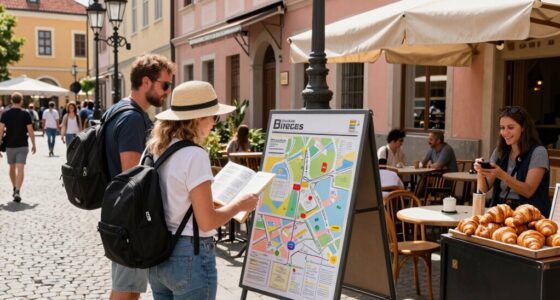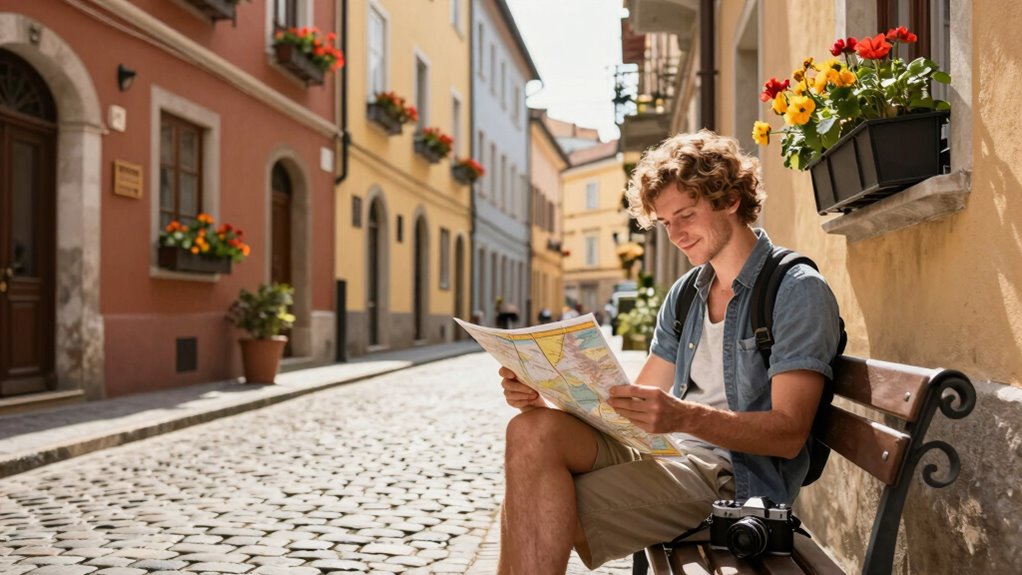

To avoid overplanning your Europe trip, focus on a few key destinations and spend more time exploring each one. Keep your schedule flexible to adapt to unexpected opportunities and avoid rushing through sights. Prioritize activities that truly interest you and embrace spontaneous adventures and relaxation. Remember, quality beats quantity, and a slower pace allows for richer cultural experiences. If you continue, you’ll discover more tips to create a balanced, enjoyable trip.

Get travel and outdoor gear delivered free with Prime
- Fast, free delivery on millions of items
- Prime Video, Amazon Music and more included
- Member-only deals all year
Key Takeaways
- Limit destinations to prevent fatigue and allow deeper exploration of each location.
- Prioritize activities aligned with personal interests over trying to see everything.
- Build a flexible itinerary to accommodate spontaneous adventures and unexpected opportunities.
- Allocate ample time in fewer places to enjoy local culture and avoid rushing.
- Incorporate downtime and relaxation to reduce stress and enhance overall enjoyment.

Planning your Europe trip can be exciting, but overdoing it often leads to stress and missed experiences. It’s tempting to pack every possible sightseeing spot into your schedule, but rushing through destinations can make your trip feel more exhausting than enjoyable. It’s a good idea to set realistic expectations and prioritize quality over quantity, especially when it comes to local culture and traditions. Instead, focus on creating a flexible itinerary that allows room for spontaneous adventures and relaxation. Think about what truly interests you—whether it’s exploring historic sites, tasting local cuisine, or simply soaking in the local atmosphere—and prioritize those activities. Remember, some of the best moments come from unexpected discoveries, so leave space for wandering around and following your curiosity.
To keep your plans manageable, limit the number of destinations you visit. Trying to see too many places in a short time leads to fatigue and leaves little room for meaningful experiences. Instead, spend more time in fewer locations, allowing you to appreciate the local culture and ambiance without feeling rushed. When it comes to local cuisine, don’t just stick to touristy restaurants. Seek out local markets, street food stalls, and family-run eateries for authentic flavors and a genuine taste of the culture. These places often offer memorable meals and insights into the region’s history and traditions, enriching your trip beyond just sightseeing. Incorporating responsible tourism practices can also help preserve the environment and support local communities during your travels.
While planning your itinerary, it’s also wise to contemplate travel insurance. Unexpected events such as illness, lost luggage, or travel delays can disrupt your plans, so having coverage provides peace of mind. It’s a small investment that can save you from significant stress, especially when steering unfamiliar environments. Make sure your insurance covers medical emergencies, trip cancellations, and theft, and keep a copy of your policy handy during your travels. Additionally, considering the importance of flexible travel plans can help you adapt to unforeseen circumstances and enhance your overall experience. Being aware of biodiversity and conservation efforts in the regions you visit can also add a meaningful layer to your trip, encouraging responsible tourism and appreciation for local ecosystems.
As an affiliate, we earn on qualifying purchases.
Frequently Asked Questions
How Do I Prioritize Must-See Attractions?
You prioritize must-see attractions by researching cultural insights and local experiences beforehand. Focus on a few top sites that truly interest you, and leave room for spontaneous discoveries. Talk to locals or read travel blogs for hidden gems, ensuring you’re engaging with authentic culture. Remember, it’s better to enjoy a handful of meaningful experiences than rush through everything. This way, your trip remains memorable and well-balanced.
What’s the Best Way to Leave Room for Spontaneous Activities?
Did you know that 70% of travelers regret over-scheduling their trips? To leave room for spontaneous activities, plan flexible days with open blocks of time. Seek out local hidden gems and cultural experiences instead of only popular sights. This way, you can explore unplanned opportunities, meet locals, and enjoy authentic moments. Embrace the unexpected, and your trip will feel more enriching and memorable.
How Many Days Should I Allocate to Each City?
You should allocate 2-4 days per city, depending on your travel budget and accommodation options. Larger cities like Paris or Rome deserve more time, while smaller towns might only need a day or two. Keep travel costs in mind—staying centrally can save money and time. Balance your schedule so you have enough time for spontaneous activities, but don’t overpack your itinerary, so you can truly enjoy each city.
How Can I Stay Flexible Without Missing Important Sights?
To stay flexible without missing important sights, you should set a balanced travel pace, allowing for spontaneous discoveries. Prioritize must-see attractions but leave room for local insights and recommendations from locals or fellow travelers. Keep your schedule adaptable, so you can explore unexpected gems or linger at places that catch your interest. This approach guarantees you experience the highlights while embracing the authentic, unplanned moments that make your trip memorable.
What Tools Help Manage a Flexible Itinerary?
Think of your itinerary as a flowing river, adapting around rocks and bends. Travel journaling helps you track your adventures, while local insights act as guiding stars, steering you toward authentic experiences. Digital tools like Google Maps and TripIt organize your plans, keeping flexibility intact. These tools become your compass, allowing spontaneous detours without losing sight of must-see sights, ensuring your journey remains vibrant, balanced, and full of surprises.
As an affiliate, we earn on qualifying purchases.
Conclusion
Remember, overplanning can turn your European adventure into a stressful checklist. Studies show that travelers who leave room for spontaneity report higher satisfaction and memorable experiences. So, give yourself permission to adapt your plans and embrace the unexpected. Sometimes, the best moments happen when you least expect them. Keep your itinerary flexible, and you’ll return home with stories that are truly your own—rich, authentic, and unforgettable. Enjoy your trip, and don’t forget to leave space for surprises!
flexible itinerary planner for travel
As an affiliate, we earn on qualifying purchases.
As an affiliate, we earn on qualifying purchases.
travel insurance for Europe trips
As an affiliate, we earn on qualifying purchases.
As an affiliate, we earn on qualifying purchases.
Halloween Picks
halloween
As an affiliate, we earn on qualifying purchases.