On Three Kings Day in Spain, enjoy vibrant parades, colorful floats, and lively street celebrations that mark the arrival of the Wise Men. Children leave shoes out to receive gifts and indulge in the traditional Roscón de Reyes cake, hidden with surprises. Many regions have unique customs like flamenco performances and folk dances. If you want to experience Spain’s rich religious and cultural traditions firsthand, there’s much more to explore about these festive festivities.
Key Takeaways
- The main celebration, Cabalgata de Reyes, occurs on January 5th with parades, floats, and candy throws across Spanish cities.
- Children leave shoes and treats for the Wise Men on January 5th, waking up to gifts and surprises on January 6th.
- The Roscón de Reyes, a ring-shaped sweet bread containing surprises, is a central tradition for sharing and festivities.
- Regional customs include flamenco performances, street markets, fireworks, and unique local parades reflecting Spain’s diversity.
- Attending early, dressing warmly, respecting traditions, and engaging with locals enhance the festive experience.
The Historical and Religious Roots of the Celebration

The celebration of Three Kings Day in Spain has deep religious and historical roots that trace back to Christian traditions. You learn that it commemorates the arrival of the Three Wise Men—Melchior, Caspar, and Balthazar—in Bethlehem, as described in biblical stories. The day marks the presentation of their gifts—gold, frankincense, and myrrh—to baby Jesus, symbolizing kingship, divinity, and death. Unlike Christmas, which is more commercialized, this day maintains its religious significance, especially in Catholic countries. Historically, it replaced older gift-giving customs, emphasizing the biblical story. Recognized as a bank holiday across Spain, it’s rooted in the Gospel of Matthew, which highlights the Wise Men’s journey and the importance of faith, tradition, and the biblical narrative in shaping this meaningful celebration.
Key Events and Parades Across Spain
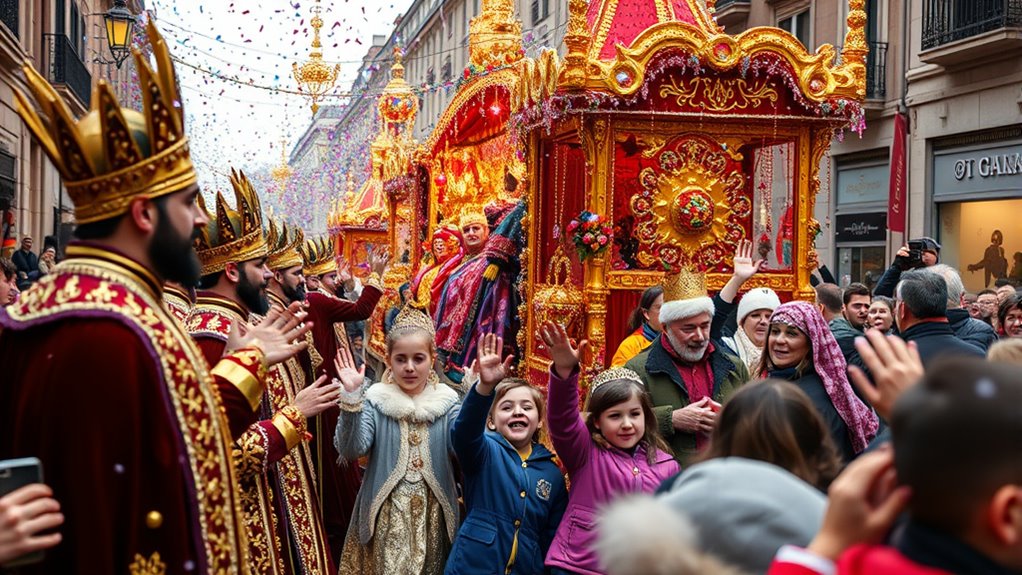
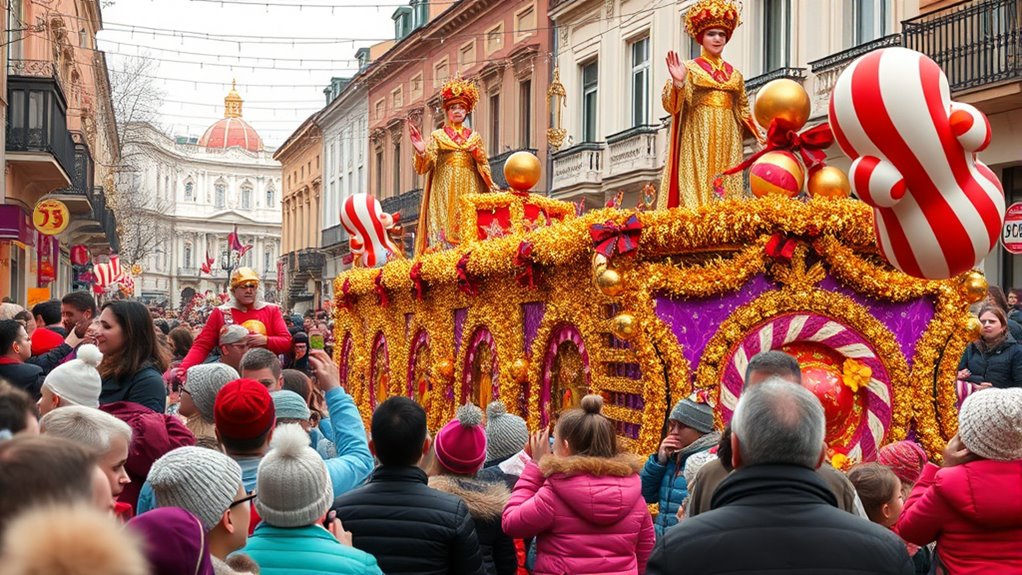
Across Spain, the celebration of Three Kings Day comes alive with vibrant parades and public events that draw large crowds each year. The main event, the Cabalgata de Reyes, takes place on January 5th in nearly every city and town. Spectacular floats representing each of the Three Wise Men parade through streets, with participants dressed as the Magi, riding on horseback, camels, or trucks. Crowds gather along the route to cheer, wave, and catch candies and small gifts thrown by the Kings. Smaller neighborhood parades also happen, ensuring widespread participation. In addition to these processions, towns host street performances, music, and fireworks, creating a festive atmosphere. These lively events offer an authentic experience, immersing you in Spain’s rich cultural traditions. Many of these celebrations feature traditional processions that highlight Spain’s historical and cultural heritage, providing insight into the country’s long-standing customs and festivities. The parades often include music, dance, and local customs that reflect regional identities, further enriching the cultural tapestry of Spain during this holiday. Additionally, these festivities often incorporate symbolic rituals that deepen the cultural significance of the event. Participating in or observing these events can also give visitors a sense of community, illustrating the importance of tradition in Spanish society.
How Children Prepare for the Arrival of the Wise Men
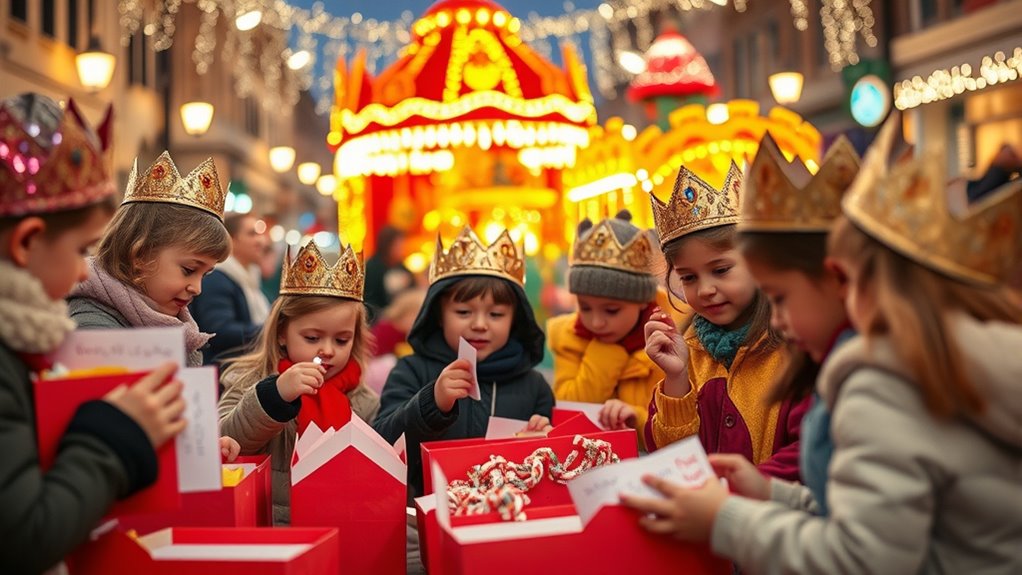
On the night before Three Kings Day, you’ll leave your shoes outside your door, hoping the Wise Men fill them with gifts. You also prepare food and drinks, like water, milk, or sweets, to welcome their journey. These simple acts build excitement and magic as you wait for the special morning. To enhance the experience, some families also include traditional decorations to create a festive atmosphere. Incorporating local cultural elements can further enrich the celebration and deepen the festive spirit. Understanding holiday customs helps preserve the tradition and adds meaning to the festivities. Additionally, many families pay attention to the color accuracy of their decorations to make the scene more vibrant and authentic.
Shoes Left Outside
Children in Spain prepare for the arrival of the Three Wise Men by carefully cleaning and placing their shoes outside their doors on the evening of January 5th. This simple act symbolizes their belief in the magic of the night and their hope for gifts. As they prepare, they focus on creating a welcoming space for the kings’ gifts to appear. Leaving shoes outside also represents trust in the tradition and the magic of the event. It’s a way for children to actively participate in the celebration, building anticipation and excitement. The ritual fosters a sense of community and shared tradition that strengthens family bonds. It’s a meaningful gesture that keeps the enchanting spirit of Three Kings Day alive for generations to come. Additionally, this tradition helps to discover home decor inspiration by encouraging families to personalize their spaces for the celebration. Moreover, this custom exemplifies the importance of cultural traditions in maintaining a connection to heritage and community. The act of leaving shoes outside exemplifies how community participation enhances the festive experience and reinforces cultural identity.
Offering Food and Drink
As part of the tradition, kids prepare food and drink to welcome the Three Wise Men on their journey. You’ll clean your shoes and leave them outside your door, ready for the kings to fill with gifts. Along with the shoes, families often leave water or milk for the wise men and their camels, along with some turrón, cookies, or sweets for the journey. Some even add a glass of wine or sherry for the kings. Straw or carrots are placed nearby to feed the camels. These rituals build excitement and magic, making children feel involved in the celebration. The preparation shows respect and gratitude, and it’s a heartfelt way for kids to participate in welcoming the kings into their homes. Additionally, these customs often reflect the importance of tradition in fostering a sense of community and cultural identity among families. Incorporating these practices highlights the deep-rooted cultural significance of the celebration, strengthening family bonds and cultural heritage. Recognizing the value of cultural heritage helps deepen appreciation for these meaningful customs. Moreover, creating memorable experiences with innovative ornaments can add a special touch to the tradition, making it even more memorable for children.
Preparing for Gifts
In the evening before Three Kings Day, kids take an active role in preparing for the arrival of the Wise Men by getting ready to receive their gifts. They clean their shoes and place them outside their doors, hoping the kings will fill them overnight. Families often leave water, milk, and sweets like turrón or cookies for the Wise Men and their camels. Straw or carrots are added to feed the camels during their journey. This ritual builds excitement and hope, fostering a sense of magic and anticipation. Additionally, some families incorporate festive traditions such as singing carols or sharing special meals to enhance the celebration atmosphere. Many families also use digital memory storage to preserve these special moments for future generations, ensuring that the joy and traditions are passed down. To make these memories more vivid, some also create video recordings of the celebrations. Recognizing the importance of energyLast, some families may also use energy-efficient lighting to illuminate their homes during the festivities.
Traditional Treats and Symbolic Foods
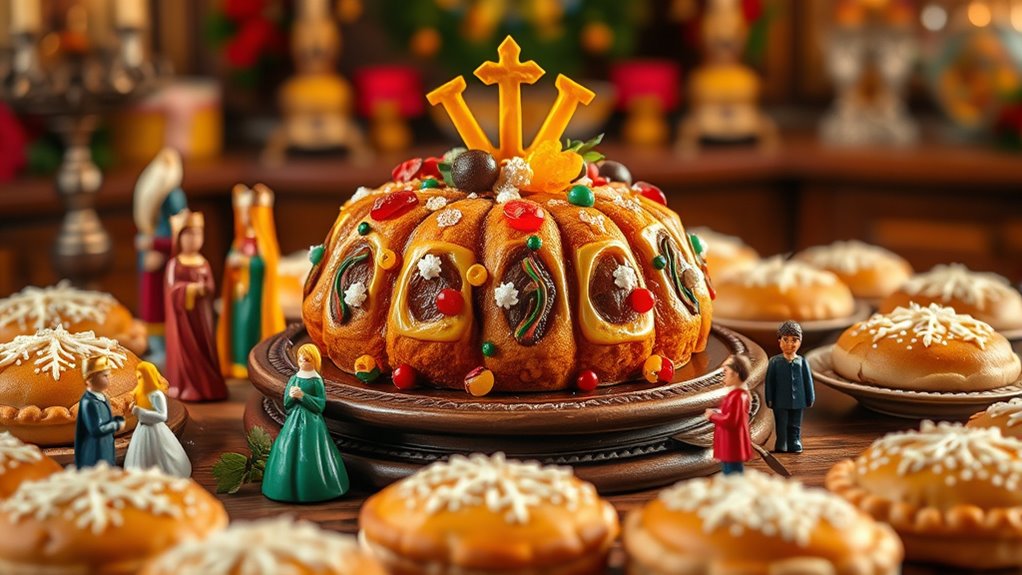
One of the most iconic treats during Three Kings Day in Spain is the Roscón de Reyes, a ring-shaped sweet bread decorated with colorful candied fruit that resembles jewels in the Magi’s crown. As you enjoy this delicious pastry, you’ll notice hidden surprises inside—a small figurine of a king and a dried bean. The person who finds the king figurine is crowned and celebrated as royalty for the day, while the one who finds the bean pays for the cake. Traditionally, families leave out water, milk, and turrón for the Kings and their camels, enhancing the festive atmosphere. Some also leave cookies, wine, or carrots for the animals. These foods symbolize traditional symbolism of abundance, hospitality, and the magic of the holiday, making the celebration truly special. Understanding large number conversions can also help in grasping the scale of celebrations or financial figures involved in such festivities.
The Significance of the Roscón De Reyes Cake
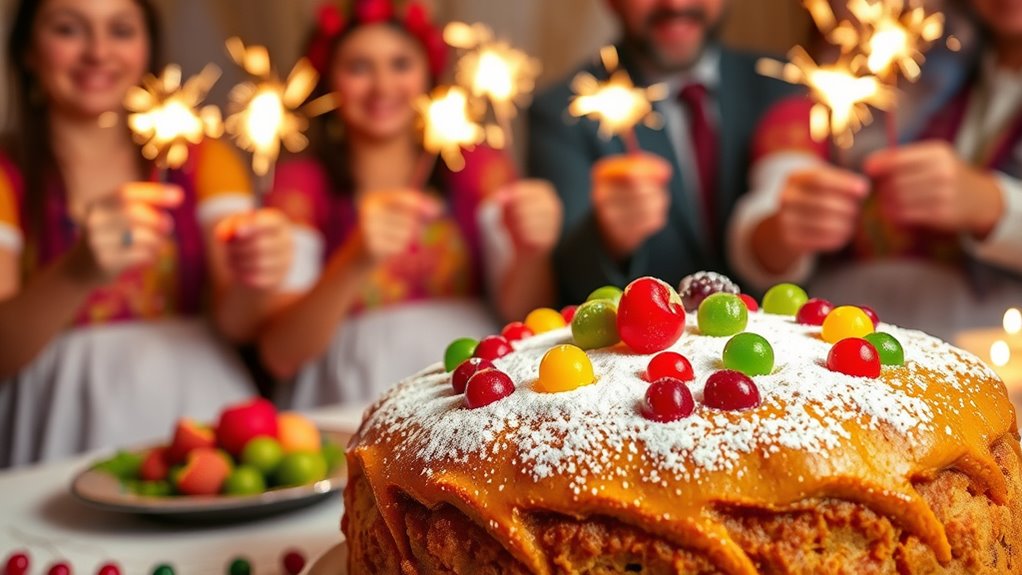
The Roscón de Reyes cake is rich with symbolism, especially the candied fruit that represents the jewels of the Magi’s crowns. Inside, surprises like a figurine and a bean add excitement and tradition to the celebration. These elements keep the magic alive and connect everyone to the deeper meaning of this special day.
Symbolism of Candied Fruit
Candied fruit on the Roscón de Reyes cake carries deep symbolic meaning, representing the jewels adorning the crowns of the Three Wise Men. These colorful pieces symbolize wealth, prosperity, and the richness of the gifts brought to baby Jesus. The vibrant hues reflect joy and celebration, adding a festive touch to the cake. Additionally, each fruit’s placement signifies the diversity and unity of the three kings’ journey. The candied fruit also reminds you of the sweetness and hope that come with this special day. As you enjoy the cake, remember that the jewels symbolize faith and the spiritual riches that come with the Epiphany. This tradition connects you to the historical and religious roots of the celebration, emphasizing the importance of generosity, faith, and community.
Surprises and Traditions
The Roscón de Reyes cake embodies more than just a sweet treat; it’s a centerpiece of the celebration filled with surprises that deepen the holiday’s meaning. As you enjoy its soft, ring-shaped bread decorated with candied fruit, you’ll notice the hidden figurine of a king and a dried bean inside. If you find the king, you’re crowned for the day, symbolizing honor and joy. But if the bean appears, you’re responsible for buying the next cake, adding an element of fun and anticipation. Sharing this cake with family and friends creates a lively, communal atmosphere, reinforcing the joy and tradition of the day. The surprises turn a simple dessert into a memorable moment of celebration and togetherness.
Celebrations on the Morning of January 6th
On the morning of January 6th, children eager wake up to discover whether their shoes have been filled with gifts by the Three Wise Men. This moment marks the culmination of days of anticipation and tradition. As you observe, you’ll see children excitedly check their shoes, often placed outside their doors or near the Christmas tree. The gifts inside symbolize the Wise Men’s visit, reinforcing the holiday’s religious and cultural significance. Families gather to enjoy breakfast, often featuring Roscón de Reyes and warm drinks. The tradition emphasizes kindness, patience, and hope, creating lasting memories.
Children eagerly find gifts in their shoes, celebrating tradition, faith, and joy on January 6th.
- Reinforces faith and tradition in the community
- Celebrates the spirit of giving and compassion
- Connects children to cultural history
- Brings families together in joyful anticipation
- Reminds everyone of the holiday’s deeper meaning
Unique Regional Customs and Festivities
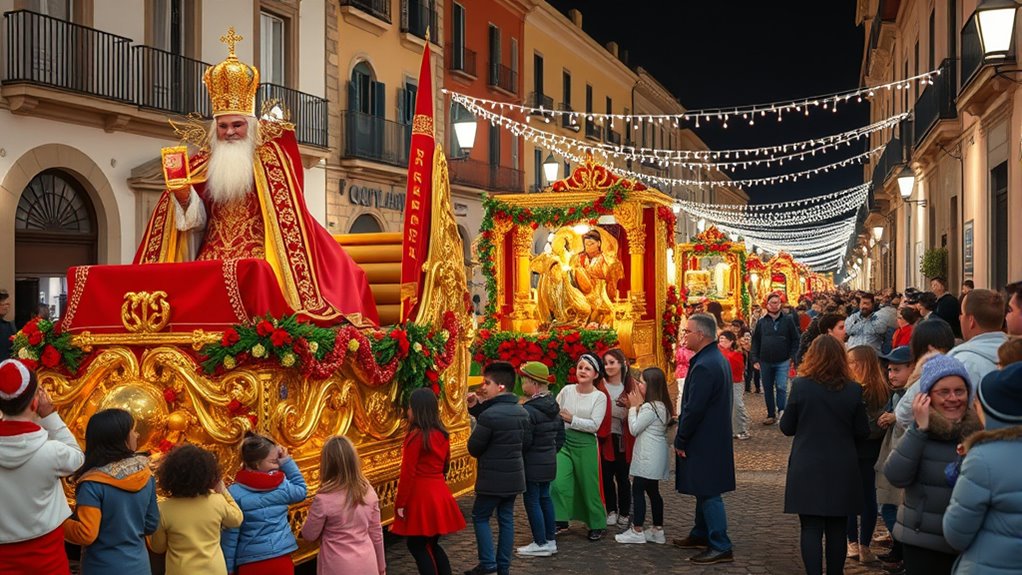
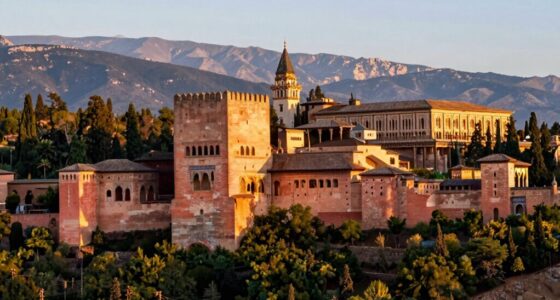
Spain’s diverse regions add vibrant and distinctive flair to Three Kings Day celebrations, making each area’s customs unique. In Granada, the city center comes alive with elaborate decorations around the cathedral and lively flamenco performances in the evening. Nava del Rey in Valladolid hosts the Fiesta de Los Pastores, where local shepherds lead a procession to a crib, illuminating the town with the Star of Nava del Rey. In Catalonia, you’ll find the “Cavalcada de Reis,” a colorful parade featuring floats and music, while in Andalucía, towns often include traditional folk dances and vibrant street markets. These regional customs reflect local history and traditions, offering you an authentic and immersive experience. Each area’s festivities highlight Spain’s rich cultural tapestry during this beloved holiday.
Tips for Visitors Attending the Festivities
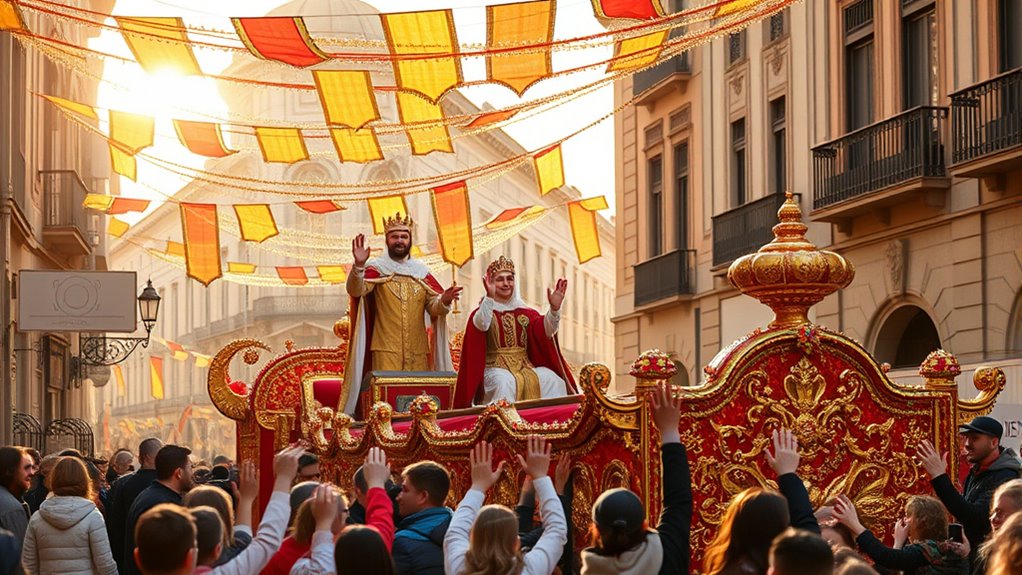
To make the most of your experience during Three Kings Day celebrations, plan ahead by researching local parade routes and event schedules, as festivities can vary considerably between regions. Arrive early to secure a good spot along the parade routes, especially in popular cities like Madrid or Granada. Wear comfortable shoes and dress warmly, since you’ll be outdoors for hours. Respect local customs and join in the joyful spirit by participating in traditions like shoe placement or sampling the Roscón de Reyes. Keep a close eye on children’s safety, as large crowds can be overwhelming. Finally, embrace the regional differences to fully enjoy the cultural richness and authentic atmosphere of the celebrations.
- Understand the local parade schedule to catch key moments
- Dress for unpredictable weather and large crowds
- Respect traditions, even if they’re unfamiliar
- Engage with locals to deepen your experience
- Capture moments to remember the vibrant festivities
Frequently Asked Questions
How Do Different Regions in Spain Customize Their Three Kings Day Celebrations?
You’ll notice that regions in Spain personalize their Three Kings Day celebrations through unique traditions. In Granada, expect elaborate city center decorations and flamenco performances, while Nava del Rey hosts a lively procession called Fiesta de Los Pastores. Some areas feature special illuminations, local parades, or unique food customs. These regional touches make the festivities vibrant and diverse, giving you a rich cultural experience wherever you go during this special holiday.
Are There Any Specific Safety Tips for Attending the Parades and Festivities?
When attending parades and festivities, stay alert and keep an eye on your belongings to avoid pickpocketing. Arrive early to secure a good viewing spot and stay hydrated, especially if it’s crowded or warm. Follow local safety instructions, and be cautious around large floats and crowds to prevent accidents. Keep children close, and enjoy the colorful celebrations responsibly, respecting the traditions and community spirit.
What Are the Historical Origins of the Gifts Brought by the Wise Men?
You might picture the Wise Men as ancient gift-givers, bringing treasures to honor a newborn king. Their gifts—gold, frankincense, and myrrh—symbolize wealth, divinity, and mortality. Historically, these offerings reflect the deep cultural roots of the holiday, representing royal wealth, spiritual significance, and sacrifice. This tradition emphasizes the importance of giving meaningful presents, connecting you to a centuries-old act of reverence and celebration that still resonates today.
How Do Local Communities Incorporate Their Cultural Traditions Into the Celebration?
You see local communities incorporate their traditions through vibrant parades, like the grand Cabalgata de Reyes, featuring elaborate floats and costumes. You’ll notice children leaving shoes and treats for the Wise Men, creating a magical atmosphere. Many regions also host unique events such as flamenco performances in Granada or the Fiesta de Los Pastores in Nava del Rey. These customs deepen your experience, showcasing Spain’s rich cultural heritage during this festive season.
Can Visitors Participate in the Candlelit Processions or Local Customs?
Imagine stepping into a scene straight out of a fairy tale, with flickering candles guiding your way. You can definitely join in the candlelit processions or local customs. As a participant, you’ll walk alongside locals, feeling the warmth of community and tradition. Wear comfortable clothes, follow the crowd, and embrace the magic. Your presence helps preserve this cherished celebration, making it even more special for everyone involved.
Conclusion
As you immerse yourself in Spain’s Three Kings Day, remember it’s like stepping into a storybook where history and tradition dance together. Embrace the vibrant parades, indulge in sweet Roscón de Reyes, and witness children’s joy as they await the Wise Men’s arrival. Just as the stars guided travelers long ago, let this celebration illuminate your journey, leaving you with memories as timeless as the tales of old.