
If you seek a vibrant city with a strong economy, lively festivals, and extensive infrastructure, Seville is your best choice—it offers diverse cultural experiences and urban amenities. However, if you’re drawn to rich history, stunning architecture, and natural beauty with a more relaxed atmosphere, Granada’s charm and closeness to the Sierra Nevada make it ideal. To decide which suits your preferences best, exploring more about their highlights will help you make an informed choice.
Key Takeaways
- Choose Seville for a vibrant, diverse city with extensive cultural festivals, modern infrastructure, and a dynamic economy.
- Prioritize Granada for a historic, intimate experience centered around the Alhambra and access to outdoor mountain activities.
- Seville offers a larger urban environment with comprehensive public transit and a growing digital sector.
- Granada provides a relaxed atmosphere with rich Islamic and Christian heritage, ideal for history and nature enthusiasts.
- Consider Seville if you seek a bustling metropolis; opt for Granada for cultural depth and scenic outdoor pursuits.

Pocket Rough Guide Seville: Travel Guide with eBook
As an affiliate, we earn on qualifying purchases.
As an affiliate, we earn on qualifying purchases.
Population and Urban Growth Patterns
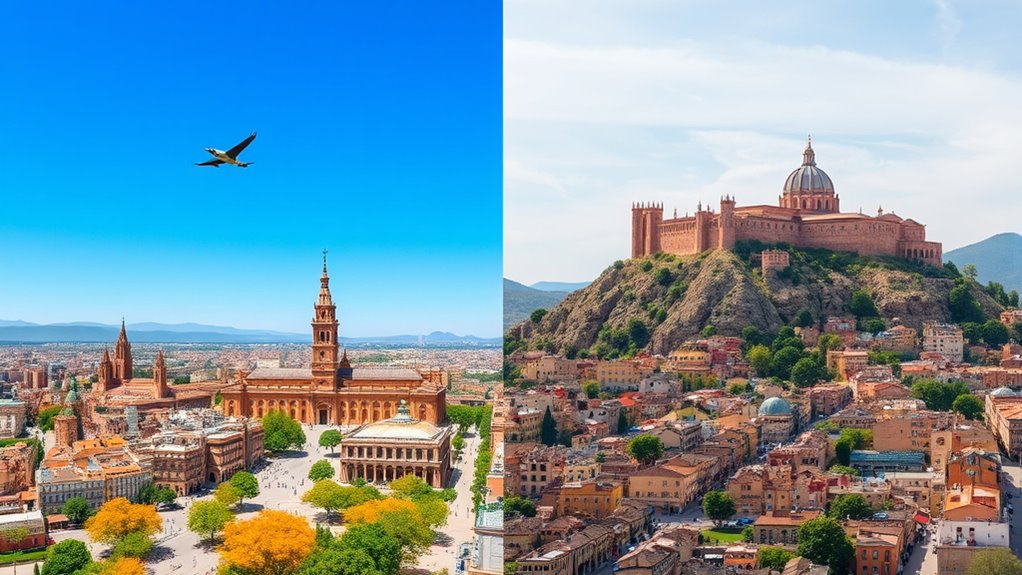
Seville has experienced steady population growth in recent years, with its city municipality reaching approximately 687,500 residents in 2024. This growth reflects ongoing urban expansion, though it’s becoming more constrained by physical boundaries. You’ll notice that Seville’s population has increased by over 10% since 2001, narrowing the gap with larger cities like Zaragoza. The metropolitan area, supporting nearly 1.57 million people across 46 municipalities, continues to expand, emphasizing Seville’s role as a regional hub. Additionally, the city’s urban planning strategies aim to accommodate this growth sustainably. This approach highlights the importance of sustainable development in managing urban growth effectively. Furthermore, Seville’s population density is increasing, which may influence future infrastructure planning. To address these challenges, Seville is investing in smart growth initiatives that promote efficient land use and transportation options. Moreover, Seville’s focus on infrastructure resilience ensures the city can adapt to ongoing urban challenges. Conversely, Granada’s population has remained relatively stable, with slight declines in recent decades, and its city hosts about 233,500 residents. While Granada’s surrounding towns are smaller, they contribute to a more dispersed, less densely populated urban pattern compared to Seville’s concentrated growth.

Granada Travel Guide: The Alhambra, Sacromonte and Moorish Andalucía (Spain Travel Guides)
As an affiliate, we earn on qualifying purchases.
As an affiliate, we earn on qualifying purchases.
Economic Strengths and Main Industries
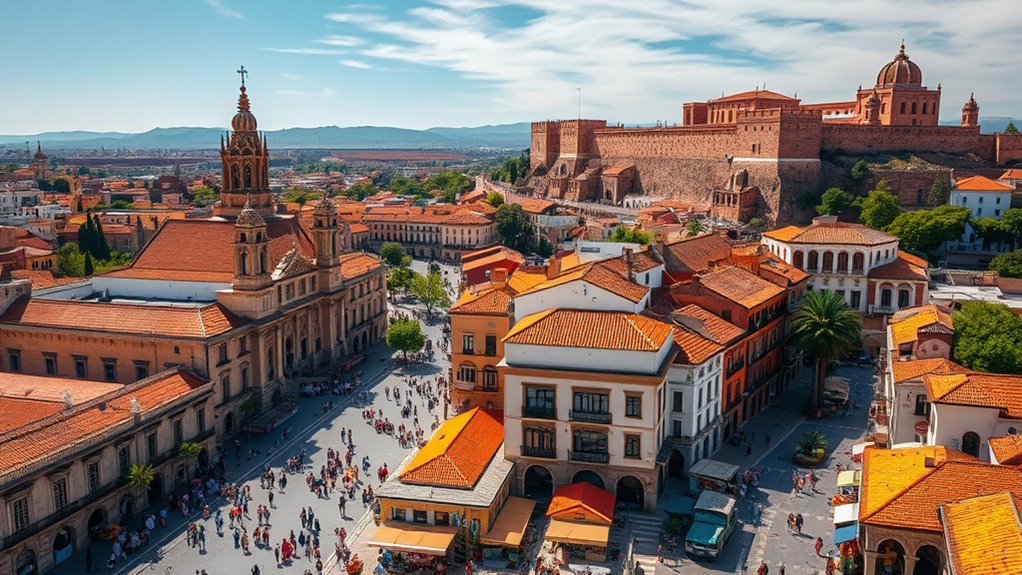
While Seville boasts a diverse and robust economy, its main strengths lie in its significant contribution to Andalusia’s GDP and its thriving sectors. You’ll find that tourism, logistics, and services dominate, supported by its strategic location and well-developed infrastructure. The city’s port and transportation network facilitate trade and commerce, making Seville a key economic hub in southern Spain. Additionally, the region has a growing technology sector and a vibrant financial industry. In contrast, Granada’s economy relies heavily on tourism, driven by its historic sites like the Alhambra, and its university-driven innovation. While Granada benefits from its cultural appeal, Seville’s broader industrial base and economic diversity make it a more influential economic force in the region. Furthermore, emerging digital assets and blockchain technologies are starting to influence regional industries, offering new opportunities for economic growth, especially in fostering innovative financial solutions. Recent developments in regional economic strategies are also contributing to sustained growth and diversification.
Andalusia city tour packages
As an affiliate, we earn on qualifying purchases.
As an affiliate, we earn on qualifying purchases.
Key Historical and Cultural Landmarks
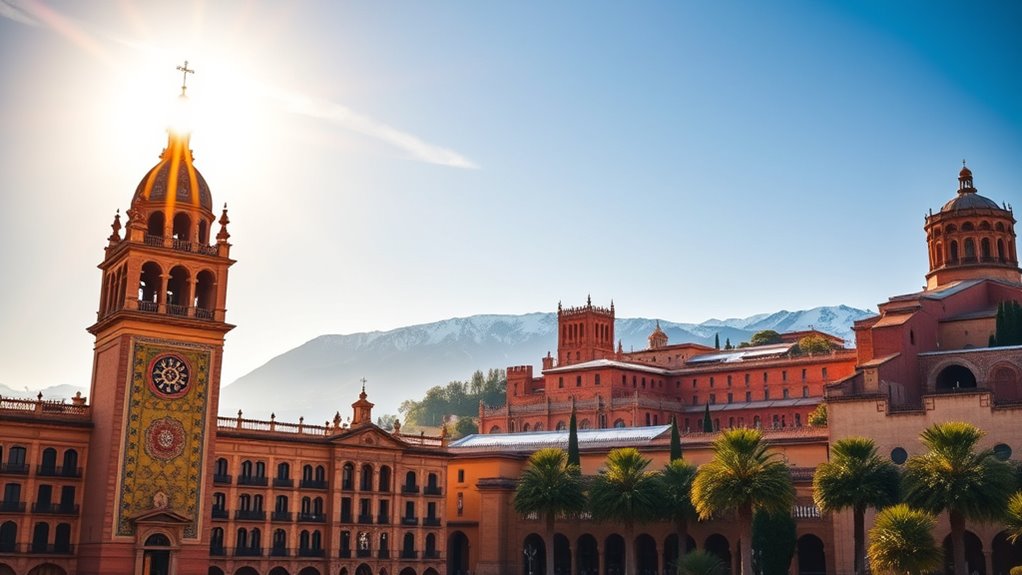
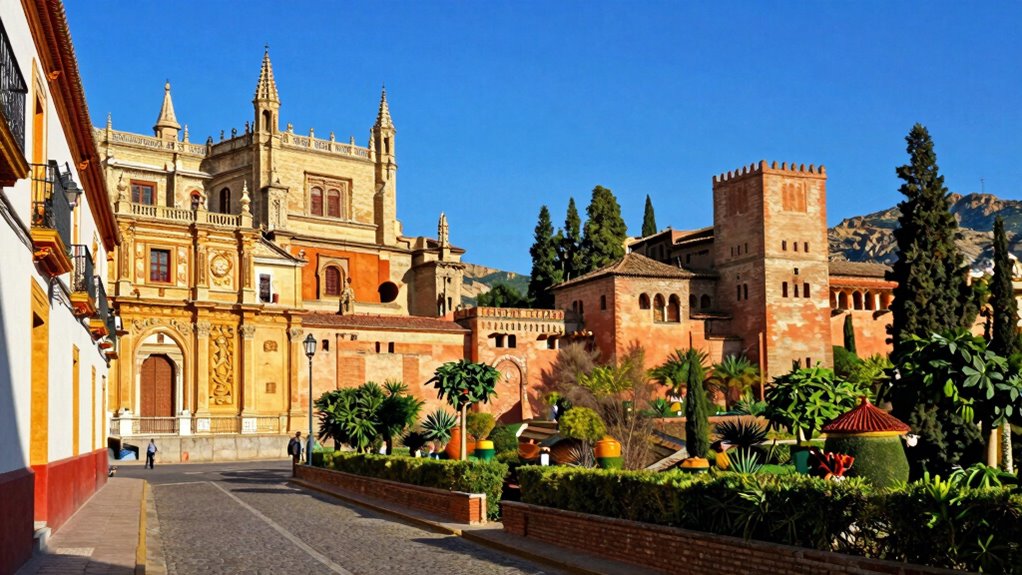
You can’t visit Seville or Granada without noticing their iconic heritage sites and architectural marvels. Seville’s Alcázar and Cathedral highlight its rich history, while Granada’s Alhambra stands as a stunning example of Moorish architecture. These landmarks define each city’s unique cultural identity and draw travelers from around the world.
Iconic Heritage Sites
Both Seville and Granada boast iconic heritage sites that define their cultural landscapes and attract visitors from around the world. In Seville, the stunning Seville Cathedral, the largest Gothic cathedral globally, houses Christopher Columbus’s tomb and features the impressive Giralda tower. The Alcázar of Seville stands out with its stunning Moorish architecture and lush gardens, offering a glimpse into Spain’s diverse history. These sites are more than tourist attractions; they are symbols of their cities’ rich, layered histories. Visiting either city means immersing yourself in centuries of cultural influence, marveling at architectural mastery, and experiencing Spain’s diverse heritage firsthand. Additionally, both cities have invested in preserving historic sites, ensuring that future generations can continue to appreciate their cultural significance. Furthermore, ongoing conservation efforts highlight the importance of cultural preservation in maintaining these architectural masterpieces for generations to come. Moreover, engaging in heritage conservation projects can deepen visitors’ understanding of the historical context behind these landmarks.
Architectural Marvels
Seville and Granada are renowned for their architectural marvels that showcase centuries of cultural influences and craftsmanship. In Seville, you’ll admire the stunning Seville Cathedral, the largest Gothic cathedral in the world, and the Alcázar with its intricate Mudéjar design. Granada’s highlight is the Alhambra, a breathtaking fortress blending Islamic, Christian, and Renaissance styles. These landmarks reflect their rich histories and craftsmanship. Here’s a quick comparison:
| Landmark | Style | Significance |
|---|---|---|
| Seville Cathedral | Gothic | Largest cathedral in the world |
| Alcázar | Mudéjar/Renaissance | Royal palace with intricate details |
| Alhambra | Islamic/Renaissance | Fortress symbol of Moorish heritage |
| Giralda Tower | Moorish/Christian | Iconic bell tower of Seville |
| General Archive | Renaissance | UNESCO World Heritage Site |
Both cities offer unique historical sights that vividly bring their past to life. Additionally, the preservation and architectural styles of these landmarks provide valuable insights into the diverse cultural influences that shaped Andalusia. Exploring these sites allows visitors to experience the cultural diversity that defines Andalusia’s historical identity.
Furthermore, understanding the historical significance of each site enriches the visitor experience and highlights the enduring legacy of these architectural masterpieces.

2 Pack European Plug Adapter USB C, TESSAN US to Europe Adapter 4 Outlets 3 USB Charger, Type C International Power Adaptor to Italy Spain France Portugal Iceland Germany, Europe Travel Essentials
Adapter for Europe Plug: Europe plug adapter works in European countries such as Italy, Spain, France, Portugal, Greece,…
As an affiliate, we earn on qualifying purchases.
As an affiliate, we earn on qualifying purchases.
Tourism Opportunities and Natural Attractions
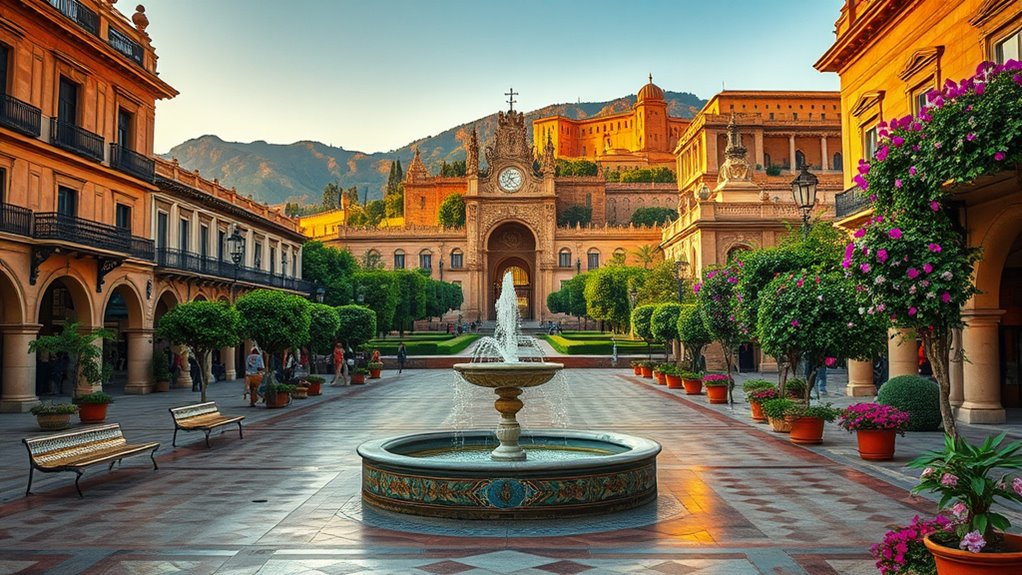
While Seville and Granada each boast unique natural and cultural attractions, they both draw visitors with their rich tourism opportunities. In Seville, you can explore the lush Parque de María Luisa, stroll along the Guadalquivir River, or enjoy the vibrant Plaza de España. The city’s gardens, flamenco performances, and lively markets offer authentic Andalusian experiences. To enhance your visit, consider exploring local traditions that define the region’s cultural identity. Granada, on the other hand, features the breathtaking Sierra Nevada mountains, perfect for hiking and skiing. The Alhambra’s stunning gardens and panoramic views provide a natural and historical spectacle. Nearby, you can visit the charming Albaicín district or relax in the countryside. Both cities serve as gateways to natural beauty, offering diverse outdoor activities and scenic landscapes that cater to adventure lovers and history enthusiasts alike. Additionally, Mad Tasting highlights unique local flavors and culinary traditions that enrich the cultural tapestry of both destinations.
Educational and Academic Institutions
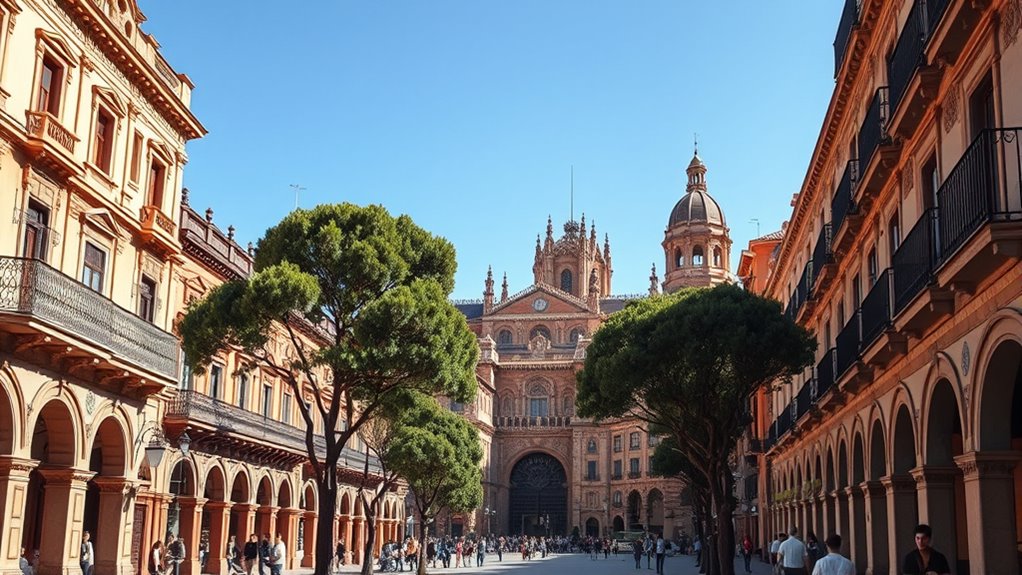
Home to a renowned university, Granada’s educational landscape centers around the University of Granada, one of Spain’s oldest and most prestigious institutions, attracting students from all over the world. This university offers a wide range of programs, fostering a vibrant academic community and cultural exchange. The city’s focus on education supports a lively student atmosphere, with numerous research centers and cultural activities. In contrast, Seville boasts several universities, including the University of Seville, which has a strong reputation in arts, sciences, and law. While Seville’s academic scene is broad, Granada’s university-driven environment creates a more intimate, student-centered experience. If education and academic prestige are priorities, Granada’s institutions provide a compelling reason to think about it as your destination. Additionally, Granada’s emphasis on educational excellence and its rich academic tradition make it a particularly attractive choice for students seeking a comprehensive learning experience.
Infrastructure and Transportation Networks

Both cities boast well-developed transportation networks that support their economic activities and connectivity. Seville features an extensive public transit system, including a modern metro, bus network, and high-speed AVE train station, connecting it efficiently to Madrid, Córdoba, and beyond. Its road infrastructure facilitates easy movement within the city and to surrounding regions. Granada also offers solid transport options, with a reliable bus network and a central train station linking it to major cities like Madrid and Málaga. The city’s proximity to the Sierra Nevada makes road travel essential for tourism. While Seville’s infrastructure is more all-encompassing, Granada’s transportation is well-suited for both daily commuting and tourism. Both cities prioritize accessibility, but Seville’s larger scale ensures a more extensive network overall.
Quality of Life and Local Amenities
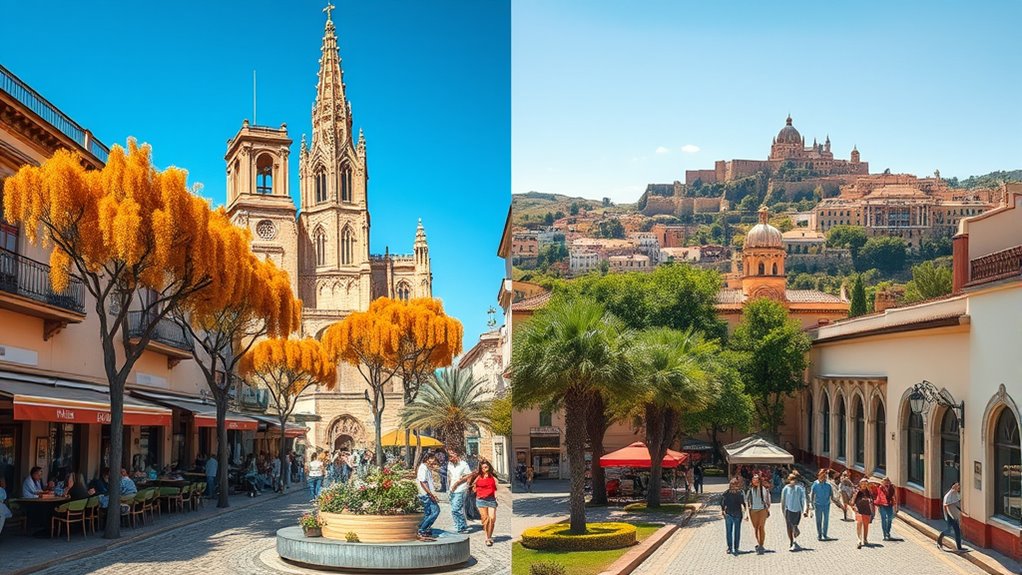
You’ll find that both Seville and Granada offer vibrant cultural scenes and lively events that enrich daily life. Green spaces and recreational options are plentiful in Seville’s parks and riverfront areas, while Granada’s proximity to the Sierra Nevada provides outdoor adventures. Reliable local services and well-developed infrastructure support residents in both cities, but the scale and variety differ markedly. Additionally, both cities host diverse outdoor activities, catering to various interests and enhancing residents’ quality of life. For those seeking wellness options, Seville’s availability of sauna and cold-plunge systems adds an extra dimension of relaxation and health benefits to urban living. Moreover, the public transportation systems in each city facilitate convenient access to these amenities, further improving daily convenience. Modern smart appliances in homes are increasingly common, making everyday tasks more efficient and comfortable for residents. Increased urban amenities contribute to a more convenient and enjoyable lifestyle in both locations.
Cultural Activities and Events
Seville and Granada both offer vibrant cultural scenes that considerably enhance residents’ quality of life and provide a wealth of local amenities. In Seville, you’ll enjoy world-famous festivals like Feria de Abril and Semana Santa, along with a lively flamenco tradition and numerous museums. The city’s historic sites, such as the Alcázar and Cathedral, host regular cultural events. Granada’s rich heritage shines through the Alhambra’s concerts and exhibitions, along with lively festivals like the International Festival of Music and Dance. The university’s influence means there’s a constant stream of lectures, theater performances, and art exhibitions. Both cities foster a thriving cultural atmosphere, but Seville’s larger scale offers a broader variety of events, while Granada’s intimate setting provides a unique, deeply rooted local vibe.
Green Spaces and Recreation
While the vibrant cultural scene in Seville and Granada enhances residents’ lifestyles, green spaces and recreational areas play a pivotal role in determining quality of life. Seville offers expansive parks like María Luisa Park and the Gardens of the Alcázar, where you can relax or enjoy outdoor activities. The city also features the Guadalquivir River promenade, perfect for walking or cycling. Granada, on the other hand, boasts the lush Parque de las Ciencias and the Sierra Nevada foothills, ideal for hiking, mountain biking, and nature escapes. Both cities promote outdoor recreation, but Seville’s parks provide more urban green space, while Granada’s natural surroundings offer quick access to mountain adventures. Your choice depends on whether you prefer city-centered parks or mountain outdoor activities.
Local Services and Infrastructure
Both Seville and Granada offer a range of local services and infrastructure that considerably impact your quality of life. Seville boasts a well-developed public transport system, including buses, trams, and bike-sharing schemes, making commuting easy. Its healthcare facilities are extensive, with multiple hospitals and specialized clinics. Education is strong, with numerous schools and universities, particularly the University of Seville. Granada features similarly good services, especially in healthcare and education, thanks to its university-driven economy. Public transport is reliable, centered around buses and taxis. Both cities provide essential amenities like shopping centers, cultural venues, and sports facilities. While Seville’s infrastructure supports its larger population, Granada’s smaller scale offers a more relaxed pace. Your choice depends on whether you prioritize extensive services or a quieter, more manageable environment.
Regional Significance and Connectivity
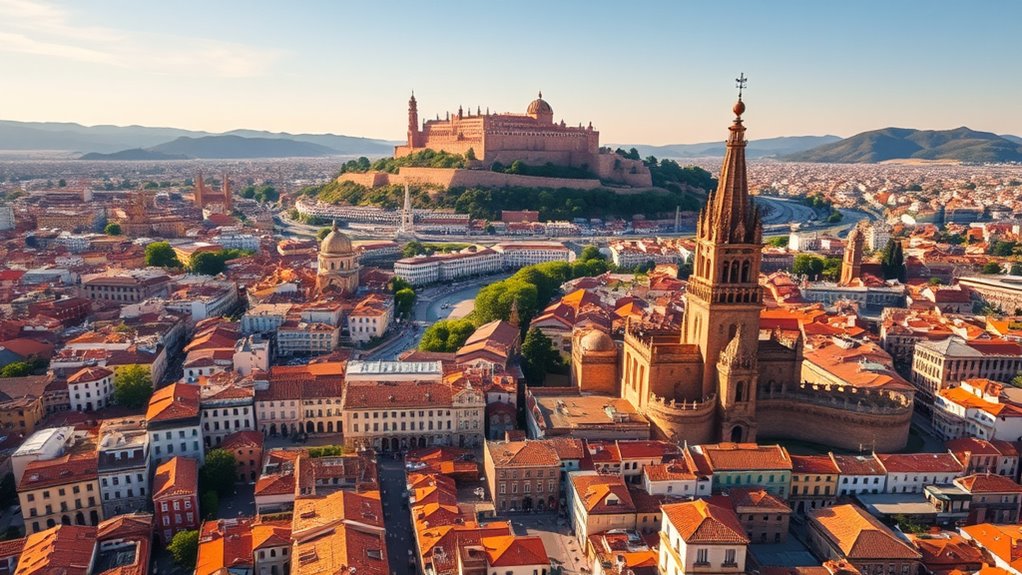
Seville plays a crucial role as a regional hub in Andalusia, connecting the province’s economic, cultural, and transportation networks. Its central location links major highways, rail lines, and the Andalucían high-speed train (AVE), making travel across southern Spain efficient. As the largest city in Andalusia, Seville hosts the region’s primary economic activities, supporting surrounding municipalities and facilitating trade. Its strategic position also enhances cultural exchange, with numerous festivals and historical sites attracting visitors from across Spain and beyond. Granada, while known for its university and mountain access, doesn’t match Seville’s extensive regional connectivity. If you’re looking for a city with broad transportation links and economic influence, Seville’s regional significance makes it the more connected choice.
Suitability for Different Types of Visitors
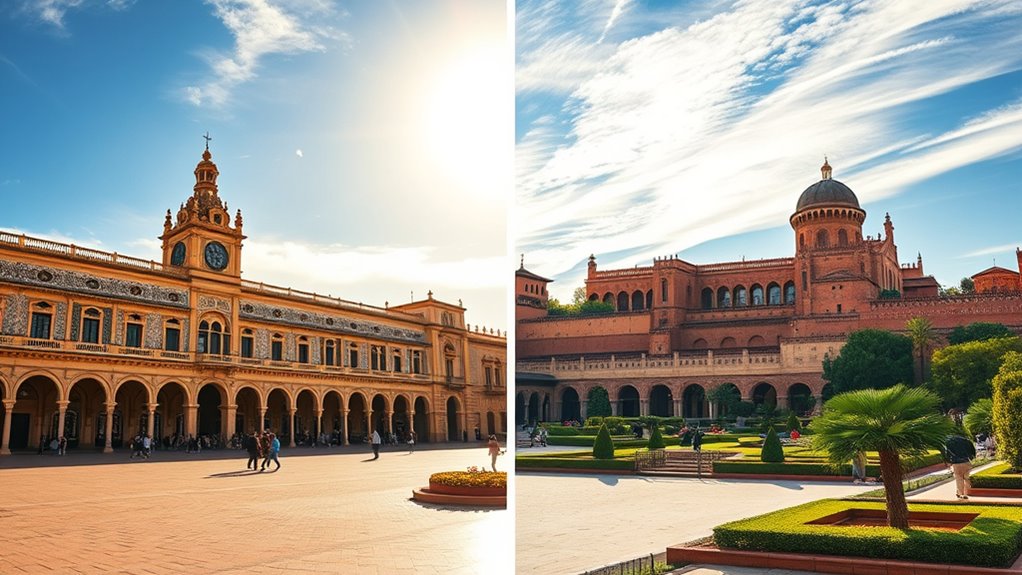
Seville’s rich historical and cultural scene makes it a perfect destination for history buffs, art lovers, and those interested in vibrant festivals. If you love exploring UNESCO sites, the Alcázar and Seville Cathedral will captivate you. Art enthusiasts can enjoy the impressive Plaza de España and contemporary galleries. Festival-goers will appreciate the lively Feria de Abril and Semana Santa processions. Seville’s lively atmosphere also appeals to nightlife seekers and foodies enthusiastic to indulge in Andalusian cuisine. Conversely, Granada suits travelers passionate about history and natural beauty, especially if you’re intrigued by the Alhambra’s Moorish architecture. Outdoor lovers will enjoy the Sierra Nevada mountains and hiking trails. Granada’s relaxed vibe is ideal for those seeking a quieter, culturally rich experience intertwined with nature.
Frequently Asked Questions
How Do Nightlife and Entertainment Options Compare Between Seville and Granada?
You’ll find Seville’s nightlife more vibrant, with lively bars, flamenco clubs, and bustling plazas that stay active until late. Granada offers a more relaxed scene, with charming tapas bars and cultural events centered around its historic sites. If you seek energetic evenings and diverse entertainment, Seville’s your best choice. For a cozy, authentic experience, Granada’s intimate venues provide a perfect atmosphere for unwinding after daytime sightseeing.
Which City Offers Better Options for Outdoor Activities and Recreation?
You’ll find Granada offers better options for outdoor activities and recreation. The city is surrounded by the Sierra Nevada mountains, perfect for skiing, hiking, and mountain biking. Its parks and outdoor spaces, like the Generalife Gardens, provide relaxing spots. Seville also has parks and river activities, but Granada’s proximity to nature and mountain adventures make it ideal if outdoor recreation is your priority.
How Do Healthcare Facilities and Services Differ in Seville and Granada?
You’ll find Seville offers a wider range of healthcare facilities, including major hospitals, specialized clinics, and advanced medical services due to its larger population and economic strength. Granada has quality healthcare too, but its smaller size means fewer specialized options. If access to cutting-edge treatments and all-encompassing medical services is important to you, Seville’s healthcare system provides more extensive and diverse options.
What Are the Transportation Options for Day Trips From Each City?
You can hop on high-speed trains from Seville or Granada, making day trips effortless. Seville’s AVE train connects to Madrid and Cordoba in just a few hours, while Granada’s trains take you to nearby attractions or even Madrid, though less frequently. Buses are available from both cities for more budget-friendly options. So, whether you prefer swift trains or scenic bus rides, day-tripping from either city is a breeze—if you don’t mind the crowds.
Which City Has More Affordable Housing and Living Costs?
You’ll find that Granada offers more affordable housing and living costs than Seville. In Granada, rent and daily expenses tend to be lower, making it an attractive option if you’re on a budget. Seville’s popularity and larger size drive up prices, especially in central areas. If affordability is your priority, Granada provides a more budget-friendly environment while still offering rich history and scenic beauty.
Conclusion
Ultimately, choosing between Seville and Granada depends on what you seek. If you’re after vibrant history and lively streets, Seville’s the place to be. But if you prefer a mix of stunning scenery and rich culture, Granada won’t disappoint. Both cities offer unique charms, so it’s really a matter of finding your perfect fit. Remember, you can’t judge a book by its cover—sometimes, the best adventures happen when you explore both and see where your heart leads.