
In European museums and churches, you’ll find strict quiet rules to preserve sacred atmospheres and show respect. Visitors are expected to speak softly, avoid flash photography, and follow signage urging low voices and silent phone use. Acoustic treatments and soundproofing help maintain calm environments. Policies prioritize contemplation and accessibility while balancing tourism. If you keep exploring, you’ll discover how these quiet rules are carefully managed to protect sacred spaces and enhance your experience.
Key Takeaways
- Museums and churches in Europe typically enforce silence or low voices near artworks and sacred spaces to preserve reverence and contemplation.
- Signage, staff, and acoustical treatments promote quiet behavior and reduce ambient noise, ensuring a peaceful environment.
- Photography without flash is often encouraged or restricted, with designated zones for capturing images respectfully.
- Specific rules during religious services mandate subdued conduct, prayer, and minimal disturbances.
- Accessibility measures like sensory-friendly hours and designated quiet zones support diverse visitors while maintaining tranquility.
Top picks for "cultural quiet museum"
Open Amazon search results for this keyword.
As an affiliate, we earn on qualifying purchases.
Norms of Silence and Quiet Behavior in Cultural Spaces
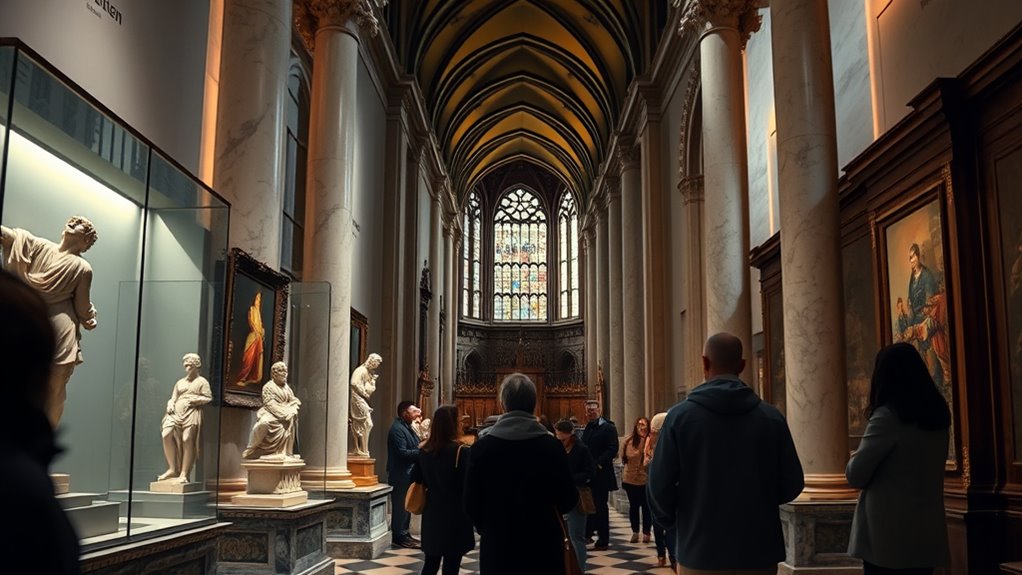
In European museums and churches, maintaining silence and quiet behavior is a fundamental expectation that shapes visitor conduct. You’re expected to speak softly near artworks and sacred spaces to avoid disturbing others’ reflection or prayer. Signage and staff reinforce these norms, reminding visitors to keep voices low and phones muted. Photography without flash is often preferred to protect the ambiance and preserve sensitive collections. In churches, subdued behavior during religious services and prayer is essential, with notices and stewards ensuring respectful silence. These norms foster a contemplative atmosphere, allowing everyone to engage with the space meaningfully. Additionally, cultural etiquette plays a key role in maintaining the respectful environment expected in these historic and spiritual locations. Recognizing the quiet rules helps visitors appreciate the importance of preserving the solemn and reflective environment integral to these settings. Understanding the behavioral expectations ensures respectful and enjoyable visits for all, especially considering the silent etiquette that is a hallmark of these cultural spaces. Moreover, adhering to respectful conduct helps maintain the integrity of these sacred and historic environments for future visitors.
Institutional Measures to Promote Calm and Low Noise Levels
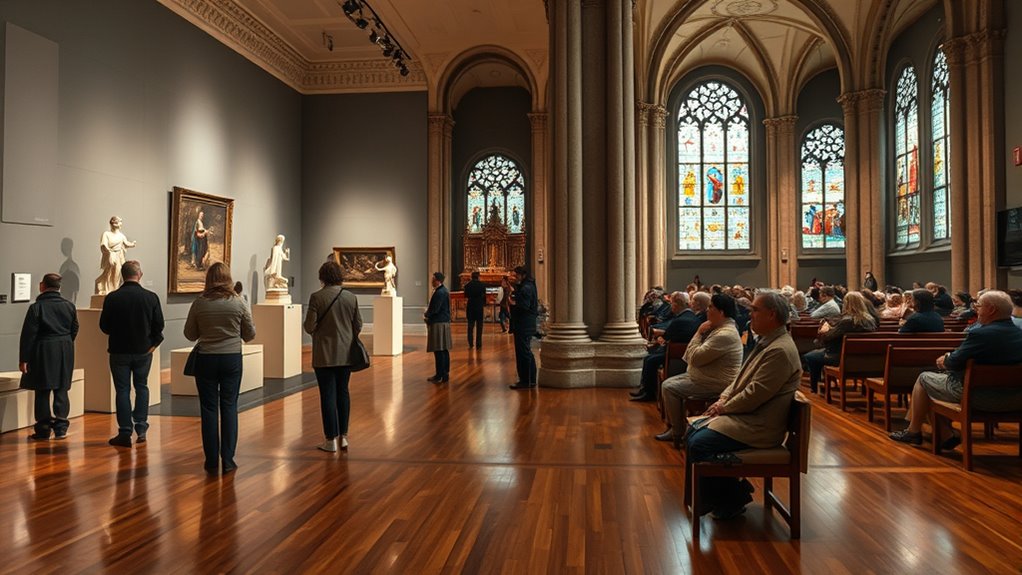
Museums and churches implement a variety of institutional measures to maintain calm and minimize noise levels. You’ll notice scheduled “Quiet Hours” or sensory-friendly sessions designed to accommodate neurodiverse visitors and reduce stimulation. Sound zoning and directional audio help localize sounds, preventing spillover into quiet spaces. Signage and visitor codes of conduct clearly request low voices and silent phone use, reinforced by staff and stewards who remind visitors of these rules. Technical solutions, such as motion-triggered audio and headphone guides, keep sound confined to specific exhibits. Acoustic treatments like absorption panels and soft finishes are integrated into spaces to dampen ambient noise. Additionally, soundproofing techniques are employed in some venues to further enhance acoustic comfort, creating a more peaceful environment for visitors. Implementing noise mitigation strategies helps preserve the cultural and spiritual integrity of these spaces while ensuring a comfortable experience. Incorporating sound absorption materials can significantly improve room acoustics and reduce echo, further promoting tranquility. These measures aim to balance accessibility, preserve the tranquil atmosphere, and ensure a respectful environment for all visitors.
Legal and Political Influences on Silence Policies
You should consider how funding constraints can lead institutions to silence controversial topics to avoid risking financial support. Political sensitivities often influence policies, with censorship used to prevent issues that might offend or polarize visitors. Legal frameworks further shape silence practices, as regulations restrict certain expressive activities or enforce specific standards to maintain order and decorum. Additionally, the cultural significance of water-related spaces, such as fountains and pools, can influence policies aimed at preserving their public tranquility and ensuring respectful silence in these environments. Moreover, the importance of cultural norms in shaping silence policies reflects how societal values and traditions are integrated into institutional guidelines.
Funding Constraints and Silencing
Funding constraints and legal pressures profoundly influence silence policies in European museums and churches, often shaping how these institutions manage sound and visitor behavior. Limited budgets restrict staff, making enforcement of silence rules rely more on signage and less on personnel presence. Financial dependence on tourism drives institutions to balance visitor engagement with maintaining a peaceful atmosphere, sometimes leading to self-censorship on contentious topics that could attract controversy or reduce funding. Legal frameworks also limit overt protest or expressive activities, reinforcing silence as a safeguard for heritage preservation and visitor experience. Institutions may delay or cancel events that could generate noise or controversy, prioritizing reputation and stability over open dialogue. These financial and legal factors collectively reinforce the importance of maintaining quiet environments, often at the expense of more open or dynamic interactions. Additionally, sound management practices are often dictated by regulations and funding priorities, further constraining the extent to which institutions can foster open or lively exchanges.
Political Sensitivities and Censorship
Political sensitivities and censorship profoundly shape silence policies in European museums and churches, as institutions often navigate complex social and legal landscapes to avoid controversy. You’ll find that:
- Governments influence museum displays and church activities to prevent offending national or religious sentiments, leading to self-censorship.
- Funding dependencies encourage institutions to adopt neutral programming, sidestepping contentious topics that might provoke political backlash.
- Security concerns and legal restrictions restrict protest, expressive events, or controversial exhibits, reinforcing quiet environments and limiting public discourse.
- These constraints exemplify how Feature Buddies can impact cultural environments, emphasizing the strategic nature of silence to maintain stability and harmony.
- The influence of law and regulations can lead to the suppression of open discussion or provocative art, further reinforcing silence in these settings.
These factors mean that silence isn’t just about decorum; it’s a strategic response to political pressures. You may notice how institutions prioritize harmony and stability over open expression, subtly shaping the atmosphere of reverence and reflection.
Legal Frameworks and Regulation
Legal frameworks and regulations play a crucial role in shaping silence policies within European museums and churches, often dictating what can and cannot be said or displayed. These laws influence how institutions enforce quiet zones, manage speech, and control noise levels. For example, heritage protection laws restrict amplified sounds and loud activities, while public order statutes regulate behavior in sacred spaces. Funding policies and political priorities also shape silence practices, encouraging neutral programs to avoid controversy. These regulations lead to structured signage, sound zoning, and the deployment of staff to ensure compliance.
| Aspect | Regulation Type | Impact |
|---|---|---|
| Heritage protection | Noise restrictions | Limits amplified sound in sacred and historic sites |
| Public order laws | Behavior and speech regulation | Enforces silence and decorum in sensitive areas |
| Funding policies | Program approval and content control | Shapes silence policies to avoid political issues |
| Safety regulations | Emergency and accessibility rules | Influence quiet zones and signage |
| Cultural heritage laws | Preservation and conservation laws | Restrict loud activities to preserve ambiance |
Acoustic Design and Technology for Sound Management
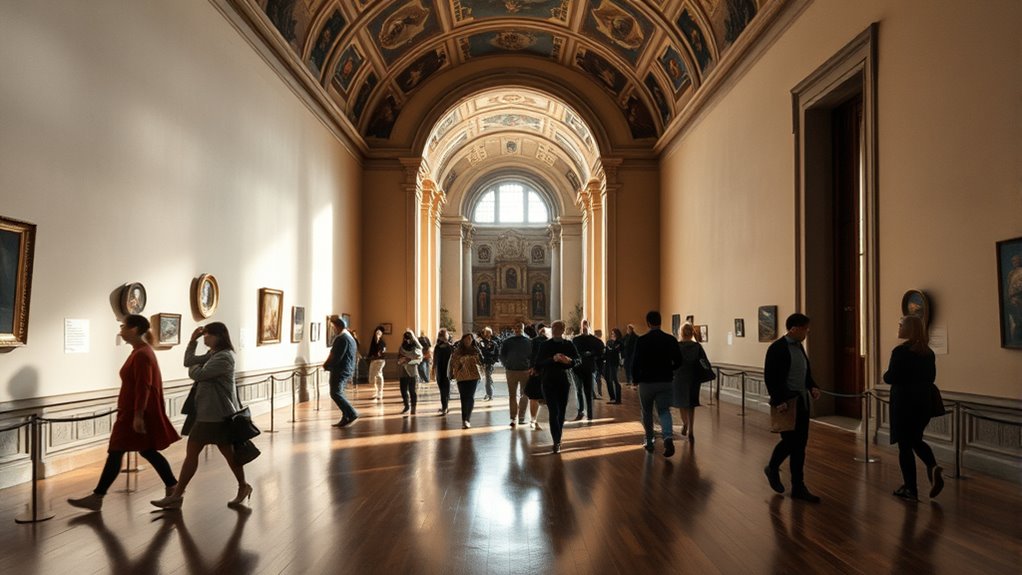
You can improve sound management by integrating acoustic treatments like absorption panels and low-reflectivity surfaces to minimize noise. Localized audio solutions, such as directional speakers and motion-triggered playback, help contain sound within specific exhibits. These technologies guarantee visitors experience a peaceful environment while engaging with the displays. Additionally, incorporating connected audio technology can optimize sound distribution and further enhance the overall acoustic environment. Using sound masking systems can also help reduce background noise and improve speech intelligibility in large or echo-prone spaces. Implementing acoustic treatments tailored to the specific space can further refine sound quality and comfort for visitors. Exploring acoustic design principles can provide additional strategies for effective sound management in complex environments. Applying sound absorption methods rooted in acoustic design principles can significantly improve the serenity of historic and sacred spaces.
Acoustic Treatments Integration
To effectively manage sound within museums and churches, acoustic treatments are carefully integrated into the architectural design to control noise levels and enhance the visitor experience. You’ll find solutions that absorb, diffuse, or block sound, maintaining the desired atmosphere. Acoustic design principles guide the placement and selection of these treatments to optimize acoustics. Acoustic panels and soft finishes are installed on walls and ceilings to minimize echoes and ambient noise. Localized sound systems, like directional speakers and headphones, deliver audio precisely where needed, preventing spillover. Spatial planning separates interactive areas from contemplative zones, ensuring sound remains contained and appropriate for each space. These treatments help uphold the cultural quiet rules, making the environment conducive to reflection, learning, and reverence while respecting the acoustical integrity of each site.
Localized Audio Solutions
Localized audio solutions have become essential tools in managing sound environments within museums and churches. These systems direct sound precisely where it’s needed, minimizing noise spillover into quiet zones. Directional speakers and beamforming technology focus audio at specific exhibits or spaces, allowing visitors to engage without disturbing others. Headphone guides offer personalized listening experiences, reducing ambient noise. Motion-triggered playback activates audio only when visitors approach, maintaining a serene atmosphere. Sound zoning separates interactive zones from contemplative areas, ensuring visitors experience appropriate acoustics. Soft finishes and acoustic treatments complement these solutions, enhancing sound absorption. Incorporating acoustic design principles ensures the effectiveness of these systems in preserving the sanctity and tranquility of sacred and cultural sites while ensuring accessibility and engagement for diverse audiences.
Accessibility and Diversity: Quiet Rules for All Visitors

Ensuring quiet rules in European museums and churches is essential for making these spaces accessible and welcoming to visitors of all backgrounds and needs. You’ll find that many institutions implement measures to accommodate neurodiverse visitors, families, and older adults. For example:
- Quiet hours and sensory-friendly sessions create low-stimulation environments for those with sensory sensitivities. These initiatives often include sensory accommodations to help visitors engage comfortably. Implementing environments designed for accessibility can further support diverse visitor needs.
- Designated zones for families and children allow lively activities without disturbing contemplative spaces.
- Clear signage and pre-visit guidance set expectations, helping diverse visitors understand rules and feel comfortable. Incorporating inclusive communication strategies can enhance understanding across different needs.
- Incorporating mental challenges and cognitive engagement strategies can further enhance the experience for visitors seeking meaningful interaction with the cultural site. Additionally, thoughtful space design can help reduce noise and visual clutter, making environments more calming.
These measures foster inclusivity, ensuring everyone can enjoy cultural and religious sites comfortably. By respecting these quiet rules, you contribute to a more accessible, respectful environment where all visitors can engage meaningfully.
Sacred Silence: Traditions and Tourism in Churches
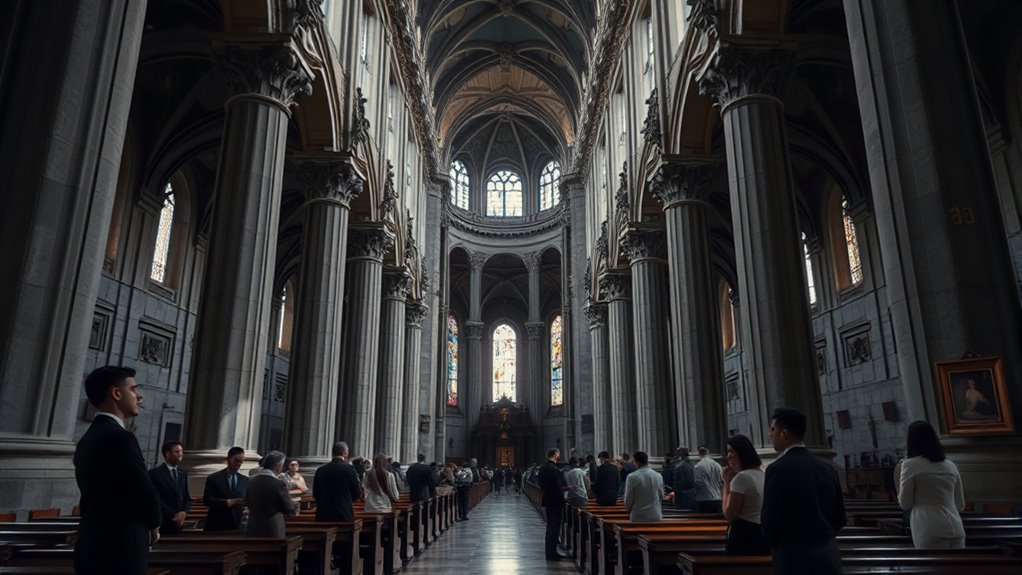
Sacred silence is a cornerstone of religious practice in many European churches, where periods of quiet reflection and prayer are deeply rooted in tradition. You’re expected to maintain respectful silence during services, private prayer, and moments of devotion, often reinforced by notices and stewards. Tourism introduces challenges, prompting churches to implement rules like restricted photography, guided routes, and designated quiet zones to preserve the sacred atmosphere. Many sites adopt ticketing systems or scheduled visiting hours to balance worship and tourism. Acoustic treatments, such as soft finishes and sound barriers, help contain noise levels. These practices aim to honor the spiritual purpose of churches while accommodating visitors, ensuring the space remains a place of reverence amid increasing tourism. Additionally, understanding thermal behavior and sound management techniques can assist in designing spaces that uphold their sacred silence while welcoming guests.
Balancing Sound, Space, and Visitor Experience in European Heritage Sites
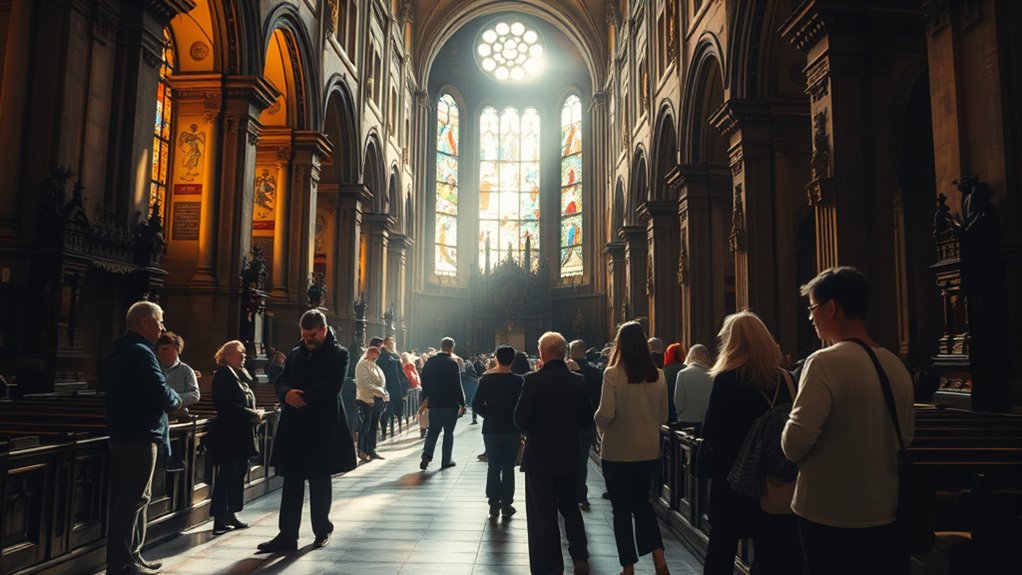
Balancing sound, space, and visitor experience in European heritage sites requires careful planning and innovative design strategies. You can enhance the visitor journey by considering these key approaches:
- Implement sound zoning and directional audio to localize soundscapes, ensuring quiet zones remain undisturbed.
- Use acoustic treatments like absorption panels and soft finishes to minimize ambient noise and create tranquil environments.
- Incorporate technology such as headphone guides and motion-triggered audio to allow personalized experiences without increasing overall noise.
These measures help maintain a peaceful atmosphere, respect sacred and contemplative spaces, and accommodate diverse visitor needs. By thoughtfully managing sound and space, you create an environment that encourages reflection, preserves heritage integrity, and enhances overall visitor satisfaction.
Frequently Asked Questions
How Do Cultural Differences Influence Silence Norms Across European Countries?
You’ll notice that cultural differences shape silence norms across European countries. In Northern and Western Europe, strict guidelines and formal signage enforce quiet behavior, while in Southern and Eastern regions, social norms and local customs often govern rules more informally. You’re expected to adapt your behavior accordingly, whether lowering your voice in museums or maintaining reverence in churches, respecting each country’s unique approach to silence and decorum.
What Challenges Do Museums Face When Implementing Quiet Zones for Neurodiverse Visitors?
You may find that implementing quiet zones for neurodiverse visitors presents challenges like balancing the need for low-stimulation environments with maintaining accessibility for all. Staff must navigate potential disruptions from other visitors, enforce rules consistently, and manage expectations. Technical solutions like sensory-friendly hours or soundproofing can help, but they require resources. Overall, fostering understanding among visitors and staff is vital to creating inclusive spaces without compromising the museum’s atmosphere.
How Do Heritage Sites Balance Preservation With Modern Noise Management Techniques?
Heritage sites walk a tightrope, balancing preservation with noise control like a skilled acrobat. You’ll see them use acoustic treatments—absorption panels and soft finishes—that act as a sound sponge, protecting delicate collections. Directional audio and headphone guides focus sounds where they’re needed, like a lighthouse guiding ships safely. Spatial planning separates noisy zones from contemplative spaces, ensuring that the site’s soul remains intact while embracing modern sound management techniques.
Are There Legal Penalties for Violating Silence Policies in Churches and Museums?
Yes, there are often legal penalties if you violate silence policies in churches and museums. You might face fines, asked to leave, or be denied future entry. Staff enforce these rules to protect the ambiance and respect sacred or sensitive spaces. Ignoring signage or staff instructions can lead to these consequences, so it’s best to follow the rules, keeping quiet and respectful during your visit.
How Effective Are Technological Solutions in Maintaining Low Noise Levels in Busy Spaces?
Technological solutions act like quiet gatekeepers, effectively keeping noise in check in busy spaces. You’ll notice sound-absorbing panels, directional speakers, and headphone guides that localize and dampen noise, creating a calm environment. These tools work well to reduce ambient sounds, ensuring visitors can appreciate exhibits or sacred spaces without disruption. While not foolproof, their strategic use markedly enhances the atmosphere, making silence more manageable amid crowds.
Conclusion
So, next time you visit a museum or church in Europe, remember—shushing isn’t just etiquette; it’s a sacred duty. Ignore the quiet rules, and you risk turning a peaceful sanctuary into a chaotic playground. But hey, who needs reverence when you can shout “look at this!” at priceless artifacts? Embrace the silence, or prepare to be the unwelcome guest in Europe’s carefully curated symphony of calm. Silence truly is golden—preferably with a velvet rope.