
To ask for help in Europe politely, start with a friendly greeting like “Hello” or its local equivalent, accompanied by a smile. Clearly state your request with phrases like “Could you help me with…” or “Excuse me, I need assistance with…,” and always add “please” and “thank you.” Using respectful non-verbal cues like eye contact and a warm tone also shows courtesy. If you keep these tips in mind, you’ll foster positive and respectful interactions wherever you go.
Key Takeaways
- Start with a friendly greeting like “Hello” or “Bonjour” and smile to set a polite tone.
- Use polite phrases such as “Could you please help me?” or “S’il vous plaît” to soften your request.
- Clearly state your question or need, e.g., “Can you tell me how to get to…?”
- Maintain respectful body language, eye contact, and an open posture to show courtesy.
- Always thank the person afterward with “Thank you,” “Gracias,” or “Merci” to express appreciation.

Lonely Planet Europe Phrasebook & Dictionary
As an affiliate, we earn on qualifying purchases.
As an affiliate, we earn on qualifying purchases.
Using Polite Greetings to Start Your Request

Starting your request with a polite greeting sets a respectful tone and makes locals more receptive to helping you. In Europe, greeting someone properly shows courtesy and cultural awareness. For example, say “Hallo” in Germany or “Bonjour” in France during the day. In Italy, “Buongiorno” works in the morning, while “Buonasera” is suitable in the evening. Spanish speakers use “Hola,” and Turkish speakers say “Merhaba.” Using a greeting helps break the ice and creates a friendly atmosphere. It’s best to keep your tone polite and genuine. Remember, a simple smile paired with your greeting can further foster goodwill. Starting with a respectful hello shows you appreciate their culture and encourages a positive response. Practicing cultural sensitivity about local customs can also improve your interactions and help you connect more authentically. Being aware of communication styles can make your requests smoother and more effective, leading to better assistance. Showing awareness of local communication styles demonstrates respect and can lead to more helpful responses.

Japanese for Travelers Phrasebook & Dictionary: Useful Phrases, Travel Tips, Etiquette Guide
As an affiliate, we earn on qualifying purchases.
As an affiliate, we earn on qualifying purchases.
How to Clearly State Your Need for Assistance

When asking for help, be specific about what you need so others understand your situation quickly. Use clear phrases like “Can you help me with…” or “I need assistance with…” to communicate directly. Always keep a respectful tone to show appreciation and encourage a positive response. Clearly indicating your projector needs can lead to more accurate and helpful advice, especially when discussing technical details or preferences.
Use Specific Phrases
Are you unsure how to make your request for help as clear as possible? Using specific phrases helps prevent misunderstandings and shows your sincerity. Instead of vague requests, be direct with phrases like “Can you help me?” or “I need assistance.” This clarity builds trust and speeds up the process. To deepen your understanding, consider this table:
| Situation | Example Phrase | Purpose |
|---|---|---|
| Asking for directions | “Can you tell me how to get to…?” | Clear navigation request |
| Seeking help at a shop | “Could you help me find this item?” | Specific assistance needed |
| Requesting language aid | “Do you speak English?” | Language clarification |
| Emergency situation | “I need help now!” | Urgent assistance |
Using precise language ensures your needs are understood quickly and politely.
Maintain Respectful Tone
To guarantee your request for help is received politely and effectively, maintaining a respectful tone is essential. Use polite openers like “Excuse me” or “S’il vous plaît” before asking for assistance. Keep your language courteous and avoid sounding demanding or impatient. When asking a question, phrase it kindly, such as “Could you please help me?” or “Would you mind assisting me?” Smile and make eye contact to show appreciation and respect. Express gratitude after receiving help with a simple “Thank you” or “Merci.” Remember, a respectful tone fosters cooperation and positive interactions. Even if you’re in a hurry, patience and politeness make it more likely someone will want to assist you. Your respectful attitude shows appreciation for their time and effort. Being aware of customer service standards can also help guide your approach to requesting assistance courteously. Demonstrating cultural awareness, especially in European countries, can further improve the likelihood of receiving help and building positive connections. Additionally, understanding local customs and social norms can enhance your communication and create more positive exchanges. When seeking help with specific needs, such as electric bikes or tools, clearly stating your request can help clarify your intentions and avoid misunderstandings. Incorporating some knowledge of attune magazine’s sound healing science can also help you remain calm and centered, making your interactions smoother.

Language Translator Device, Portable Translator No WiFi Needed, Offline Voice Photo Translation, 150 Languages Supported, High Accuracy VORMOR Translator for Travel Business Learning (Black)
【Accurate online and offline translation】 This translator adopts the latest translation technology of the four major search engines…
As an affiliate, we earn on qualifying purchases.
As an affiliate, we earn on qualifying purchases.
Incorporating Common Courteous Phrases in Different Languages

Incorporating common courteous phrases in different languages shows respect and helps build positive interactions while traveling in Europe. Learning a simple greeting or polite phrase creates a friendly atmosphere and makes others more willing to assist you. You can easily blend these phrases into your conversations:
Using polite phrases in various languages fosters respect and friendly connections during your European travels.
- Use greetings like “Hallo,” “Bonjour,” or “Hola” to start on a respectful note.
- Add polite openers such as “Excuse me” or “Mi scusi” before asking for help.
- Say “Please” with “S’il vous plaît,” “Bitte,” or “Por favor” to soften requests.
- Always thank with “Danke,” “Gracias,” or “Merci” after receiving assistance.
- Understanding connection standards and device compatibility can improve your communication experience across different countries.
- Being aware of cultural etiquette can also help avoid misunderstandings and demonstrate your appreciation for local customs.
- Familiarizing yourself with local language expressions can further enhance your interactions and show your genuine interest in the culture.
- Remember that cross-cultural communication involves both language skills and respectful gestures, which can make your interactions more meaningful.

cilate AI Translation Earbuds Real Time, 3-in-1 Bluetooth 6.1 Translation Headphones with 5 Translation Modes, 80H AI Ear Buds Translator Device for Business/Travel/Learning
【High-Precision Multilingual Translation Support】Supports real-time two-way translation in 164 languages, including Chinese, English, Japanese, Korean, Russian, German, French,…
As an affiliate, we earn on qualifying purchases.
As an affiliate, we earn on qualifying purchases.
Asking for Directions Respectfully and Effectively

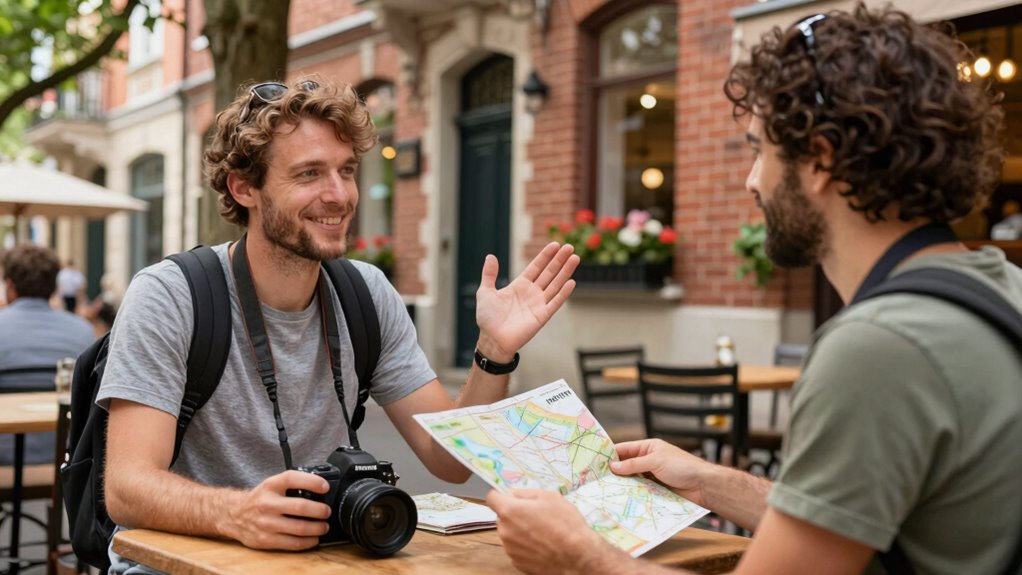
Wondering how to find your way without causing offense? Start with a friendly greeting, like “Bonjour” in France or “Hallo” in Germany. Then, clearly state where you want to go, for example, “Can you tell me how to get to the train station?” Use a polite phrase like “S’il vous plaît” or “Bitte” to make your request respectful. Making eye contact and smiling shows appreciation and respect. If you’re unsure, you can ask, “Do you speak English?” to ease communication. Keep your tone friendly and respectful, and avoid demanding language. Being aware of local customs and communication styles can help you avoid misunderstandings and show your respectful attitude. Using simple, actionable phrases can make your interactions smoother and more positive. Additionally, understanding cultural etiquette related to asking for help can greatly improve your experience. Remember that understanding style and etiquette in different countries can also enhance how well your requests are received. Thanks to simple phrases and courtesy, you’ll get directions without sounding rude, and locals will appreciate your politeness.
Approaching Strangers With Confidence and Courtesy

How can you approach strangers confidently while remaining courteous? First, smile warmly and make eye contact to show friendliness. Begin with a polite greeting like “Bonjour” or “Hola,” then add an open-ended question or request. Keep your tone respectful and avoid rushing. Remember, a genuine smile and a calm voice go a long way. Here are some tips to help you feel more confident:
Smile warmly, greet politely, and stay calm to confidently and courteously approach strangers.
- Start with a simple greeting before asking for help
- Use polite openers like “Excuse me” or “Perdón”
- Keep your request clear and concise
- Be receptive to their response, and thank them kindly
- Maintaining respectful communication helps foster positive interactions
Approaching strangers becomes easier when you’re respectful and approachable. Practice patience, and don’t take rejection personally. Confidence and courtesy make all the difference.
Tips for Using Non-Verbal Cues to Show Respect

Did you know that non-verbal cues can especially impact how respectful and approachable you appear? When asking for help, maintain good eye contact to show sincerity and attentiveness. Smile gently to convey friendliness, but avoid overdoing it, which might seem insincere. Keep your posture open—don’t cross your arms or turn away—so you seem receptive. Nodding occasionally signals understanding and respect. Use a calm, steady tone and avoid rushing, as this shows patience. When gesturing, use your hands naturally and avoid aggressive or dismissive movements. Respect personal space, especially in European cultures where close proximity can feel intrusive. Additionally, being aware of cultural norms around gestures can greatly enhance how your request is received. Research indicates that understanding cultural differences in communication can help you adapt your approach more effectively. Remember that cultural norms can vary between regions and countries, so observing local behaviors can help you adapt effectively. Being mindful of non-verbal communication strategies ensures your approach is perceived as polite and considerate. Combining these cues with polite words ensures your request comes across as respectful and genuine.
Frequently Asked Questions
How Can I Politely Ask for Help Without Sounding Demanding?
To politely ask for help without sounding demanding, start with a friendly greeting like “Hello” or “Bonjour,” then use courteous phrases such as “Could you please help me?” or “Would you mind assisting me?” Keep your tone gentle, make eye contact, and say “thank you” afterward. Using polite expressions and a warm smile shows respect and makes others more willing to help without feeling pressured.
What Are Polite Ways to Interrupt Someone for Assistance?
When you need to politely interrupt someone for assistance, start with a friendly greeting like “Excuse me” or “Entschuldigung,” then briefly explain your need. Maintain eye contact and a warm smile to show respect. You can say, “Could you please help me?” or “Would you mind assisting me?” Keep your tone calm and polite, making it clear you value their time and kindness.
How Do I Handle Language Barriers Politely in Europe?
You can handle language barriers politely by learning a few key phrases in the local language, like “Do you speak English?” or “Can you help me?” You’ll show respect by starting with a greeting and using gestures or a translation app if needed. Smile and maintain eye contact—your warmth speaks louder than words. Patience and a friendly attitude help bridge language gaps, making communication smoother and more respectful.
What Should I Do if I Don’T Understand the Answer?
If you don’t understand the answer, politely repeat what you heard with a phrase like “Sorry, I didn’t catch that,” or “Could you please repeat?” You can also ask if they speak English by saying, “Do you speak English?” Smile and maintain eye contact to show you’re respectful. Using gestures or a translation app can also help clarify. Stay patient and courteous; most people will appreciate your effort.
Are There Cultural Differences in Politeness When Asking for Help?
Yes, cultural differences affect politeness when you ask for help. In some countries, like Germany and Austria, directness is appreciated, so being straightforward is fine. In others, like France or Spain, politeness and formal greetings matter more before making your request. You should always include a greeting, say please, and thank them afterward. Pay attention to local customs, and you’ll show respect, making it easier for people to assist you kindly.
Conclusion
Remember, politeness opens doors—studies show that 80% of Europeans appreciate respectful requests. Using simple greetings and courteous phrases can make asking for help much smoother. Confidence combined with respect helps you connect better with locals, even if you’re unsure of the language. Don’t forget non-verbal cues like a smile or friendly nod. With these tips, you’ll navigate Europe more confidently and politely, making your travel experience more enjoyable and respectful for everyone.