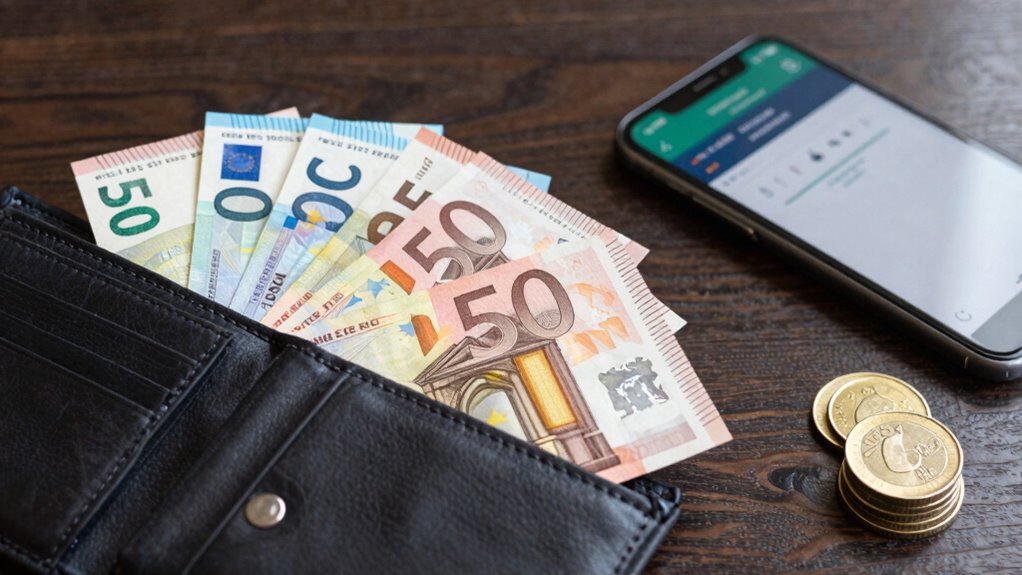

To avoid hefty fees and stay secure, bring enough cash for daily expenses—around 100-150 euros per day—while relying mainly on cards or digital payments. Withdraw larger amounts from ATMs with low fees so you don’t keep frequent trips. Use reputable currency exchange providers and compare rates before swapping money. Keep extra funds hidden safely in case of emergencies. Staying flexible with your cash plan helps you save and stay secure; learn more to fine-tune your budget.
Key Takeaways
- Carry enough cash for daily expenses, but avoid large sums to minimize theft risk and fees.
- Use digital wallets and credit cards with no foreign transaction fees as primary payment methods.
- Withdraw cash in larger amounts from ATMs affiliated with major banks to reduce withdrawal fees.
- Compare exchange rates and fees before exchanging money at airports, hotels, or currency exchange offices.
- Keep extra cash in secure, separate locations and carry only essential funds daily to prevent loss.

HERO Neck Wallet – RFID Blocking Passport Holder, Easy to Conceal and Pouch (Army Grey)
LIFETIME REPLACEMENT GUARANTEE – We individually test every HERO Neck Wallet in the USA before shipping. And every…
As an affiliate, we earn on qualifying purchases.
As an affiliate, we earn on qualifying purchases.
Estimating Your Daily Expenses in Europe
To estimate your daily expenses in Europe, start by considering the destinations you’ll visit and their cost of living. Different countries and cities vary widely in prices, so research local customs and tipping etiquette ahead of time. For example, in some places, tipping isn’t customary, while others expect around 10-15% in restaurants. Understanding these customs helps you budget accurately and avoid awkward situations or over-spending. Include costs for meals, transportation, attractions, and small extras. Keep in mind that some cities are pricier than others, so adjusting your daily budget accordingly is smart. Being aware of cybersecurity and ethical hacking concerns related to digital payments can help protect your financial information while traveling. Additionally, understanding projector specifications like contrast ratio and color accuracy can help you make informed choices if you plan to purchase or rent equipment for entertainment purposes. Knowing the local currency exchange rates can also prevent you from losing money through unfavorable conversions. Furthermore, considering cash handling tips can assist in managing your money safely and efficiently during your trip. Also, considering emergency funds for unexpected expenses ensures you are prepared for any unforeseen costs. By factoring in local customs and tipping etiquette, you can better gauge your daily expenses and plan your cash needs without surprises or overspending.

VENTURE 4TH Money Belt for Travel – Hidden Under-Clothes RFID Blocking Passport Holder & Slim Travel Wallet Pouch for Men & Women to Protect Cash, Cards & Documents (Black)
HIDDEN MONEY BELT FOR TRAVEL – Stay secure with this slim hidden money belt for travel, designed to…
As an affiliate, we earn on qualifying purchases.
As an affiliate, we earn on qualifying purchases.
Understanding Currency Exchange Rates and Fees

Understanding currency exchange rates and fees is essential for managing your cash when traveling in Europe. When you deal with foreign exchange, you’re subject to fluctuating rates that affect how much local currency you get for your money. Currency conversion fees can add up, costing you more than expected if you’re not careful. To avoid surprises, always check the current exchange rates before exchanging cash or withdrawing from ATMs. Be aware that some providers may offer better rates than others and might charge additional fees. Knowing these details helps you compare options and minimize extra costs. Additionally, understanding how currency exchange rates fluctuate can help you plan your budget more effectively. Monitoring real-time exchange rates online enables you to make informed decisions and avoid unfavorable conversions. Keeping track of exchange rate trends can also provide insight into the best times to exchange money during your trip. Being aware of market volatility can further help you anticipate potential rate swings and optimize your currency exchanges. Furthermore, understanding the impact of exchange rate fluctuations can help you avoid sudden losses due to unpredictable market movements.

KOSMCCO RFID Blocking Clip Stash Pouch, Minimalist Hidden Travel Wallet for Cards & Cash – Slim Pickpocket-Proof Design for Everyday Carry, Black
RFID Blocking Protection: Built-in copper/nickel lining, shield your cash, credit cards, and IDs from wireless theft and digital…
As an affiliate, we earn on qualifying purchases.
As an affiliate, we earn on qualifying purchases.
Choosing the Best Payment Methods Abroad
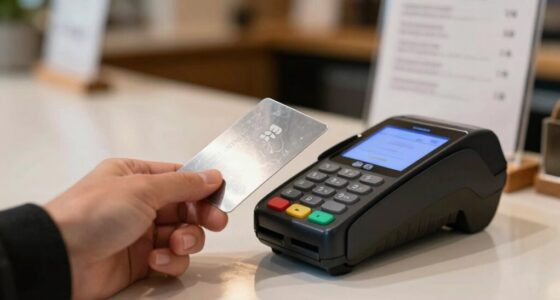
When traveling abroad, choosing the right payment methods can save you time and money. Digital wallets offer a convenient way to pay without carrying cash, often with lower fees and enhanced security. Apps like Apple Pay or Google Pay work seamlessly at many merchants and help you avoid foreign transaction charges. Travel checks are another option, especially if you prefer having a physical form of payment, but they can be less convenient and more cumbersome to cash or deposit. Consider pairing digital wallets with a credit or debit card that waives foreign fees for the best value. Avoid relying solely on cash, as it can be risky and costly to exchange. Selecting versatile, low-fee payment methods guarantees safer, smoother transactions during your trip. Utilizing European cloud servers can also ensure your online financial transactions are processed securely and efficiently, giving you peace of mind during your travels. Additionally, understanding the security features of your chosen payment methods helps protect you from fraud and unauthorized charges. Implementing encryption protocols is crucial for safeguarding your financial data from potential breaches. Being aware of transaction security measures can further prevent potential issues and provide added confidence while managing your finances abroad. Moreover, familiarizing yourself with the local currency exchange rates can help you plan better and avoid unfavorable conversions.

WINGS Craft & Fundraising Supply RFID Debit Credit Card Holder ATM Case with Choice Insert, Scenery Art & Music (Farm with 1 Photo Insert)
RFID ArmorShield Protected Debit Card Holder with 1 Photo Insert
As an affiliate, we earn on qualifying purchases.
As an affiliate, we earn on qualifying purchases.
How Much Cash Is Too Much? Setting a Safe Limit

Carrying too much cash can expose you to theft, loss, or unnecessary risks, so setting a safe limit is essential for a worry-free trip. To determine this, consider your destination’s local customs and the coverage of your travel insurance. Generally, bringing an amount that covers daily expenses without tempting theft is wise. Avoid carrying large sums unless absolutely necessary. Keep in mind that some countries have strict regulations on cash limits, and exceeding them can cause delays. By understanding local customs, you avoid awkward situations or legal issues. Remember, a small, secure amount of cash combined with cards and travel insurance provides both safety and flexibility during your trip. Staying informed about security guidelines ensures you are prepared to protect your funds effectively throughout your travels. Additionally, being aware of legal restrictions helps you prevent accidental violations that could complicate your journey. Knowing about currency exchange rates can also help you manage your funds more effectively and avoid unfavorable conversions. Familiarizing yourself with international banking options can further enhance your financial safety and convenience abroad.
Tips for Carrying and Securing Cash During Your Trip
To keep your cash safe, consider using a money belt to hide your valuables from pickpockets. It’s also wise to split your money into different places so you’re not left stranded if one stash is lost. Additionally, avoid flashing large amounts of cash in public to prevent unwanted attention. Using tools that detect passive voice can help improve your writing clarity and effectiveness. Being aware of electric bike speed capabilities can also inform you about legal speed limits and safety precautions when riding in new areas. Moreover, understanding the benefits of fire-starting kits can be crucial for emergencies that require warmth or cooking. Consulting Gold IRA markets can provide insights into secure investment options should you wish to protect your funds during your travels.
Use a Money Belt
A money belt is a smart way to keep your cash secure while exploring unfamiliar destinations. It offers discreet cash storage and enhances money belt safety, reducing the risk of theft. To maximize its benefits, keep these tips in mind:
- Wear it snugly against your body, under your clothes.
- Avoid flashing it in public to maintain discreet cash storage.
- Only carry what you’ll need for the day, leaving extra funds elsewhere.
- Check regularly to ensure it’s secure and undamaged.
- Choose a lightweight, breathable belt for comfort on long days.
Using a money belt helps prevent pickpocketing and provides peace of mind during your trip. Stay vigilant, and your cash stays safe, so you can focus on enjoying your adventure.
Split Your Cash
Splitting your cash into multiple locations reduces the risk of losing everything if one stash is compromised. Keep some bills in your wallet for daily expenses, but also hide extras in secure spots like a hotel safe or a hidden pouch. This way, if you’re targeted or lose your main cash, you still have backup funds. Make sure your packing essentials include a secure way to carry cash, such as a money belt or neck pouch. Also, consider travel insurance that covers theft or loss of cash and valuables. Avoid keeping all your money in one place, and never flash large amounts in public. By dividing your cash wisely, you minimize risks and stay prepared for unexpected situations during your trip.
Avoid Flashing Cash
While it’s tempting to show off your cash, flashing large amounts in public can quickly attract unwanted attention. To stay safe, keep your cash secure and discreet. Use a money belt or hidden pouch to carry your colorful banknotes and smaller denominations. Avoid displaying cash in crowded places or at ATMs. Be mindful of your surroundings when counting cash or counting cash denominations. When paying, use cards whenever possible to minimize cash exposure. If you carry cash, only bring what you need for the day. Keep the rest tucked away safely. Stay alert and avoid unnecessary risks. Remember, secure handling of cash helps prevent theft and keeps your trip stress-free.
When to Use ATMs and How to Minimize Withdrawal Fees

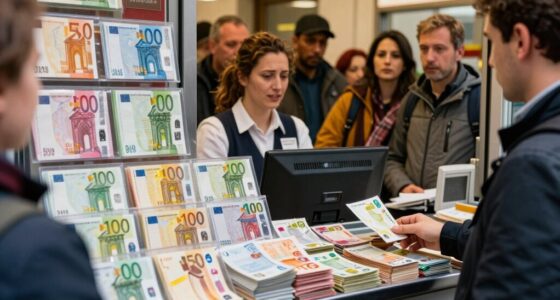
Using ATMs wisely can save you money on withdrawal fees, especially when you’re traveling in Europe. To maximize your ATM strategies, always choose machines affiliated with major banks or recognized networks to avoid extra charges. Use ATMs that display your local currency to simplify currency conversion and reduce unfavorable exchange rates. Before withdrawing, check if your bank offers partnerships with European banks to lower or eliminate fees. Avoid multiple small withdrawals; instead, take larger sums less frequently to minimize transaction costs. Keep in mind that some ATMs may charge a flat fee, so compare options if possible. By planning your withdrawals carefully and selecting ATMs strategically, you’ll keep your costs down while accessing cash efficiently during your trip.
Avoiding Common Pitfalls With Currency Exchange Services

To get the best value when exchanging currency, you’ll want to be cautious of common pitfalls that can quickly eat into your funds. Poor choices in currency conversion methods or falling for scams can lead to unnecessary losses. Be wary of exchange rates that seem too good to be true, as they often include hidden fees. Avoid exchanging currency at airports or hotels, where rates tend to be unfavorable. Use reputable providers and look for transparent fees to prevent fraud. Always compare rates beforehand. When exchanging money, consider using a service that offers secure transactions and fraud prevention measures. This helps guarantee your funds are safe and that you’re getting a fair deal. Staying vigilant minimizes risks and maximizes the value of your euros.
Planning for Emergencies and Extra Expenses
Planning for emergencies and extra expenses is essential to guarantee you’re prepared for unexpected situations that may arise during your trip. Knowing local emergency contacts can save you valuable time, while having suitable travel insurance options provides financial protection. Keep a list of emergency numbers for each country you visit, and share it with someone back home. Also, consider carrying a small amount of extra cash for emergencies, but don’t rely solely on cash—use a credit card as a backup. Here’s a quick reference:
| Emergency Contact | Details |
|---|---|
| Local Police | 112 or local number |
| Medical Services | Emergency numbers specific to each country |
| Travel Insurance | Policy details and contact info |
Being prepared reduces stress and ensures you’re ready for anything.
Frequently Asked Questions
What Are the Safest Ways to Carry Large Amounts of Cash?
You should use secure cash carrier services to transport large amounts of cash safely. Opt for security accessories like money belts, hidden pouches, or RFID-blocking wallets to keep your cash discreet and protected. Avoid flashy displays and carry only what you need. Always keep a backup plan, such as splitting cash into multiple secure locations, to minimize risk. Stay vigilant and choose reliable services to guarantee your cash stays safe.
How Do Currency Exchange Rates Vary Across European Countries?
You’ll notice currency exchange rates vary widely across Europe, with fluctuations reaching up to 10% between countries. This variation is driven by differing exchange rate policies and currency stability. For example, the euro tends to have stable rates within the Eurozone, but countries like Switzerland or Hungary have more pronounced currency fluctuation. Always check current rates and policies before exchanging money to avoid surprises and maximize your budget.
Are Travel Money Cards a Better Alternative to Cash?
Travel money cards, like prepaid cards, and digital wallets are often better than cash because they help you avoid hefty fees and offer convenience. With prepaid cards, you can load money in advance and use them across Europe, while digital wallets let you pay with your phone effortlessly. Both options provide security, saving you from carrying large amounts of cash and making transactions smoother during your trip.
How Can I Avoid Scams Related to Currency Exchange?
To avoid currency fraud and cash scams, always exchange money at reputable locations like banks or official currency exchanges, avoiding street vendors. Did you know that in 2022, over 30% of travelers experienced some form of currency scam? Stay alert by counting your cash discreetly, not flashing it around, and using secure payment methods when possible. Trust only verified sources to protect yourself from scams related to currency exchange.
What Documentation Is Needed for Large Cash Transactions?
When making large cash transactions, you need to carry proper documentation, including a cash declaration form if you’re crossing borders. This helps with financial reporting and guarantees compliance with legal regulations. Always declare amounts over the specified threshold to avoid fines or legal issues. Keep records of where you got the cash and why you’re carrying it, as authorities may request proof during customs checks or financial audits.
Conclusion
Packing the right amount of cash is like finding the perfect key—unlocking smooth adventures without the baggage of fees. Stay sharp, plan ahead, and blend cash with digital payments to keep your trip sailing smoothly. Think of your money as a trusty compass guiding you through Europe’s bustling streets and quiet alleys. With a little preparation, you’ll navigate your journey confidently, turning potential pitfalls into stepping stones for unforgettable memories.