You lose the most money on currency exchanges at tourist spots, airport counters, and bank ATMs, where high fees and poor rates drain your funds quickly. Tourist areas and airports charge premium rates and hidden fees, making each exchange costly. Using ATMs abroad often incurs additional charges and unfavorable rates. To keep more money, avoid these places and explore local banks or digital options. Keep going to discover smarter strategies to save on currency exchange.
Key Takeaways
- Currency exchange counters near landmarks and airports charge high premiums and fees, leading to significant losses for travelers.
- Airport currency counters offer the worst rates and hidden charges, making them the most costly exchange option.
- Using ATMs or banks in tourist areas often incurs high foreign transaction and withdrawal fees, reducing your euros.
- Relying on unfavorable rates at premium exchange spots results in losing more money compared to local banks or digital services.
- Timing your exchanges with market fluctuations and avoiding large transactions at premium places can minimize losses.
Tourist Area Exchanges and Premium Rates

Ever wonder why currency exchange counters near Europe’s popular landmarks and airports often seem more expensive? It’s because these locations charge premium rates to capitalize on tourist convenience. While they accept US dollars, the rates are usually unfavorable, meaning you get less euros for your dollars. High transaction fees further increase the total cost, and these extra charges add up quickly, especially if you’re exchanging large amounts. Many travelers prioritize ease over savings, making these counters tempting despite the hidden costs. Avoid exchanging large sums here unless absolutely necessary. Instead, plan ahead and seek out local banks or small exchange offices in neighborhoods, which typically offer better rates and lower fees. Taking a little time to shop around can save you significant money during your trip. Additionally, being aware of Free Floating currency exchange practices can help you better understand how rates are determined and how to navigate them effectively. Understanding exchange rate fluctuations can empower you to identify favorable moments to exchange money and avoid unfavorable deals. Knowing how these market dynamics work enables you to make smarter decisions and avoid unfavorable deals when exchanging money. Being familiar with dynamic currency markets can further give you an edge in timing your exchanges for better rates. Moreover, staying informed about international financial trends can help you anticipate shifts in currency values that might benefit your exchange timing.
Airport Currency Counters and Overpriced Conversions
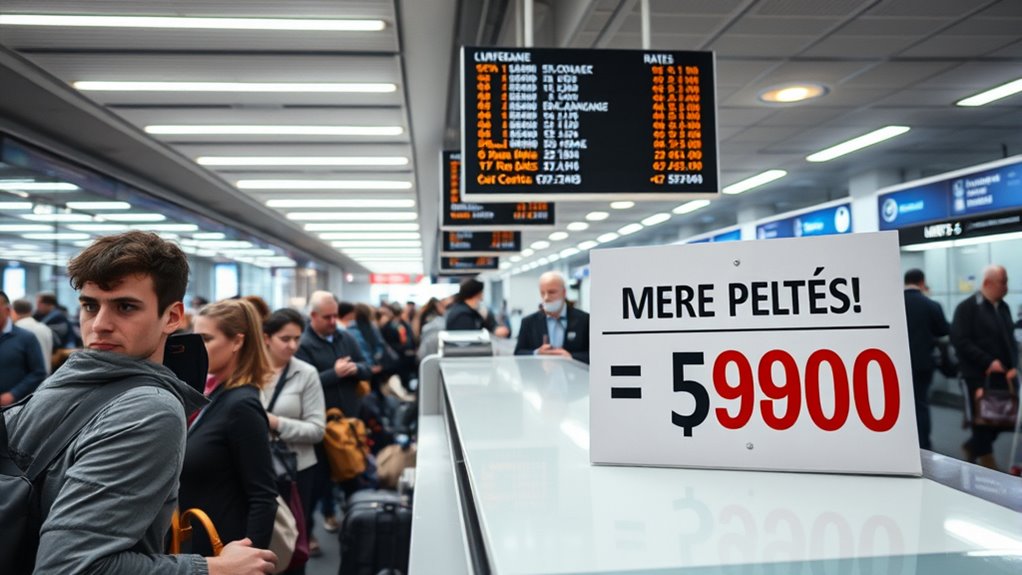
Airport currency counters tend to charge the highest premiums for exchanging money, making them an expensive option for travelers. They often offer quick access but at a steep cost. Fees and poor exchange rates quickly add up, erasing potential savings. Despite accepting US dollars, the rates are unfavorable compared to elsewhere. To understand this better, consider the table below:
| Feature | Impact |
|---|---|
| Premium rates | Higher costs on small or large amounts |
| Convenience | Overpayment for quick access |
| US dollars acceptance | Poor exchange rates, hidden fees |
| Additional fees | Hidden costs inflate total exchange |
| Better alternatives | Use local banks or digital services |
Avoid these counters for large sums, and explore cheaper options to keep more of your money.

Using ATMs and bank services to withdraw euros can seem convenient, but hidden fees often make it more expensive than expected. Many banks charge foreign transaction fees—typically 1-3% of each withdrawal—adding up quickly. Some ATMs also impose usage fees, especially in tourist areas, which can double your costs. Additionally, the exchange rate you receive might be less favorable than the spot rate, further increasing expenses. To minimize these costs, notify your bank before traveling to prevent transaction declines, compare ATM fees online, and consider using cards with no foreign transaction fees. Alternatively, digital remittance services or prepaid travel cards often offer better rates and lower fees. Being mindful of these hidden costs helps you save money and get the most value from your euros. Understanding currency exchange strategies can also help you avoid common pitfalls and maximize your spending power abroad. Knowing how to choose the right bank account can also reduce unnecessary charges during your trip, especially if it offers no foreign transaction fees or ATM reimbursements. Additionally, choosing fee-free ATMs in advance can further lower your costs, especially in areas with high surcharge rates. Moreover, exploring options like flat iron bike technology might be beneficial for eco-friendly transportation needs in certain destinations.
Frequently Asked Questions
Are There Specific Banks Known for Better Currency Exchange Rates in Europe?
If you want better currency exchange rates in Europe, check out local banks like Deutsche Bank in Germany, BNP Paribas in France, or Barclays in the UK. These banks typically offer more favorable rates and lower fees compared to tourist spots or airport counters. Before you go, compare their rates online or ask at your home bank for partnerships. Using ATMs linked to these banks also helps you avoid hidden charges.
How Can I Avoid Foreign Transaction Fees When Using My Credit Card Abroad?
You want to dodge those sneaky foreign transaction fees? Here’s the secret: use a credit card with no foreign transaction fees—many travel cards offer this perk. Always notify your bank before traveling to prevent holds. Consider using digital remittance services or withdrawing cash from local banks with lower fees. Keep an eye on exchange rates and pay in local currency to avoid extra charges. Stay alert, save money, and travel smarter.
What Are the Best Digital Remittance Apps for Low-Cost Currency Transfers?
You should try digital remittance apps like Revolut, Wise, or N26 for low-cost currency transfers. These apps offer real-time exchange rates with minimal fees, often better than traditional banks. You can send money directly to your euro account or use their debit cards for purchases. Just make sure to monitor rates and fees before transferring, and always compare options to get the best deal for your needs.
Do Currency Exchange Rates Vary Significantly Between European Countries?
You’ll notice currency exchange rates can feel like a rollercoaster through Europe’s financial landscape. They vary wildly from country to country, with some offering near-perfect rates and others hitting you with massive hidden fees. A quick trip from Germany to Greece might see your dollars stretch or shrink dramatically. Always compare rates beforehand, use digital services, and shop around—otherwise, you risk losing a fortune in the blink of an eye.
Is It More Cost-Effective to Withdraw Cash or Use Cards for Transactions?
Using your card is generally more cost-effective than withdrawing cash, especially if you choose a card with low foreign transaction fees. You avoid high ATM charges and unfavorable exchange rates often found at cash points. Just make sure to notify your bank beforehand to prevent transaction issues. Comparing fees and rates can save you money, while digital services may offer even better deals for remittances or large purchases.
Conclusion
Did you know that travelers often lose up to 10% of their money on currency exchanges? By avoiding tourist areas, airport counters, and hidden ATM fees, you can save a significant amount. Being aware of these costs helps you make smarter choices and keep more of your money. So, next time you exchange currency in Europe, stay vigilant and choose the best options—your wallet will thank you!