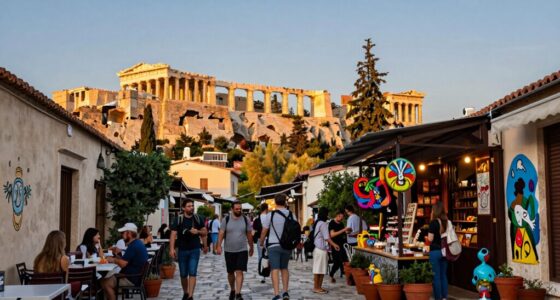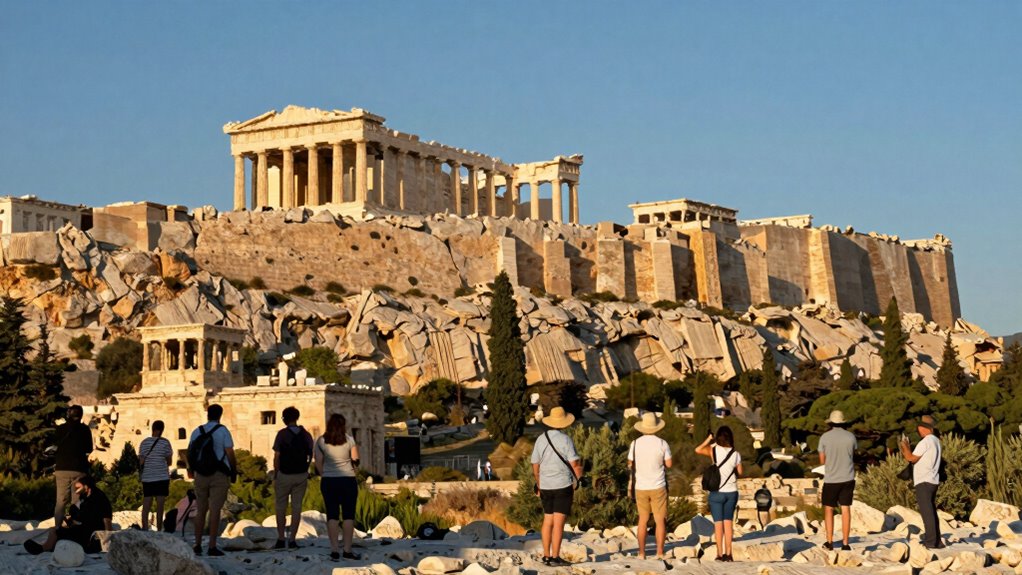

To visit the Acropolis comfortably, plan your trip early in the morning or late in the afternoon to avoid the biggest crowds and hottest temperatures. Spring and fall offer milder weather, while summer requires extra sun protection and hydration. Weekdays and shoulder seasons are usually quieter, and arriving 30 minutes before opening or near closing times helps beat peak crowds. For more tips on timing, weather, and smart strategies, keep exploring how to make the most of your visit.

Get travel and outdoor gear delivered free — and shop member deals
- Fast, free delivery on millions of items
- Access to Prime Big Deal Days deals on October 6–7
- Prime Video, Amazon Music and more included
Key Takeaways
- Visit early at 8 AM or late 6-8 PM to avoid crowds and enjoy cooler temperatures.
- Choose shoulder seasons like spring or fall for mild weather and fewer visitors.
- Plan weekday visits, especially on free entry days, to experience less crowded conditions.
- Dress in layers, stay hydrated, and wear hats to manage heat during summer visits.
- Check operating hours and avoid peak midday hours, especially during hot months, for a comfortable experience.
As an affiliate, we earn on qualifying purchases.
Best Times to Arrive for a Quiet Visit
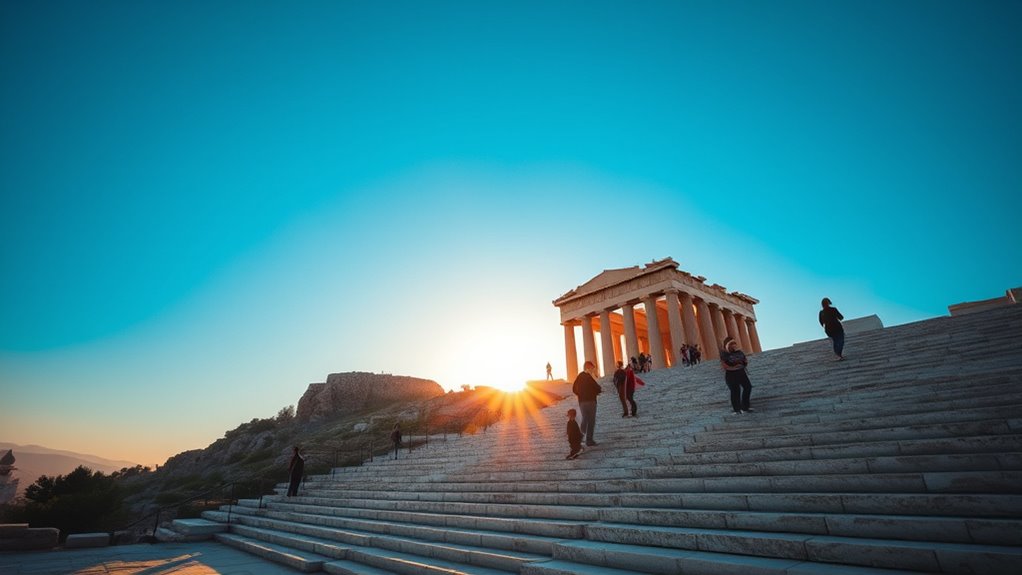
To enjoy a quiet visit to the Acropolis, it’s best to arrive early in the morning right at opening time, which is 8:00 AM year-round. This way, you’ll beat the crowds and enjoy the site with fewer visitors around. The first hour after opening offers the lightest foot traffic, making it perfect for photography and exploring without distractions. During these early hours, temperatures tend to be cooler, especially in summer, enhancing comfort. If you prefer fewer people later in the day, consider visiting the last 1-2 hours before closing, when crowds thin out considerably. Arriving 30 minutes before your timed entry slot also helps you get through the entrance smoothly. Overall, early mornings and late afternoons are your best bets for a peaceful visit. Incorporating energy-efficient cloud servers can help fund sustainable tourism initiatives and preserve historical sites like the Acropolis for future generations. Additionally, planning your visit during less popular times can minimize the impact of crowds and heat on your experience. Choosing specific timing strategies can further enhance your visit by avoiding peak hours and extreme weather conditions. Moreover, understanding visitor flow patterns can help you optimize your schedule for a more comfortable experience.
As an affiliate, we earn on qualifying purchases.
Navigating Peak Crowd Hours and Avoiding the Busyness
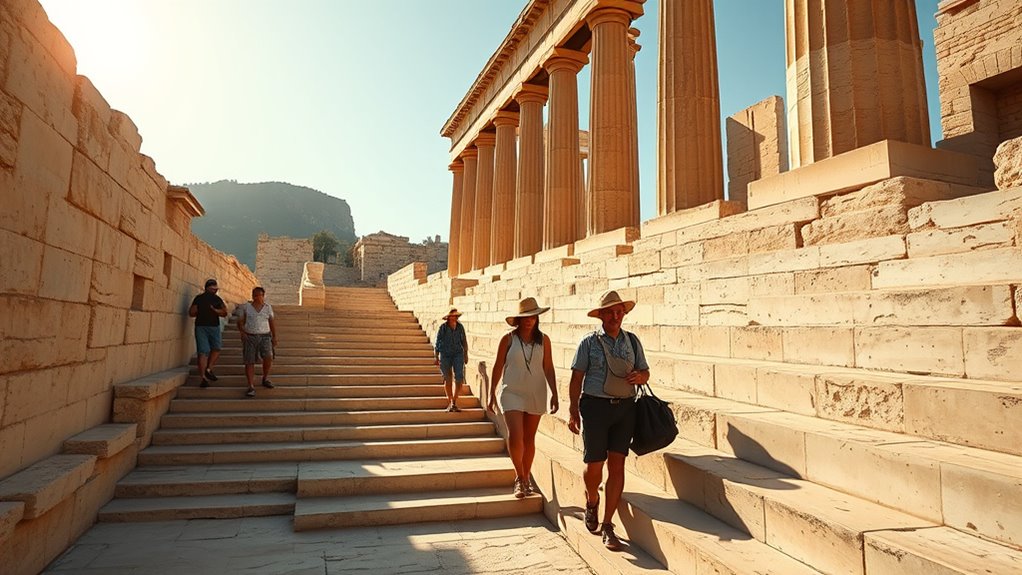
Arriving during peak hours can considerably impact your experience at the Acropolis, as the site becomes crowded and access to certain areas may be limited. To prevent the busiest times, plan your visit early in the morning right at opening time, around 8 AM, when visitor numbers are minimal. Alternatively, consider visiting in the late afternoon or within the last hour before closing, when crowds thin out and you can enjoy sunset views. Avoid midday hours between 10 AM and early afternoon when cruise ships and tour groups flood the site. Booking a timed entry ticket and arriving 30 minutes before your slot helps you beat the rush. Staying flexible and choosing off-peak windows ensures a more relaxed, enjoyable experience at this iconic monument. Being aware of visitor patterns and planning accordingly can significantly enhance your visit. Additionally, checking for special events or closures can help you avoid unexpected disruptions during your trip.
portable sun protection umbrella
As an affiliate, we earn on qualifying purchases.
As an affiliate, we earn on qualifying purchases.
Seasonal Weather and Temperature Considerations
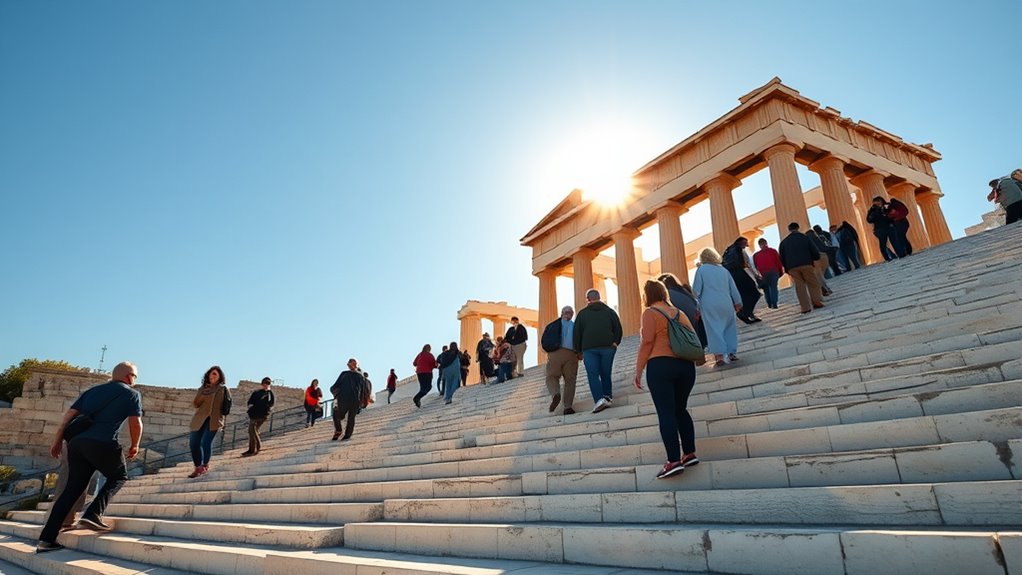
Seasonal weather greatly impacts your experience at the Acropolis, so planning your visit around temperature and climate conditions can enhance your comfort. Consider these key points:
- Spring (April-May) and fall (October) typically feature mild temperatures and pleasant weather, ideal for exploring. Additionally, these seasons often have lower pollution levels, making the air more breathable and your visit more enjoyable. These periods also tend to have fewer tourists, allowing for a more relaxed experience.
- Summer (June-August) can bring intense heatwaves, especially midday, so early mornings or late afternoons are best. Being aware of seasonal weather patterns can help you better prepare for sudden changes in temperature or conditions during your visit.
- Winter (November-March) offers cooler conditions but shorter daylight hours, making mornings more comfortable.
- During the shoulder seasons, you’ll encounter fewer crowds and moderate weather, balancing comfort and tranquility.
- Understanding climate variability can help you pack appropriately and ensure a comfortable visit despite unexpected weather shifts.
Adjust your schedule accordingly to avoid heat exhaustion or cold discomfort, ensuring a more enjoyable visit.
As an affiliate, we earn on qualifying purchases.
Planning Around Seasonal Operating Hours and Closed Days
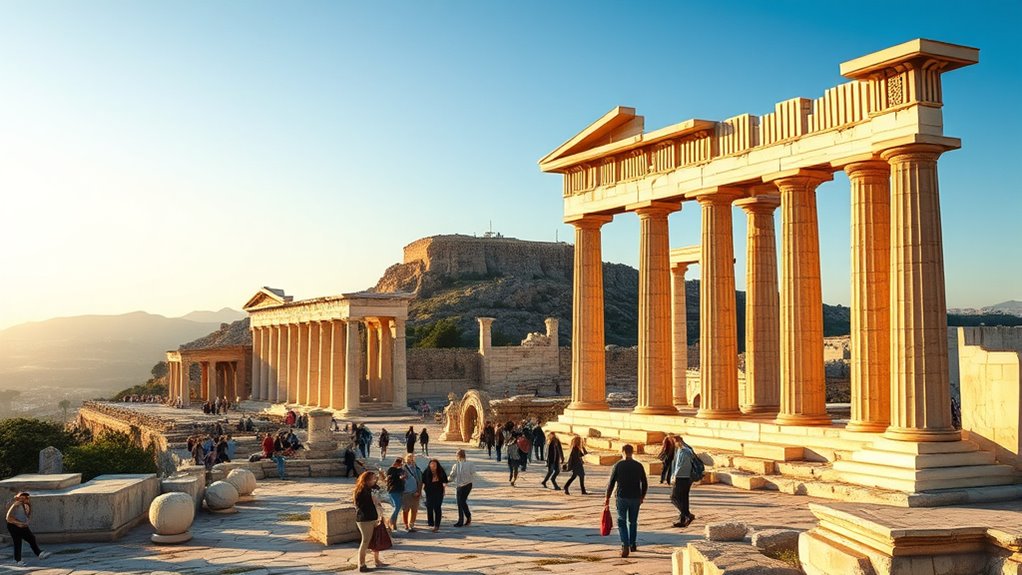
Planning your visit around the Acropolis’s seasonal operating hours and closure dates is crucial to make certain you don’t miss out. The site operates from 8:00 AM to 5:00 PM during winter (November 1 – March 31) and extends to 8:00 PM in summer (April 1 – October 31). Keep in mind that last entries are 30 minutes before closing, so arrive early, especially during peak seasons. The Acropolis closes on major holidays like January 1, March 25, and December 25-26, as well as some religious days. Reduced hours occur on December 24 and 31, and Orthodox Holy Saturday. Planning your visit around these dates ensures you won’t be disappointed or caught off guard by closures or limited hours.
Tips for Securing Affordable and Free Entrance Opportunities
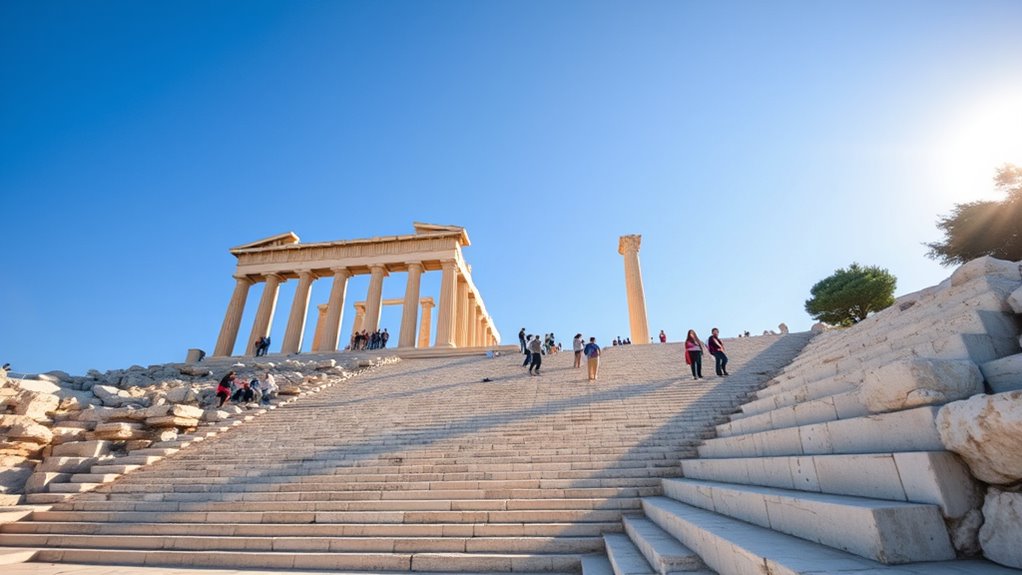
Taking advantage of free entry days is one of the best ways to explore the Acropolis without spending extra money. To maximize your savings, plan your visit around these key dates.
- Check the free admission days on the first and third Sundays from November to March.
- Visit on March 6, April 18, May 18, or during the last weekend of September for free entry.
- Remember that certain holidays like March 25, May 1, and December 25-26 also offer free access.
- Arrive early or late in the day to avoid crowds, especially during free days, and arrive 30 minutes before your scheduled entry time. This way, you’ll get the most out of your visit without extra costs.
- Planning your visit during visitor flow periods can help you avoid peak crowds and enjoy a more relaxed experience. Being aware of crowd management strategies can further enhance your experience by selecting less busy times. Additionally, considering heat levels during summer months can make your visit more comfortable and enjoyable. Moreover, understanding the best times to visit can help you optimize your experience based on your preferences.
Optimal Strategies for Photography and Sightseeing
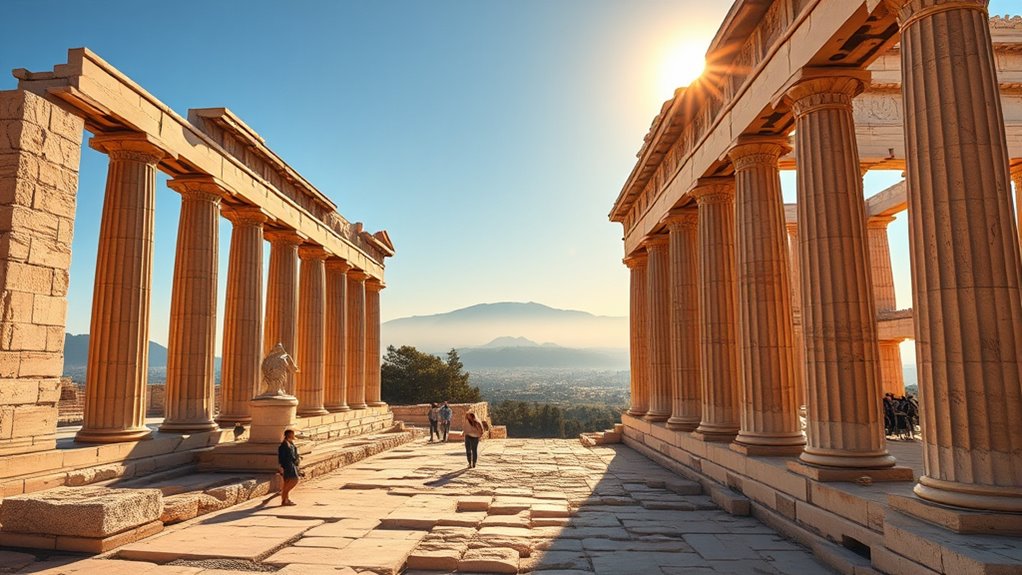
To capture stunning photographs and enjoy a memorable sightseeing experience at the Acropolis, timing your visit is key. Aim for early mornings at 8 AM, when crowds are minimal and lighting is soft, perfect for photos. The last hour before closing also offers low visitor numbers and beautiful sunset views. Consider visiting during shoulder seasons like spring or fall for milder weather and fewer tourists. Use the table below to plan your photography and sightseeing:
| Time Slot | Crowd Level | Best For | Weather Conditions |
|---|---|---|---|
| 8:00 AM | Very Low | Photography & Exploration | Cool, calm, ideal lighting |
| 10:00 AM – 2:00 PM | Peak Crowds | Avoid unless you like crowds | Hot, busy, challenging light |
| 4:00 PM – 6:00 PM | Low | Sunset photos & relaxed visits | Cooler, golden hour light |
| Last Hour Before Closing | Very Low | Final photos & peaceful experience | Comfortable, fading light |
| Midday | Very High | Avoid for sightseeing | Hot, crowded, difficult lighting |
Additionally, plan your visit during shoulder seasons for the most comfortable experience. Being aware of crowd levels can help you optimize both your photography and sightseeing enjoyment. Recognizing the importance of timing can greatly enhance your overall experience at historical sites. Incorporating visitor management strategies can also improve your overall visit.
How to Maximize Your Experience During Different Seasons
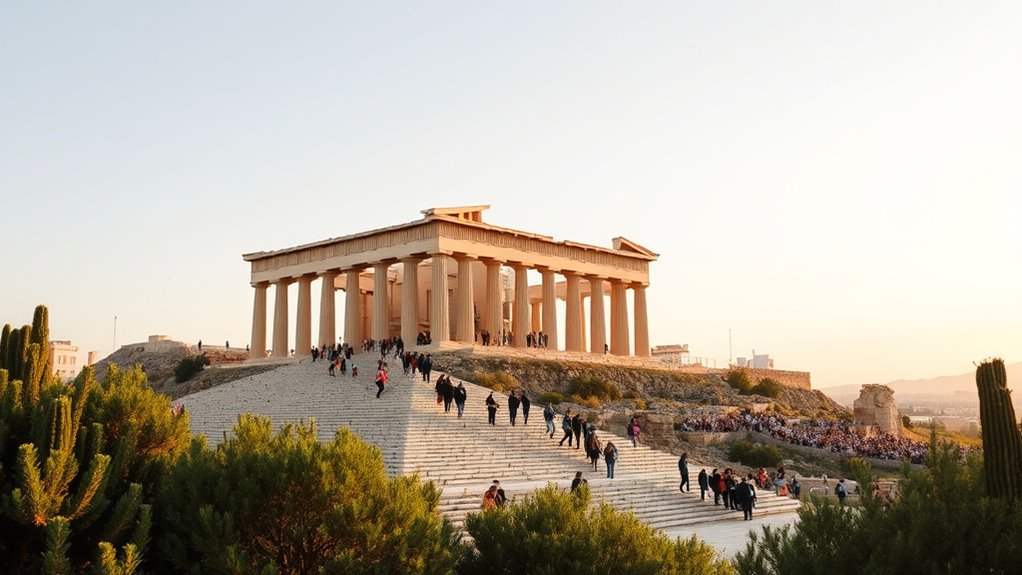
To get the most out of your visit, consider visiting during spring and fall when temperatures are mild and crowds are smaller. In summer, plan early morning or late afternoon trips to escape the heat and busy hours, especially during July and August. During winter, take advantage of cooler weather and shorter days by visiting early in the day for a comfortable experience. Additionally, understanding seasonal crowd patterns can help you choose the best times for a more relaxed visit. Being aware of active voice detection tools can also assist in improving your descriptions and narrative style for a clearer, more engaging presentation. Moreover, exploring timing strategies can further optimize your experience by avoiding peak hours and enjoying the site at a more leisurely pace.
Spring and Fall Comfort
Spring and fall are ideal seasons to visit the Acropolis because the weather is mild and comfortable, making your experience more enjoyable. During these months, temperatures are pleasant, and crowds are generally lighter, giving you better access to the site’s wonders. To maximize your visit, consider these tips:
- Arrive early at 8 AM to enjoy cooler temperatures and fewer visitors
- Plan your visit during weekdays to avoid weekend crowds
- Schedule outdoor photography sessions in the late afternoon for perfect lighting
- Dress in layers to adapt to fluctuating temperatures during the day
- Be mindful of seasonal weather fluctuations, which can influence your comfort and the overall experience.
Summer Heat Strategies
Are you wondering how to enjoy the Acropolis comfortably during the scorching summer months? The key is planning your visit early or late in the day to avoid the intense heat and crowds. Arrive right at opening at 8 AM or during the final hours before closing for cooler temperatures and fewer visitors. Use this table to help you plan:
| Time of Day | Benefits |
|---|---|
| Early Morning (8 AM) | Cooler, fewer crowds, ideal lighting |
| Late Afternoon (6-8 PM) | Cooler, sunset views, fewer visitors |
| Midday (10 AM-2 PM) | Hot, crowded, least suitable for comfort |
| Evening (Post 8 PM) | Not available during summer hours, but ideal in shoulder seasons |
Staying hydrated, wearing hats, and using sunscreen are essential for summer visits.
Winter Visiting Tips
During winter months, visiting the Acropolis offers a more peaceful experience with fewer tourists and shorter lines. To make the most of your trip, plan strategically.
- Arrive early at 8 AM to enjoy minimal crowds and better lighting for photos.
- Dress warmly, as winter temperatures can be chilly, especially in the mornings and late afternoons.
- Take advantage of the shorter hours by leaving around 4:30 PM, before the site closes.
- Consider visiting on free entry days like the first or third Sunday of each month to avoid extra costs and large crowds.
Winter’s cooler weather means fewer visitors, but shorter daylight hours require efficient planning. This season offers a serene, less rushed experience.
Frequently Asked Questions
Are There Specific Days When the Acropolis Is Less Crowded?
You’ll find the Acropolis less crowded on certain days, especially during the shoulder seasons of spring and fall. Visiting early mornings right at opening time or late afternoons just before closing also helps avoid the busiest times. Additionally, plan your visit on the first or third Sunday of each month between November and March, when entry is free and crowds are typically lighter. Avoid weekends and peak summer months for a quieter experience.
How Do Weather Conditions Affect Visiting Plans During Different Seasons?
Weather conditions considerably influence your visit plans to the Acropolis. During summer, high temperatures and heatwaves make early morning or late afternoon visits more comfortable. In spring and fall, milder weather allows flexible timing, while winter offers cooler temperatures but shorter daylight hours. Rain or storms can disrupt your plans, so check the forecast and choose days with clear weather for the best experience. Always prepare for seasonal temperature variations to enjoy your visit fully.
Can I Visit the Acropolis With a Timed Ticket Outside Peak Hours?
Yes, you can visit the Acropolis with a timed ticket outside peak hours. While midday and summer months draw crowds, early mornings and late afternoons offer a quieter experience. Arrive 30 minutes before your slot to avoid lines and enjoy the site with fewer visitors. This way, you’ll beat the crowds, capture better photos, and experience the monument’s beauty in a more relaxed atmosphere.
Are There Any Special Events or Festivals That Impact Visiting Times?
Yes, special events and festivals can influence your visiting times at the Acropolis. During major celebrations like Greek Independence Day on March 25 or religious festivals, the site may host events that restrict access or change operating hours. Verify the official schedule before your visit, as these occasions might require advanced arrangements or lead to closures. Planning ahead ensures you enjoy the site without unexpected disruptions during special events.
What Should I Know About Accessibility During Busy or Closed Days?
During busy or closed days, accessibility can be limited, with some areas temporarily restricted. Notably, on national holidays and during peak seasons, certain paths may be closed to accommodate large crowds, so check ahead. You should plan your visit on open days and consider accessible routes, especially during peak hours. Arrive early or late in the day for easier access, and always verify current info to avoid surprises.
Conclusion
Think of visiting the Acropolis like catching a perfect wave—you need timing, patience, and a little luck. By planning your visit during quieter hours and seasons, you’ll avoid the crowds and heat, surf the best conditions, and truly connect with history. When I visited early in the morning, I felt like I had the whole ancient site to myself, a rare moment to soak in the timeless beauty without distractions. With the right strategy, your trip will be unforgettable.
Halloween Picks
halloween
As an affiliate, we earn on qualifying purchases.