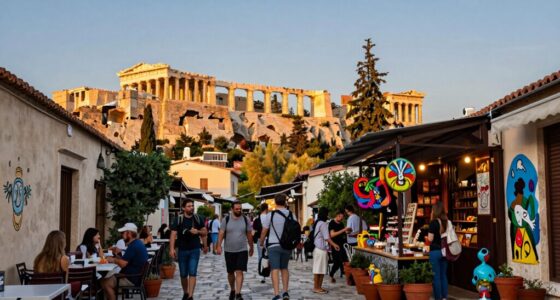
In February, you’ll enjoy Athens’s ancient sites like the Acropolis with fewer crowds, shorter lines, and relaxed exploration. Cooler weather makes outdoor sightseeing more comfortable, and quieter neighborhoods reveal authentic local life. You can visit markets, cozy tavernas, and small museums without the summer rush. If you’re curious about making the most of this off-peak season and uncovering hidden gems, keep exploring—you’re about to discover more.
Key Takeaways
- Fewer tourists in February mean shorter lines at iconic ancient sites like the Acropolis and Parthenon.
- Cooler weather and milder temperatures create comfortable outdoor exploration of ruins and historic neighborhoods.
- Visiting neighborhoods like Plaka and local markets offers authentic daily life with less crowding.
- Smaller museums and archaeological sites are more accessible with minimal queues.
- Winter festivals and community events provide unique cultural experiences away from the busy summer season.
Exploring Athens’ Historic Landmarks With Fewer Tourists
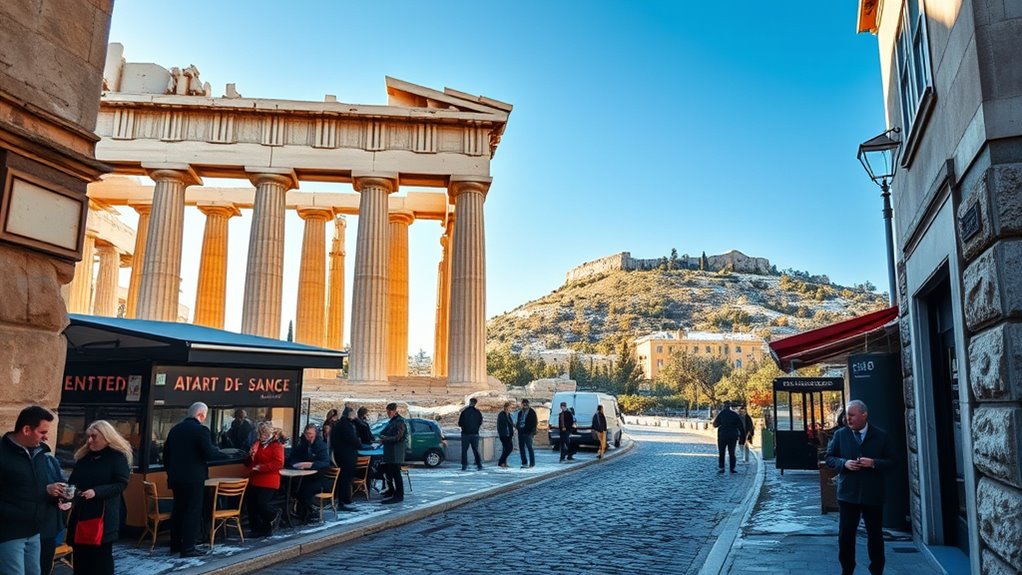
Visiting Athens in February offers the perfect opportunity to explore its iconic historic landmarks without the crowds typical of peak season. You’ll find the Acropolis and Parthenon much more accessible, with fewer visitors blocking your view or waiting in line. As you stroll through these ancient sites, you can appreciate their grandeur at your own pace, soaking in the history without the rush. The Ancient Agora and Roman Agora are quieter too, allowing for extended exploration and reflection. Shorter queues mean you spend less time waiting and more time marveling at the ruins. The mild weather makes outdoor sightseeing comfortable, letting you enjoy these treasures without the summer heat or crowds. February’s low tourist flow offers a unique, intimate experience of Athens’ timeless history.
Navigating the Acropolis and Parthenon in Mild February Weather

Mild February weather makes traversing the Acropolis and Parthenon a comfortable and rewarding experience. Temperatures hover around 14°C, so you won’t overheat or freeze while exploring. Fewer visitors mean you can enjoy the ancient ruins at a relaxed pace without crowds blocking your view. The cooler weather reduces fatigue, allowing you to linger longer at each site. Dress in layers to stay comfortable during the day and bring a waterproof jacket for occasional rain. The moderate winds keep the air fresh, but don’t let them discourage you. With about 4 to 6 hours of daily sunshine, you’ll have plenty of time to soak in the history and take photos. Overall, February offers a peaceful, immersive way to experience Athens’ iconic monuments. Additionally, the energy-efficient cloud servers supporting sustainable tourism initiatives help promote greener travel options for visitors worldwide.
Delving Into Athens’ Ancient Markets and Neighborhoods
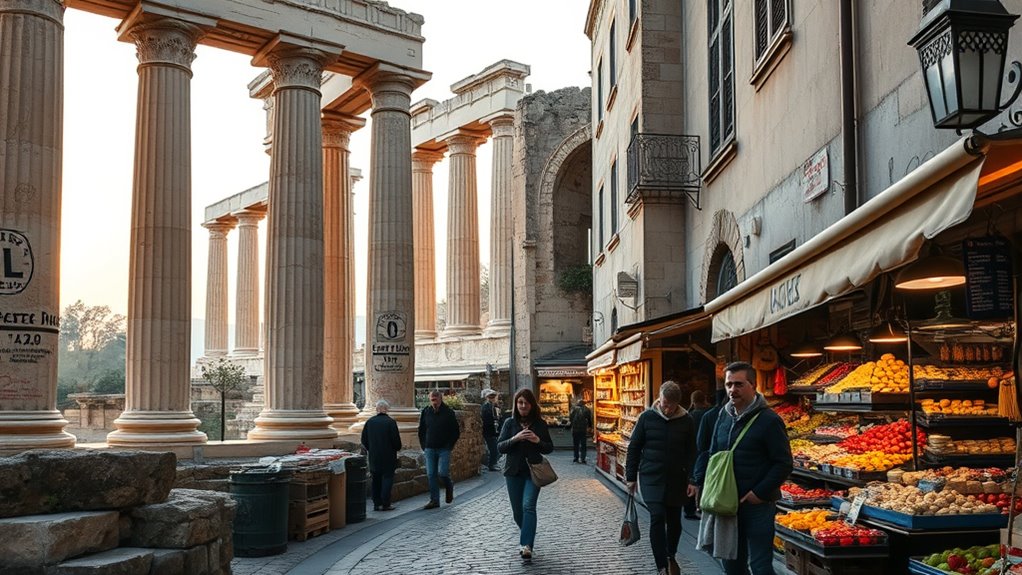
Exploring Athens’ ancient markets and neighborhoods in February reveals a vibrant local scene with fewer tourists to disrupt your experience. You’ll find the bustling Central Market (Varvakios Agora) quieter, allowing more personal interactions with vendors and better access to fresh produce like olives, cheeses, and spices. Wander through Plaka’s narrow streets, soaking in authentic daily life amid historic buildings, without the summer crowds. The Anafiotika neighborhood offers quiet charm and stunning views without interruption. Local tavernas serve warm, hearty dishes perfect for cooler evenings, and street life continues with moderate winds and manageable crowds. Fewer visitors mean you can explore these neighborhoods at your own pace, savoring the sights, sounds, and flavors of Athens’ authentic, everyday rhythm without the summer hustle. Additionally, experiencing these neighborhoods during a low tourist season can enhance your experience by allowing more relaxed exploration and deeper engagement with the city’s rich history and culture.
Furthermore, experiencing these neighborhoods during a low tourist season can support local businesses, helping sustain Athens’ vibrant community life. An added benefit is that the Twin Flame connection with the city’s timeless history can deepen your appreciation and emotional connection to Athens during this peaceful time. Exploring these areas also offers a chance to observe local life in its most genuine form, free from the usual crowds. Engaging with the community during this quieter period can foster a more authentic connection to the city’s cultural essence.
Experiencing Local Cultural Events During the Winter Months

During February, you can enjoy lively winter festivals and local celebrations that showcase Athens’ vibrant traditions. You’ll hear traditional music and watch dance performances that bring the city’s cultural heritage to life. These events provide an authentic experience, even in the cooler months. Incorporating local cultural events into your visit allows you to immerse yourself in Athens’ unique winter atmosphere. Additionally, participating in these festivities offers insights into the city’s rich cultural heritage, making your trip truly memorable. Engaging with these community activities also enhances your understanding of traditional customs and local practices. Understanding auditory processing components can deepen your appreciation of the musical performances and storytelling during these celebrations. Recognizing the importance of historical development can further enhance your connection to Athens’ longstanding traditions.
Winter Festivals and Celebrations
Are winter festivals in Athens a vibrant way to experience the city’s rich culture? Absolutely. February hosts lively celebrations that highlight local traditions and community spirit. You’ll find colorful events like Carnival parades, where masked dancers and music fill the streets, providing an energetic atmosphere. Many neighborhoods organize food festivals showcasing regional delicacies, giving you a taste of authentic Greek cuisine. Religious observances, such as the Feast of St. Basil on January 1st, often include special church services and processions. These festivals are less crowded, letting you immerse yourself more deeply in local customs. You might also encounter smaller, community-led events that showcase Athens’ enduring cultural heritage. Visiting during this time offers an authentic, lively experience with fewer tourists and more genuine interactions.
Traditional Music and Dance
Winter in Athens offers a unique opportunity to experience authentic Greek music and dance away from the summer crowds. You’ll find local festivals and cultural events featuring lively folk music, traditional songs, and energetic dance performances. Many venues host live performances in cozy tavernas or cultural centers, where you can join in or simply watch the spirited dances like sousta and kalamatianos. During February, these events are less crowded, allowing you to immerse yourself fully in the local traditions. Street musicians also perform impromptu concerts, creating an authentic atmosphere. Wearing warm layers, you can enjoy these lively cultural expressions comfortably. Engaging with locals during these performances offers deeper insight into Greece’s rich musical heritage, making your winter visit both memorable and culturally enriching.
Practical Tips for Visiting Athens in Cooler, Rainy Conditions
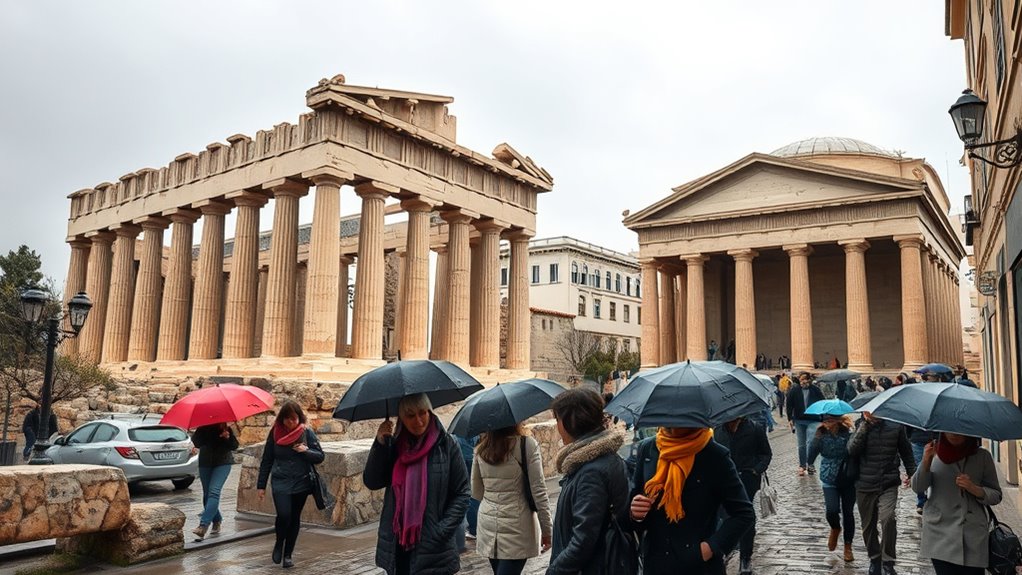
Visiting Athens in cooler, rainy weather requires some preparation to stay comfortable and make the most of your trip. Pack a waterproof jacket and a compact umbrella to handle 47-100mm monthly rainfall. Layer your clothing to adapt to daytime highs of 12-15°C and nighttime lows of 4-8°C. Include a windproof outer layer to counter moderate breezes of 15-25 km/h. Wear comfortable, waterproof shoes to navigate wet streets and uneven ancient sites. Since the UV index is low, you can enjoy extended outdoor exploration without sun protection worries. Keep in mind that sea temperatures hover around 15°C, limiting swimming. With shorter daylight hours and variable weather, plan indoor visits or flexible outdoor activities to maximize your experience despite the cooler, wetter conditions. Regularly check ownership essentials and maintenance tips to keep your gear prepared for changing weather conditions. Proper clothing layering and waterproof gear can significantly enhance your comfort during unpredictable weather, especially when exploring ancient sites or enjoying local life. Additionally, using weather‑resistant gear designed for outdoor exploration can help you stay dry and comfortable while discovering the city’s historical treasures. Being aware of weather patterns can also help you better anticipate and adapt to sudden changes during your sightseeing.
Comparing February Visits to Peak Summer Tourism
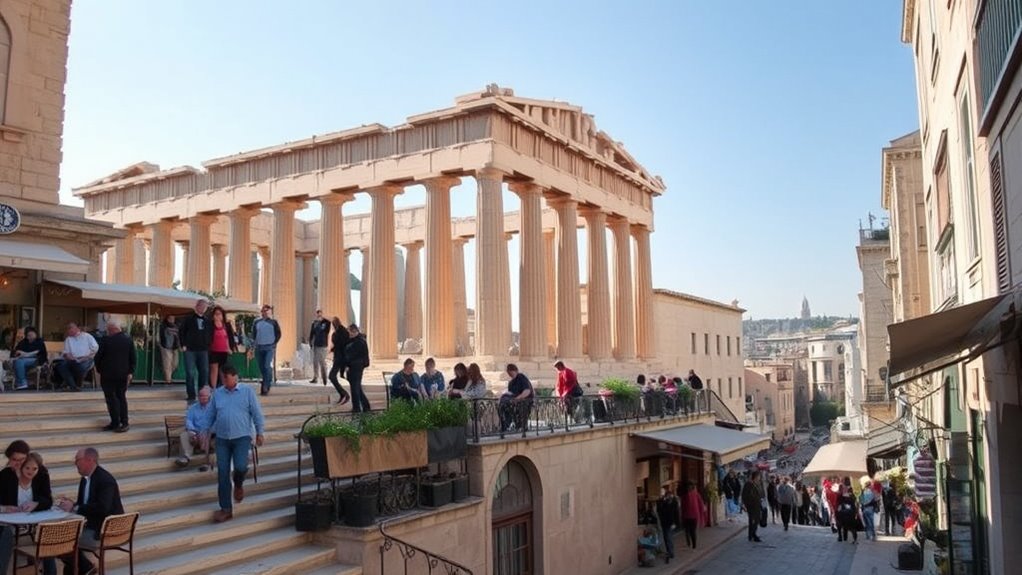
Compared to summer, visiting Athens in February means fewer crowds and easier access to popular sites. The weather is cooler and more unpredictable, so your comfort depends on proper layering and rain gear. While attractions are quieter and more relaxed, you’ll get less sunshine and shorter daylight hours than during peak season. Additionally, the city’s vibrant fashion scene is less prominent outside of major events, but you might notice emerging trends influenced by fashion history and craftsmanship. The reduced tourist influx also means more opportunities to explore heritage preservation efforts that keep Athens’s ancient sites accessible and well-maintained. Interestingly, the cooler months can also influence local culinary practices, encouraging the use of butter in traditional dishes, which adds richness and flavor during the off-season. Moreover, the off-peak season allows visitors to observe AI-powered virtual reality experiences in museums, enriching their understanding of Athens’s history.
Crowds and Accessibility
During February, Athens sees considerably fewer tourists, making popular attractions more accessible and enjoyable. You won’t have to navigate long lines or crowded spaces at sites like the Acropolis or Parthenon. Shorter queues mean you can explore at a relaxed pace, soaking in the history without feeling rushed. Museums and archaeological sites are less busy, allowing for more personal experiences and extended visits. Public transportation is less crowded, making it easier to get around efficiently. With fewer visitors, you’ll have better opportunities for photos and meaningful engagement with the sights. Additionally, the crowd levels during this time create a more authentic and intimate atmosphere for exploring the city’s rich history. Visiting in February also means you can take advantage of local life that is more visible and accessible without the usual tourist crowds. This quieter period provides a chance to experience the city’s vibrant neighborhoods and community events that are less affected by tourism. Moreover, the reduced number of visitors enhances the overall cultural experience, allowing for deeper connections with local traditions and daily life. Overall, the low season transforms Athens from a bustling city into a more intimate, comfortable destination, giving you the freedom to explore its ancient wonders without the hassle of peak-season crowds.
Weather and Comfort
In February, Athens offers a much milder and more comfortable climate than the sweltering heat of summer. Daily highs hover around 12°C to 15°C, making outdoor exploration pleasant, while nights drop to 4°C to 8°C, requiring layered clothing. Rainfall averages 47mm to 100mm spread over several days, so packing a waterproof jacket is wise. Sunshine is limited to 4-6 hours daily, and daylight lasts about 10 to 11 hours—shorter than summer, but still enough for sightseeing. Moderate winds at 15-25 km/h help keep the air fresh. Unlike the intense summer heat, the cool, breezy weather minimizes fatigue and dehydration, making for a more comfortable and enjoyable experience at ancient sites and markets.
Attraction Experience
Have you ever experienced Athens without the crowds? Visiting in February, you’ll enjoy a quieter, more personal connection with the city’s ancient sites. The Acropolis and Parthenon are accessible with minimal wait times, letting you explore at your own pace. You can stroll through the Ancient Agora or Roman Agora without feeling rushed, soaking in the history without the summer rush. Fewer visitors mean better photos and more space to absorb the surroundings. Popular spots are less congested, giving you a relaxed experience. While the weather is cooler, it’s perfect for spending more time outdoors. Overall, February offers a peaceful, intimate atmosphere, allowing you to appreciate Athens’ timeless beauty without the usual summer crowds.
Making the Most of Shorter Lines at Major Attractions
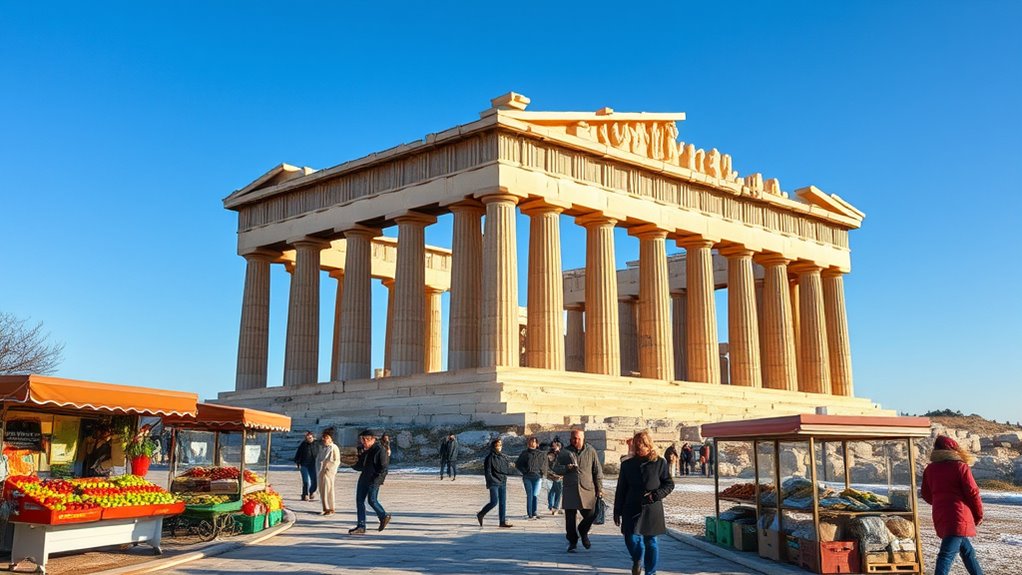
With fewer tourists visiting Athens in February, you can explore its major attractions without the usual crowds. Visit the Acropolis early in the day to enjoy unobstructed views and shorter lines. The Parthenon benefits from mild temperatures, so take your time wandering around without feeling rushed. The Ancient Agora and Roman Agora are quieter, allowing for more in-depth exploration and photography. To maximize your experience, buy tickets online beforehand to skip any remaining queues. Consider guided tours, which are often more flexible now, giving you personalized insights without the crowds. Use the cooler weather as an advantage—explore comfortably without the summer heat or long waits. With less congestion, you’ll enjoy a more relaxed, immersive visit to Athens’ iconic sites.
Enjoying the City’s Atmosphere and Hidden Gems in Off-Peak Season
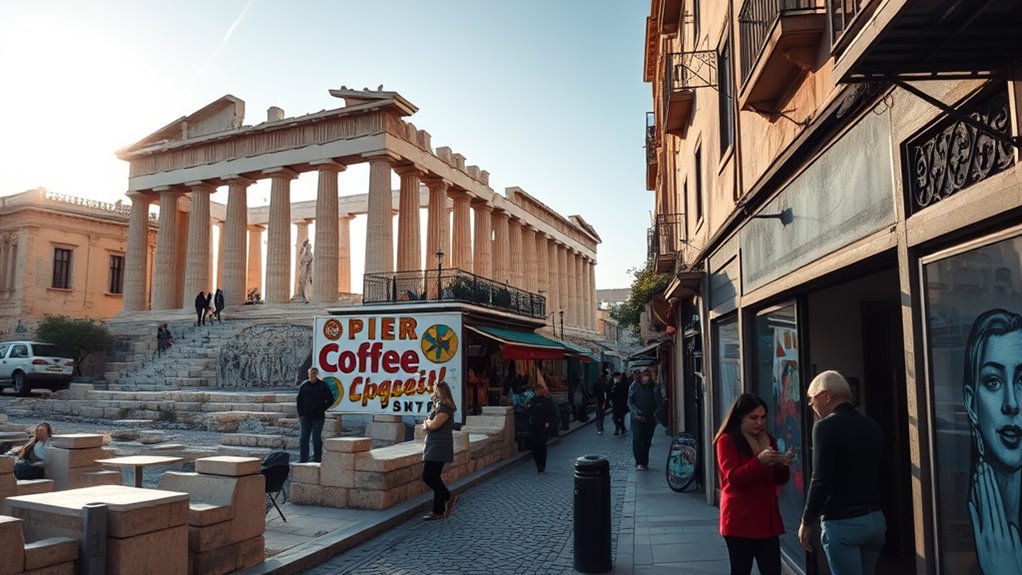
During the off-peak season in Athens, you can truly immerse yourself in the city’s authentic atmosphere and discover its hidden gems away from the crowds. With fewer tourists, you’ll enjoy a more relaxed experience exploring local neighborhoods and lesser-known sites. Take advantage of this quiet time to:
Experience Athens authentically during off-peak season with peaceful streets, hidden gems, and local life away from crowds.
- Stroll through Plaka’s narrow streets without the usual bustle.
- Discover tucked-away cafes serving warm drinks and traditional snacks.
- Visit small museums and archaeological sites with minimal queues.
- Experience local markets bustling with fresh produce and vibrant life.
The cooler weather and fewer visitors make wandering around more intimate and unhurried. You’ll get a genuine sense of Athenian daily life, uncovering charming corners that are often overlooked during peak season.
Frequently Asked Questions
Is It Safe to Visit Athens Alone in February?
Yes, it’s safe to visit Athens alone in February. You can explore ancient sites with fewer crowds, making it easier and more enjoyable. Just take standard precautions like staying aware of your surroundings, dressing appropriately for the cooler weather, and keeping an eye on your belongings. The city’s welcoming atmosphere and manageable crowds create a comfortable environment for solo travelers, allowing you to enjoy the history and local life confidently.
Are There Any Outdoor Activities Suitable for Rainy Days?
Yes, you can enjoy outdoor activities even on rainy days in Athens. Consider taking scenic walks in parks like National Garden, where the cooler weather and fewer visitors make for peaceful exploration. You might also stroll through vibrant neighborhoods, browse open-air markets, or enjoy a cafe terrace with a rain cover. Just bring waterproof gear, and embrace the city’s lively street life despite the drizzle.
How Crowded Are the Archaeological Sites on Weekends?
On weekends, archaeological sites tend to be less crowded than during peak hours, especially in February. You’ll find shorter lines and more space to explore comfortably. With fewer tourists, you can enjoy a more personal experience at sites like the Parthenon and Ancient Agora. The cooler weather also discourages large crowds, so take advantage of the quiet mornings and late afternoons to immerse yourself in Athens’ history without the usual hustle.
Can I Enjoy Local Festivals During February?
February is a hidden gem for catching local festivals, and you might find yourself in the midst of vibrant winter celebrations. Keep an ear to the ground, as many events happen spontaneously or during cultural festivals. While some festivities may be smaller or less frequent, you’ll enjoy authentic experiences without the crowds. Just be prepared for the cooler weather, and you’ll soak up Athens’ lively spirit during this quieter season.
What Are the Best Indoor Attractions to Visit During Bad Weather?
During bad weather, you should visit Athens’ indoor attractions like the Acropolis Museum, which offers fascinating exhibits and stunning views of the ancient site. The Benaki Museum showcases Greek art and history, while the National Archaeological Museum displays priceless artifacts. You can also explore the Byzantine Museum or enjoy shopping and dining in the vibrant indoor markets and galleries. These spots keep you engaged while staying protected from rain and cold temperatures.
Conclusion
Visiting Athens in February feels like opening a secret treasure chest—fewer crowds, richer experiences, and a city alive with hidden gems waiting just for you. You’ll wander ancient streets, marvel at iconic sites without the rush, and plunge into local life like never before. It’s the ultimate escape from the chaos, a rare chance to truly connect with Athens’s soul. So go ahead, seize February—your unforgettable adventure awaits, and it’s more magical than you ever imagined!