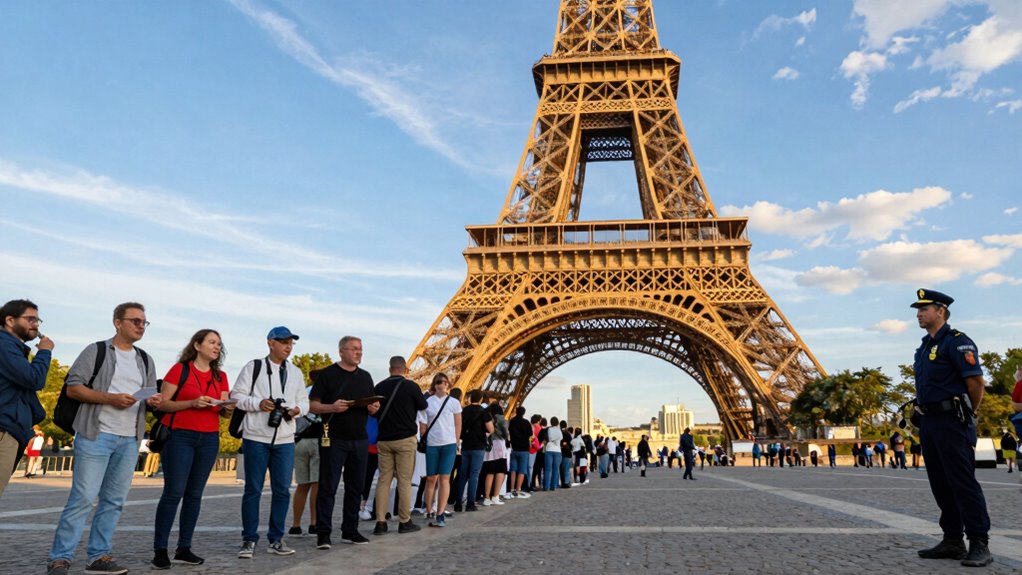
To visit the Eiffel Tower smoothly, plan to arrive early in the morning (9am-11am) or late in the evening after 5pm when crowds are lighter. Buy your tickets online in advance to skip long lines and secure your preferred time slot. Be prepared for security checks, which can take time during busy seasons, and expect longer waits during peak months. If you want helpful tips to make your visit easier, keep exploring.
Key Takeaways
- Visit early mornings or late evenings to avoid crowds and reduce wait times at security lines.
- Purchase tickets online in advance to skip long lines and secure preferred time slots.
- Plan your visit during off-peak seasons like winter or early spring for a quieter experience.
- Arrive 15–20 minutes early and be prepared for security checks involving bag scans and metal detectors.
- Allocate 2–3 hours for the full visit, including sightseeing, photos, and potential waits during busy periods.
Choosing the Best Time of Day to Visit
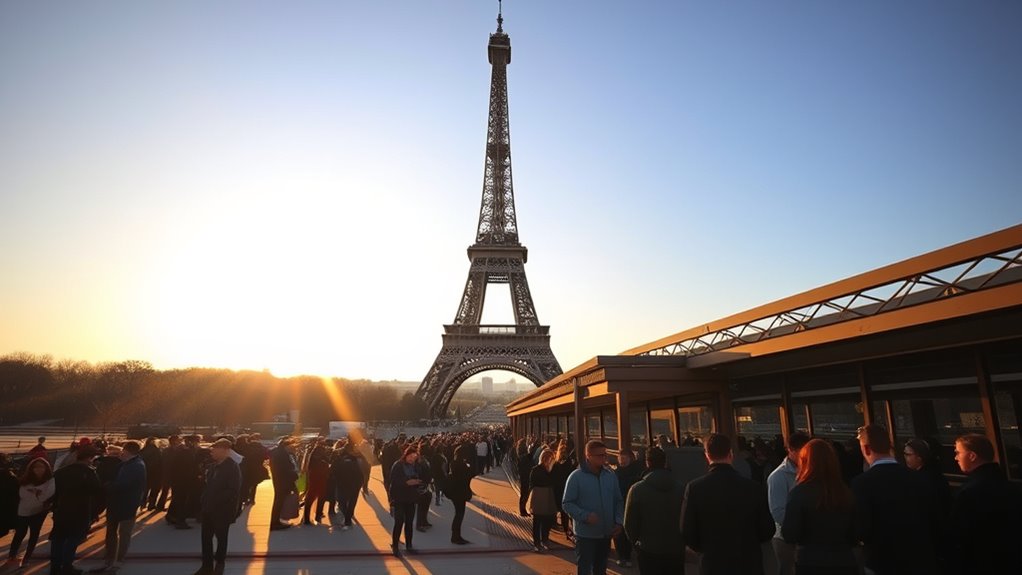
To make your visit to the Eiffel Tower more enjoyable, choosing the right time of day can make a big difference. Morning visits between 9am and 11am tend to be quieter, giving you a more relaxed experience with fewer crowds. If you prefer a more comfortable atmosphere, late afternoons or evenings after 5pm are ideal, especially for sunset views and softer lighting. Visiting between 8pm and 10:30pm usually means shorter lines and a calmer environment, perfect for capturing beautiful photos. Early mornings are cooler and less busy, making them a great choice if you want to avoid crowds entirely. Remember, peak hours from late morning to early afternoon are crowded, so plan accordingly if you want to skip long queues. Smart timing can also help you avoid long security lines and make your visit smoother. Additionally, visitor flow patterns can vary depending on the season, so checking local advisories can help you choose the best time. Being aware of crowd management strategies can further enhance your experience and help you enjoy the monument without unnecessary delays. Furthermore, some reputable travel guides and specialized tour services can provide insights into optimal visiting times based on current conditions. Understanding local traffic and transportation patterns can also contribute to a more seamless visit, especially if you plan to arrive during busy hours.
Navigating Peak Seasons and Holidays
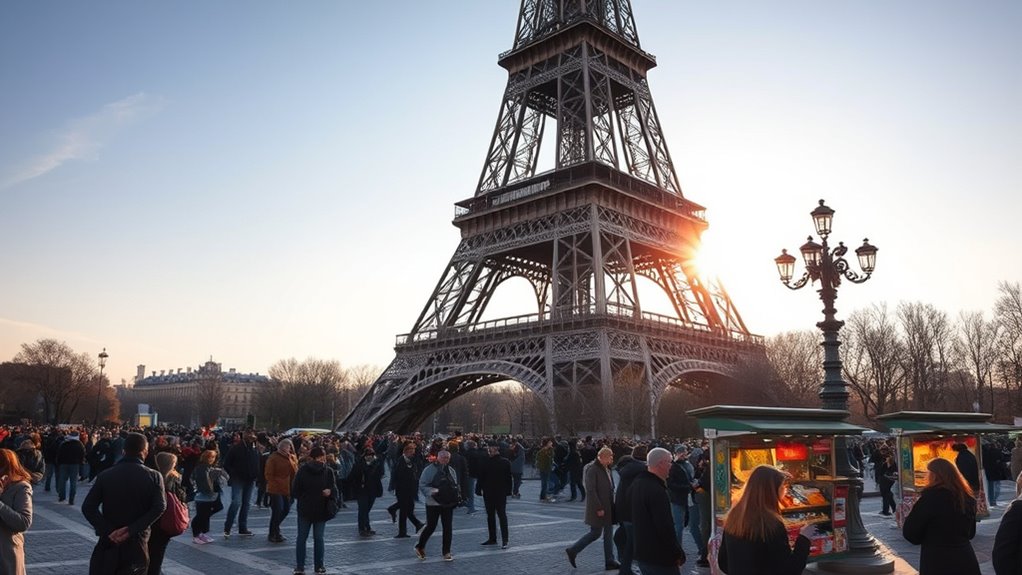
During peak seasons and holidays, you’ll encounter larger crowds and longer waits at the Eiffel Tower. Traveling during off-peak times can make your visit more enjoyable and less hectic. Planning ahead for busy periods guarantees you get the most out of your experience.
Peak Periods and Crowds
Ever wondered when the crowds at the Eiffel Tower are at their peak? During July 5–August 31, 2025, expect the highest visitor numbers, with busy days lasting from late morning through early evening. December 20, 2025–January 5, 2026, also sees significant crowds, especially around Christmas and New Year’s. Spring months like April 5–May 4, 2025, and fall from October 18–November 2, 2025, bring increased visitors, but crowds are generally more manageable outside peak hours. Midday tends to be busiest, with long queues and wait times often exceeding 30 minutes or more. To avoid the worst of the crowds, plan your visit early in the morning or later in the evening, especially during these peak periods. Additionally, understanding Free Floating concepts can help you choose less crowded times and optimize your visit.
Holiday vs. Off-Season Visits
Visiting the Eiffel Tower during holidays and peak seasons means facing larger crowds and longer waits, but it also offers unique experiences you can’t get during quieter times. During these periods, expect busy security lines, full observation decks, and extended ticket sell-outs, especially in summer and around major holidays like Christmas and New Year’s. The atmosphere is lively, with special events and festive decorations, making your visit memorable. However, you’ll need patience for longer queues, often lasting 30 minutes to several hours. If you prefer a calmer experience, consider visiting during off-season months like winter or early spring, when crowds thin out and lines shorten. Planning ahead, booking tickets early, and choosing less busy times can make your visit more enjoyable regardless of the season. Additionally, understanding peak season patterns can help you better prepare for the busiest times, including crowd management strategies to optimize your visit. Recognizing visitor flow trends can also aid in selecting the best times to visit for a more relaxed experience. To enhance your visit, being aware of security procedures can help you navigate the lines more efficiently. Being aware of average wait times during different seasons can help set realistic expectations and improve your overall experience.
Planning for Busy Times
Planning for busy times at the Eiffel Tower requires careful preparation, especially during peak seasons and holidays when crowds can be overwhelming. To avoid long lines, aim to visit early in the morning between 9am and 11am or later in the evening after 5pm, when crowds are lighter. Be aware that July and August, as well as December and early January, see the highest visitor numbers. Tickets sell out quickly during peak periods, so book your tickets well in advance, ideally on release days before 10:30am. Arrive early or late to minimize wait times, and consider visiting on weekdays rather than weekends. Keep in mind that security lines can also be lengthy, so plan extra time. Staying flexible and prepared helps guarantee a smoother experience during these busy times. Additionally, outdoor‑kitchen essentials can serve as a reminder to bring necessary supplies to stay comfortable and organized while waiting. Being aware of visitor flow patterns can also help you choose the best times to visit and avoid the busiest periods. Incorporating an understanding of crowd management strategies can further enhance your experience during peak times.
Planning Your Visit Around Peak Hours and Crowds
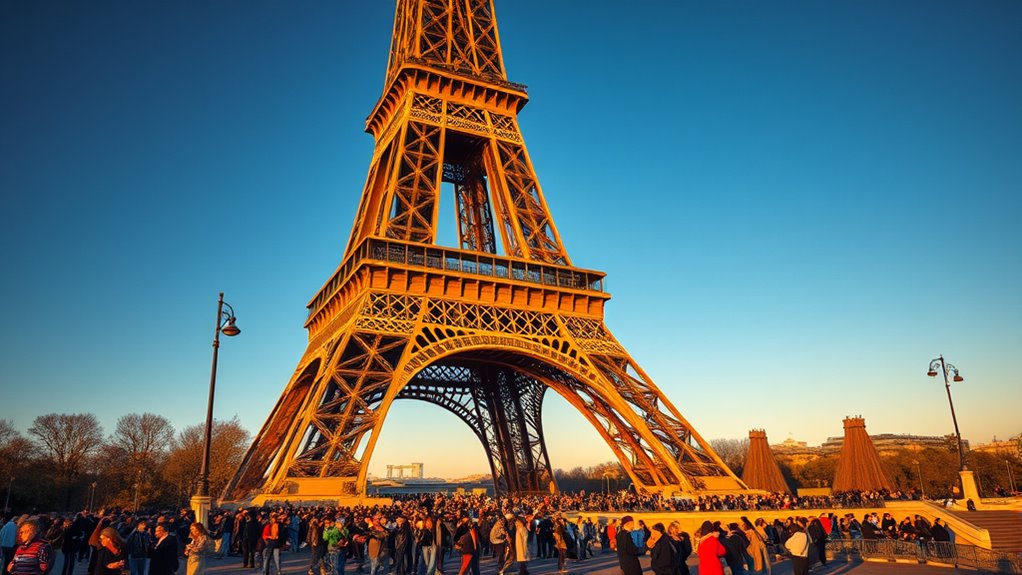
To avoid long lines and crowded spots, plan your visit during off-peak hours like early mornings or late evenings. You’ll find it’s much easier to enjoy the views and experience the tower without the crowds. Choosing the right time makes your trip more pleasant and less stressful.
Optimal Visit Times
Choosing the best times to visit the Eiffel Tower can substantially enhance your experience by minimizing crowds and long waits. To avoid peak times, aim for early mornings between 9am and 11am, when the crowds are lighter and lines shorter. Evening visits after 5pm are also more relaxed, especially around sunset, offering beautiful views with fewer visitors. During summer, try to arrive before 11am or after 8pm, as these windows typically feature lower attendance. Midday and early afternoon tend to be busiest, especially during peak seasons like July and August. By planning your visit during quieter hours, you’ll enjoy easier access, shorter queues, and a more comfortable experience while taking in the iconic views. Additionally, considering the timing of outdoor attractions can further improve your overall visit experience. Being aware of crowd patterns can help you select optimal days for visiting and avoid the busiest periods. For added convenience, booking tickets in advance can also help you skip long lines and save time during peak hours. Planning your visit around support breakfast options can also be a delightful way to start your day before heading to the Eiffel Tower, especially if you choose a nearby café or breakfast spot that offers quality options. Moreover, understanding the security procedures at the site can help you prepare and streamline your entry process.
Avoid Peak Crowds
Ever wonder how to dodge the busiest times at the Eiffel Tower? Planning your visit during quieter periods makes the experience more enjoyable. Aim for early mornings between 9am and 11am or late evenings after 5pm, when crowds thin out. Avoid peak hours from 11am to 5pm, especially during summer and holidays. Use this table to guide your timing:
| Time Slot | Best for | Crowds |
|---|---|---|
| 9am–11am | Quiet mornings | Light |
| 5pm–8pm | Sunset visits | Moderate |
| 8pm–10:30pm | Evening, fewer lines | Lower crowds |
Additionally, scheduling your visit according to seasonal patterns for optimal experience can help you avoid unexpected crowds and long wait times. Recognizing visitor flow trends can further enhance your planning for a more relaxed visit. Being aware of crowd density during different times can significantly improve your overall experience. Also, considering weather conditions can influence crowd levels and your comfort during the visit.
Understanding Security Lines and Queues
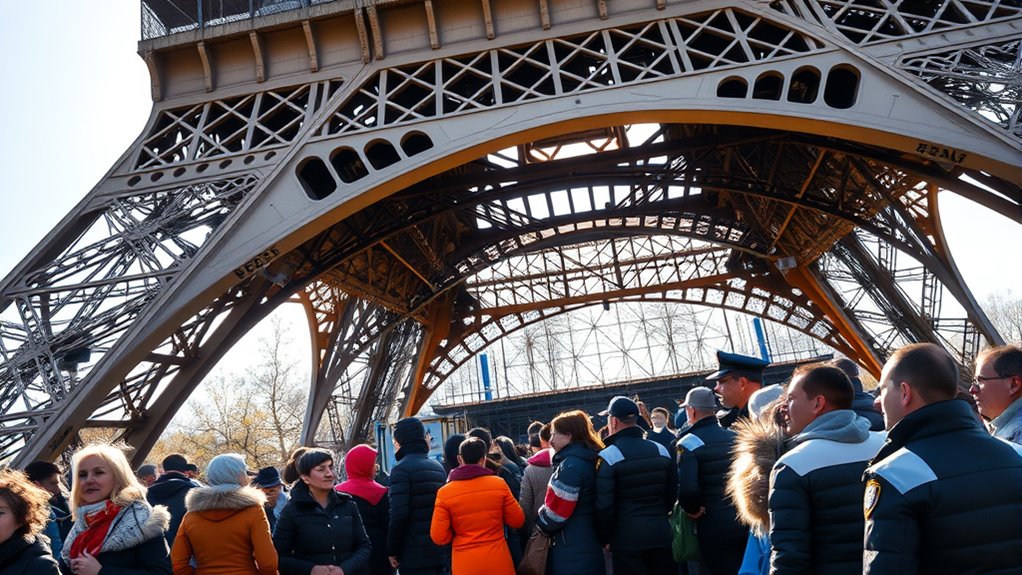
Security lines at the Eiffel Tower can vary greatly depending on the time of day and season. During peak hours, expect waits from 30 minutes to several hours, especially in summer or holidays. To minimize your wait, aim to arrive early in the morning between 9am and 11am or later in the evening from 8pm to 10:30pm, when crowds are lighter. If you have e-tickets, arrive about 15–20 minutes before your scheduled time to avoid delays. Be prepared for security checks involving bag scans and metal detectors. Remember, lines move faster during off-peak times, so plan your visit accordingly. Staying patient and choosing less busy hours will make your experience more enjoyable and less stressful.
Purchasing Tickets and Securing Your Spot
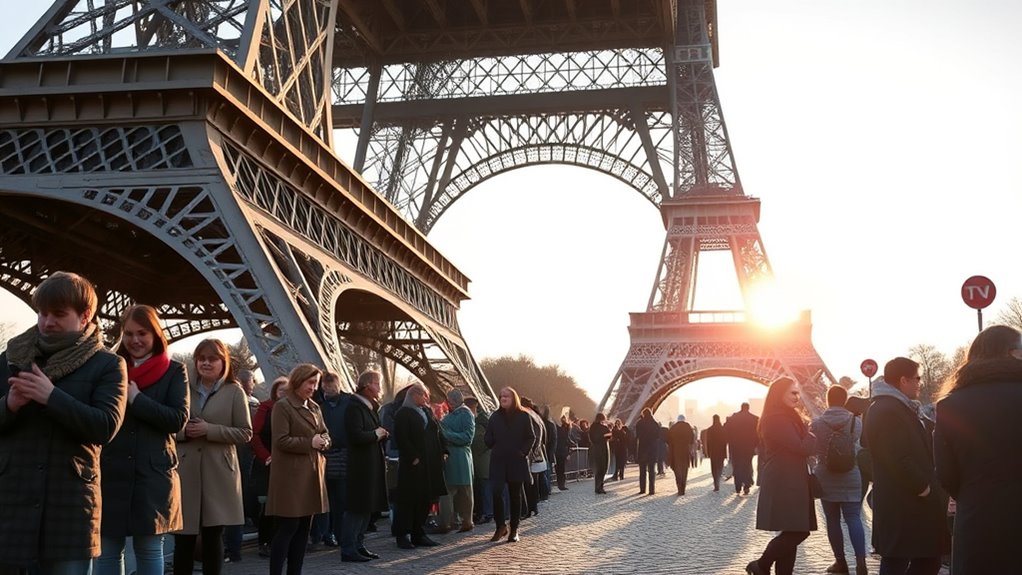
To make your visit smoother, it’s best to purchase your tickets in advance. Doing so helps you skip long lines and secure your preferred time slot. You can buy tickets online through official vendors or authorized partners. Remember, peak times sell out quickly—often by 10:30 am—so plan ahead. Here’s a quick overview:
| Ticket Type | Cost | Notable Features |
|---|---|---|
| Second floor stairs | €14.50 | Climb at your own pace |
| Second floor lift | €23.10 | Faster access, less effort |
| Top (lift to summit) | €36.10 (adults) | Stunning views, quick access |
Secure your spot early to avoid disappointment, especially during busy seasons.
Exploring Different Ticket Options and Costs
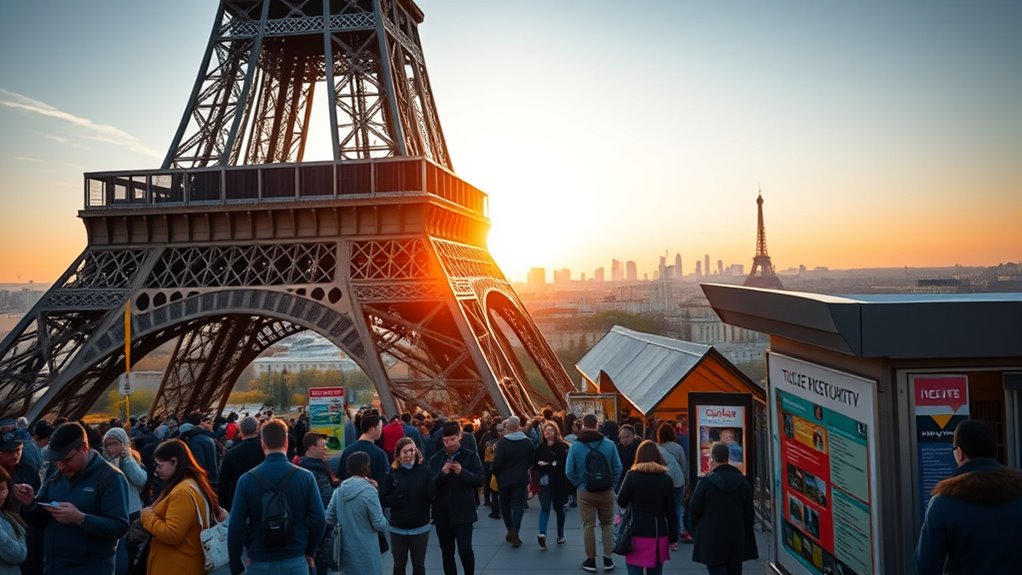
You have several ticket options to choose from, each with different prices depending on whether you take the stairs or elevator and which level you visit. It’s important to plan ahead, as popular tickets sell out quickly, especially during peak times. To get the best deal, consider purchasing your tickets early and checking availability online.
Ticket Types and Pricing
Are you aware of the variety of ticket options available when visiting the Eiffel Tower? You can choose between tickets for the second floor by stairs (€14.50) or lift (€23.10). If you want to reach the top, options include a lift ticket for €36.10 for adults or a combination ticket for €27.50 that covers stairs to the second floor plus a lift to the summit. Children’s tickets range from €3.70 to €18.10, depending on age and destination. Keep in mind, tickets sell out quickly, especially during peak hours, often by 10:30 am on release days. Prices are fixed, but peak times can be crowded, so plan accordingly. Booking in advance helps guarantee you secure your preferred ticket type and time slot.
Purchasing Tips and Availability
Securing tickets for the Eiffel Tower requires prompt planning, especially during peak seasons when they sell out quickly. To guarantee you get the right tickets, consider these tips:
- Book online early—tickets sell out fast, often by 10:30 am during busy periods.
- Opt for e-tickets to skip lines, arriving 15–20 minutes before your time slot.
- Choose your ticket type based on your interest—stairs or lift, second floor or summit.
- Be flexible with your timing—early mornings or evenings often have better availability and fewer crowds.
Prices vary: stairs to the second floor cost €14.50, while a full summit lift ticket is around €36.10. Planning ahead helps you secure your preferred experience without stress.
Managing Expectations for Visit Duration and Views
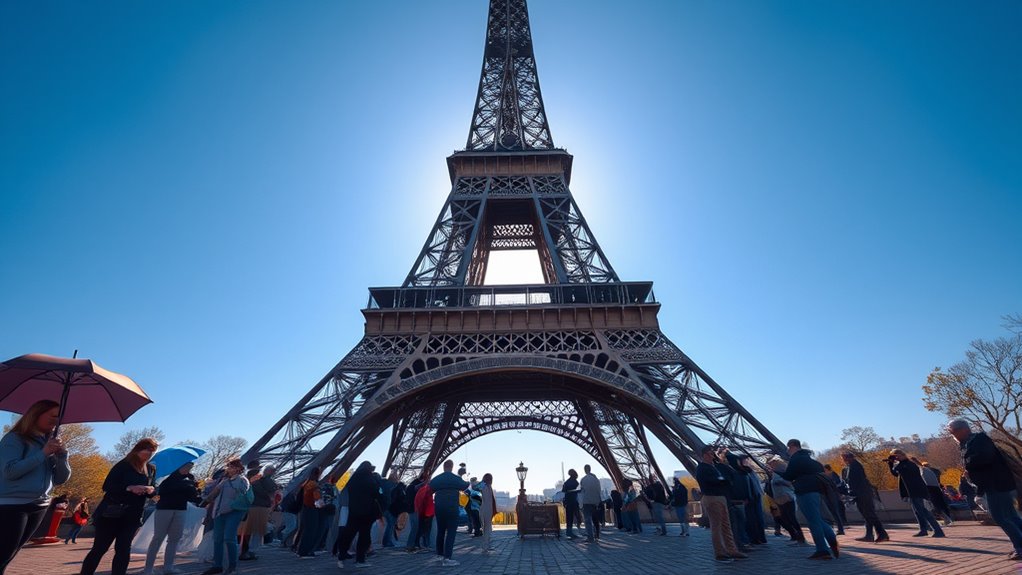
Visiting the Eiffel Tower offers unforgettable views, but managing your expectations about duration and scenery can make the experience more enjoyable. Typically, your visit lasts around 2 to 3 hours, allowing enough time for sightseeing, photos, and possibly dining or shopping. If you’re visiting during peak hours or busy seasons, expect longer waits and more crowded spaces, which can extend your overall time. Night visits often provide calmer atmospheres and stunning illuminated views, but the summit’s availability depends on weather and season. Remember, the view from the second floor is impressive, but reaching the top enhances the experience. Keep in mind that weather and crowds influence your experience, so plan accordingly to maximize your enjoyment without feeling rushed.
Considering Weather and Seasonal Closures

Weather conditions and seasonal changes considerably impact your Eiffel Tower experience. You should plan accordingly to maximize your visit.
- During cold months, especially winter, high winds and rain can lead to temporary closures of the summit and outdoor sections. Check weather forecasts before you go.
- Summer heat may cause closures or limit access to certain areas due to safety concerns. Early mornings or late evenings are best for avoiding heat and crowds.
- Seasonal closures often happen for maintenance, typically outside peak seasons like winter and early summer.
- Be aware that heavy rain, snow, or storms can delay or cancel visits altogether, so stay flexible and monitor updates from official sources. Preparing for weather fluctuations guarantees a smoother, safer trip.
Tips for Visiting During School Holidays and Special Events
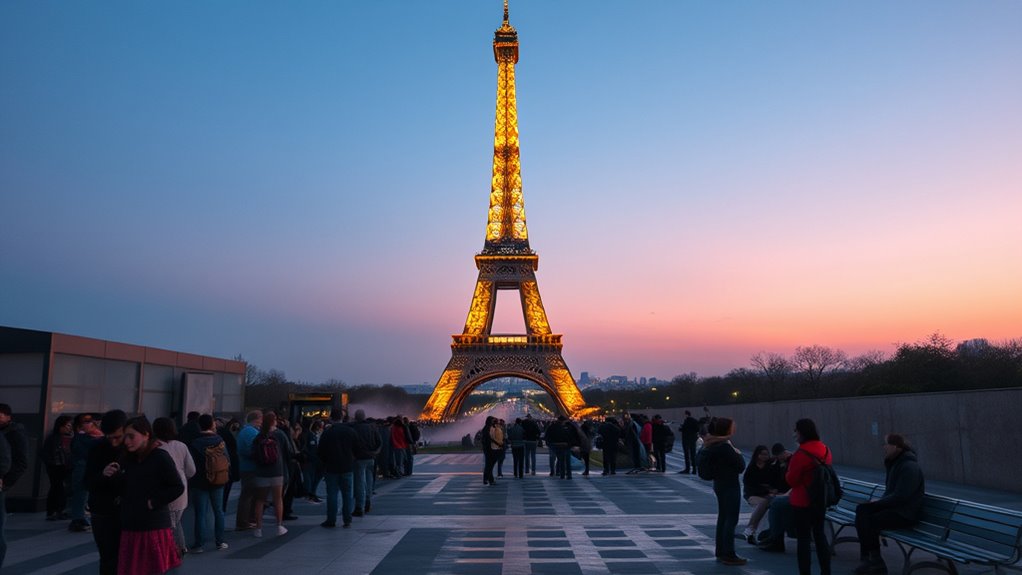
Ever wondered how to make the most of your trip to the Eiffel Tower during school holidays and special events? Plan ahead, as these times bring large crowds. Book your tickets online early to secure your preferred time slot and avoid long queues. Consider visiting in the early morning or late evening when crowds thin out, especially around sunset or after 5pm. Be prepared for busy security lines and arrive well in advance. If you want a quieter experience, avoid peak dates like July 5–August 31 and December holidays. During special events or holidays, check for extended hours or closures. Staying flexible with your schedule helps you enjoy the views without feeling rushed and allows for spontaneous moments amid the lively atmosphere.
Making the Most of Your Experience at the Eiffel Tower
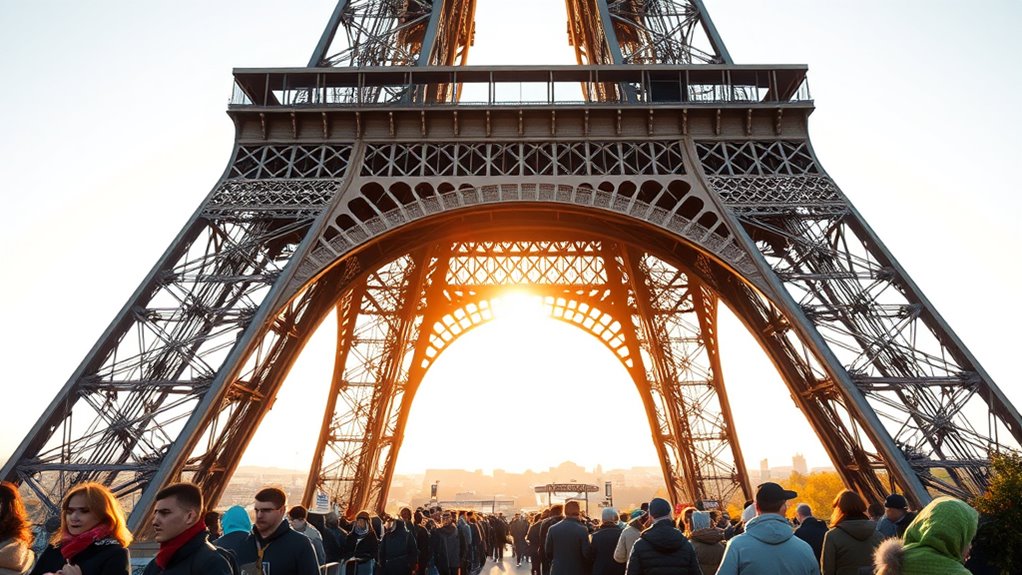
Looking to make the most of your Eiffel Tower visit? Maximize your experience by planning ahead. Here are four key tips:
- Choose off-peak hours: Visit early mornings or late evenings to enjoy fewer crowds and better views.
- Book tickets online: Skip long lines by purchasing e-tickets in advance, especially during peak seasons.
- Catch sunset views: Arrive late afternoon to experience stunning golden light and spectacular cityscapes.
- Explore beyond the main levels: Consider climbing the stairs to the second floor or visiting the summit during quieter times for a more intimate experience.
Frequently Asked Questions
Are There Any Age Restrictions for Visiting the Eiffel Tower?
No, there aren’t specific age restrictions for visiting the Eiffel Tower. You can bring children of all ages, but keep in mind that climbing stairs might be challenging for very young kids or those with mobility issues. Younger children may require supervision, and strollers are allowed but can be cumbersome on stairs. Consider the weather and your child’s stamina when planning your visit, especially if you’re planning to go up to the top.
Is It Possible to Rent a Guided Tour or Audio Guide?
Yes, you can rent a guided tour or an audio guide at the Eiffel Tower, making your visit feel like having a personal storyteller by your side. Guided tours often include skip-the-line access, saving you time. Audio guides are available in multiple languages and are a great way to explore at your own pace. Book in advance to secure your spot and enhance your experience of this iconic monument.
Can I Bring Food or Drinks to the Eiffel Tower?
You can bring food and drinks to the Eiffel Tower, but keep in mind that consumption is generally permitted only in designated areas or outside the monument. Avoid bringing glass bottles or alcohol, as security may ask you to dispose of them. While picnicking nearby is popular, inside the tower, you’re limited to snacks and beverages in moderation. Always check current policies before your visit to ensure a smooth experience.
Are There Accessible Options for Visitors With Mobility Impairments?
Over 80% of Paris’s major attractions, including the Eiffel Tower, are accessible to visitors with mobility impairments. You’ll find elevators on both the second floor and summit, making it easier to enjoy the views without climbing stairs. Wheelchair-accessible routes are marked clearly, and staff are prepared to assist. Just plan your visit during less crowded hours, like early mornings or late evenings, to ensure a smoother experience.
What Safety Measures Are in Place During Peak Times or Emergencies?
During peak times or emergencies, you’ll find enhanced safety measures like increased security personnel and reinforced barriers. Emergency procedures are clearly posted, and staff are trained to assist quickly. You should stay alert, follow instructions, and keep your belongings close. If an emergency occurs, evacuations are coordinated smoothly to ensure everyone’s safety. Always pay attention to announcements and signage so you can respond promptly and stay safe during your visit.
Conclusion
Think of your visit to the Eiffel Tower as a well-orchestrated symphony. When you plan your timing, navigate crowds wisely, and set realistic expectations, you’ll create a harmonious experience that stays with you forever. Like a skilled conductor, you control the rhythm—choosing the right moment to ascend, capturing breathtaking views, and savoring the magic of Paris from above. With preparation, your adventure becomes a masterpiece you’ll cherish long after the visit ends.