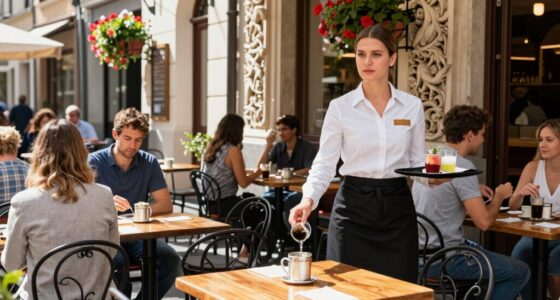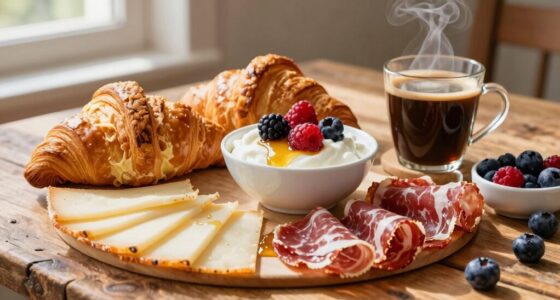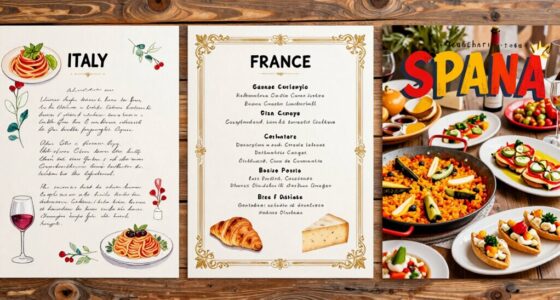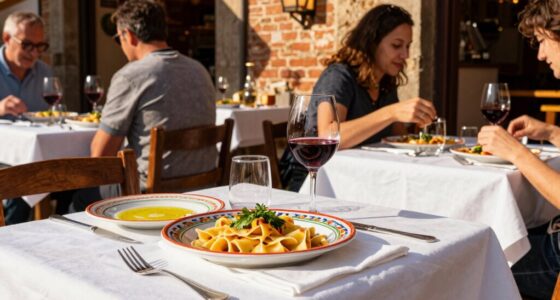
Italian markets are lively and bursting with local flavors, showcasing regional products like cheeses, oils, and cured meats that tell stories of heritage and tradition. You’ll experience vibrant stalls with fresh produce, where vendors share their passion and knowledge, creating a warm community atmosphere. Unlike the more refined and curated French markets, Italian ones focus on authenticity, spontaneity, and cultural storytelling. Keep exploring to discover what makes these markets so uniquely enchanting.
Open a free Amazon Business account
Business pricing, bulk buying and tax-exempt orders.
As an affiliate, we earn on qualifying purchases.
Key Takeaways
- Italian markets emphasize regional flavors and traditional products linked to local heritage and land.
- They feature a wide, diverse selection of cheeses representing Italy’s dairy craftsmanship.
- Market atmospheres are lively, bustling, and encourage direct vendor interaction and storytelling.
- Open-air stalls with rustic displays promote browsing and spontaneous purchases.
- Italian markets prioritize community, authenticity, and sensory experiences over curated elegance.
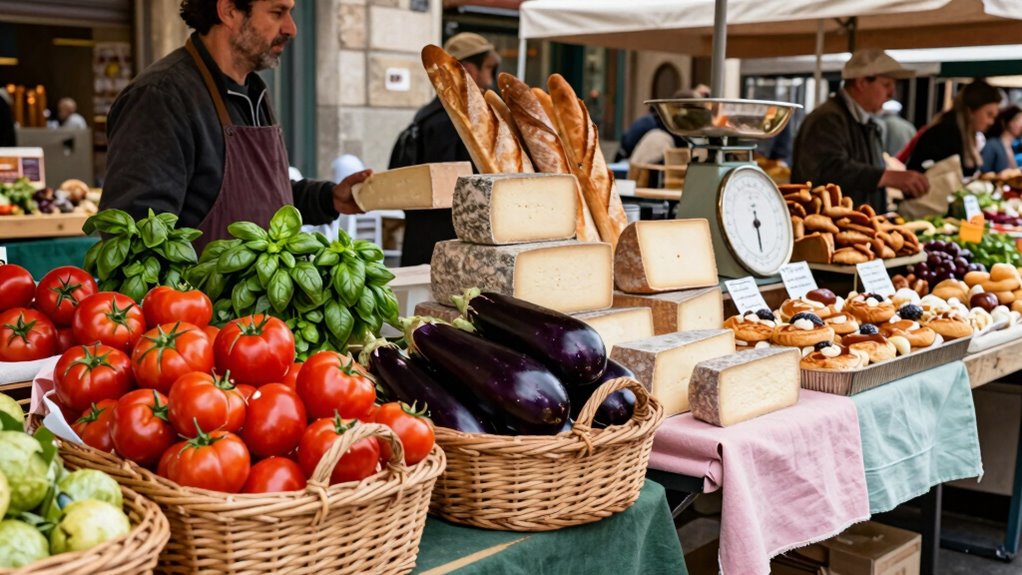
Have you ever wondered what sets Italian markets apart from their French counterparts? It’s not just the language or the accents—it’s the soul of the markets themselves. Italian markets often feel like a celebration of local flavors and traditions, creating an atmosphere that invites you to explore every stall with curiosity. One of the most striking differences is the emphasis on high-quality ingredients that are deeply rooted in regional heritage. For example, you’ll find an incredible variety of olive oils, each with unique flavors that reflect the land and climate where they’re produced. These oils aren’t just condiments; they’re a symbol of Italy’s rich agricultural history. When you stroll through an Italian market, you’re likely to encounter a wide range of cheese varieties—from creamy burrata and tangy pecorino to aged Parmesan—that showcase Italy’s mastery in dairy craftsmanship. Each cheese has its own story, often tied to specific regions, and you can taste the difference in every bite. The selection isn’t just about quantity; it’s about celebrating tradition and regional identity. Additionally, the emphasis on regional heritage influences not only the products but also the atmosphere, making each market a vibrant celebration of local culture. This focus on tradition often extends to the way vendors share their knowledge and passion with visitors, enriching the experience further. A sense of community is also cultivated through lively conversations and shared stories, enhancing the immersive experience. The lively environment is complemented by the approachable atmosphere, which encourages visitors to interact directly with vendors and learn more about their offerings. In contrast, French markets tend to emphasize their own culinary heritage, with a focus on artisanal breads, pastries, and delicate charcuterie. While cheese is also prominent in France, the approach is often more refined and curated, highlighting specific varieties like Camembert, Roquefort, or Comté. Italian markets, however, tend to be more vibrant and bustling, filled with vendors *enthusiastic* to share stories behind their products. You might find cheese vendors offering tastings or olive oil producers explaining the nuances of their latest harvest. This personal touch creates a strong sense of community, making every visit feel like an immersion into local culture. The lively environment makes it easier to connect with the vendors and gain insights into regional culinary traditions. The arrangement and presentation also differ. Italian markets often feature open-air stalls brimming with fresh produce, herbs, and specialty items, encouraging you to browse and pick what catches your eye. French markets, meanwhile, might have more curated displays with a focus on presentation and elegance, reflecting a different aesthetic rooted in French culinary tradition. Ultimately, what makes Italian markets unique is their lively, approachable atmosphere that celebrates rustic authenticity—through the aroma of fresh olive oil and the diverse cheese varieties—drawing you into a sensory experience that’s both authentic and vibrant.
As an affiliate, we earn on qualifying purchases.
Frequently Asked Questions
How Do Italian and French Markets Differ in Product Presentation?
You notice that Italian markets often feature vibrant displays with local vendors engaging directly with customers, creating a lively atmosphere. Their product presentation emphasizes artisanal craft displays, showcasing fresh produce, cheeses, and cured meats with rustic charm. In contrast, French markets tend to arrange items more elegantly, highlighting sophistication and refinement. The focus on personal interactions and artisanal aesthetics in Italian markets makes their product presentation more approachable and dynamic.
Are There Specific Traditional Dishes Unique to Italian or French Markets?
Imagine stepping into a vibrant tapestry woven with local culinary traditions and artisanal craftsmanship; in Italian markets, you’ll find iconic dishes like fresh gnocchi and fragrant risotto, while French markets boast delicate quiches and hearty bouillabaisse. These traditional dishes aren’t just food—they’re stories of history and culture, crafted with love and skill. Each market reflects its unique heritage, offering you a taste of its soul through time-honored recipes.
What Is the Typical Layout of Italian Versus French Markets?
You’ll notice Italian markets often feature open-air layouts with vibrant stalls arranged in a circular or grid pattern, encouraging lively vendor interactions. French markets tend to have a more structured, linear layout with covered sections, creating a cozy atmosphere. In both, the architecture emphasizes accessibility, but Italian markets prioritize communal, bustling spaces, while French markets focus on elegance, making vendor interactions feel intimate yet vibrant.
How Do Pricing Strategies Vary Between Italian and French Markets?
In Italian markets, you’ll notice a flexible pricing methodology that often relies on bargaining, encouraging customer interaction. Promotional tactics tend to emphasize fresh, local produce and seasonal specials, creating a sense of authenticity. In contrast, French markets often adopt fixed pricing with less emphasis on bargaining, focusing instead on elegant presentation and quality labels. Both utilize promotional tactics, but Italians prioritize personal negotiation, while French markets highlight artisanal craftsmanship.
Do Italian and French Markets Have Different Cultural Shopping Atmospheres?
You’ll notice that Italian and French markets have distinct cultural atmospheres. In Italy, the market ambiance is lively and vibrant, with vendors engaging warmly and encouraging friendly interactions. French markets tend to be more refined, with an emphasis on elegance and a relaxed shopping etiquette. You’ll find the Italian experience more energetic, while the French approach feels more composed, both offering unique cultural insights through their ambiance and customer interactions.
Extra virgin olive oil tasting kit
As an affiliate, we earn on qualifying purchases.
As an affiliate, we earn on qualifying purchases.
Conclusion
So, next time you stroll through an Italian or French market, remember their unique charms. Italian markets often burst with vibrant colors and fresh produce, while French markets exude rustic sophistication. Did you know that over 70% of Italians shop at local markets weekly? That’s a proof to how these markets aren’t just shopping spots—they’re cultural experiences. Whether you prefer the lively Italian stalls or the elegant French boutiques, you’re always in for a flavorful adventure.
As an affiliate, we earn on qualifying purchases.
As an affiliate, we earn on qualifying purchases.
NFL season / tailgating Picks
team gear
As an affiliate, we earn on qualifying purchases.