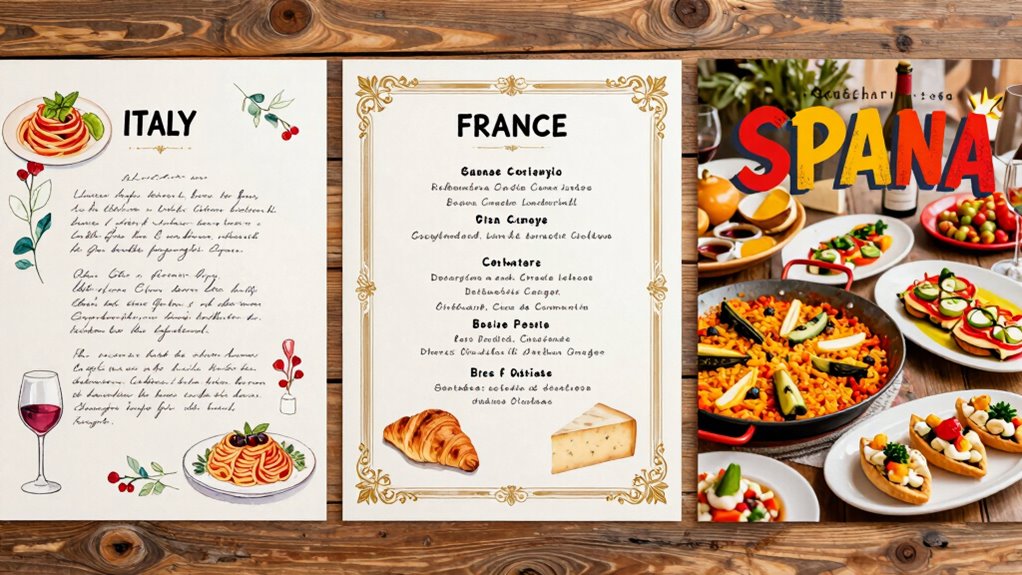

In Italy, menus highlight regional ingredients and traditional dishes, with a leisurely pace and courses like antipasti, primi, and dolci. French menus are formal, carefully organized into hors d’oeuvres, entrées, and plats principaux, emphasizing presentation and artistry. Spanish menus focus on shared small plates like tapas, showcasing regional diversity and vibrant flavors. Understanding these styles reveals how each country’s culture influences their culinary experience—keep exploring to learn more about their unique traditions.

Get travel and outdoor gear delivered free with Prime
- Fast, free delivery on millions of items
- Prime Video, Amazon Music and more included
- Member-only deals all year
Key Takeaways
- Italian menus focus on regional ingredients and traditional courses, emphasizing a leisurely dining experience.
- French menus are formal, organized into set or à la carte options, highlighting culinary refinement and presentation.
- Spanish menus prioritize shared small plates (tapas), promoting social interaction and regional diversity.
- Italian menus adapt to seasons and festivals, while French menus emphasize regional specialties and French culinary artistry.
- Spanish menus reflect regional diversity with seafood, stews, and vibrant communal dishes, encouraging active participation.
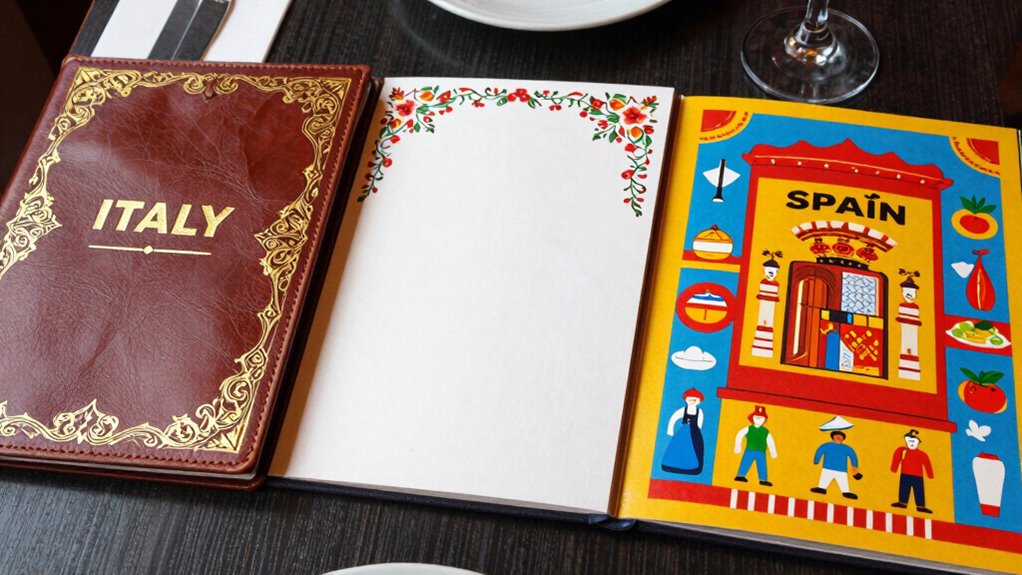
When exploring the culinary traditions of Italy, France, and Spain, you’ll notice that their menus reflect rich histories and regional influences. These differences shape how you approach dining and what you can expect from each country’s culinary experience. Understanding the cultural dining etiquette is key to fully appreciating each menu’s structure. In Italy, menus often emphasize regional variations, highlighting local ingredients and traditional dishes. You’ll find that Italian menus are typically divided into antipasti, primi, secondi, contorni, and dolci, guiding you through a meal that balances flavors and textures. Italians value a leisurely dining pace, so the menu’s structure encourages savoring each course. When ordering, it’s common to ask about regional specialties or local ingredients, showing respect for the culinary heritage behind each dish. Recognizing the importance of menu structure helps travelers navigate different dining customs more confidently. Additionally, Italian menus often feature seasonal and locally sourced ingredients, which reflect the country’s deep connection to its regional produce. Incorporating regional ingredients into their dishes is a hallmark of authentic Italian cuisine, and menus often highlight these seasonal elements. Furthermore, many Italian menus adapt to local festivals and traditions, adding a layer of cultural significance to the dishes offered.
In France, menus tend to be more formal and meticulously organized, reflecting a deep appreciation for culinary artistry. You might notice the classic menu sections like hors d’oeuvres, entrées, plats principaux, and desserts, often presented in a set menu or à la carte. French dining etiquette emphasizes refinement and appreciation for presentation, so you’re encouraged to take your time, savor each course, and even discuss the wine pairings. Regional menu variations are prominent across France, with dishes like Bouillabaisse in Provence or Choucroute in Alsace showcasing local flavors. Recognizing these regional differences helps you understand why certain dishes appear on menus in specific areas, and it invites you to explore regional traditions while respecting the formal dining customs.
Spain’s menus are characterized by their vibrant, communal spirit, often emphasizing shared dishes and tapas. You’ll see a variety of small plates designed for sharing, which reflects the lively, social nature of Spanish dining. In Spain, cultural dining etiquette encourages sitting together, engaging in conversation, and sampling multiple flavors in one sitting. Regional menu variations are particularly notable—from seafood-heavy dishes along the coast to hearty stews in inland regions—and understanding these nuances enriches your experience. Spanish menus often feature a mix of traditional recipes and seasonal specialties, making each dining experience unique to its region. When ordering, it’s polite to ask about local favorites and to participate actively in the communal aspect of the meal. Appreciating the regional diversity of Spanish cuisine can deepen your understanding of local customs and ingredients.
Italian regional ingredients cookbook
As an affiliate, we earn on qualifying purchases.
As an affiliate, we earn on qualifying purchases.
Frequently Asked Questions
How Do Tipping Customs Vary Across These Countries’ Menus?
In Italy, France, and Spain, tipping customs vary with service expectations and menu presentation. You typically leave a small tip, around 5-10%, in all three countries, but it’s not obligatory. In Italy, tips are often included in the bill, especially with formal menus. In France and Spain, you might tip directly based on your experience, especially if service isn’t included. Always check the bill and observe local cues.
Are There Specific Dietary Symbols on Menus in Each Country?
You’ll notice dietary symbols and menu icons are common in these countries, helping you identify options easily. In Italy, about 80% of menus include icons for vegetarian or gluten-free dishes. France often uses symbols like a leaf for vegetarian and a wheat ear for gluten-free, while Spain’s menus typically feature icons for allergen information. These symbols make *finding your way through* menus quicker and *guarantee* you find dishes that fit your dietary needs.
Do Menus Typically Include Regional Specialties or Only Standard Dishes?
Menus often include regional delicacies alongside standard dishes, giving you a taste of local flavors. Chefs typically highlight local ingredients and regional specialties to showcase their culinary traditions. In Italy, France, and Spain, you’ll find regional dishes that reflect local culture and produce. This approach allows you to explore authentic tastes, making your dining experience richer and more immersive, especially when menus emphasize regional delicacies and local ingredients.
How Do Language Barriers Affect Menu Understanding in These Countries?
Language barriers can make menu understanding tricky due to cultural language nuances and menu translation challenges. You might find it hard to grasp ingredients or cooking styles if the menu isn’t translated well, leading to confusion or unintended orders. To avoid surprises, look for menus with pictures, ask for recommendations, or use translation apps. Embracing these challenges helps you enjoy authentic dishes while steering through language differences with confidence.
Are There Traditional Menu Ordering Sequences Unique to Each Country?
Like a dance with a familiar rhythm, each country has its own traditional menu ordering sequence. In Italy, you typically start with antipasti, then move to primi, secondi, and desserts. France often begins with appetizers, followed by main courses and cheeses, ending with desserts. Spain’s cultural dining sequence usually includes tapas or small plates, then main dishes, and finally sweets. Understanding these menu presentation patterns helps you enjoy authentic dining experiences.
As an affiliate, we earn on qualifying purchases.
Conclusion
Exploring menus in Italy, France, and Spain feels like stepping into a vibrant marketplace—Italy’s colorful, handwritten pages invite you to savor tradition; France’s elegant, structured menus promise refined sophistication; Spain’s lively, tapas-filled lists encourage sharing and spontaneity. Each country offers a unique flavor, a different rhythm of dining. By understanding these differences, you can immerse yourself fully, savoring not just the food but the culture behind every menu—making your culinary journey truly unforgettable.
As an affiliate, we earn on qualifying purchases.
As an affiliate, we earn on qualifying purchases.
Halloween Picks
halloween
As an affiliate, we earn on qualifying purchases.