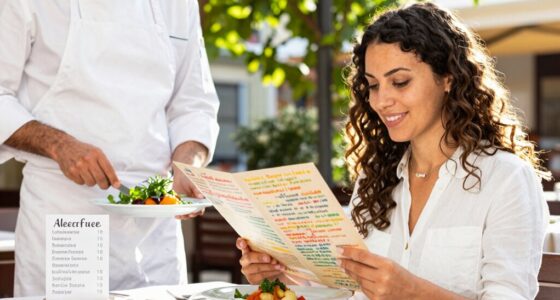

When traveling in Europe with food allergies, use clear, multilingual allergy cards and visual icons to communicate your needs. Ask detailed questions about ingredients and preparation, and rely on your instincts if something feels unsafe. Carry emergency medications and explain symptoms to companions. Utilizing allergy apps and translation tools can boost confidence. Staying prepared with effective communication methods guarantees your safety and enjoyment—discover more strategies to navigate this complex issue confidently.
Key Takeaways
- Use multilingual allergy alert cards with clear symbols and descriptions to communicate your allergies effectively.
- Learn and rehearse key phrases in the local language to explain your allergies confidently.
- Ask detailed questions about ingredients, preparation, and cross-contact to ensure meal safety.
- Utilize allergy translation apps and digital resources for instant, accurate communication.
- Confirm understanding with staff or hosts and request ingredient lists to prevent misunderstandings.

Secure ID, LLC Chef Card Customized Allergy Emergency Contact Card Restaurant Chef Food Allergy Allergies. Customized 2 Pack or Write on 3 Pack available
Write on the back of the card with all of your food allergies
As an affiliate, we earn on qualifying purchases.
As an affiliate, we earn on qualifying purchases.
Understanding Regional Allergy Risks and Common Allergens in Europe

Understanding regional allergy risks and common allergens in Europe is essential for safe travel, especially if you have food allergies. Europe’s diverse culinary traditions mean that allergens vary by country, making it vital to research local ingredients and food practices. Many Europeans are aware of food allergies, but hidden allergens like buckwheat, peas, and goat’s milk are increasingly causing reactions. Be aware that non-top-14 allergens, such as pine nuts and alpha-gal, also pose risks. Labeling regulations differ across countries, so always check ingredient lists and ask about preparation methods. Keep updated on regional allergen trends using resources like allergy maps. Recognizing these regional differences helps you identify potential dangers, communicate effectively with food providers, and avoid risky foods during your trip. Additionally, understanding the contrast ratio of local dishes can help you better assess the visual cues of food presentation, which may indicate allergen presence. Staying informed about regional food labeling standards can further enhance your safety and confidence when dining abroad. Familiarizing yourself with halal standards and ingredients can also be beneficial, as some allergens may overlap with non-halal components. Consulting regional allergy information sources can also provide valuable insights into emerging allergen concerns specific to each area. Being aware of regional allergen prevalence can help you prepare better for specific countries or regions.

ANFIER AI Language Translator Device2025 Instant Translation in Real Time in 144 Languages Online | Offline| AI| Voice| Photo Translation for Business,Travel & Language Learning W12W
Anfier W12: The Ultimate Game-Changer in Language Translation: Break free from language barriers with the Anfier W12 Translator,…
As an affiliate, we earn on qualifying purchases.
As an affiliate, we earn on qualifying purchases.
Preparing Your Medical and Emergency Supplies for Safe Travel
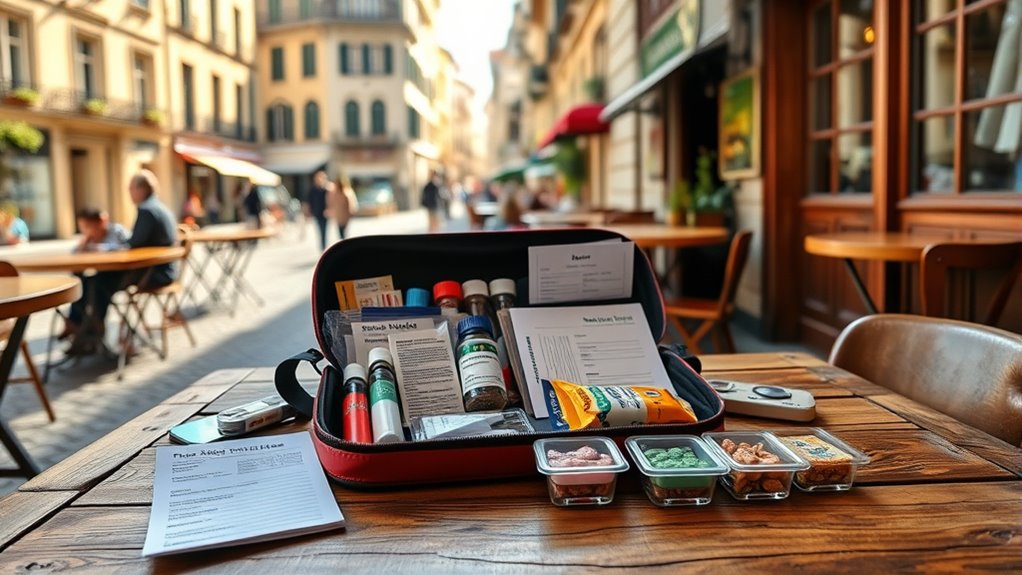
You need to pack your essential medications and carry copies of your emergency action plan to guarantee quick access if needed. Make sure your medications are stored safely and in your carry-on to avoid losing them or exposure to extreme temperatures. Carry your documentation securely, so you can easily prove your allergy details if emergencies arise.
Packing Essential Medications
Preparing your medical and emergency supplies is a crucial step before traveling, especially when managing food allergies. You need to pack all essential medications, including epinephrine auto-injectors, antihistamines, and any prescribed emergency drugs. Always carry extra supplies in case of delays or loss. Keep medications in their original containers with clear labels for easy identification. Store them in a waterproof, accessible bag. Use the table below to organize your medications:
| Medication Type | Quantity/Details |
|---|---|
| Epinephrine auto-injectors | At least two, in original packaging |
| Antihistamines | Non-drowsy, in original packaging |
| Prescriptions | Copies of prescriptions, in case of emergencies |
Double-check expiration dates and pack a copy of your allergy action plan. Incorporating clear communication about your allergies with local healthcare providers and travel companions can enhance your safety and ensure prompt assistance if needed.
Emergency Action Plans
Having your medications organized is just the first step; creating a thorough emergency action plan guarantees you’re ready for any allergic reactions while traveling. First, identify the signs of a severe reaction, like swelling or difficulty breathing. Second, assign roles, such as who administers medication or calls emergency services. Third, keep a list of emergency contacts, including local medical facilities and embassy numbers. Fourth, practice your plan regularly by reviewing steps and ensuring all supplies are accessible. Visualize yourself quickly grabbing your epinephrine auto-injector and guiding someone through the process. Make sure your emergency kit contains essential supplies: medications, antihistamines, a detailed allergy card, and wipes to clean contaminated surfaces. Being aware of safety protocols and local emergency procedures can significantly improve your response in critical moments. Familiarize yourself with emergency response procedures, which vary by location but are crucial for swift action. Additionally, understanding how medical facilities operate in your travel destinations can help you seek prompt assistance if needed. Having these steps clear helps you respond swiftly and confidently in critical moments.
Carrying Documentation Safely
Ensuring your medical and emergency supplies are carried safely is essential for managing food allergies while traveling. Keep all documentation, like allergy alerts, prescriptions, and emergency action plans, in a secure, waterproof case. Carry multiple copies of your medical info, both printed and digital, in case one gets lost or damaged. Store your medications in your carry-on to prevent loss or delay and keep them within easy reach. Use a labeled bag or folder to organize your documents, making them quick to access when needed. Consider translating key allergy details into the local language for added clarity. Regularly check that your supplies are intact and up-to-date before departure. Proper storage and organization guarantee you’re prepared for any allergy-related emergency. Trendy dog sweaters can be a fun way to keep your pet comfortable during travel, especially in colder climates. Additionally, being aware of your piercing care and hygiene needs can help prevent complications if you have body piercings, which could otherwise be a concern during travel.
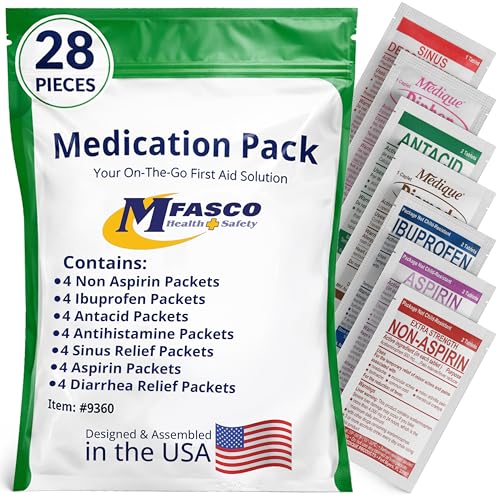
MFASCO – 7 in 1 – Travel Size Medicine Kit – TSA Approved | 28 First Aid Emergency OTC Medicine Packets for Cruise & International Travel | Compact Med Refill for Traveling & Office Assembled in USA
Great For Refilling Smaller First Aid Kits for On the Go or Travel. Assembled in USA.
As an affiliate, we earn on qualifying purchases.
As an affiliate, we earn on qualifying purchases.
Creating Clear and Effective Communication Tools for Food Allergies

Effective communication is essential for travelers with food allergies to navigate dining safely abroad. To do this, you should create effective tools that bridge language gaps and clarify your needs. Visual aids help, like:
- Carrying allergy alert cards with clear, multilingual descriptions of your allergies.
- Using icons or symbols to quickly indicate allergens on menus or labels.
- Preparing a simple, universally understood phrase or sentence to explain your allergy.
- Downloading allergy translation apps or guides for instant reference.
These tools help you communicate confidently, reduce misunderstandings, and ensure your safety. By combining visual aids, prepared phrases, and digital resources, you create a reliable system that supports clear exchanges with restaurant staff and local markets. This proactive approach minimizes risks and enhances your travel experience.
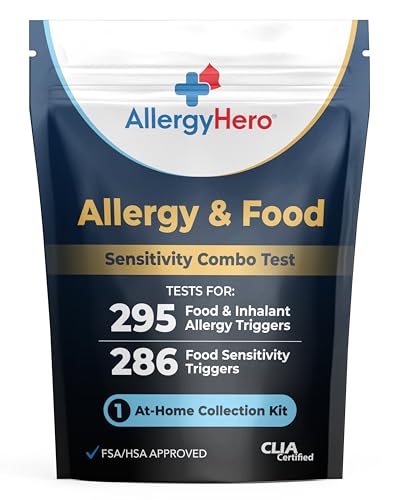
Allergy Hero Comprehensive Allergy & Food Sensitivity Combo Test Kit – 581 Food & Environmental Items Tested – for Adults & Kids – Easy & Pain-Free at-Home Collection with Accurate Results
FAMILY-FRIEND TESTING: Designed for both adults and kids, this kit screens for 581 potential food and environmental sensitivities….
As an affiliate, we earn on qualifying purchases.
As an affiliate, we earn on qualifying purchases.
Navigating Restaurant Interactions and Dietary Restrictions

Clear communication with restaurant staff is key to managing your food allergies while dining abroad. Be direct and specific about your allergies, using simple language and your prepared chef card in the local language. Ask detailed questions about ingredients, preparation methods, and cross-contact precautions. Don’t hesitate to clarify any uncertainties; restaurant staff may not be familiar with your allergy. Observe their responses and gauge their confidence in handling your dietary restrictions. If you feel unsure or uncomfortable, consider choosing a different restaurant or opting for a dish with fewer ingredients. Remember, your safety comes first—trust your instincts and don’t be afraid to advocate for yourself. Effective communication strategies help ensure your meal is safe and enjoyable. Clear, respectful dialogue helps ensure your meal is safe and enjoyable.
Using Technology and Resources to Enhance Allergy Safety

Leveraging technology and digital resources can substantially boost your allergy safety while traveling in Europe. You can use:
Using digital tools and apps enhances allergy safety during your European travels.
- Allergy-focused apps that provide restaurant reviews, ingredient info, and user reports on allergy incidents.
- Interactive pollen maps from organizations like the European Academy of Allergy and Clinical Immunology, helping you avoid high allergen areas.
- Translation apps that instantly convert allergy-specific phrases into local languages, ensuring clear communication with staff.
- Digital travel guides highlighting allergy-friendly accommodations, markets, and restaurants tailored to your needs.
These tools empower you to access real-time data, communicate confidently, and make informed decisions, reducing your risk of allergic reactions. Embracing technology makes your European adventure safer, smoother, and more enjoyable.
Educating Your Travel Companions and Hosts About Your Allergies

You need to clearly explain your allergies and symptoms to your travel companions and hosts so they understand the seriousness. Language barriers can make this tricky, so prepare simple translations or written descriptions in the local language. It’s also essential to plan emergency responses together, so everyone knows what to do if a reaction occurs.
Clear Allergy Descriptions
Ever wondered how to guarantee your travel companions and hosts understand the seriousness of your food allergies? Clear allergy descriptions are essential. To do this effectively, focus on these steps:
- Clearly state your allergy, like “I’m allergic to peanuts and shellfish.”
- Specify symptoms to watch for, such as swelling or difficulty breathing.
- Explain cross-contact risks, like shared utensils or surfaces.
- Provide visual aids or allergy cards in the local language to reinforce your message.
- Be aware of the importance of vetted communication methods, including confirming understanding with your hosts or staff. Utilizing local automation or translation tools can help ensure your message is accurately conveyed. Incorporating essential oils for communication can also create a calming environment that encourages attentive listening. Additionally, practicing effective communication techniques can enhance clarity and reduce misunderstandings.
Use simple, direct language and avoid vague terms. Confirm understanding by asking your hosts or staff to repeat your instructions. Being precise and consistent helps ensure everyone recognizes the severity of your allergies and takes necessary precautions.
Language Barriers Solutions
Misunderstandings caused by language barriers can pose serious risks for travelers with food allergies. To avoid this, educate your travel companions and hosts about your allergies using clear, simple language. Bring translated allergy cards or notes in the local language, highlighting your specific allergies. Practice explaining your needs concisely and confidently.
| Tip | Example |
|---|---|
| Use visual aids | Show allergy cards or pictures of common allergens |
| Learn key phrases | “I am allergic to nuts,” in the local language |
| Confirm understanding | Ask, “Do you understand my allergy?” |
| Clarify ingredients | Request details about ingredients used in dishes |
| Keep emergency info handy | Carry translations of medications and emergency steps |
Emergency Response Planning
Educating your travel companions and hosts about your food allergies is essential for ensuring your safety abroad. Start by clearly explaining your allergies and the severity of reactions. Use these steps to prepare them:
- Show them your allergy card or medical ID, so they understand exactly what to avoid.
- Demonstrate how to recognize symptoms of an allergic reaction.
- Explain how to use your emergency medication, like an epinephrine auto-injector.
- Practice a quick response plan together, including calling emergency services if needed.
Make sure everyone knows your specific triggers and understands the importance of avoiding cross-contact. Providing detailed information helps everyone stay vigilant and ready to act swiftly if an allergic incident occurs.
Recognizing and Managing Allergic Reactions During Your Trip
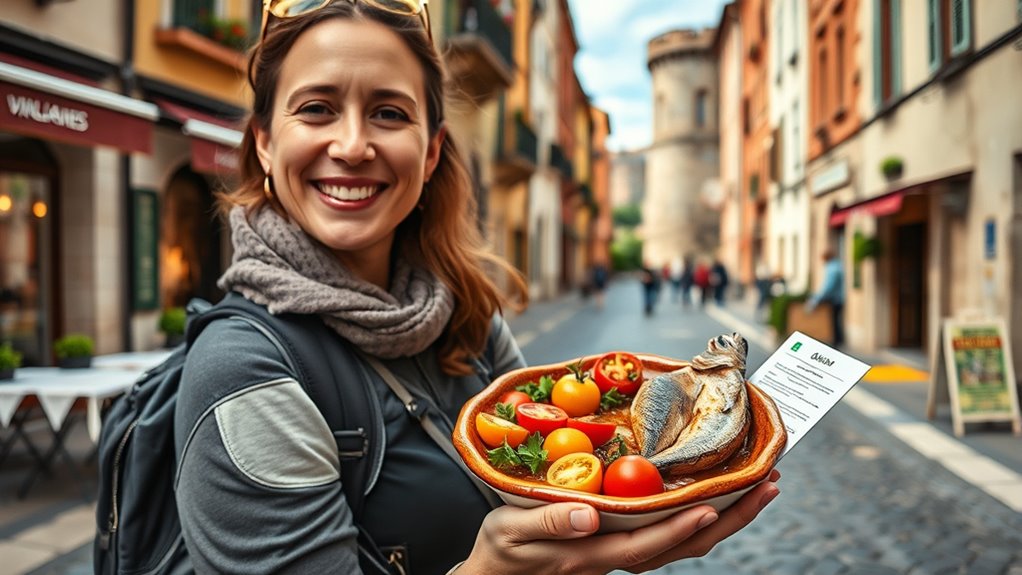
Recognizing allergic reactions early is essential to managing them effectively during your trip. Pay close attention to symptoms like hives, swelling, difficulty breathing, or a rapid heartbeat. If you notice these signs, act immediately—administer your emergency medication, such as an epinephrine auto-injector if prescribed, and seek medical help without delay. Stay calm and reassure your companions. Keep your medication accessible at all times and familiarize yourself with how to use it properly. Communicate clearly with staff or bystanders about your allergy and symptoms. Remember, quick response can prevent a reaction from worsening. Trust your instincts—don’t ignore early warning signs, and prioritize your safety at all times. Prompt action can make all the difference in managing reactions effectively.
Post-Travel Follow-Up and Sharing Important Allergy Information
After returning from your trip, reviewing your experiences and sharing essential allergy information with your healthcare provider and close contacts helps guarantee your safety in future travels. To do this effectively:
- Document any reactions, triggers, and details of incidents with photos or notes.
- Update your medical records with new allergy insights or sensitivities discovered abroad, including insights from best vacuums for pet hair that can help maintain a clean environment and reduce allergens.
- Share your trip experience and challenges with family or friends to increase awareness and foster understanding of your allergy needs.
- Provide your primary care provider with your travel details, including any emergency interventions used.
- Consider family photoshoot fails and unexpected pet antics that may have impacted your experience to better prepare for future trips. Recognizing potential allergy triggers and understanding deep-sky imaging can help you plan more effectively. Additionally, being aware of privacy policies can ensure your personal health information remains protected during information sharing.
This process ensures everyone stays informed, improves your preparedness, and helps prevent future reactions. Clear communication and thorough documentation offer peace of mind and support your ongoing safety during future European adventures.
Frequently Asked Questions
How Can I Handle Unexpected Allergen Exposure During Travel?
If you face unexpected allergen exposure, stay calm and act quickly. Remove yourself from the source immediately and evaluate your symptoms. Use your emergency medication, like an epinephrine auto-injector if needed, and seek medical help right away. Inform nearby staff or fellow travelers about your allergy. Carry detailed allergy information, including medications and emergency contacts, so others can assist you effectively and guarantee prompt treatment.
What Should I Do if a Restaurant Refuses to Accommodate My Allergy?
Like steering through a maze, if a restaurant refuses to accommodate your allergy, stay calm and assertive. Explain your allergy clearly, mention potential severe reactions, and ask to speak with a manager or chef. If they still refuse, choose a different restaurant to guarantee your safety. Always trust your instincts—your health comes first. Carry emergency medications, and remember, you’re the best advocate for yourself in unfamiliar settings.
Are There Specific European Travel Insurance Options for Allergy Emergencies?
Yes, you can find European travel insurance plans that cover allergy emergencies. Look for policies that explicitly include medical treatment for allergic reactions, emergency evacuation, and medication coverage. Compare providers like Allianz, World Nomads, and AXA, which offer customizable plans tailored to travelers with health concerns. Always read the fine print to guarantee your allergies are fully covered, and carry proof of insurance during your trip for quick access to help.
How Can I Verify Local Food Safety Standards and Allergy Labeling?
You can confirm local food safety standards and allergy labeling by researching country-specific regulations beforehand. Did you know 14% of severe allergy cases involve non-top-14 allergens? Use official government websites and local health authorities for up-to-date info. Contact restaurants directly to ask about allergen labeling, and look for certifications or labels that indicate allergy-safe practices. Carry translated chef cards and verify ingredient lists to guarantee your safety.
What Are the Best Ways to Communicate Allergies in Unfamiliar Languages?
You should prepare by translating allergy details into the local language beforehand. Carry printed chef cards with clear, concise messages about your allergies, including specific ingredients to avoid. Use simple language and visuals if possible. When dining out, verbally communicate your allergies directly to staff, asking questions about ingredients and cross-contamination. Always double-check that they understand, and consider using translation apps or hiring local guides for added clarity.
Conclusion
Traveling with food allergies is like steering a ship through unfamiliar waters—you need clear maps and trusted guides. By understanding the regional risks, communicating effectively, and staying prepared, you can navigate Europe’s culinary seas safely. Each step you take is a lighthouse guiding you away from danger and toward memorable adventures. With the right tools and awareness, your journey becomes a voyage of discovery, where safety and new experiences shine brightly like stars guiding your way.