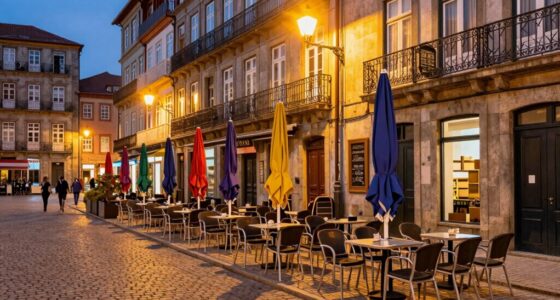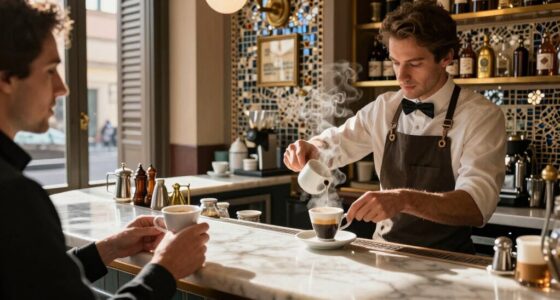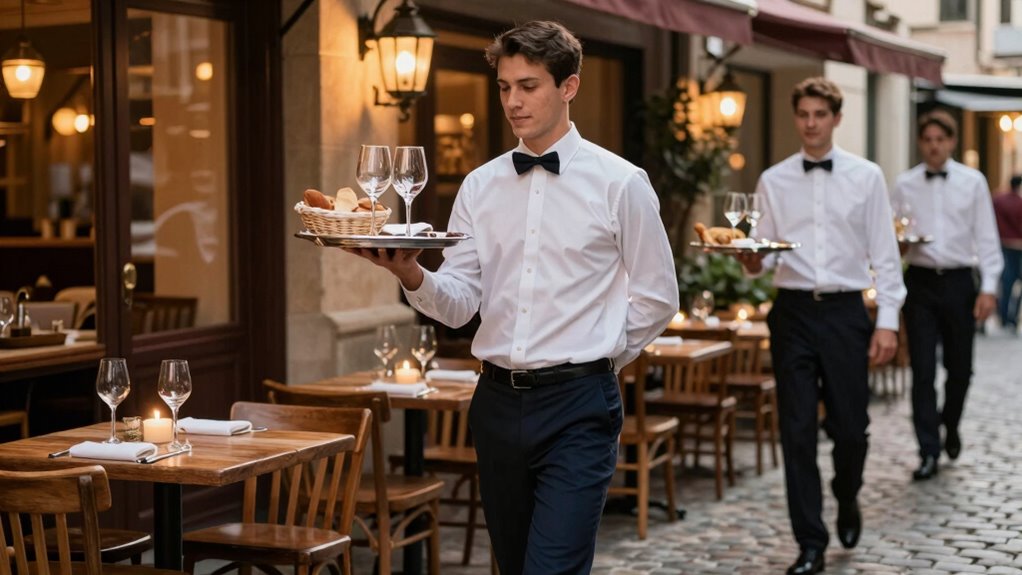

European restaurant service feels slow to Americans because of cultural differences that prioritize relaxed dining and social connection over speed. Servers have fixed wages and aren’t incentivized to rush, and payment processes are intentionally slow to encourage lingering. Meals also take longer as they’re prepared from scratch and served together, focusing on quality and conversation. If you want to understand how these customs shape your experience and why it feels different, there’s more to discover.
Key Takeaways
- European service emphasizes unhurried, social dining, with less frequent check-ins and longer meal durations, contrasting with American efficiency.
- Fixed server wages in Europe reduce pressure to rush, fostering a leisurely pace focused on quality and conversation.
- Meals often take 40+ minutes from order to table, with dishes prepared from scratch, extending overall service time.
- Payment procedures in Europe involve customers requesting the check, encouraging lingering and a relaxed dining experience.
- Cultural norms prioritize social interaction over speed, making European restaurant service feel slower to Americans accustomed to quick turnover.
Cultural Perspectives on Dining Duration
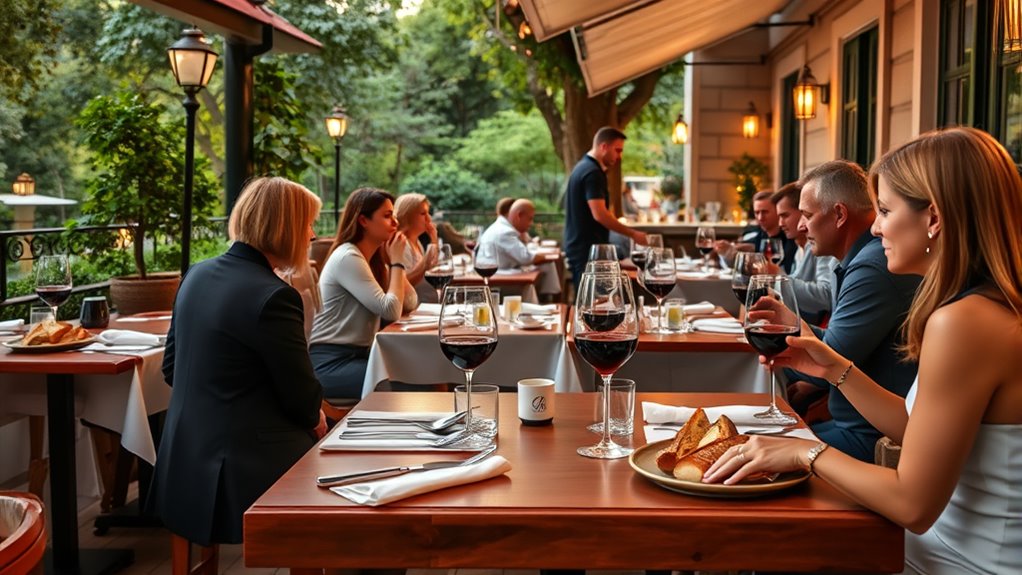
European dining culture values long, unhurried meals as a social event rather than a quick transaction. You’re encouraged to relax and enjoy extended conversation, savoring each course without rushing. Restaurants design their spaces and service to support this philosophy, allowing you to linger comfortably. Unlike in America, where efficiency and quick turnover are prioritized, Europeans see dining as an experience worth savoring. You won’t be rushed to finish your meal or leave quickly; instead, you’re invited to sit back and soak in the atmosphere. This approach reflects a cultural belief that eating isn’t just about nourishment but about connection and enjoyment. As a result, your meal becomes a leisurely event, emphasizing quality time over speed.
Service Interaction and Customer Expectations
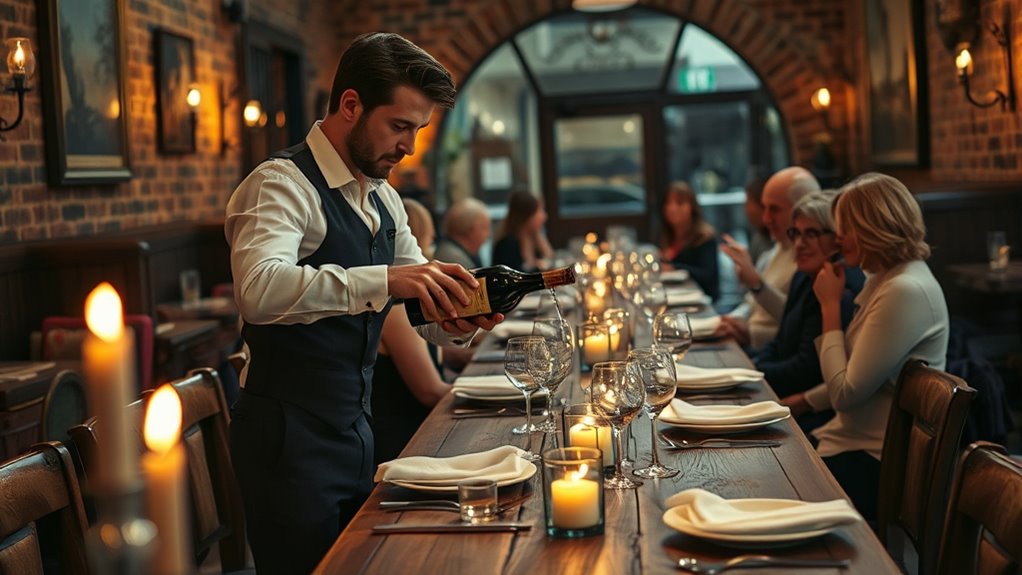
The way servers interact with customers varies greatly between European and American dining cultures, shaping what diners expect during their meal. In Europe, servers are less available unless you explicitly call them, which encourages a more relaxed, unhurried atmosphere. You’re expected to enjoy your meal and conversation without constant interruptions. Conversely, American servers check on tables frequently, about every 5-10 minutes, aiming to anticipate your needs and ensure prompt service. This frequent interaction creates a sense of attentiveness but can feel intrusive in European settings. Your expectations are shaped by these norms: in Europe, you anticipate a more hands-off approach that respects your pace, while in America, you expect continuous engagement to maximize efficiency. These differences influence how you perceive service quality and the overall dining experience. Additionally, cultural differences in service interaction science contribute to these contrasting norms, affecting how both hosts and guests perceive attentiveness and professionalism. Recognizing these cultural norms can help both diners and staff adapt and appreciate different service styles. Furthermore, understanding the customer expectations rooted in these cultural patterns can enhance mutual respect and satisfaction during international dining experiences. Research also shows that these norms are deeply embedded in cultural communication styles, which shape how service is delivered and received across regions.
Moreover, these variations are reinforced by historical and societal factors that influence service standards and customer interactions in diverse settings.
Differences in Server Compensation Models
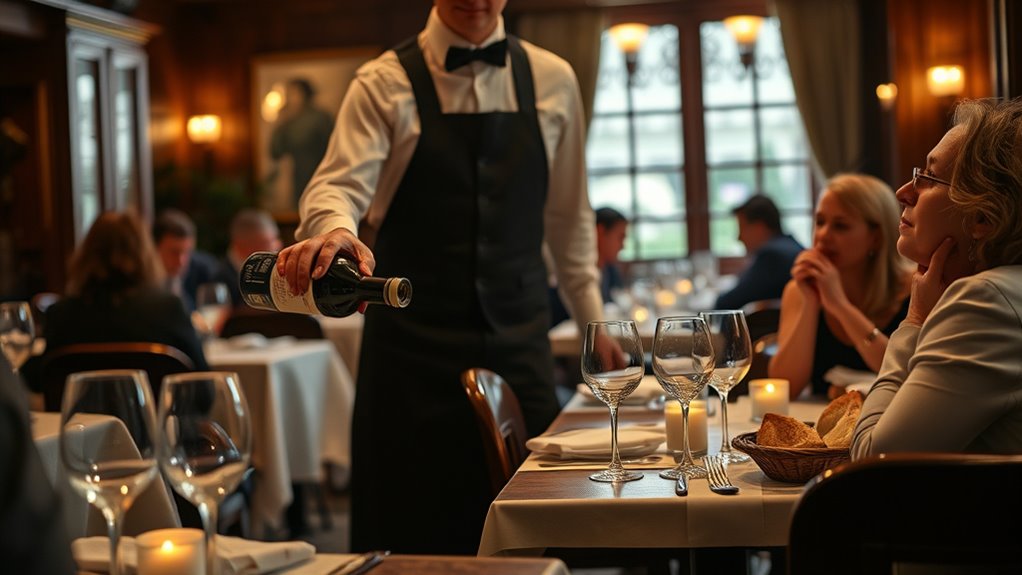
You’ll notice that European servers typically receive fixed pay regardless of service quality, unlike American servers who rely on tips for their income. This difference creates distinct motivations—where American staff are encouraged to speed up service to maximize tips, European servers focus on providing a relaxed experience. Understanding these compensation models helps explain the contrasting service styles and customer expectations across regions. Additionally, these models can influence the overall dining environment, shaping how hosts and guests perceive the pace of service and hospitality. For instance, the tips reliance in the U.S. often leads to quicker service to satisfy customer expectations for promptness.
Fixed Versus Variable Pay
Server compensation models vary considerably between regions, shaping how service is delivered and how waitstaff approach their work. In Europe, servers typically receive a fixed salary, which isn’t tied to customer tips or service speed. This setup removes the financial pressure to turn tables quickly, encouraging a more relaxed, unhurried service style. Conversely, in America, servers rely heavily on tips, motivating them to prioritize rapid service and maximize table turnover. This difference influences everything from the pace of food delivery to payment procedures and customer interactions. The role of pay structure significantly impacts the overall atmosphere and customer experience in restaurants across different regions. Additionally, understanding the reliance on tips reveals how regional cultural norms can shape dining experiences and staff behavior. Moreover, the type of compensation often determines staff motivation and service quality, further contributing to regional differences in dining environments. Recognizing the impact of payment models helps explain why service feels slower to some customers. Furthermore, the differing incentives created by these models can lead to variations in service style and efficiency.
Incentives for Speed
In American restaurants, the reliance on tips creates a strong incentive for servers to work quickly and efficiently, as their income depends directly on how many tables they serve and how fast they turn over. This system pushes servers to prioritize rapid service, often rushing food delivery and check presentation to maximize earning potential. In contrast, European servers receive a fixed salary regardless of service speed or customer satisfaction. Without financial ties to quick turnover, they have no motivation to rush guests or hasten tables. Instead, they focus on providing attentive, unhurried service that emphasizes the dining experience over speed. This difference in compensation models fundamentally shapes how each region approaches service, creating the contrasting pacing that feels “slow” to Americans but is standard in Europe. Moreover, cultural expectations around service quality influence how patrons perceive the pace, with Europeans often valuing a more relaxed dining atmosphere. The work culture in Europe also encourages a more leisurely approach, emphasizing quality interactions over speed. Additionally, the emphasis on customer experience in European settings often leads to a more personalized and unhurried dining process, which can be misinterpreted as sluggish by those accustomed to tip-driven service.
Tipping and Motivation
How does the way servers are paid influence their motivation and behavior? In America, tips directly impact your earnings, so servers aim to maximize tips through speed and attentive service. This creates a motivation to serve quickly, clear tables fast, and encourage prompt payments. Conversely, European servers receive a fixed salary regardless of customer satisfaction or service speed, reducing their financial incentive to rush. This shifts their motivation toward quality and thoroughness rather than speed. Additionally, vetted wave and wind conditions can influence the overall atmosphere and pace of service in European restaurants. Moreover, understanding the biography and career background of servers can shed light on their work ethic and approach to service.
Impact of Service Speed on Restaurant Economics
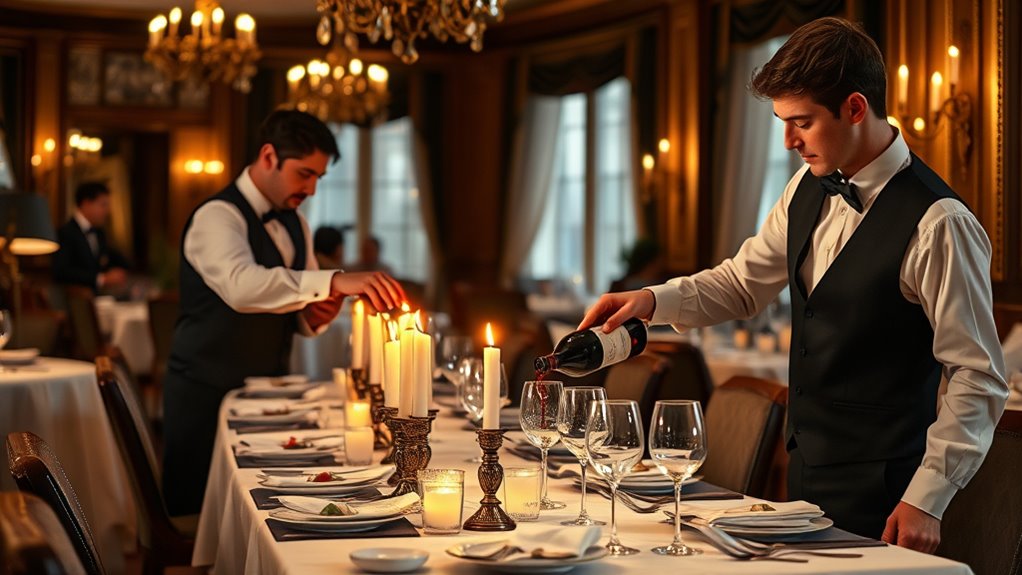
The speed at which a restaurant delivers food and clears tables directly influences its financial performance, especially in regions where rapid turnover is a key metric. Faster service means more tables served per shift, increasing revenue and profit. In American restaurants, quick pace encourages guests to finish and leave promptly, making room for new customers. This model relies on high table turnover to maximize income, especially since servers depend on tips tied to speed and efficiency. Conversely, European establishments prioritize a relaxed pace, which can reduce the number of daily covers but enhances customer satisfaction and perceived value. Although slower service may seem less profitable, it aligns with a different economic model where longer stays and quality experiences foster loyalty and justify higher prices for a leisurely dining experience. Additionally, cultural expectations and dining customs influence service speed, with Europeans often valuing a more leisurely dining experience over rapid turnover. Moreover, prioritizing quality over speed can lead to a more sustainable and customer-centric business approach in the long term. This approach can also create a more relaxed atmosphere, encouraging guests to enjoy their meal without feeling rushed. Recognizing these differences is essential for understanding the diverse restaurant models across regions.
Food Preparation and Delivery Timelines
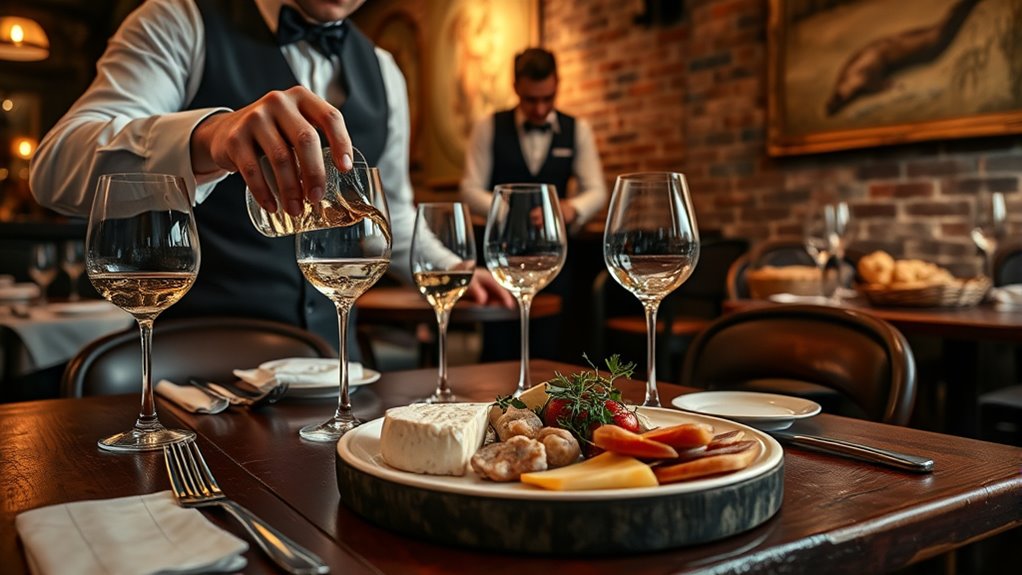
European restaurants typically have longer food preparation and delivery timelines compared to their American counterparts. You might notice that your meal takes 40 minutes or more from order to table, reflecting a deliberate culinary pace. This approach emphasizes quality, craftsmanship, and authenticity over speed.
- Dishes are often prepared from scratch, using fresh, high-quality ingredients, which increases prep time.
- Chefs prioritize meticulous presentation and flavor development, extending cooking durations.
- Servers often wait until the entire meal is ready before delivering, ensuring everything arrives simultaneously for a cohesive dining experience.
This slower process encourages savoring each course and engaging in conversation, aligning with the cultural philosophy that dining is an event, not just a transaction.
Payment Procedures and Their Significance

Payment procedures in European restaurants reflect their broader cultural approach to dining as an unhurried, social event. You’ll notice servers don’t rush you to settle the bill; instead, you must request it when ready. Often, there’s a delay before the check appears, encouraging lingering conversations. This contrasts sharply with American restaurants, where servers present the bill promptly, sometimes before you finish your meal. The slow payment process isn’t about inefficiency but about respecting the leisurely pace of European dining. It shifts the focus from speed to experience, emphasizing social interaction over quick turnover. Because servers in Europe receive fixed wages regardless of how fast customers pay, there’s less pressure to accelerate payment. This approach reinforces the idea that dining is a valued social occasion, not just a transaction.
How Regional Business Norms Shape Dining Experiences
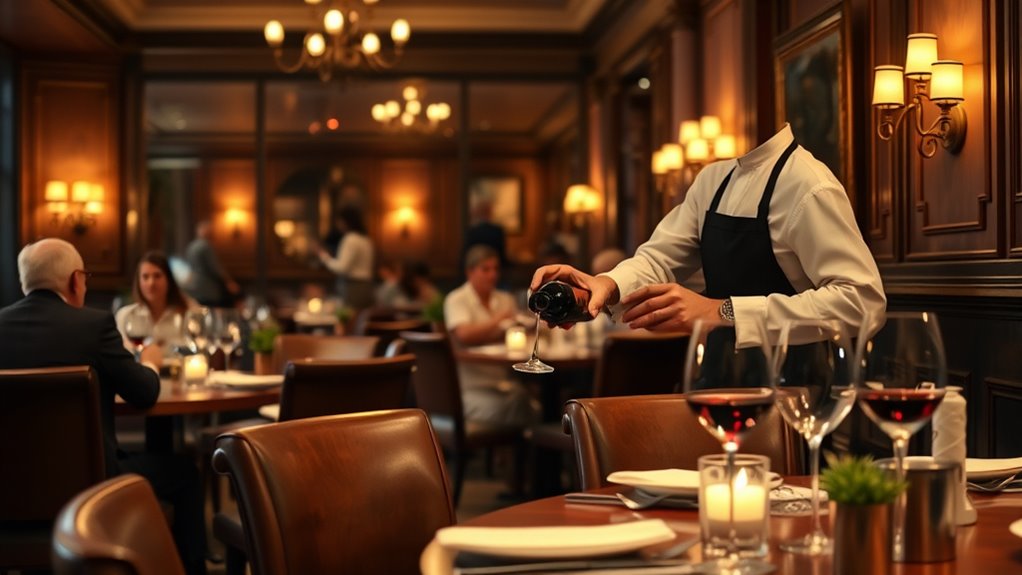
Your dining experience is shaped by regional business norms that prioritize different outcomes. In Europe, slower service and extended meals reflect a cultural view of dining as an event, not just a transaction. Meanwhile, economic incentives in the U.S. push for faster turnover, influencing how servers approach their work and how you enjoy your meal.
Economic Incentives Drive Speed
Economic incentives play a crucial role in shaping how quickly restaurants operate in different regions. In America, servers depend on tips, which are directly linked to service speed and table turnover. This creates a financial motivation to serve quickly, clear tables promptly, and present checks early. Conversely, European servers receive fixed wages regardless of how fast or slow they work, removing the pressure to turn tables rapidly. As a result, European establishments focus on providing a leisurely experience, where extended conversations and lingering are valued. The different economic models influence customer expectations and service pace, making American dining feel rushed and European dining feel unhurried.
- Tips incentivize rapid service and high turnover in America
- Fixed wages in Europe eliminate performance-based pressure
- Business models align with regional economic priorities and customer preferences
Cultural Views on Dining
Have you ever wondered how regional business norms shape the way people experience dining? In Europe, dining is seen as an event for connection and enjoyment, not a quick transaction. Restaurants prioritize lingering conversations and extended meals, emphasizing quality time over speed. Servers intentionally avoid rushing, allowing guests to stay as long as they wish without feeling hurried. This approach reflects a cultural belief that dining should be relaxed and social, not rushed for efficiency. Unlike in America, where quick turnover is valued, European dining celebrates patience and savoring the moment. This cultural perspective influences everything — from service style to meal pacing — shaping a unique experience that often feels slow to Americans but is deeply rooted in European social norms.
Service Norms and Expectations
Regional business norms directly shape the expectations and behaviors around dining service, creating distinct experiences in Europe and America. In Europe, the focus is on leisurely dining, where extended conversations and lingering are valued. Servers tend to be less available unless summoned, emphasizing a relaxed atmosphere. In contrast, American norms prioritize efficiency, with frequent check-ins and quick turnover. Tips incentivize faster service, and bills are presented proactively to maximize table rotations. These differences reflect underlying economic structures: European servers have fixed wages without performance-based bonuses, while American servers rely heavily on tips. As a result, European service feels slower and more unhurried, aligning with regional priorities.
- Service duration aligns with cultural attitudes toward conversation and socializing
- Payment procedures are less hurried, emphasizing a relaxed pace
- Incentive structures influence service speed and attentiveness
Adapting to Cultural Variations in Service Styles
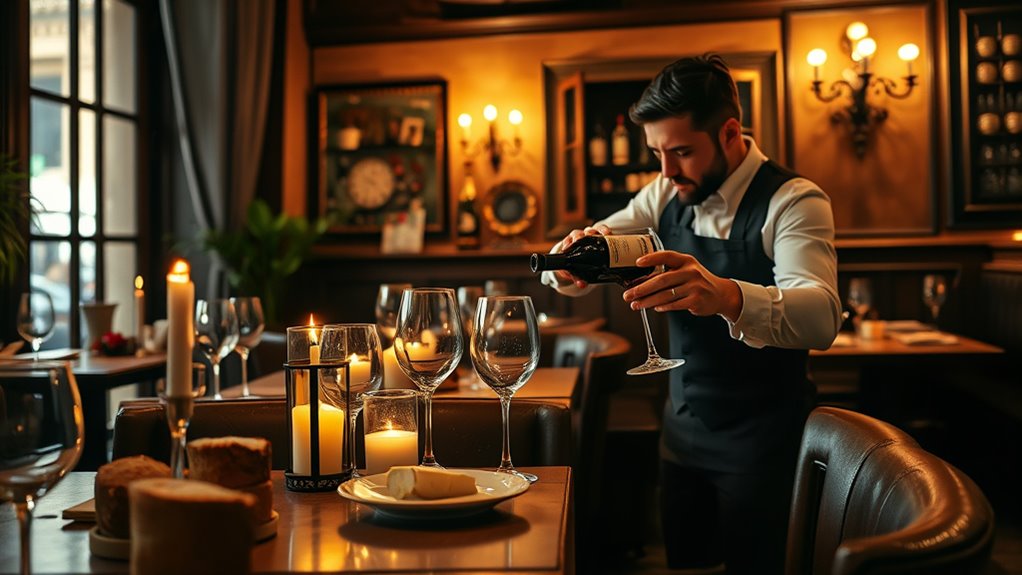
Adapting to different service styles requires understanding the underlying cultural values that shape dining expectations. In Europe, meals are leisurely events meant for social connection, not quick transactions. You’ll notice servers often wait for you to summon them, reflecting a respect for your pace and privacy. To adapt, resist the urge to flag down staff constantly; instead, enjoy the slower rhythm and engage in conversation. Recognize that extended waiting times, whether for menus, food, or the check, aren’t signs of poor service but a different approach to hospitality. Embrace the patience required, knowing that European dining emphasizes quality time over efficiency. Adjusting your mindset helps you appreciate the cultural significance behind these service differences, making your experience richer and more authentic.
Frequently Asked Questions
How Does European Dining Culture Influence Customer Satisfaction?
European dining culture emphasizes a relaxed, social experience, so your satisfaction depends on enjoying the ambiance and conversation rather than quick service. You’re encouraged to savor your meal, engage with others, and appreciate the atmosphere. While it might feel slow compared to American standards, this approach enhances your overall enjoyment, making the meal a memorable event. Your patience is part of the cultural experience, leading to deeper satisfaction and connection.
Why Do Europeans Prefer Slower Food Preparation Methods?
You might think Europeans prefer slower food prep for efficiency, but it’s actually about quality and experience. They believe rushing compromises flavor and presentation, turning dining into a leisurely event. Instead of speed, they value savoring each bite, conversation, and social connection. This approach prioritizes enjoyment over quick turnover, creating a richer, more relaxed experience that emphasizes the culinary journey rather than just the end result.
What Are the Benefits of Extended Dining Times for Diners?
Extended dining times allow you to relax and enjoy your meal more fully. You get to savor each dish, savor conversations, and appreciate the ambiance without feeling rushed. It encourages lingering, which can enhance your overall experience and foster deeper connections. Plus, you have more time to savor flavors and try multiple courses, making your meal more memorable and satisfying. This slow pace helps you unwind and truly enjoy the moment.
How Do Service Styles Impact Restaurant Profitability Differently?
Imagine a race where slowing down actually wins. Service styles shape profitability differently: in Europe, fixed wages mean slower service doesn’t hurt earnings, allowing for longer, more relaxed dining. In America, tips drive quick turnover, so speed boosts profits. Your restaurant’s approach determines whether you prioritize rapid seating or leisurely experiences, ultimately affecting how well you balance customer satisfaction with financial success.
Can American Tipping Systems Adapt to European Service Standards?
Yes, American tipping systems can adapt to European service standards, but it requires changing incentives. If tips are tied to service quality rather than speed, servers may focus more on attentiveness and hospitality, aligning with European norms. This shift encourages slower, more personalized service. However, it might reduce table turnover and profits unless restaurants adjust pricing or business models to support longer dining experiences.
Conclusion
Understanding why European restaurant service feels slow to Americans often comes down to cultural norms and business practices. While some suggest it’s about quality and savoring the experience, others believe it’s rooted in different compensation models. Notably, research shows that slower service can boost revenue by encouraging longer stays and higher tips. So, what feels like sluggishness might actually be a strategic approach to enhance customer satisfaction and profitability—challenging the idea that speed equals better service.