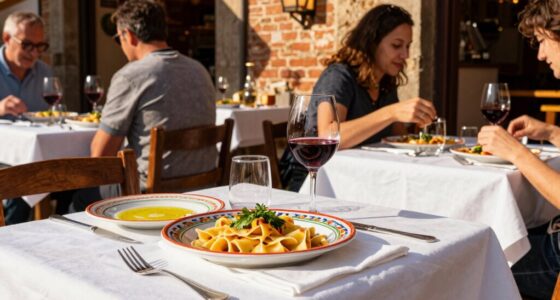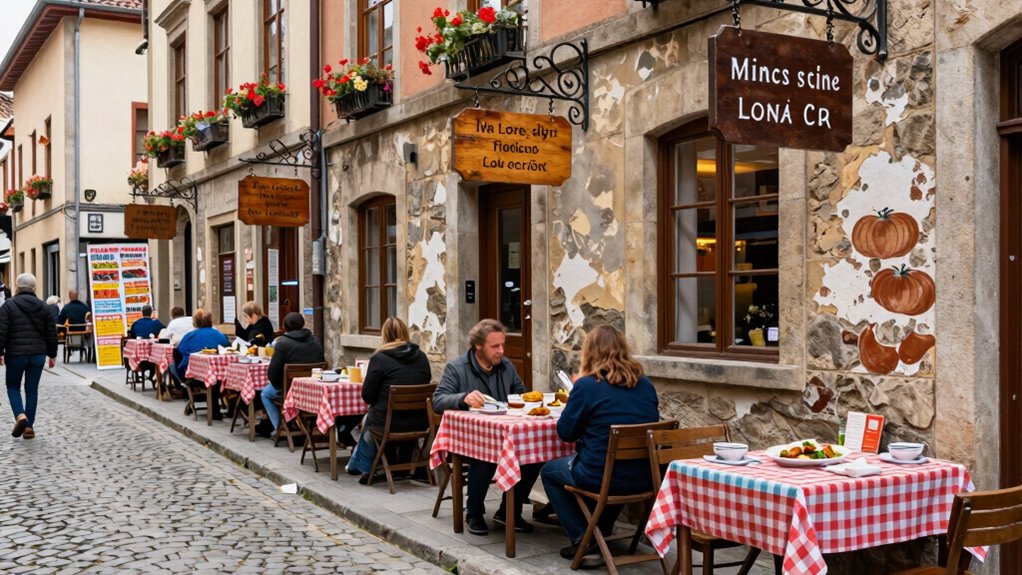

To avoid tourist menu restaurants in Europe, look for places tucked away from busy sights, especially those with handwritten, seasonal menus in the native language. Skip flashy signs and fixed-price menus targeting tourists. Instead, choose spots with daily specials, a lively local atmosphere, and clear prices. Pay attention to small dishes with fresh ingredients and avoid eateries that boast quickly or have a cookie-cutter look outside. Keep these tips in mind to find authentic meals—and if you keep exploring, you’ll discover even more.
Key Takeaways
- Look for restaurants with signs that blend into the neighborhood and avoid overly flashy, tourist-oriented signage.
- Choose places with handwritten, seasonal menus and dishes in the local language to ensure authenticity.
- Observe if the staff is familiar with local dishes and if the chatter is lively, indicating a local favorite.
- Check for fixed-price menus or daily specials that highlight seasonal ingredients and local traditions.
- Avoid restaurants with menus in multiple languages, generic dishes, or prices that seem inflated for tourists.
Recognizing Strategic Location Signs and Tourist Traps
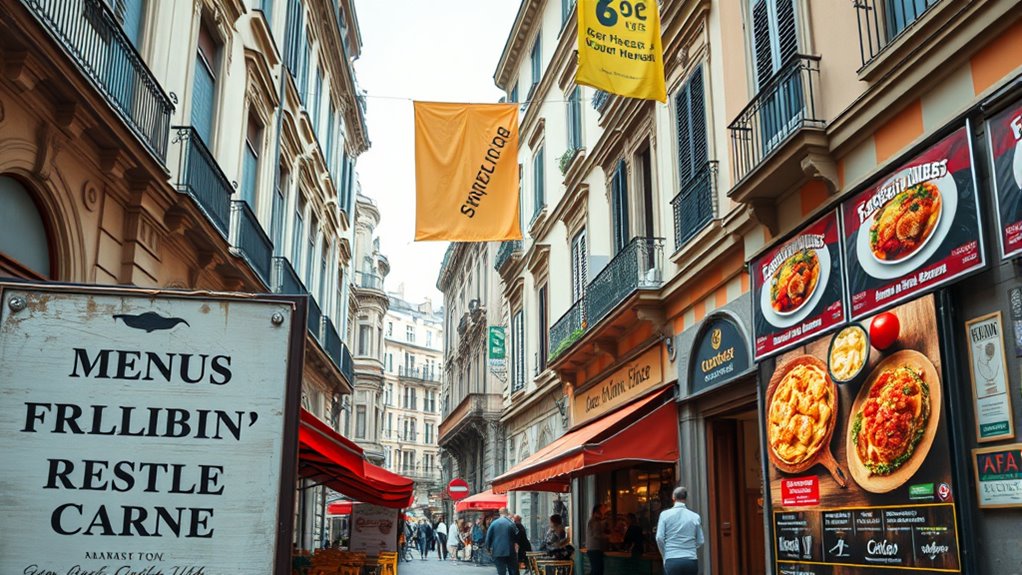
When exploring European cities, it’s essential to pay attention to where restaurants are located, as this can reveal whether they’re genuine or just tourist traps. Restaurants near major landmarks like the Colosseum, Eiffel Tower, or Big Ben often prioritize quick profits over quality. These spots are designed to attract tourists with easy access and high visibility, but they rarely serve authentic local cuisine. Instead, they focus on generic dishes and flashy signs. Stay alert for eateries tucked away from busy tourist zones—these often serve locals and maintain higher standards. Look for places slightly off the beaten path, where the crowd is quieter, and the signs are more modest. Authentic spots tend to blend into the neighborhood, not stand out in heavily trafficked tourist areas. Additionally, observing local dining standards can help identify establishments that prioritize quality over tourist appeal. Recognizing strategic location signs can also help in avoiding these common pitfalls and finding true local dining experiences. Being aware of tourist menu pricing can further help you steer clear of overpriced, subpar food aimed at visitors. Moreover, paying attention to restaurant decor and presentation can give clues about whether the establishment values authenticity or is primarily focused on attracting tourists. Also, monitoring menu variety can reveal whether a restaurant offers diverse, local dishes or just generic options designed for quick consumption.
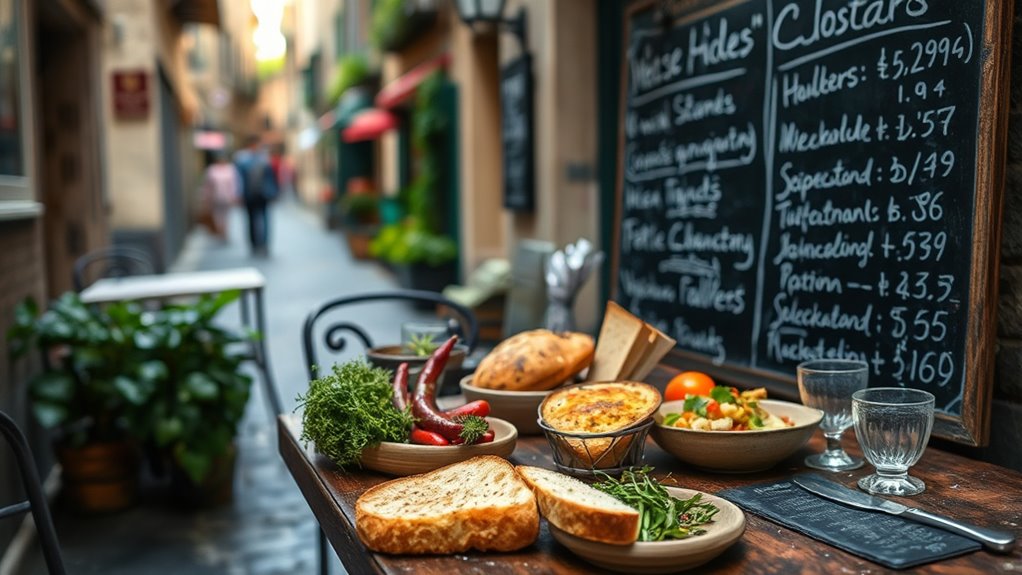
Deciphering menu clues is a quick way to distinguish authentic local eateries from tourist-oriented spots. Look for handwritten menus that change seasonally, signaling fresh ingredients and local focus. Short menus in the native language only often cater to locals, while multilingual menus with flags suggest tourists. Avoid laminated or pre-printed menus that seem unchanged, as they usually feature generic dishes adapted for international palates. Be wary of menus offering overly familiar dishes or those missing regional specialties. Daily specials, like *dagens rett* or *menu du jour*, reflect seasonal ingredients and local traditions. Also, check for fixed-price menus (*prix fixe*) or set menus, which tend to be more authentic and offer better value. Recognizing European cloud innovation in restaurant practices can also be a subtle indicator of authenticity, emphasizing quality and sustainability. These clues help you spot eateries that prioritize quality over tourist appeal.
Observing Restaurant Behavior and Operational Cues
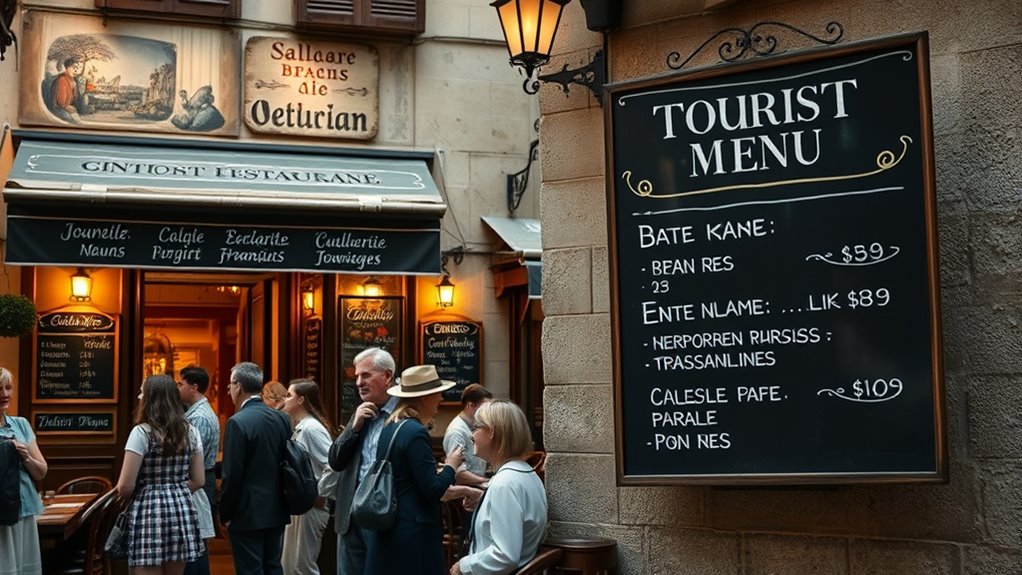
Paying attention to how a restaurant operates can reveal whether it’s genuinely local or primarily targeting tourists. Watch for aggressive hosts calling from sidewalks, which often aim to lure inattentive visitors. Signs claiming “no frozen food” can be a tactic to attract crowds, but might also indicate a focus on quick turnover rather than quality. Exaggerated authenticity claims or menus outside that remain unchanged suggest a tourist trap. Genuine local spots often have buzzing chatter and staff who seem familiar with the neighborhood, not overly enthusiastic to sell. Permanent menu boards outside typically show static offerings, while handwritten or daily specials hint at fresh, seasonal ingredients. Additionally, observing the restaurant’s setup and presentation can give clues about its authenticity—local establishments usually pay attention to detail and ambiance that reflect the area’s character. Recognizing patterns like consistent staff behavior can also be a reliable indicator of a genuine local spot. Moreover, paying attention to the wave and wind around the restaurant can provide subtle cues about its connection to local culture and environment. Noticing how the restaurant’s layout and thermal behavior respond to weather conditions can further reveal its integration with the local setting. Furthermore, observing how the restaurant adapts to seasonal changes can offer insight into its authenticity and connection to the community.
Evaluating Pricing Strategies and Value for Money
Evaluating pricing strategies is essential to determine whether a restaurant offers genuine value or preys on tourists’ willingness to spend. Look for transparent prices that clearly break down costs, avoiding places with hidden charges or service fees added at the end. Tourist menus often bundle three courses at a fixed price, which might seem convenient but can also be inflated. Authentic spots typically offer set menus like *prix fixe* or *menu du jour* that include multiple courses at reasonable prices, often with local ingredients. Be wary of exorbitant prices for simple dishes, as they signal tourist traps. Locals tend to avoid overpriced menus, opting instead for places with fair, straightforward pricing. Remember, good value isn’t just about low prices but about quality, authenticity, and honesty in how they’re presented.
Understanding Local Eating Habits and Insider Tips
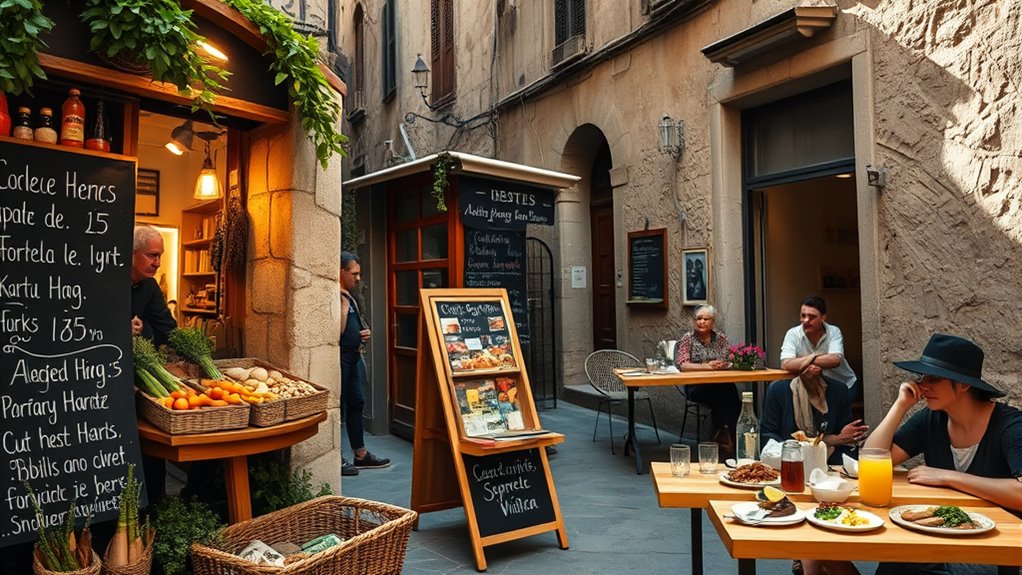
To truly experience authentic local cuisine, it’s essential to understand the eating habits of residents rather than relying on tourist-focused restaurants. Locals often dine at tucked-away spots away from major landmarks, where menus feature handwritten daily specials using fresh ingredients. They prefer small, simple dishes that highlight seasonal, regional produce, often ordering à la carte or prix fixe menus that reflect authentic flavors. Instead of tourist menus, locals rely on word-of-mouth recommendations or follow signs indicating daily specials. Lunch hours are prime for savoring fresh vegetables and affordable meals. Pay attention to how restaurants promote themselves—places with bustling chatter, local language menus, and signs emphasizing fresh, non-frozen ingredients are your best bets. Observing these habits helps you find genuine dining experiences beyond the tourist traps. Recognizing the importance of local food habits can significantly enhance your culinary adventures, especially when you seek out authentic dining experiences that align with regional customs.
Frequently Asked Questions
How Can I Identify Authentic Regional Specialties on Menus?
You can spot authentic regional specialties on menus by looking for handwritten or short menus in the local language, often featuring daily specials like *dagens rett* or *menu du jour*. Avoid menus with multiple languages or generic dishes. Check for local ingredients and seasonal items, which indicate freshness and regional focus. Locals tend to choose these options, so ask locals or observe their choices for genuine recommendations.
Are Handwritten Menus Always More Genuine Than Printed Ones?
Handwritten menus are generally more genuine than printed ones because they often reflect seasonal changes and fresh, local ingredients. When you see a handwritten menu, it’s likely updated daily, catering to locals and emphasizing authenticity. Printed menus tend to stay static, signaling tourist traps with generic dishes. Look for handwritten signs or specials, as they usually indicate a restaurant that values tradition, seasonality, and real regional flavors.
What Signs Indicate a Restaurant Relies on Tourist Pricing?
You spot a tourist trap when menus burst with multiple languages and flags, like a colorful billboard screaming “tourist here!” Laminated or overly polished menus suggest mass production, not fresh flavor. If prices seem sky-high for simple dishes or if servers push pre-set menus, you’relikely walking into a sightseeing feast, not authentic cuisine. Trust your gut—locals keep their secrets close, not plastered on shiny, multilingual signs.
How Do Locals Choose Where to Eat Away From Tourist Spots?
You can find locals eating away from tourist spots by looking for places with handwritten or short menus in the local language only. They often feature daily specials or prix fixe menus, and are tucked away from main attractions. Locals avoid overly polished, multilingual menus and aggressive hosts. Instead, they rely on word-of-mouth, buzzing chatter, and places that focus on seasonal ingredients and authenticity, not tourist traps.
When Is the Best Time to Visit Authentic Eateries?
You should visit authentic eateries during off-peak hours, like late lunch or early dinner times, when locals dine. Avoid weekends and peak tourist seasons, as popular spots tend to be crowded and may prioritize tourists. Midweek visits or early mornings often lead you to quieter, genuine places. Timing your visit this way increases your chances of experiencing local flavors and avoiding tourist traps.
Conclusion
Now that you know the signs, decipher menus, and observe local customs, you can confidently dodge those tourist traps. Trust your instincts, just like a seasoned explorer of old, and seek out genuine eateries. Remember, a true taste of Europe lies beyond the postcard-perfect façades, so keep your wits about you and savor authentic flavors. After all, even in this modern age, an adventurous spirit is your best guide—just like a wise old mariner steering uncharted waters.