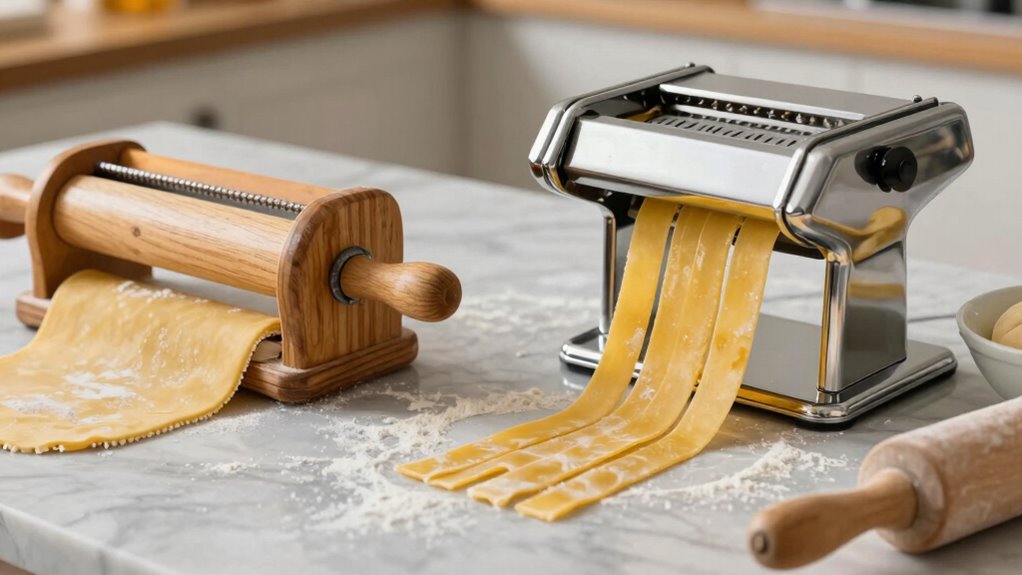

If you prefer a hands-on, craft-focused pasta night, a pasta roller lets you knead, roll, and shape dough manually, giving you control over thickness and texture. It’s perfect for experimenting and connecting with traditional techniques. On the other hand, if you want quick, consistent shapes and larger batches, a pasta extruder is faster and more efficient. Both tools have unique benefits—discover which suits your style better as you explore more options.

Get travel and outdoor gear delivered free — and shop member deals
- Fast, free delivery on millions of items
- Access to Prime Big Deal Days deals on October 6–7
- Prime Video, Amazon Music and more included
Key Takeaways
- Choose a pasta roller for a hands-on, craft-focused experience that allows control over dough thickness and texture.
- Opt for an extruder for quick, uniform shapes suitable for large batches and time-efficient pasta making.
- Use a roller if you enjoy experimenting with different pasta styles and textures; choose an extruder for consistency and speed.
- A roller enhances skill development and personal craftsmanship; an extruder minimizes manual effort for convenience.
- Your choice depends on whether you prioritize the traditional, artisanal process or efficient, large-scale pasta production.
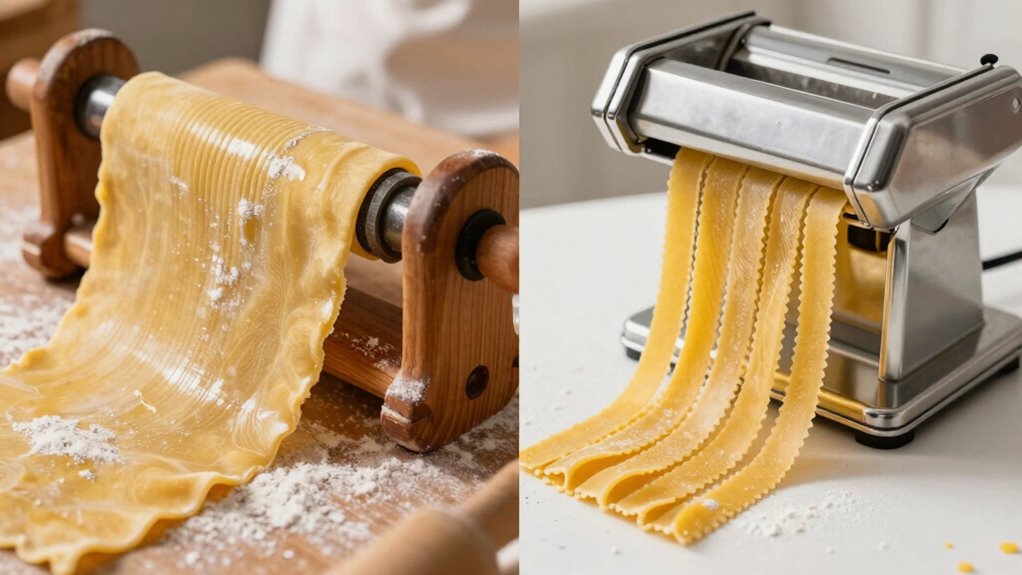
When it comes to making pasta at home, choosing between pasta rollers and extruders can substantially impact your results. If you’re passionate about handmade techniques, you might lean toward using traditional pasta rollers, which allow you to knead, roll, and shape dough with your hands. These tools give you a tactile connection to your pasta, letting you control thickness and texture precisely. Hand-cranking or motorized pasta rollers are versatile kitchen appliances that help you achieve thin, even sheets perfect for lasagna, ravioli, or fettuccine. Their simplicity encourages a more involved process, giving you satisfaction from creating pasta the old-fashioned way.
On the other hand, pasta extruders are more about efficiency and consistency. These kitchen appliances force dough through shaped dies, creating various pasta types like rigatoni, bucatini, or penne quickly and uniformly. If you prefer a more automated approach, extruders can save time and effort, especially when making larger quantities. They’re ideal for those who want to produce consistent shapes without the manual effort of rolling and cutting. However, using extruders can sometimes feel less connected to the craft, especially if you’re someone who enjoys the tactile experience of handmade pasta. They’re also less flexible in creating custom shapes or textures, but they excel at producing classic pasta forms with minimal fuss.
Choosing between these two options depends on what kind of pasta night you envision. If you love the process of kneading dough, rolling it out, and shaping it by hand—perhaps even experimenting with different thicknesses—then pasta rollers are your best bet. They complement a kitchen full of handmade techniques, allowing you to develop a deeper understanding of pasta’s textures and forms. Conversely, if you value quick results and uniformity, an extruder might be the better choice. It can be a fun, efficient addition to your kitchen appliances, especially if you’re preparing pasta for a crowd or want consistent shapes for a specific dish.
Ultimately, your decision boils down to your cooking style and how much effort you want to invest. Both pasta rollers and extruders have their merits, and each can elevate your pasta night in different ways. Whether you prefer the craftsmanship of handmade techniques or the convenience of modern kitchen appliances, there’s a technological solution for your pasta-making journey. Engaging with these tools also offers an opportunity to appreciate the biodiversity of pasta shapes and styles that can be explored through different methods. Exploring different pasta types can deepen your appreciation for this versatile food. Additionally, choosing the right tool can influence the texture of your finished pasta, making each dish uniquely satisfying.
As an affiliate, we earn on qualifying purchases.
Frequently Asked Questions
Which Method Is Faster for Making Homemade Pasta?
Using traditional techniques with pasta rollers is generally faster for making homemade pasta compared to extruders. With rollers, you can quickly flatten dough and cut it into various shapes, allowing for more flavor variations. Extruders involve more setup and cleanup, which takes extra time. If speed is your priority, pasta rollers streamline the process, giving you fresh pasta in less time while still allowing for creative flavor variations.
Can Pasta Extruders Create Unique Pasta Shapes?
Imagine pressing a button and watching your pasta take on innovative shapes—extruders make that possible. They excel at creating custom designs and unique pasta shapes that stand out on your plate. With adjustable dies, you can craft everything from spirals to intricate patterns, adding flair to your meal. So yes, pasta extruders definitely let you bring your creative culinary visions to life, making each pasta night a fun, personalized experience.
Are Pasta Rollers Easier for Beginners to Use?
Yes, pasta rollers are generally easier for beginners to use because they involve manual operation with straightforward controls. You can easily roll out dough to your desired thickness, giving you more control over the process. Since they’re beginner-friendly, you don’t need technical skills or complex settings, making pasta rollers a great choice if you’re new to making pasta. Plus, they’re simple to clean and operate.
Do Extruders Require Special Pasta Dough Recipes?
Extruders do require specific pasta dough recipes with the right dough consistency to work properly, often needing fewer eggs or more moisture. You can’t just use any ingredients, as the extruder’s mechanism needs a certain texture to shape the pasta correctly. However, they offer ingredient flexibility once you find the right recipe. Stick to the recommended dough consistency, and you’ll get delicious, well-formed pasta every time.
How Much Space Do Each of These Machines Take?
Pasta rollers are compact, often fitting easily into your kitchen storage, typically around 12-18 inches long and a few inches wide. Extruders tend to be larger, requiring more space due to their design, often around 18-24 inches in length and bulkier. When considering appliance size, think about your available kitchen storage to guarantee you select a machine that fits comfortably without cluttering your workspace.
As an affiliate, we earn on qualifying purchases.
Conclusion
So, whether you’re pulling out your pasta rollers on a lazy Sunday or firing up your extruder for a quick, innovative dinner, it all comes down to what kind of pasta night you crave. Sometimes, the best nights happen when you stumble upon that perfect tool, making pasta not just a meal but an experience. Whichever method you choose, remember, the real magic is in the joy of creating something delicious from scratch.
As an affiliate, we earn on qualifying purchases.
automatic pasta extruder for home use
As an affiliate, we earn on qualifying purchases.
As an affiliate, we earn on qualifying purchases.
Evergreen bestsellers Picks
bestsellers
As an affiliate, we earn on qualifying purchases.