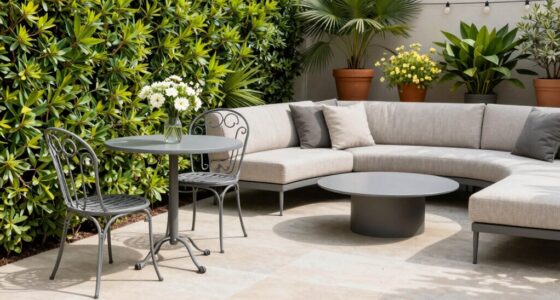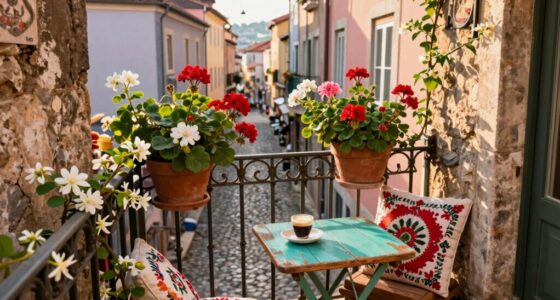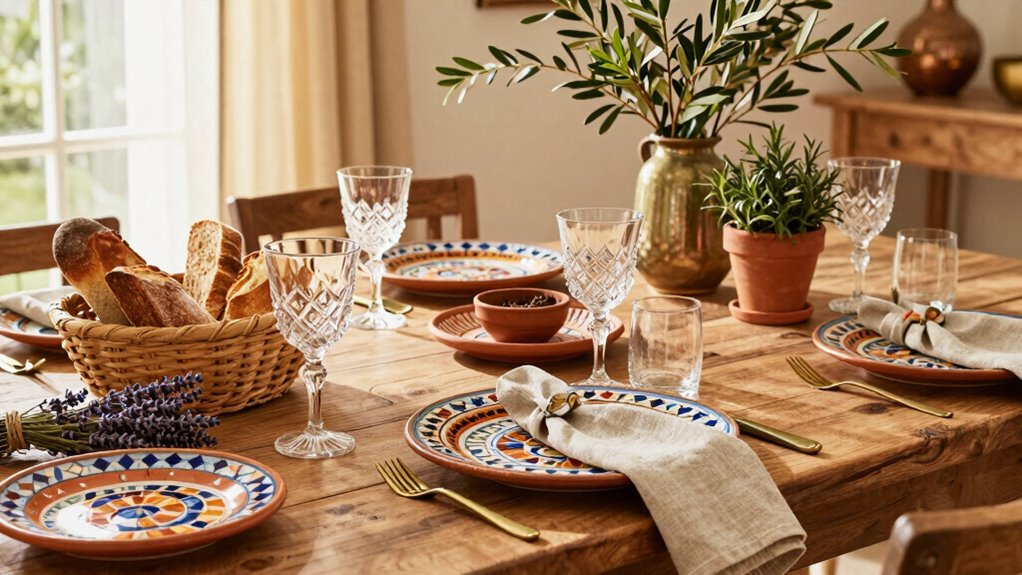
To mix Italian, French, and Mediterranean influences without clashing, focus on a cohesive color palette that includes terracotta oranges, deep blues, soft creams, and muted greens. Incorporate contrasting textures like rough stone with polished marble, and blend rustic materials with elegant touches. Use patterns and scale thoughtfully to add interest without overwhelming. By balancing these elements harmoniously, you’ll create a lively, sophisticated space that celebrates each culture’s charm. Keep exploring for tips to perfect the blend.
Key Takeaways
- Use a cohesive color palette incorporating warm terracotta, deep blues, and soft neutrals to unify all influences visually.
- Balance rustic textures like weathered wood with refined materials like marble and ornate metals for harmony.
- Incorporate small, distinct accents from each culture to highlight diversity without overwhelming the overall design.
- Vary pattern scale strategically, pairing bold French fabrics with subtle Mediterranean motifs for visual interest.
- Maintain a consistent overall style—whether elegant, rustic, or layered—to ensure the influences complement rather than clash.

Blending Italian, French, and Mediterranean influences in your design or cuisine can create a vibrant, harmonious space or dish that celebrates diverse cultural traditions. To do this successfully, you need to master the art of color coordination and texture blending. These elements serve as the foundation for integrating different styles without creating visual chaos or culinary confusion. When it comes to color, think about choosing a palette that reflects the warmth of the Mediterranean, the elegance of French decor, and the rustic charm of Italy. For example, combine terracotta oranges and deep blues with soft creams and muted greens. This approach guarantees your space or plate feels cohesive rather than disjointed. You might use a bold, patterned French-inspired fabric as a statement piece, balancing it with the warm, earthy tones of Italian ceramics and the cool, breezy shades typical of the Mediterranean. The key is to keep the color palette limited but intentional, allowing each influence to shine without overpowering the others. Incorporating texture blending techniques can further enhance the cohesiveness of your aesthetic or culinary creation. Additionally, considering material choices can help you achieve a more polished and unified look or flavor profile. Texture blending is equally essential in creating harmony. Mediterranean design often features rough-hewn stone, woven textiles, and weathered wood, while Italian interiors lean into smooth marble, polished ceramics, and ornate metals. French style might incorporate delicate lace, soft velvets, and aged bronze accents. When combining these textures, aim for contrast that enhances rather than clashes. For instance, pair a rough stone wall with sleek marble countertops or add a plush velvet cushion to a rustic wooden chair. In cuisine, this means blending crunchy, fresh ingredients with silky sauces, or incorporating rustic bread alongside refined cheeses and delicate herbs. The tactile experience should feel layered but balanced, inviting touch and curiosity without feeling chaotic. To elevate the overall harmony, consider scale and pattern** as crucial elements in your design or culinary arrangement. In both design and cooking, your goal is to create a seamless flow between influences. Use color coordination to anchor the space or dish, and employ texture blending to add depth and interest. Think of each element as part of a larger story—each style contributes its voice, but they all speak in a shared language of harmony. Be mindful of scale, pattern, and material choices, and don’t be afraid to experiment with small accents that reflect each culture’s unique character. When done thoughtfully, mixing Italian, French, and Mediterranean influences results in a space or dish that’s lively, sophisticated, and genuinely inviting—an authentic celebration of diverse traditions** woven seamlessly together.
Mediterranean style terracotta ceramic vase
As an affiliate, we earn on qualifying purchases.
As an affiliate, we earn on qualifying purchases.
Frequently Asked Questions
Can I Combine These Styles in a Small Space Effectively?
Yes, you can combine these styles effectively in a small space. Use compact layouts to maximize your area without clutter. Incorporate multi-style accessories, like a French chandelier with Italian ceramics or Mediterranean textiles, to blend influences seamlessly. Keep a cohesive color palette and balance bold patterns with neutral tones. This approach guarantees your space feels curated and harmonious, highlighting diverse styles without overwhelming the limited area.
What Color Palettes Work Best Across These Influences?
They say “clothes make the man,” but colors make the space! For a harmonious look, choose a balanced palette of warm neutrals, soft blues, and terracotta shades that reflect Italian, French, and Mediterranean styles. Prioritize color harmony by sticking to a cohesive scheme, and use pattern coordination to keep everything visually appealing. This approach creates a timeless, inviting atmosphere without overwhelming your small space.
How Do I Balance Rustic and Elegant Elements?
To balance rustic and elegant elements, you should pair vintage accents with modern fixtures thoughtfully. Use vintage pieces like aged wood or antique ceramics to add warmth, then incorporate sleek, contemporary lighting or hardware for a touch of sophistication. Keep the color palette cohesive, blending earthy tones with subtle metallics, ensuring neither style overpowers the other. This blend creates a harmonious space that feels both timeless and refined.
Are There Specific Materials to Avoid Mixing?
Don’t bite off more than you can chew when it comes to mixing materials. Steer clear of overly busy textile combinations and avoid clashing decorative accents that compete rather than complement. Stick to consistent materials like natural woods, ceramics, and subtle fabrics, which help unify Italian, French, and Mediterranean styles. By choosing harmonious textures and avoiding overly shiny or synthetic finishes, you’ll create a balanced, inviting space that feels thoughtfully curated.
How Can I Incorporate Cultural Authenticity Respectfully?
You can incorporate cultural authenticity respectfully by practicing cultural sensitivity and ensuring authentic sourcing. Research each culture’s history, traditions, and symbolism to avoid stereotypes. Support local artisans and authentic brands when selecting materials or products. When sharing or displaying cultural elements, do so with appreciation and understanding, giving proper credit. This approach shows respect, enriches your work, and helps preserve the genuine essence of Italian, French, and Mediterranean influences.
French-inspired velvet throw pillow
As an affiliate, we earn on qualifying purchases.
As an affiliate, we earn on qualifying purchases.
Conclusion
Blending Italian, French, and Mediterranean influences is like weaving a rich tapestry—each thread adding depth and color. Trust your instincts and let the unique flavors, textures, and styles flow together naturally. When you embrace the harmony between these traditions, you’ll create a space that feels both vibrant and cohesive. Remember, the key is balance; too much of one can tip the scale, but with mindful blending, your design will sing like a well-orchestrated symphony.
As an affiliate, we earn on qualifying purchases.
Rustic weathered wood wall panel
As an affiliate, we earn on qualifying purchases.
As an affiliate, we earn on qualifying purchases.