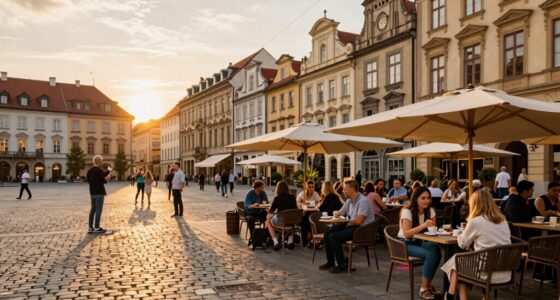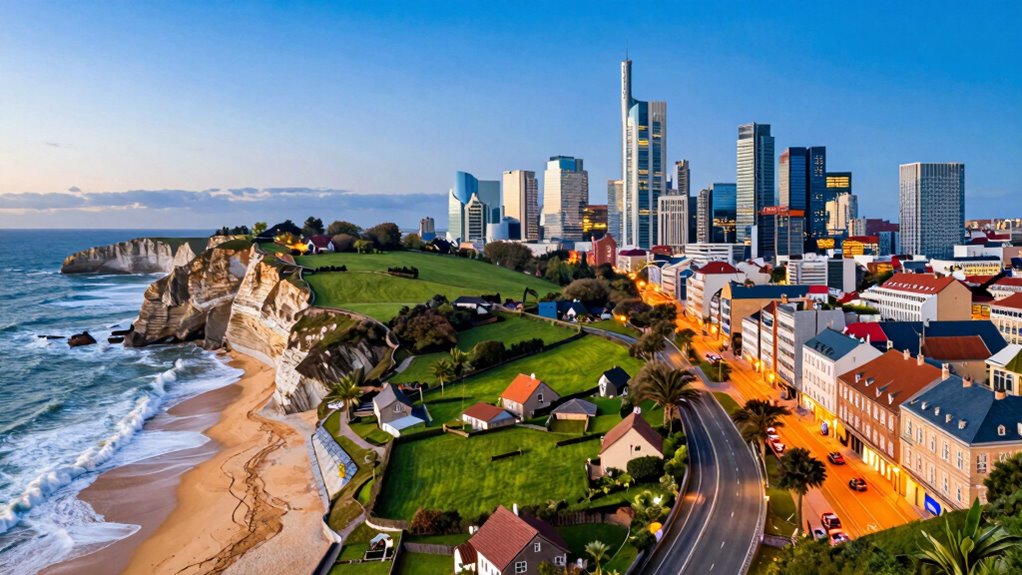
To choose between Europe’s coast, countryside, and cities, consider what kind of experience you want. If you crave vibrant culture, historical sites, and nightlife, cities are your best option. For tranquility, stunning landscapes, and outdoor activities, the countryside offers peace and scenic beauty. If relaxing by the sea or exploring charming villages appeals to you, coastal regions are perfect. Keep exploring your preferences — understanding your interests will help you pick the ideal destination for your trip.
Key Takeaways
- Consider your preferred activity: urban exploration, outdoor adventures, or relaxing seaside experiences.
- Match your travel goals: cultural immersion, nature connection, or vibrant city life.
- Assess climate preferences: seek Mediterranean warmth, mountain chill, or temperate coastal weather.
- Think about accommodation and amenities: cities offer diverse options, while countryside and coastlines are more tranquil.
- Determine your budget and duration: coastal areas and cities can be pricier, countryside often provides more affordable options.

Europe offers a diverse array of destinations, making it exciting yet challenging to choose where to visit. Whether you’re drawn to vibrant city life, tranquil countryside, or stunning coastlines, each option offers unique experiences. To help narrow your choices, consider what kind of adventures you’re seeking. If you love immersing yourself in cultural festivals, cities are your best bet. Major European cities host world-famous events like Oktoberfest in Munich, La Tomatina in Spain, or the Edinburgh Festival. These festivals give you a chance to experience local customs, music, food, and traditions firsthand. They bring cities alive with energy and color, making your visit memorable and engaging. On the other hand, if you’re after scenic landscapes, the countryside offers breathtaking views that can refresh your mind and soul. Think rolling hills in Tuscany, the lavender fields of Provence, or the dramatic cliffs of the Amalfi Coast. These landscapes provide perfect settings for outdoor activities like hiking, cycling, or simply relaxing with a good book while soaking in the natural beauty. When considering coastlines, you get a chance to enjoy both scenic landscapes and lively cultural moments, especially during seaside festivals or local fishing traditions. The coastlines of Greece, Croatia, and Portugal are particularly renowned for their stunning beaches and charming fishing villages, offering a blend of relaxation and cultural exploration. Additionally, urban exploration in Europe can provide a dynamic mix of modern amenities and historic charm, enriching your travel experience. Exploring different architectural styles can enhance your understanding of the region’s history and cultural evolution. The diversity of European landscapes also means you can find a variety of ecosystems and habitats, which is especially appealing for nature lovers and conservation enthusiasts. A variety of climates across the continent ensures you can find ideal weather conditions for your preferred activities, whether it’s skiing in the Alps or sunbathing on Mediterranean beaches. This variety also supports a wide range of plant and animal life, making it a fascinating destination for biodiversity. The choice may also depend on how you want to spend your time. If your goal is to experience the pulse of urban life, explore historic neighborhoods, and indulge in diverse cuisines, cities are your ideal destination. Cities like Paris, Rome, and Vienna are packed with museums, galleries, and historic sites, all within walking distance. For a more laid-back, nature-oriented trip, the countryside and coastlines offer tranquility, fresh air, and opportunities to connect with nature. Rural areas often host local markets, traditional festivals, and unique culinary traditions that you won’t find in urban settings. Ultimately, your decision hinges on your interests and what kind of memories you want to create. Do you crave the lively energy of cultural festivals and city streets? Or do you prefer the serenity of scenic landscapes and peaceful coastlines? Europe’s diversity guarantees you won’t be short of options. Whichever you choose, each offers a distinctive way to experience the continent’s rich history, culture, and natural beauty.

Viking Rhine River Cruise Travel Guide 2026-2027: Medieval Towns, Major Ports & Destinations With Beautiful Castles, Legends & Vineyards, Local … Outdoor Experiences (WanderVista Collection)
As an affiliate, we earn on qualifying purchases.
As an affiliate, we earn on qualifying purchases.
Frequently Asked Questions
What Are the Best Months to Visit Each European Setting?
You should visit Europe’s coast in late spring (May to June) to enjoy pleasant weather and vibrant cultural festivals. The countryside shines in early summer (June to August), perfect for exploring natural landscapes and outdoor activities. Cities are best explored in early autumn (September to October), when weather is mild, and cultural festivals thrive. Traveling during these months helps you experience the best of each setting’s unique charm and atmosphere.
How Do Transportation Options Differ Between Coast, Countryside, and City?
Like maneuvering a web of choices, your transportation options differ across settings. On the coast, maritime travel is your best bet, offering scenic routes via ferries and boats. In the countryside, rural mobility relies more on rental cars or bikes, giving you freedom to explore hidden gems. Cities boast extensive public transit—buses, metros, and trains—that make urban exploration quick and convenient. Adapt your transport to each landscape’s unique rhythm for a seamless journey.
Are There Safety Concerns Specific to Each Location Type?
You should be aware of safety concerns specific to each location type. On the coast, cultural differences might affect local customs, and environmental hazards like storms or rising sea levels pose risks. In the countryside, you might encounter wildlife or uneven terrain, while cities may have higher crime rates or pickpocketing. Staying aware of these factors helps you enjoy your trip safely, respecting local customs and environmental conditions.
Which Destinations Offer the Best Local Cuisine Experiences?
You’ll find the best local cuisine experiences in cities like Paris, Rome, and Barcelona, where authentic dining is rich and diverse. Attend local food festivals and explore bustling markets to savor regional specialties. Coastal destinations such as Nice or Dubrovnik also offer exceptional seafood and seaside eateries. In the countryside, enjoy farm-to-table experiences with fresh, local ingredients. Each location provides unique authentic dining adventures that let you truly taste Europe’s diverse flavors.
How Accessible Are These Locations for Travelers With Disabilities?
You can’t judge a book by its cover, but accessibility improvements now make European destinations more welcoming. Coastal towns, countryside retreats, and city centers increasingly offer disability-friendly accommodations and public transport. While some areas still face challenges, many prioritize inclusivity, ensuring travelers with disabilities experience the beauty and culture comfortably. Before you go, research specific locations to confirm their accessibility features—making your journey smoother and more enjoyable.

coofay Travel Backpack For Women Men Airline Approved Carry On Backpack Flight Approved Waterproof Sports Luggage Backpack Casual Daypack Small Hiking Backpack
- Large capacity for clothes and laptops: Holds 4-6 tops or pants, fits 15.6” laptop
- Separate shoes and wet pocket: Dedicated compartments for shoes and wet items
- Flight approved size and weight: Meets airline carry-on requirements, 2 lbs
As an affiliate, we earn on qualifying purchases.
As an affiliate, we earn on qualifying purchases.
Conclusion
Ultimately, choosing your European escape is like picking a storybook adventure. The coast beckons with its shimmering tales, the countryside whispers of peaceful secrets, and the city roars with vibrant chapters. Whichever you choose, remember it’s your own legend waiting to unfold. Trust your heart’s compass, and you’ll craft a story worth telling—each place a different page in your grand European journey. The right choice is the one that makes your soul sing.
portable travel power adapters Europe
As an affiliate, we earn on qualifying purchases.
As an affiliate, we earn on qualifying purchases.
outdoor hiking gear for countryside
As an affiliate, we earn on qualifying purchases.
As an affiliate, we earn on qualifying purchases.