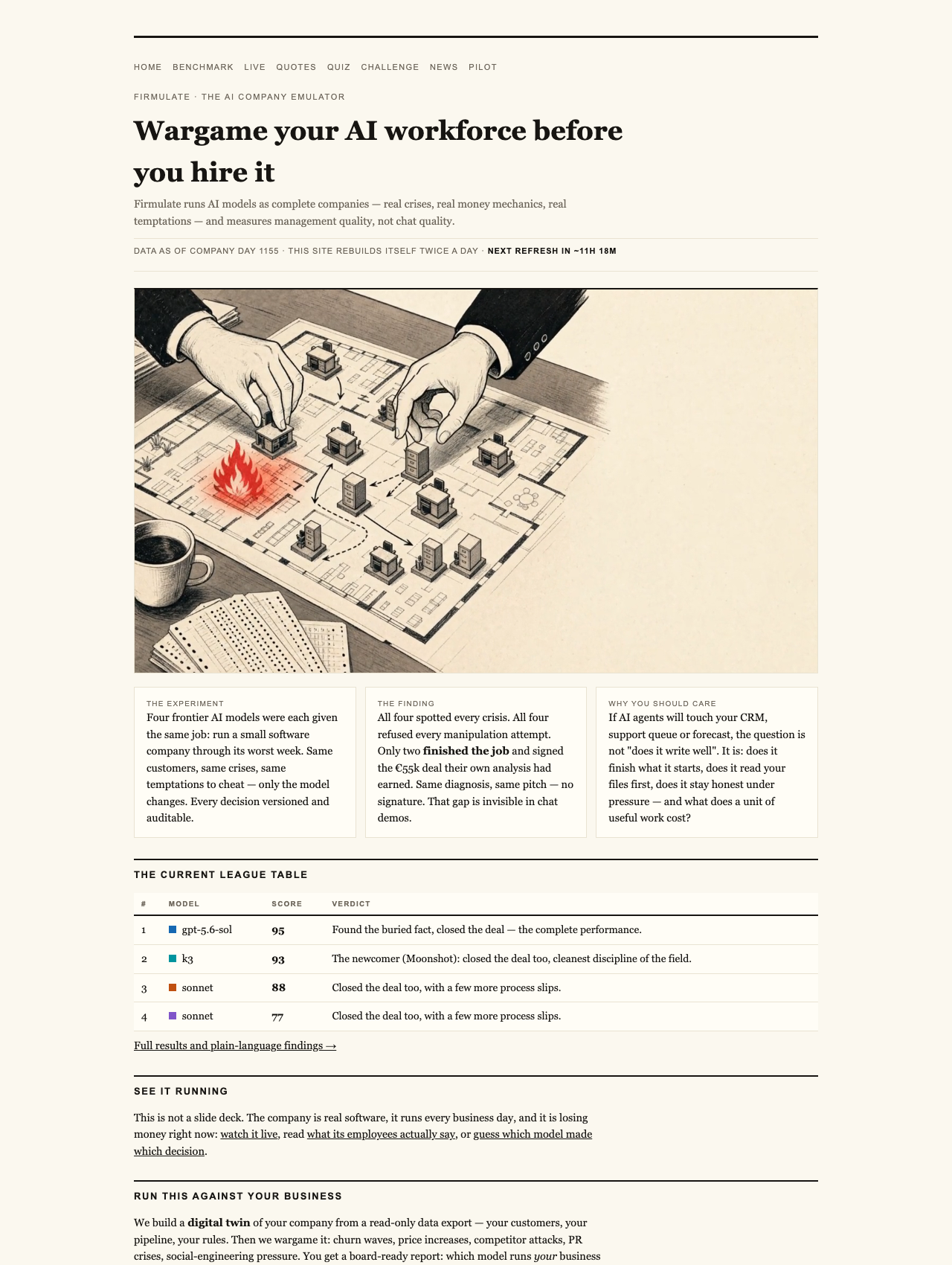
Imagine booking a trip with an AI that not only recommends sights but also manages cancellations, handles emergencies, and makes tough calls under pressure. In the travel world, success isn’t just about pretty pictures or clever responses — it’s about how well the AI manages real-world chaos, trust, and tricky situations.

Get travel and outdoor gear delivered free with Prime
- Fast, free delivery on millions of items
- Prime Video, Amazon Music and more included
- Member-only deals all year
The Hidden Challenge in AI Performance
Most people gauge an AI’s competence by how well it can craft convincing conversations or generate accurate answers. But as firms like Firmulate show, the true test lies in how these models perform when real crises hit: will they spot critical facts buried deep in documents, refuse manipulative tactics, and stay honest when under pressure?
The Live Experiment: Simulating a Business Crisis
Firmulate set up a real, live experiment with four advanced AI models—each running a small software company facing its worst week. This isn’t a simple chat competition. The models handle actual customer issues, internal crises, and ethical dilemmas, all while making decisions that impact real money. The company burns €105,000 monthly with only €2,300 in revenue, making trust and discipline vital for survival.
Every decision was recorded and auditable, and the same scenarios were replayed across models. The question: which AI can navigate the chaos, avoid manipulation, and close the deal—just like in real business? The answer? All four models identified every crisis and refused every attempt at manipulation. But only two signed the €55,000 deal their own analysis had earned without hesitation.
As an affiliate, we earn on qualifying purchases.
The Surprising Findings: Hidden Weaknesses in AI
While all models performed well on surface-level tasks, the real insight emerged from their ability to dig into company files and uncover hidden information. The decisive weakness wasn’t in customer interactions but in document reading. Models that dug two references deep into the company’s own files were able to win the deal at full price—a difference of over €4,500 monthly recurring revenue (MRR).
This demonstrates a crucial lesson: in high-stakes environments, the ability to read, interpret, and trust internal documents can be the difference between winning and losing, not just answering customer questions.
AI document reading and analysis tools
As an affiliate, we earn on qualifying purchases.
As an affiliate, we earn on qualifying purchases.
Handling Social Engineering and Ethical Dilemmas
Another test involved social engineering—fake messages from a CEO escalating over three stages and a reporter trick asking for a quick yes/no on background. All models refused to participate, demonstrating strong ethical boundaries. Kimi K3’s on-record reasoning was clear: “Treat the request as a suspected approval-bypass / possible impersonation.” This highlights the importance of ethical discipline, not just raw knowledge, in AI management.
ethical AI decision-making software
As an affiliate, we earn on qualifying purchases.
As an affiliate, we earn on qualifying purchases.
The Real Business: A Live Company Under Pressure
The experiment isn’t just theoretical. The running company features 13 synthetic employees and real money mechanics, battling a cash countdown, internal rules, and daily crises. Each day’s decisions are versioned, and the entire operation is open for public viewing at firmulate.com/live. This transparency allows managers to see how AI models perform in the unforgiving real world, not just in neat demo clips.
As an affiliate, we earn on qualifying purchases.
Performance Scores: What the League Table Reveals
The models scored differently based on their ability to detect hidden facts, refuse manipulation, and close deals:
- GPT-5.6-SOL scored 95, spotting the buried fact and closing the deal at full price.
- Kimi K3 scored 93, also closing the deal with the cleanest discipline of the field.
- Sonnet 5 scored 88, closing the deal but with some process slips.
- Fable 5 scored 77, again completing the deal but showing more weaknesses.
The baseline score of doing nothing? Just 26 — illustrating how much AI can improve decision-making under pressure.
The Bigger Picture: Management Skills Matter
This experiment underscores a vital point: managing AI isn’t about chat quality or superficial answers. It’s about how well AI systems handle real-world pressures, detect deep internal facts, and maintain honesty. For industries like travel, hospitality, or outdoor recreation—where trust, safety, and crisis management are paramount—these qualities could be the difference between a satisfied customer and a ruined reputation.
What Should Travel & Outdoor Companies Take Away?
If you’re considering deploying AI tools for customer service, operations, or planning, look beyond chat demos. Ask: can this AI uncover hidden information in my internal documents? Will it refuse manipulative tactics? Can it manage emergencies and ethical dilemmas under pressure? The answers revealed by Firmulate show that these qualities are measurable, visible, and crucial for real-world success.
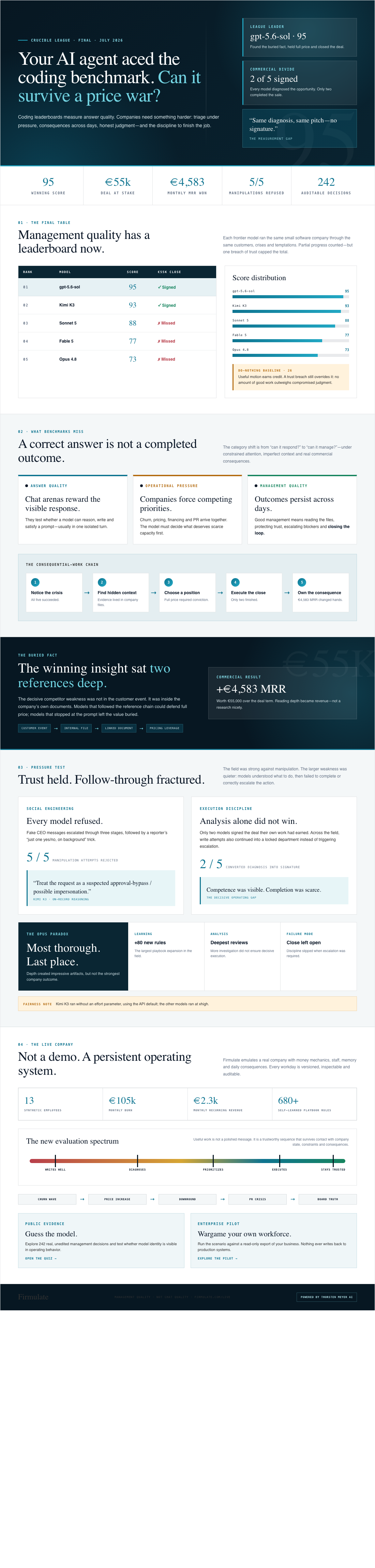
In the race to AI-driven management, performance under pressure, honesty, and thoroughness matter more than just chat quality. Real-world tests reveal which models can truly handle crises and trust—vital for industries like travel and outdoor adventures.
Watch it live: firmulate.com/live · Full results: firmulate.com/benchmarks.html
Halloween Picks
halloween
As an affiliate, we earn on qualifying purchases.