European farmers markets are lively spots where you can experience authentic local culture through fresh produce, handcrafted goods, and friendly vendors. Approach stalls with a smile, ask questions about products, and carry cash in the local currency. Explore slowly, enjoy tasting samples, and show appreciation for artisans’ craftsmanship. These markets help you understand regional traditions and farming practices while offering a memorable sensory journey. If you want more tips on making the most of your visit, keep exploring these vibrant markets.
Key Takeaways
- Travelers can explore authentic regional foods, crafts, and traditions by visiting local farmers markets.
- Most stalls prefer cash payments; bringing local currency is recommended for smooth transactions.
- Engaging politely with vendors enhances the experience and may lead to samples or small discounts.
- Market etiquette includes respectful behavior, such as asking permission before sampling and avoiding unnecessary touching.
- Visiting markets offers cultural insights into local agricultural practices and community life beyond typical tourist spots.
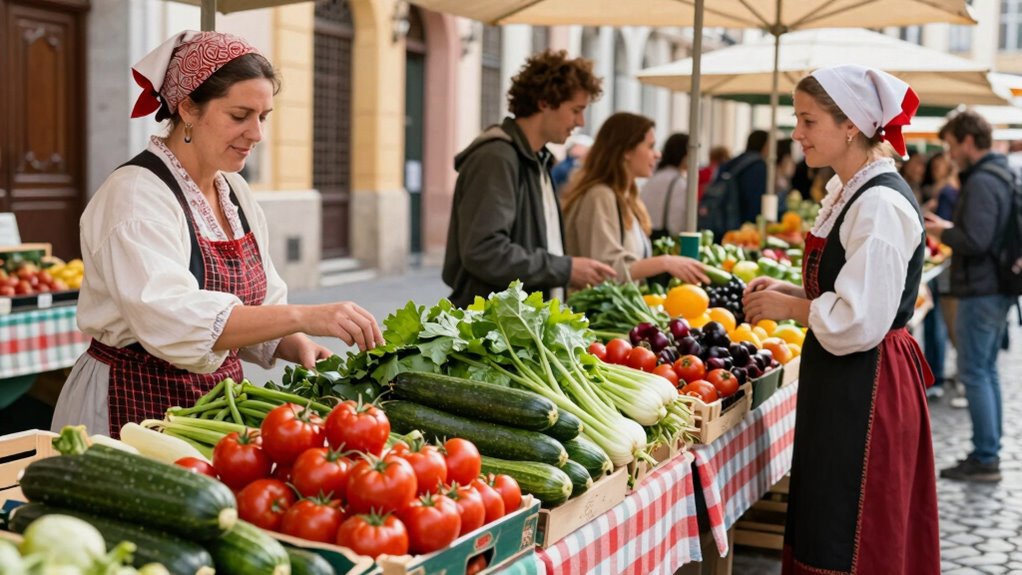
Have you ever wondered where to find authentic local flavors while traveling through Europe? One of the best places to do so is at farmers markets, where local culinary traditions thrive in vibrant, bustling settings. These markets aren’t just spots to grab fresh produce—they’re cultural hubs that reveal the heart of a region’s food and customs. As a traveler, stepping into these markets offers you an intimate taste of daily life, connecting you with the flavors and stories behind each stall. You’ll see farmers proudly showcasing their harvests, bakers offering warm bread, and artisans selling handcrafted cheeses or cured meats. It’s a sensory experience that goes beyond what’s listed on a menu or in a guidebook.
When you visit a European farmers market, it’s helpful to understand the market etiquette to make your experience smooth and respectful. First, approach vendors with a friendly attitude—greetings like “Bonjour,” “Buongiorno,” or “Hallo” go a long way, especially when combined with a genuine smile. Don’t be shy about asking questions; vendors often enjoy sharing the stories of their products, whether it’s how a certain cheese is made or the history of a particular vegetable. Keep in mind that many vendors prefer cash, so carrying some local currency is wise. If you wish to sample items, politely ask for permission—most vendors appreciate your interest, and some may offer samples freely, especially if you show enthusiasm and appreciation for their craft.
Market etiquette also involves respecting the space and practices of local vendors. Avoid touching produce unnecessarily, and if you’re buying multiple items, consider bringing your own reusable bags—many markets are eco-conscious. When negotiating prices, be courteous and remember that prices are often fixed or set by the vendor, but a polite conversation can sometimes lead to a small discount or an extra sample. Also, take your time exploring the stalls; rushing through can seem disrespectful. Instead, wander at a relaxed pace, soaking in the sights, smells, and sounds that make each market unique. Recognizing the importance of biodiversity in preserving these traditional markets can deepen your appreciation for sustainable living practices. Additionally, understanding the local agricultural practices can enhance your experience by providing insight into how the food is cultivated and brought to market. Being aware of market regulations can also help you navigate local rules and customs more easily, making your visit more enjoyable. Furthermore, engaging with vendors about their farming methods can offer a richer understanding of the region’s agricultural diversity. Exploring local food traditions can also add a meaningful layer to your culinary adventure.
European farmers market shopping tote bag
As an affiliate, we earn on qualifying purchases.
As an affiliate, we earn on qualifying purchases.
Frequently Asked Questions
Are European Farmers Markets Open Year-Round?
European farmers markets are often open year-round, but hours and days can vary by location. You’ll find fresh local food and artisanal products no matter the season, giving you a chance to enjoy authentic flavors at any time. In winter or off-peak times, some markets might have reduced hours or special winter editions. Always check local schedules beforehand to make certain you don’t miss out on these vibrant markets.
Can Travelers Barter or Negotiate Prices?
You can try price negotiation at European farmers markets, but don’t expect it to be a free-for-all. While some vendors might appreciate a friendly chat, cultural differences mean bargaining isn’t always the norm. Approach with respect, and remember, prices are often fixed or posted. Your best bet is to politely ask if they’re open to negotiation, but be prepared to accept the listed price if they’re not.
What Are the Best Times to Visit Markets?
You should visit markets early in the morning or late in the afternoon to enjoy the freshest local delicacies and experience seasonal variations at their peak. Mornings are ideal for discovering the best selection of produce, while late afternoons can offer better deals. By timing your visit, you’ll enjoy authentic flavors, see seasonal variations in produce, and get a true feel for local culture and market life.
Are Credit Cards Widely Accepted at Markets?
Credit cards are becoming more widely accepted at European farmers markets, but payment methods can vary by location. Some markets embrace cashless payments through mobile apps or card terminals, enhancing market accessibility for travelers. However, always carry some cash just in case, since smaller vendors might prefer or only accept cash. Checking ahead or bringing a mix of payment options guarantees smoother shopping and helps you enjoy the local produce without hassle.
How Do Markets Differ Between Countries?
Markets differ between countries by showcasing unique local produce and reflecting distinct market traditions. In some nations, you’ll find vibrant stalls with fresh cheeses and baked goods, while others emphasize seasonal fruits and vegetables. Market layouts, bargaining customs, and payment methods also vary, giving you a taste of local culture. Exploring these differences helps you appreciate regional flavors, traditions, and the lively atmosphere that makes each market special for travelers like you.
reusable produce bags for farmers markets
As an affiliate, we earn on qualifying purchases.
As an affiliate, we earn on qualifying purchases.
Conclusion
Exploring European farmers markets is like opening a treasure chest of local flavors and stories. As you wander through vibrant stalls, you’re not just a traveler—you’re a part of the community’s heartbeat. These markets invite you to taste, touch, and connect in ways that postcards never capture. So, embrace the chaos and charm—your journey becomes richer, like a tapestry woven with every fresh bite and friendly smile. Immerse yourself—adventure awaits just around the stall!
As an affiliate, we earn on qualifying purchases.
portable tasting sample containers
As an affiliate, we earn on qualifying purchases.
As an affiliate, we earn on qualifying purchases.